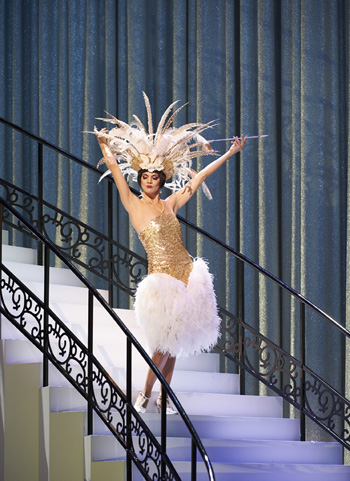
On the latest Big COC Podcast you can hear Gianmarco Segato, Wayne Gooding, Paula Citron and I discuss, among other things, Sarasota Opera’s decision to put on Pagliacci without a companion piece. They are instead offering some instrumental pieces and an after party. They claim their audience has expressed a preference for shorter evenings at the opera. I was reminded of this by seeing de Falla’s La Vida Breve this afternoon. (You’ll have to wait for the next edition of Opera Canada for a review). This performance added a tribute to de Falla composed by the music director as a kind of prelude to round things out. Continue reading
Category Archives: Ramblings
Why productions succeed in one place but not another?
In an age of co-productions many opera productions are seen in multiple houses. Some of them we get to see in multiple guises. For example I’ve seen Tcherniakov’s Don Giovanni on DVD and will be seeing it live later this season in Toronto. Spmething that’s been fermenting in my brain for a while now is why the same production can get a drastically different reception in different places. The piece that first made me think about this was Chris Alden’s Die Fledermaus. This was generally well received in Toronto (more perhaps by my friends and acquaintances than the print media but that’s par for the course) but universally panned in London when it played at ENO. Bryan’s interesting comments about the Carsen Falstaff kicked off the train of thought again and made me want to put some tentative thoughts into writing.
Roots
I was talking to Leslie Barcza of barczablog at a concert yesterday. He asked me what I was most looking forward to in the upcoming season and I was a bit stumped for an answer because there’s lots of good stuff in Toronto this season but nothing that really sets my pulse racing. Finally I answered with the TSO’s Dream of Gerontius, which, it turns out, is not exactly high on Lesley’s bucket list. This led to a brief discussion about how origins affect our reactions; that is until the actual concert interrupted our talk.
Musing on Maria
Marias seem to polarize the opera world. Ewing of that ilk still generates more search term hits around here than even Calixto Bieito. In her day Malibran was the Maria of note and controversy and more recently, of course, we have Callas. Callas was a bit before my time and it’s only really recently that I’ve listened to her much. It started, ironically, with the Pasolini Medea where she doesn’t sing but does radiate a most compelling presence. So, when Presto had the complete EMI recordings on sale for something like $20 I took the plunge and 7+ hours MC on CD duly arrived. Just looking at the leaflet blew my mind. She recorded everything from Rosina to Turandot and sang monster roles at an age when, today, she’d most likely still be in a YAP. I have to say it’s a really mixed bag. There’s some gorgeous singing. The Casta diva in this box set is exquisite. There’s also stuff that’s almost unbearable to listen to. Overall though I was still really wondering what all the fuss was about. So I got hold of a couple of documentary DVDs on Callas that included some footage of her on stage; concert rather than opera. There seems to be virtually no video record of her actual opera performances. It makes a huge difference. It’s not like she does much in the way of acting but there’s something, like in the Medea, utterly compelling. She’s still polarizing. My partner likened her voice to scratching on a chalkboard and the cats seem to agree. I was even asked this morning if the “Callas marathon” was over yet. I think the investigation may be continued but tact may be required. Also, am I completely nuts in noticing a certain similarity of timbre between Callas and Sondra Radvanovsky? It’s hard to be sure comparing 50 year old recordings with my memory of a singer I’ve only seen live.
Audiences
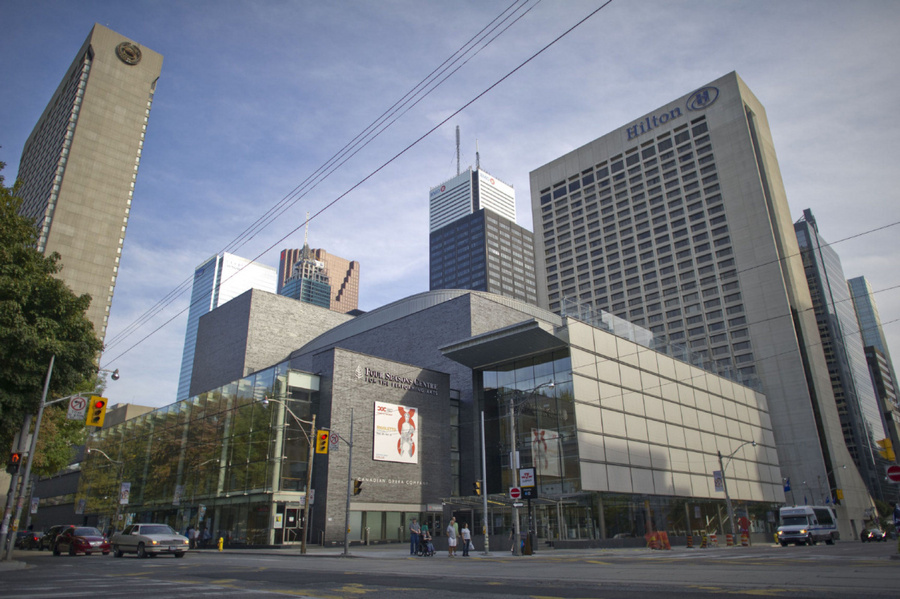
Maybe this should be titled “The bear and lemur freak show”. Anyway, no surprise to anyone who knows us or reads this blog, the classic 19th century Italian rep is not our sweet spot. Give us Handel or Berg or Britten over Rossini or Verdi (let alone Donizetti) most days. (We’ll make an exception for Don Carlos!). So, last night as the Four Seasons Centre erupted in frenzied applause I couldn’t really share the wild enthusiasm, fine as the performance was, but what startled me was when I heard a smug, female voice to my left say “Well that makes up for Hercules”. I restrained an urge to remonstrate violently (I’ve been taking lessons from Peter Sellars) but I did leave the theatre puzzled and a bit upset; a feeling shared by the lemur and subject of much conversation on the subway home.
On being at the Met for the first time
The Metropolitan Opera looms pretty large in the consciousness of any North American opera goer though, I suspect, is not as big a deal as its management thinks elsewhere. I was very curious then to experience it for myself. I see most of my opera in the comparatively intimate Four Seasons Centre (2100 seats) or even smaller spaces. I’m almost used to getting kicked as a character writhes at my feet in a small space production. I’ve been in larger houses too; neither the Coliseum nor Covent Garden are small. That said, the first impression of the auditorium and stage at the Met is just how big it is. We sat in the front row of the Balcony and the combined Balcony and Family Circlre stretched away behind us, apparently the size of a rugby field (probably a Welsh one given the slope). I had not realized that the Family Circle is not really an additional “ring” but a backwards continuation of the Balcony.
Earworms
Earworms are funny things. What causes a particular passage of music to stick in one’s mind almost obsessively? I’m thinking about this now because I’ve seen two operas twice in the last couple of weeks and one is filling my waking moments with highly detailed flashbacks. It’s not just tunes. I’m hearing the orchestration and the inflexion of the words. And it’s not the odd tune here and there. It’s great long passages and many of them. The other, although I would recognise most every phrase on hearing it, is not doing that at all. Here’s the odd thing. The one that’s leaving no impression at all is number three world wide in terms of number of performances(1) and is, of course, Puccini’s La Bohème. The one I can’t get out of my head is far down the list at number 88 and it’s Britten’s Peter Grimes (and note that it’s the Britten centenary).
Know I have to ponder whether there is any connection between this and the fact that while all the cheap seats for Peter Grimes seem to sell out, the boxes on fat cat row are half empty.
On the tyranny of word limits
Writing a review for a print publication rather than for this blog was an interesting process. I think three things were weighing on my mind. First was the sense that I needed to be, in some sense, “objective”. Inevitably a review expresses a personal opinion but I felt a greater need to be “fair”. In that respect I was very glad it was a good performance because I would not have been able to do my usual thing of just ignoring or skating over sub-par performances. I also felt that I needed to avoid quirky observations and to stay on topic rather than wander where my interest and inclination led. Finally there was this word limit thing; 375-400 words. My initial reaction was how was I going to find that much to say about a performance that was basically a concert without sets or scenery, though there was some rudimentary blocking. After all, I usually I devote at least as much space to the dramatic aspects as compared to the musical. In the event the opposite was very much the case. It proved horribly difficult to condense down to the required length. All discussion of the “production” went by the board. All I had room for was a brief discussion of how the piece had been cast from a voice type perspective, commentary on the singers’ performances as vocalists (not actors) and a brief note on the size and sound of the band. And that was my word limit gone.
Picture quality – DVD vs. Blu-ray
As regular readers know posts on this blog frequently feature screen caps from the DVD or Blu-ray disk reviewed. In the process of garnering the screen shots I have found out one or two interesting things about the picture quality of the originating disk. Using vlc to play disks gives a window the size of the image in pixels. (I use vlc because for some reason screen caps from DVDPlayer come out blank.) Older opera DVDs have a picture that is nominally 720 pixels wide giving a 720×540 window for 4:3 pictures. In practice there are often black bars at the side of screen reducing this a little and sometimes older TV derived material isn’t even really up to even that quality so this really represents an upper bound on the amount of information available. More recent 16:9 DVDs tend to be a bit more information rich; 830×468 pixels seems quite common and some HD derived material checks in at around 850×480. It does mean though that very few operas will fit on a single DVD9 disk. Continue reading
Opera houses and public transit
A few years ago I stopped being a car owner for the first time in twenty five years or so. I walk, I cycle, I use public transit and, for the rare occasions I need one, I’m a member of a carshare service. I figured out the other day that I can probably walk to 90% of the opera performances in Toronto without undue difficulty. If I don’t want to walk my main opera destination has a subway station under the building (and as a result has some ingenious engineering to isolate it acoustically from the subway line and the street outside which is the main route to three teaching hospital ERs and sometimes seems like siren central). It wasn’t much different when I lived in London; Covent Garden and the Coliseum are a hop, skip and a jump from the Tube. Likewise, as I recall, the opera houses in New York, Chicago, San Francisco and Seattle are all easily transit accessible and doesn’t Paris have a Metro station called Opéra? So, I was taken aback when I checked out the Michigan Opera Theater schedule to find directions from umpteen freeways but no mention of how the carless might access their house. I shouldn’t have been surprised. I’ve worked often enough in Detroit and the associated sprawl to know what it’s like but it does seem an odd set of priorities for a city; an opera house but no transit.