Ponderings on the Subject of Love

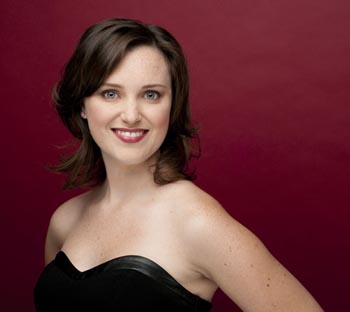
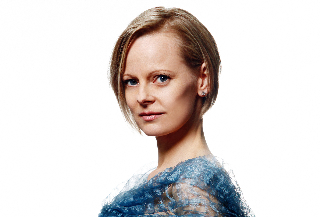
Julie Makerov and Anne Larlee in the Richard Bradshaw Amphitheatre

For the Valentine’s Day lunchtime concert at the Four Seasons Centre American dramatic soprano Julie Makerov chose a series of art songs by English and American composers on various aspects of love.  I was familiar with the English works by Quilter and Britten, though more used to hear them sung by male singers, and not at all familiar with the American works by Berger, Barber and Heggie.  It made for an interesting mix.

A dramatic soprano wouldn’t normally be my first choice for a song recital but Ms. Makerov is very skilled.  She scaled her voice back nicely and had her vibrato well under control.  She also had excellent diction and a good feel for the text.  She didn’t have the most interesting range of tone colour I’ve ever heard but it was a most musical and enjoyable performance.  She performed the whole set from memory which is nice.  The highlights for me included a couple of Quilter settings; Weep You No More Sad Fountains and The Faithless Shepherdess, and a really moving account of Britten’s setting of O, Waly, Waly.  I also really liked the three songs by Berger; In Time of Silver Rain, Heart and Carolina Cabin.  In case we thought the whole thing too serious she encored with an appropriately over the top rendering of Heggie’s Alas, Alack.

Anne Larlee, on piano, once again showed what a fine accompanist she is and there was a very good cameo for cellist Paul Widner in Heggie’s What My Lips Have Kissed.

It was well worth braving the driving sleet of a truly dreich Toronto day.


Collaborations

Each year the Studio Ensemble at the Canadian Opera Company does an exchange with its counterpart the Atelier Lyrique de’l’Opéra de Montréal. Part of this collaboration is a free concert in the Richard Bradshaw Amphitheatre featuring singers from both companies. Last year I found it quite hard to write about as, frankly, Montreal didn’t bring much to the party. This year, happily, was different.

Philip Kalmanovitch

Two of the Montreal singers really impressed me this time. Philip Kalmanovitch is a tall, slim baritone with an engaging stage manner and a very nice voice indeed. He kicked off the programme with the Largo al factotum from Rossini’s Il barbiere di Siviglia. I would not have thought it possible to overact this piece but Kalmanovitch came close! It was very characterful, well sung and he communicated that he was having fun very effectively. We also got a characterful Là ci darem la mano from Don Giovanni sung with Jacqueline Woodley. Their voices blended very well and the acting was good too. His final piece was the much more romantic Mein Sehnen, mein Wähnen from Korngold’s Die tote Stadt. He didn’t seem quite as at home in this repertoire and he could use some work on shaping his lines but, again, he sang with beautiful tone and the closing pianissimo was very well done.

Emma Parkinson

I was just as impressed by mezzo-soprano Emma Parkinson. She has a lovely smoky voice of some power. In her first number, Come ti piace, imponi from La clemenza di Tito she was singing with the Studio Ensemble’s biggest voice, soprano Ileana Montalbetti. I was worried going in that she’d be blown away (probably literally) but it wasn’t so. They actually worked very well together. Emma and Ileana collaborated again with the addition of baritone Philippe Sly in Soave sia il vento from Cosi fan tutte. This wasn’t so successful. Even when she’s throttling back, Ileana has a distinct ‘slice’ which doesn’t really suit a Mozart number like this and the voices didn’t really blend. I really want to hear what she can do with an orchestra in a genuine spinto role. Also, Philippe sang well enough but it’s going to be a long, long time before he sings Don Alfonso.  Getting back to Emma, she also sang a spirited Parto, parto, agian from La Clemenza di Tito. This was the real deal and raised hairs on the back of my neck. There was power, passion and variation of tone colour. Her coloratura was a bit ragged in places but that will come. Ms. Parkinson is one to watch.

Aidan Ferguson

The Montreal contingent was rounded out by mezzo Aidan Ferguson and tenor Isaiah Bell. Ferguson sang Va! laisse couler mes larmes from Massenet’s Werther, Sein wir wieder gut from Strauss’Ariadne auf Naxos and collaborated with Mireille Asselin in the Presentation of the Rose from Der Rosenkavalier. She and Jacqueline Woodley also sang a very musical version of Belle nuit, ȏ nuit d’amour from Offenbach’s Les contes d’Hoffmann. Ferguson is musical, she’s got plenty of power and was markedly better in the Strauss and Offenbach pieces than in the Massenet where she was a bit wobbly. She just doesn’t sound like a mezzo to me. The voice is very bright and open and I wonder whether she won’t end up as a dramatic soprano.


Bell seems very young. He started out with a very diffident Unis dès la plus tendre l’enfance from Gluck’s Iphigénie en Tauride. He sounded a bit underpowered and undercharacterised. He was better in the duet My Tale Shall be Told from Stravinsky’s The Rake’s Progress (sung with Philippe Sly as a characterful Nick Shadow) where he showed he could convey some real feeling. He finished up with Si, ritrovaria io giuro from Rossini’s La Cenerentola. This really needed more power. he has the notes but he doesn’t have the exciting, ringing top end needed to bring a piece like this to life. He is very young though and with a bit more power and confidence could be quite promising.

The Toronto singers were really in back up roles in this gig but they all performed very well. Mireille Asselin showed she has the classic qualities of a young lyric soprano in her cameo as Sophie and Jacqueline Woodley was excellent in the Offenbach though to be honest I’d much rather hear her singing Weir, Golijov or Saariaho where she truly excels.  Philippe and Ileana I’ve already mentioned.   Accompaniment on the piano was by the Studio Ensemble’s Jenna Douglas and Timothy Cheung who were, as ever, just excellent.

All in all, a very worthwhile effort all round.

Another lunchtime with Kaija Saariaho

Kaija Saariaho

Today’s concert in the RBA consisted of more works by Saariaho performed by members of the COC orchestra and the Studio Ensemble. Both the the composer and General Director, Alexander Neef, were there. The four works performed were most definitely not “easy listening”. To me they seemed firmly in the tradition of modern continental European composition in the same sort of mould as Henze or Berio. The pieces were all very dense with complex tonality and dissonance and placing great demands on the performers.


Jacqueline Woodley - Photo by Helen Tansey

First up was Changing Light described by the composer as a dialogue between soprano and violin. It’s a setting of a text by Rabbi Jules Harlow and was commissioned in the wake of 9/11. It may be a dialogue but the instrument doesn’t support the singer in any way. The violin is in a world of comples slides while the singer has some very tough intervals and the sustained, loud, high notes that characterize much of Saariaho’s vocal writing. That said in some ways this was the most conventional and accessible piece on the program. The performance by soprano Jacqueline Woodley and violinist Marie Bérard was first rate.

Mireille Asselin

Next came Mirage. This a setting for soprano, piano and cello of an English translation of a text from Mazatec healer and shaman Maria Sabina. It’s a rewriting of a piece originally written for soprano, cello and orchestra. The composer described this version as “more intimate”. It’s an uncompromising piece. Much of the piano part is played directly on the strings (rather than the keys) and the keyboard part is furiously virtuosic. The cello part is no easier with complex slides and atonality. The writing for soprano demands some characteristically difficult singing with something akin to Sprechstimme and some phrases that are whispered into the piano, using the piano as a reflector/amplifier. It’s quite a compelling piece. Again the performance was excellent. Jenna Douglas was on piano with Olga Laktionova on cello and Mireille Asselin singing.

The third piece seemed to me even more demanding. Lonh is a longish setting for soprano with electronic tape of fragments of medieval Occitan poetry by Jaufré Rudel. It requires an array of vocal techniques; singing, semi-singing, modulated speech, whispers, the works really. It’s quite haunting and the electronic tape which combines nature noises, bird sounds and fragments of spoken Occitan is very atmospheric. This was another fine performance by Jacqueline Woodley. We were told that this was composed as a “study” during the process of conceiving L’Amour du Loin so I guess it serves as an introduction to that sound universe.

Rihab Chaieb

The final piece was an early work for mezzo and soprano; From the Grammar of Dreams to texts by Sylvia Plath. It was described as “tenser” by the composer and to my ear sounded most influenced by the fashionable idiom of the 1960s and 1970s. It uses just about every vocal technique in the book and interweaves fragments of two different Plath poems; Paralytic and The Bell Jar. The composer tells us that dreams are “non linear” and that’s certainly reflected in the piece. Rihab Chaieb and Mireille Asselin were the singers and I thought their voices blended really well. The mix of Mireille’s very bright soprano with Rihab’s much darker tone was very pleasing.

I was really impressed with everyone on show today. It’s hard to express in words just how difficult this music is to perform. Here we had young singers and, I think, equally young instrumentalists putting on a truly impressive show. In particular, I was intrigued to see how much Mireille has come on. I first heard her sing a couple of Servilia’s arias from La Clemenza di Tito and my impression was of a perfectly competent light lyric soprano but nothing special. The last couple of times I have heard her she seems to have grown quite a bit musically and her performances today were top notch.

Lunchtime with Kaija Saariaho

Today’s lunchtime concert in the Richard Bradshaw Amphitheatre was of a series of works by Finnish composer Kaija Saariaho whose opera L’Amour de Loin opens on Thursday at the Four Seasons Centre. The composer was in attendance and introduced each of the pieces.

First up were four songs for soprano and piano on texts by the Finnish poet Leino. These were performed by Carla Huhtanen and Adam Sherkin. We were told that the texts were essentially untranslatable but the English versions we got were good enough to see how the mood of the music fit the piece, if not to make any real judgement of the relationship between words and music. I found the music evocative and quite complex but not difficult to listen to. It’s certainly well beyond being mere mood music. They are quite intense pieces and place pretty heavy demands on both pianist and singer. In particular the soprano has many loud, sustained high notes to cope with and some awkward intervals. Huhtanen managed this with comfort. I can’t comment on her Finnish though I guess I can say, given that the last time I heard her sing was in Serbian, that odd languages don’t seem to worry her. Sherkin seemed well in control at the keyboard.

Next up were two contrasting piano pieces played by Sherkin. Both demanded some rather athletic playing. The first, Prelude, I found the more meditative of the two. I zoned out at times (but in a good way). The second piece, Ballade, I found myself getting more analytical about. The composer explained that it was a more narratively structured piece and I did get that sense. Sherkin was really good on both pieces.

The final contribution was Tag des Jahrs for choir and electronics. It’s a setting of four poems by Hölderlin on the theme of the seasons. This was performed by the Elmer Iseler Singers who, besides the electronic tape, got “help” from a concrete saw on University Avenue. For me this was the least successful piece. The music was quite evocative but occasionally seemed to be slipping into mood music territory. It probably wasn’t helped by the performance. I thought the German diction was distinctly sub-standard. They might as well have been singing in Finnish.

I’m glad to have heard some of Saariaho’s music ahead of seeing L’Amour de Loin next week and it’s always good to hear the composer’s thoughts on works of this type. There’s another concert of vocal works by Saariaho on Thursday. Here’s the programme. I shall try to be there.

COC Ensemble Studio – Works by female composers

It feels good to be back listening to live music after a bit of a drought. Today I was at a lunchtime recital in the Richard Bradshaw Amphitheatre given by members of the Canadian Opera Company Studio Ensemble. It was very good indeed. I want to start with the undoubted highlight; Jacqueline Woodley‘s performance of Judith Weir’s piece for unaccompanied soprano, King Harald’s Saga. It’s a complex, fascinating and very difficult piece requiring the singer to switch between voices and to pull off a range of singing styles. Woodley was awesome. I’ve heard her now in quite a few contemporary pieces, though perhaps none as hard as this, and she has always impressed.

Almost as impressive was Ileana Montalbetti’s performance of Libby Larsen’s Donal Oge. It’s a work that requires considerable power from the singer and Ileana, unsurprisingly delivered. She’s got a big voice and she knows how to use it. Neil Craighead gave us two songs by Cecile Chaminade. He sounds a good deal more powerful than last time I heard him. He has a lovely tone and now the power too. He hasn’t quite got the knack of throttling it back yet but that will come I expect. We also got some fiendishly difficult Alma Mahler songs which clearly taxed tenor Chris Enns. They would have taxed anyone I think. Mireille Asselin gave a pleasing unaccompanied performance of a piece from Hildegard von Bingen and the programme was rounded out by two duets by Fanny Hensel sung by Asselin and Craighead and Montalbetti and Enns.

The pianists were the excellent Jenna Douglas and the even more impressive Timothy Cheung. All in all, this was as good a concert as I have heard in the COC’s free lunchtime series.

Zodiac Trio

Yesterday’s free concert was given by the Zodiac Trio. They are a young group consisting of Kliment Krylovsky (clarinet) Vanessa Mollard (violin) and Riko Higuma (piano). The programme was titled Music from a Silenced Nation: Soviet Composers and it was presented, appropriately enough, on the greyest, dreariest day of the season so far. They brightened it up considerably. The programme opened with a virtuosic rendering of Stravinsky’s L’Histoire du Soldat followed by the first movement of Denisov’s Sonata for Solo Clarinet. This latter is a very strange work for its time and place. It experiments with quarter tones and is generally the sort of thing that would get one sent to the gulag. Next came the Allegretto from Shostakovich’s Sonata for Violin and Piano, Op 134, composed for David Oistrakh. This piece places huge physical and technical demands on the players which Mollard and Higuma really came through on. The final item on the programme was Galina Ulstvolskaya’s Trio. This I must listen to again. Why is this woman not better known? She was a pupil of Shostakovich and her work has many of the qualities that make her teacher so great. It was played beautifully with special props to Higuma who was required to get a very wide range of effects out of the piano. They encored with an uncredited tango of considerable bravura.

I would say that the Zodiac Trio are exceptionally committed to what they do and show great musicianship and serious musical erudition. Go see them if you get a chance.

Nimm sie hin denn, diese Lieder

Today’s free lunchtime concert in the Richard Bradshaw Amphitheatre was given by Canadian bass, Robert Pomakov and the Gryphon Trio (Annalee Patipatanakoon – violin, Roman Borys – cello, Jamie Parker – piano).

First up we got Parker and Pomakov performing Beethoven’s An die ferne Geliebte.  Pomakov has a big voice as I knew from having heard his Monterone twice this month at the Four Seasons Centre.  I was impressed by how well he could scale back his volume and even more impressed by the wide and appropriate range of tone colours he deployed.  He doesn’t sound entirely secure at ppp but for a voice of his type he was pretty good!  Next the Gryphons gave us the Elegia from Arensky’s piano trio.  I don’t know this work at all but they sounded very accomplished and musical.  The finale was Mussorgsky’s Songs and Dances of Death in Gary Kulesha’s arrangement for voice and piano trio.  This time Pomakov could let rip with all his considerable power accompanied with equal fervour by the Gryphons.  The whole thing was very impressive and very loud!

The scary thing is that Pomakov has only just turned thirty and already has this huge sound.  Apparently he’s had it for a while because he’s sung in twenty COC productions going back ten seasons. I did check out Youtube to see if I could find Pomakov and there is one clip of him singing the Russian National Anthem at the World Cup of Hockey in 2004. Here it is.

Svadba-Wedding revisited

Back in June I attended and wrote up the world premiere of Ana Sokolovic’s Svadba-Wedding. Today it was given again in a concert performance by the original cast in the Richard Bradshaw Amphitheatre at the Four Seasons Centre. I’m not going to repeat what I said in the earlier review but focus on my reactions to seeing it again. First off, it works very well as a concert piece losing less than a more obviously narrative work might. Second, I was struck by the interesting way the piece weaves two very different musical strands together; the high tempo, almost percussive, onomatopoeic elements as referred to before but also a more lyrical element where a long, slow, folk derived line is introduced and then a second and maybe a third or even a fourth melody are woven in to create a rather dense harmonic texture. This second element is particularly apparent in the final number “Farewell”. The contrast is very effective. Finally, Jacqueline Woodley sounded even more like a young Dawn Upshaw. Her ability to sing powerfully with next to no vibrato is very compelling in this sort of music. [Image by John Lauener is from the staged production at Berkeley Street and was lifted from today’s performance flyer]

Artists of the University of Toronto Opera Division

Today’s lunchtime concert at the Four Seasons Centre was given by singers from the University of Toronto’s Opera Division. This is described as the university’s programme for professional singers but what that means in a city that has a professional opera company with a young artists programme and a conservatory I don’t quite know. Certainly the standard today was generally below what I’ve experienced from singers at the RCM and not close to the same league as the COC Studio Ensemble. Many of the singers sounded as if they were forcing their voices beyond their comfort zone in an attempt to sound “operatic” but were only succeeding in producing the sort of sound that persuades people they don’t like opera. Enough negativity, let’s turn to the highlights. I thought the best of the singers was baritone Josh Whelan. He stood out in an otherwise undistinguished rendering of the sextet from Lucia di Lammermoor and was very presentable in an excerpt from Menotti’s The Telephone. In the latter he was partnered by soprano Eliza Johnson who was pleasant to listen to in a rather undemanding piece. Mezzo Alexandra Beley and soprano Rosanna Murphy also sang quite nicely in a couple of excerpts from Cosi Fan Tutte though both tended toward scenery chewing which seems out of place in a piano accompanied recital (this seems to be a division characteristic). Once again I was struck by what a wonderful accompanist Sandra Horst is.

I hate to be negative about young singers but, all in all, this was rather disappointing.

Thurday members of the Ensemble Studio are performing French art songs. It looks good and I had planned to go but it now looks like I have a refereeing gig that afternoon. Maybe I can get the lemur to guest blog it.

And so it begins again

Today was the opening concert of the season for the free concert series in the Richard Bradshaw Amphitheatre at the Four Seasons Centre. As has become standard practice it was a recital by the artists of the COC Studio Ensemble. All the members sang except for Ambur Braid who was ill and Ileana Montalbetti is singing in Elektra in Rome at the moment. I have to say it was great to be listening to live, unamplified singing again after a summer of mostly DVDs. I was most interested to hear newcomer Philippe Sly who I had not heard before. He sang one of the Count’s arias from Figaro. He has a very pleasant voice with plenty of power though I think he lacks a bit of variety and drama. He’ll learn that quickly enough in the Ensemble Studio program. The other newcomer was Mireille Asselin, who I had heard before. She sang a rather weird aria from Poulenc’s Les Mamelles de Tiresias. No lack of drama or humour in her performance! The other standouts for me were Adrian Kramer and Simone Osborne. Adrian sang “Mein Sehnen, mein Wähnen” from Die tote Stadt. His diction and acting are superb and he managed an absolutely gorgeous floated pianissimo on the final “Zurück”. Simone gave us one of Norina’s arias from Don Pasquale. She just gets better. She has quite a powerful, rich voice with really strong, sweet high notes. The progress from even a year ago is obvious. She can act too. There is no question that she is one to watch on the opera scene. Fortunately, that’s exactly what I will be doing in ten days time when I shall see her role debut as Gilda in the COC’s production of Rigoletto. The season is off to a good start.