Confluencias

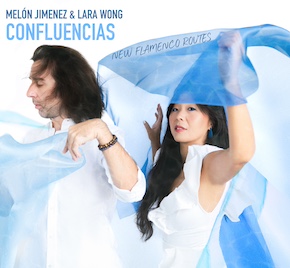
Flamenco is an interesting genre.  It’s journey from India to Southern Spain via the Middle East and North Africa means it has influenced everything from Hindustani classical music through just about the whole Islamic world to its influence on Western classical (imagine Carmen without flamenco) and across the pond to Argentina and tango.  Confluencias; a new Juno nominated album by Lara Wong and Melón Jimenez pays tribute to that global influence with a series of flamenco-jazz numbers inspired by that geographic spread.

Continue reading

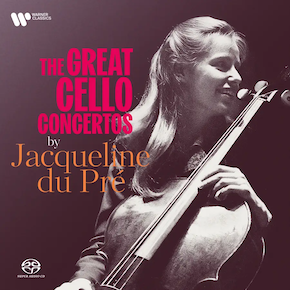
The complete du Pré

I first started to think seriously about the late Jacqueline du Pré when I saw the Woolf/Vavrek opera Jacqueline in 2020 at Tapestry.  Subsequently I listened to the CD release and attended the remount at Tapestry in February this year.  Then I saw that all of her concerto recordings for HMV (back catalogue now owned by Warner Classics) made between 1965 and 1970 had got a major facelift along the lines of the Solti Ring.  The original analogue tapes have been digitized at 192kHz/24 bit using the latest technology and then remastered for SACD.  The result is a four hybrid SACD box set called The Great Cello Concertos. Continue reading

Fauré music for the stage (mostly)

This recording from the National Symphony Orchestra of Ireland and their conductor Jean-Luc Tingaud contains 65 minutes of music; mostly written for the stage, though there are some songs for voice and orchestra.

The first set is based on the incidental music that Fauré wrote for an English language production of Maeterlinck’s Pelléas et Mélisande given in London in 1898.  There’s a four movement suite and a bonus in “Mélisande’s song” from Act III Scene 1 sung here by Tara Erraught.  It’s really tuneful, pleasant music that evokes the piece well.  I particularly liked the third movement  “Sicilienne” which features a wistful harp melody and the song which is sung with beauty and clarity. Continue reading

Schubert’s Four Seasons

Schubert’s Four Seasons is a recital disk on the BIS label by soprano Carolyn Sampson and pianist Jioseph Middleton.  It contains a generous 75 minutes of music made up of twenty Schubert songs about the seasons and nature generally (also death… there’s lots of death).  Most of the songs are less well known ones but there are some more frequently heard one likes Die Forelle, Im Frühllind and Der Hirt auf dem Felsen (which also features Michael Collins on clarinet).

Continue reading

joy & asymmetry

joy & asymmetry is a new recording from the Helsink Chamber Choir and their conductor Nils Schweckendiek.  It consista of music by Finnish composers Kalevi Aho and Einojuhani Rautavaara, although by no means all the texts are in Finnish.

There’s some interesting music on the recording but a lot of it is relatively stately, layered, polyphony.  That’s not exactly unusual for contemporary choral music and if it’s your thing there’s a lot to like her.  I’ll admit though to finding much of it quite soporific.

Continue reading

Coups de roulis

One might be forgiven for thinking that French operetta ended with Offenbach since, outside of France anyway, nothing much gets performed.  However, the tradition continued.  Reynaldo Hahn, for example, produced Ciboulette in 1923.  Another has now come my way.  It’s an audio recording of Andrê Messager’s 1928 work Coups de roulis.

It’s set on a French battleship, the Montesquieu in the Mediterranean.  Christmas leave has been cancelled to allow the visit of the High Commissioner M. Puy-Pradal on a cost saving expedition.  He is accompanied by his daughter Béatrice who is his secretary.  Both the ship’s captain Gerville and a young officer Kermao fall in love with Béatrice. During a party given during a courtesy visit to Egypt Puy-Pradal forms a liaison with the aspiring actress Sola Myrrhis who believes Puy-Pradal’s influence can get her into the Comédie-Française. He accompanies her on her Egyptian tour.

Continue reading

Greene’s Jephtha

Fourteen years before Handel’s 1751 work Jephtha Maurice Greene produced a different English language oratorio on the same theme and with the same title.  It’s now been recorded by the Early Opera Company.

Thje story is taken from Judges and concerns the recall of Jephtha from exile to lead the Israelite army against an Ammonite invasion (the people from the East bank of the Jordan not the cephalopods).  Jephtha promises Jehovah that if he is victorious he will sacrifice the first creature “of virgin blood” he meets (shades of Idomeneo) which, of course, turns out to be his daughter.  There’s no divine intervention and no happy ending.

Continue reading