
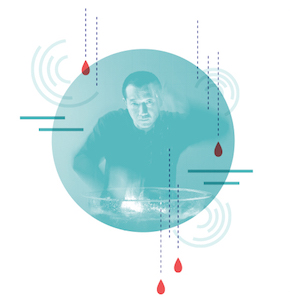
 Tan Dun’s Water Passion After St. Matthew, given last night by Soundstreams at Trinity St. Paul’s is very Tan Dun. The work is in nine movements and scored for chorus, soprano and bass-baritone soloists, violin, cello, electronics and lots of percussion. And bowls of water and rocks. The texts broadly follow the Passion story finishing with a final Resurrection movement in which water is the symbol of rebirth, recycling and spiritual completeness. There are also ritual elements. Bowls of water laid out in a cruciform pattern are lit from beneath. The musicians change position and the players, especially the percussionists, perform hieratic gestures with the water bowls and their contents. It also involves a complex and dramatic lighting plot.
Water Passion
Reply
 This year’s Toronto Summer Music Festival runs from July 12th to August 4th and, in commemoration of the 100th anniversary of the end of WW1 is war themed, though to be honest it wears it pretty lightly. As always there is one big vocal star. This year it’s German tenor Christoph Prégardien. He has a recital at Walter Hall with Julius Drake at 7.30pm on July 17th. He also pops up on the 20th at the same time and place to sing Schubert’s Die Forelle with Stephen Philcox in a program that features chamber music by Schubert, Shostakovich and Rachmaninoff. There’s no word on public masterclasses but he’s around for a few days so I suspect that something will emerge.
 FAWN Chamber Creative have just announced their latest project, Belladonna. It’s a queer chamber work blending techno and opera. The libretto and dramaturgy are by UK LGBT specialist Gareth Mattey. Music composition, arrangement and performance will feature modular synth artist
 operaramblings