Zoraida di Granata

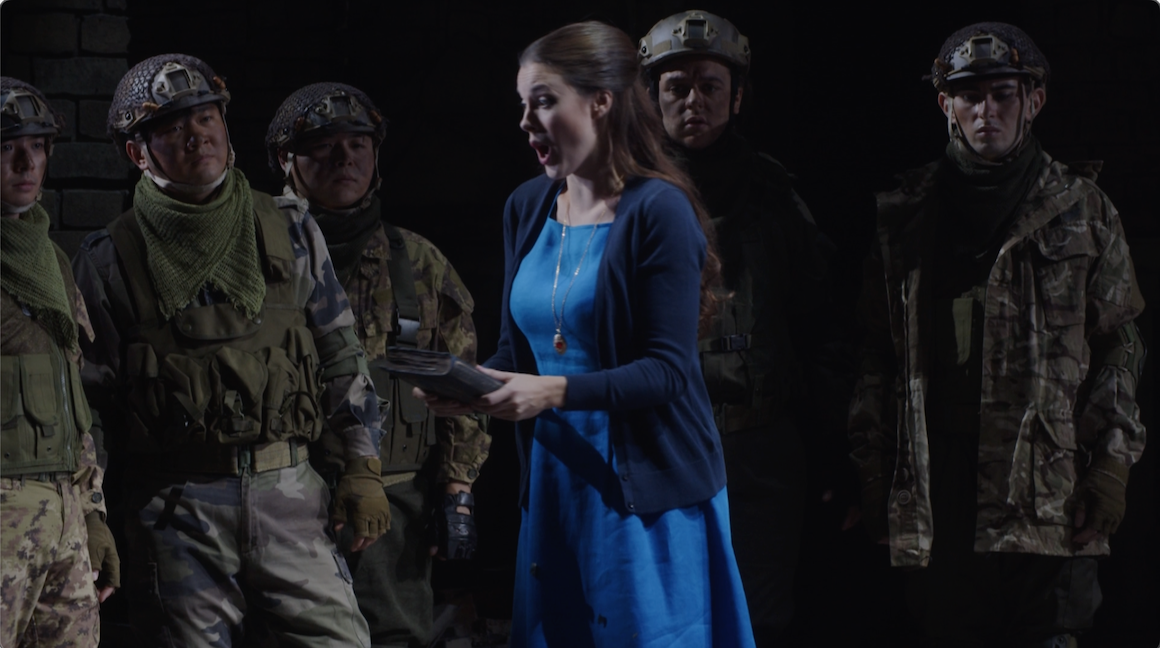
Zoraida di Granata is an early serious opera by Donizetti.  It’s set in Muslim controlled Granada in 1480.  The city is under siege by the Spanish and the usurper Almuzir is in control and wants to marry Zoraida, daughter of the former king, but she’s in love with Abenamet, leader of the aristocratic and warlike Abencerrages.  Almuzir makes Abenamet commander in chief of his army and entrusts him with a sacred flag.  If he returns victorious and with the flag he gets Zoraida but if he loses the flag he’ll be executed as a traitor.  Naturally Almuzir has arranged for his sidekick, Ali, to betray the flag to the Spanish.  The victorious hero is going to be executed but Zoraida promises to marry Almuzir if he spares Abenamet.  Then the lovers meet secretly and after the statutory rowing about Zoraida betraying him Abumet exits.  But Ali has overheard the conversation and gets Zoraida sentenced to death for treason.  Only a knight showing up to defend her in trial by combat can save her (that again!).  Of course it’s Abenamet in disguise and he beats Ali who fesses up.  The clan want to kill Almuzir and Ali but Abenamet forgives them and in return gets the girl.
Continue reading

Le siège de Corinthe

Le siège de Corinthe is a 1826 reworking, for Opéra de Paris, of Rossini’s earlier Maometto II so besides, of course, being in French it is restructured as a three act tragédie lyrique with a substantial ballet in Act 2.  The plot is straightforward enough.  It’s the mid fifteenth century.  Mahomet II is besieging Corinth but unknown to him the king, Cléomène’s, daughter Palmyra is the girl he fell in love with during an incognito trip to Athens.  Cléone has promised Palmyra to his top warrior Néoclès.  After Corinth falls Mahomet promises clemency to the Greeks as long as Palmyra marries him.  She agrees and is cursed as a traitor by her father.  The marriage doesn’t happen for various reasons and Palmyra flees to the camp of the once again revolting Greeks.  When they are defeated for a second time she commits suicide rather than submitting to Mahomet.

1.bottles

Continue reading

Il Turco in Pesaro

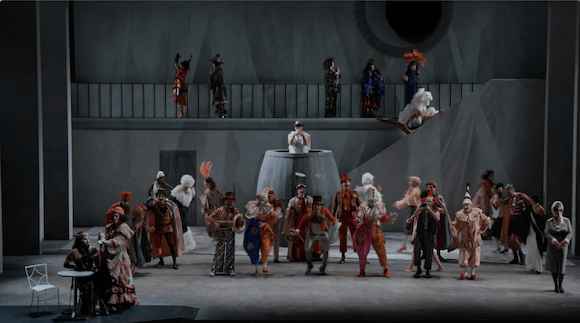
Rossini’s Il Turco in Italia isn’t performed (or recorded) all that often despite being well constructed and amusing in a thoroughly silly way.  Perhaps it’s just too difficult/expensive to cast?  It requires a bass or bass-baritone of great flexibility plus a top notch Rossini soprano and two tenors with genuine high notes plus several other soloists.  Who knows?  Anyway it was given at the Rossini Festival at Pesaro in 2016 and recorded for video.

1.gypsies

Continue reading

La morte d’Orfeo

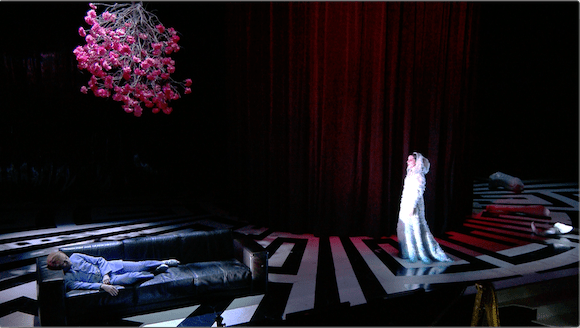
Stefano Landi’s La morte d’Orfeo of 1619 is interesting for several reasons.  It’s one of relatively few operas from this early in the history of the art form that we have enough information on to perform.  It was also written in and for Rome so it reflects the clerical influences of that environment rather than the more secular Venice of Monteverdi.  It’s also an unusual take on the Orfeo legend.  It takes off from where Monteverdi and many others leave off.  Euridice is dead, for good this time, and the opera deals with the balance of Orfeo’s life.  Briefly, he is heartbroken and renounces Pleasure; including wine and women.  He compounds this by not inviting Bacco to a birthday celebration attended by most of the other gods.  Bacco and his female followers are not pleased.  Orfeo is torn to pieces by the Maenads.  Orfeo is quite OK with this because now he will be united with Euridice but Charon refuses to take him; a demi-god, across the Styx.  Mercury fetches Euridice from the Elysian Fields but she has drunk from Lethe and doesn’t recognise him.  She’s quite clear that she wants nothing to do with this so-called Orfeo.  Giove makes it up to Orfeo (who also drinks the water of Lethe and forgets Euridice) by making him into a constellation and all the gods rejoice.  (for consistency’s sake I’ve used the Italianised versions of the Roman versions of the various Greek characters in the same way as the libretto).

1.orfeoeuridice

Continue reading