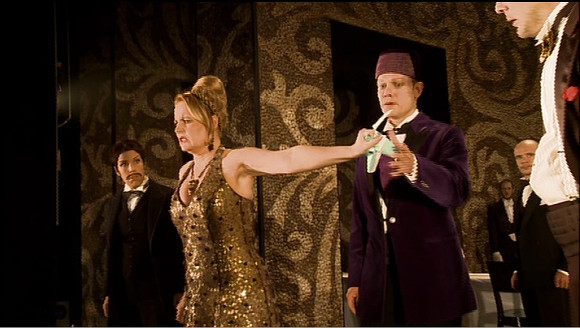
Handel’s Partenope is a bit unusual. It feels lighter than a lot of Handel’s Italian operas and it is basically a romcom, albeit one that still has a vaguely classical setting. Handel also plays with opera seria conventions by, for example, writing “heroic” arias for non-heroic texts and putting accompagnato in odd places. The number of potential match ups that need to be tracked is fairly staggering. Basically everybody is in love with, or pretending to be in love with, Partenope, queen of Partenope aka Naples. These include the invading prince of Cumae, Emilio; Arsace, prince of Corinth; Armindo, prince of Rhodes and Eurimene, an Armenia who is really Rosmira, princess of Cypress and formerly betrothed to Arsace. The only character who isn’t in love with Partenope is the philosophical captain of the guard, Ormonte, who is easy to spot as he’s a bass. At the start of the piece Partenope is in love with Arsace but Eurimene/Rosmira isn’t having that and engineers a duel with Arsace. This takes most of two acts but it’s the only essential bit of plot. In Act 3 Arsace, who really doesn’t want to fight his former fiancée finally comes up with the wizard wheeze of demanding that the duel be fought bare chested. Apparently this was perfectly normal under Neopolitan duelling conventions. maybe it’s what gave Patrick O’Brian the idea of having Stephen Maturin always duel bare chested? Anyway the modest Rosmira isn’t about to do any boob flashing (somewhat ironically as Inger Dam-Jensen, in the title role, has been bosom heaving with the best since the overture) so confesses to being, shock horror, female. Arsace and Rosmira are reunited and Partenope awards herself as a consolation prize to Armindo. Got that?
 Continue reading →


 operaramblings