Moonlight Schooner

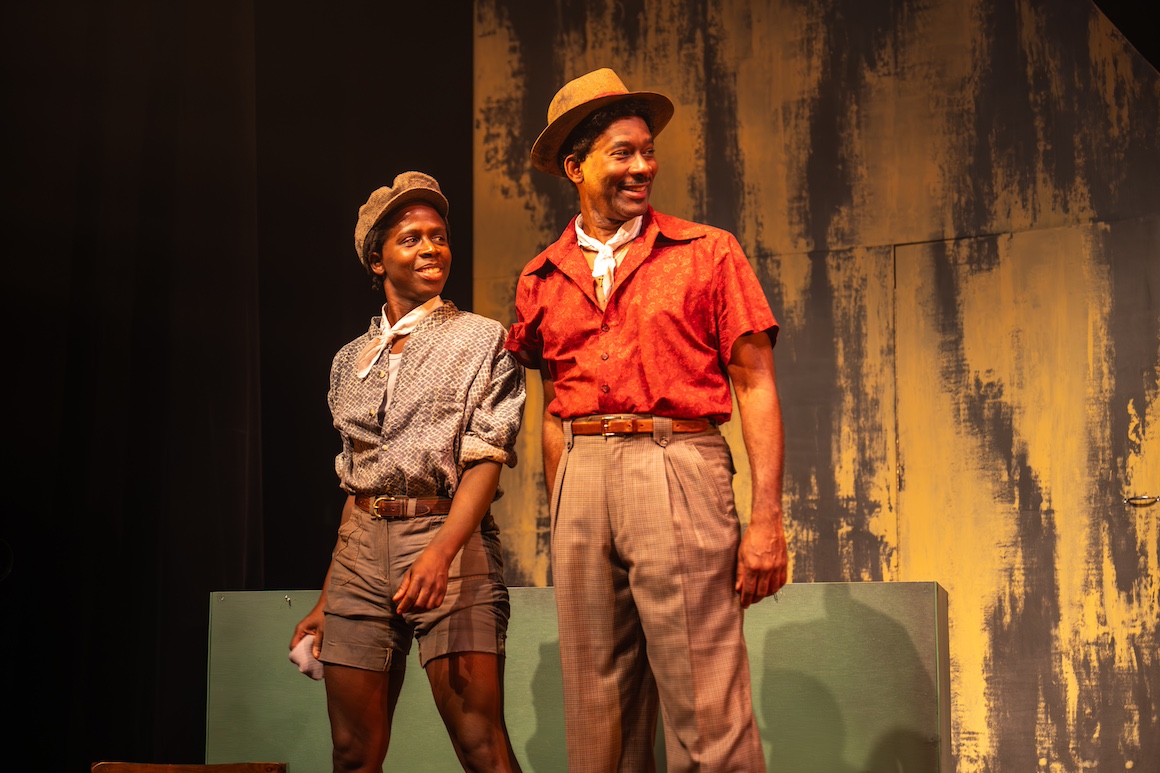
Moonlight Schooner, by Kanika Ambrose, is currently playing at the Berkeley Street Theatre in a production directed by Sabryn Rock.  It’s set on May Day 1958 and a group of Black sailors have been stranded on St. Kitt’s by a storm.  It being a holiday they decide to have a night on the town.

Continue reading

GGS Carmélites delivers

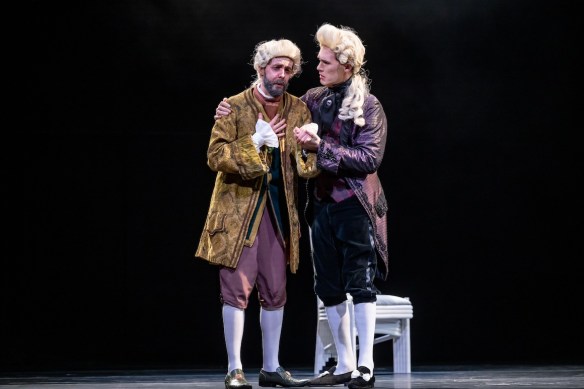
Poulenc’s Dialogues des Carmélites is a very unusual opera.  It breaks all the rules and yet, done well, is an immensely compelling piece of music theatre.  There are no show stopper arias.  The ensemble numbers are mainly drawn from Catholic liturgy.  And yet it maintains a coherent and compelling narrative arc that builds steadily to an emotionally devastating conclusion.  The Glenn Gould School’s current production at Koerner Hall directed by Stephen Carr gets all the elements right and makes for a memorable evening at the opera.

RCMDiadesCarmelites--photobyDahliaKatz-17

Continue reading

work.txt

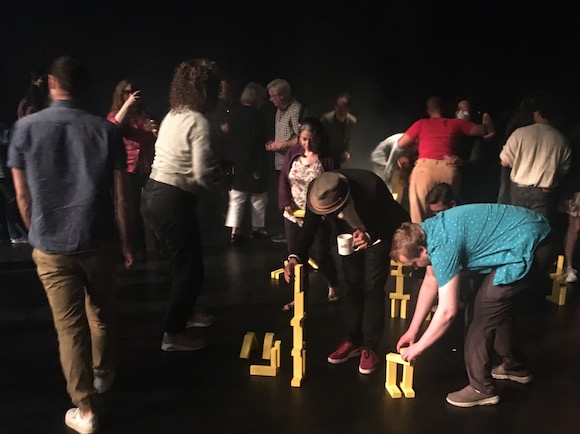
work.txt by Nathan Ellis is an interactive, participatory theatre piece that explores work. art and the end of the world.  There are no actors, except for the audience and whoever is pushing the buttons that move things along.  There’s a computer screen.  It instructs the audience what to do, what to say, what to sing.  It asks for volunteers.  But the volunteers don’t know whether they will be given a task that lasts seconds or whether they will play a major role in the unfolding drama.  One volunteer becomes the principal protagonist of the show.  They alone have a name.  But I’m jumping ahead.  First we must create the city where millions go to places called “workplaces” to do stuff called “work”.  We do this with Jenga blocks.  It’s fun and looks cool.  But back to our protagonist.

building

Continue reading

Inspirations

Last night’s Toronto Summer Music concert at Koerner Hall featured two works played by the TSM Festival Orchestra conducted by Nicolas Ellis .  The first was Keiko Devaux’ Arras.  It’s a sort of tone poem for chamber orchestra.  The base material is drawn from Keiko’s family’s musical and other heritage; agriculture, weaving, plainsong, Buddhist chant, chansons, Japanese-American pop and so on.  Samples are rewoven, looped, distorted etc and mixed to form a “tapestry” (hence the title).  The effect is quite hypnotic and rather soothing though there’s not much to get a “handle” on, which may be the point.

3 TSM 20220728-Z50_1011

Continue reading

Songs From the House of Death

Songs From the House of Death is a new song cycle for mezzo-soprano and orchestra by Ian Cusson.  It was premiered in April by Krisztina Szabó and the Vancouver Symphony Orchestra.  It’s a setting of three texts from Joy Harjo‘s How We Became Human.  Ian has a knack of finding really strong texts by Indigenous poets and these are no exception.  The longest (13 minutes of the 23 minute work) is “Songs From the House of Death; Or How to Make it Through the End of a Relationship”. This is an evocation of death and impermanence and memory.  The setting is very varied.  The opening pizzicato strings are barely audible but it rapidly builds to blend densely orchestrated (it’s a big orchestra) and very high energy music with much gentler and more lyrical passages; sometimes using the concert master as a soloist.  This fits the changing moods of the text and, as I’ve come to expect with Ian, the music is always rooted in the text.

szabovso

Continue reading