
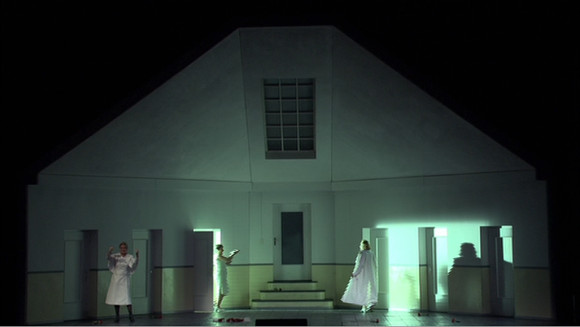
Paul Dukas’ Ariane et Barbe-bleue is a setting of a libretto by the symbolist poet and playwright Maeterlinck. It’s roughly contemporary with both Debussy’s Pelléas et Mélisande and Strauss’ Salome. It shows. It really is a product of a particular fin de siècle world view. Like Debussy’s piece, Ariane is loosely based on a folk tale. In this case it’s the gory story of Duke Bluebeard and his six wives but here it’s curiously etiolated. It’s as if Maeterlinck is reacting to the ultra-realism of, say, Zola, by retreating into a strange inner world. It’s not even the troubled inner world of Freud or Jung either. It’s colourless (and we’ll come back to that). All this is reinforced by Maeterlinck’s style of telling rather than showing. Much of what “action” there is takes place off stage and is narrated by the on stage characters. Both words and music are used to fill in the gaps.
Beyond pale
Reply
 operaramblings