
 Olivier Py directed a production of Stravinsky’s Le Rossignol at the Théâtre des Champs Élysées in 2023 and a live recording was made for CD. The Nightingale is sung by soprano Sabine Devieilhe and she is very good indeed. She has pretty much the perfect voice for this role with its coloratura sections and very high tessitura. Her voice sounds suitably sweet all the way up and her coloratura is very precise. She’s very well backed up by an all French cast featuring the excellent tenor Cyrille Dubois as the Fisherman and the unmistakable Laurent Naouri as the Chamberlain. Jean-Sébastien Bou also impresses as a suitably tremulous Emperor and there’s a nice cameo from Chantal Santon Jeffery as the Cook. The minor roles are all well sung and French diction is notably good across the board. Continue reading
Sabine Devieilhe impresses in Stravinsky’s Le Rossignol
Reply
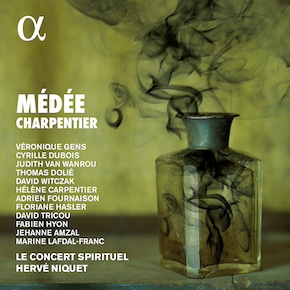 Cherubini’s Médée of 1797 is undergoing something of a revival at the moment albeit in an Italian version. But there’s an earlier and less known version of the same story with a libretto by (as opposed to based on) Corneille. It’s Charpentier’s Médée of 1693. It’s a tragédie lyrique with all the expected elements; an allegorical prologue in praise of Louis XIV, a classical subject, five acts, gods, spirits and demons and lots of spectacular theatrical effects. The Lully formula in fact.
 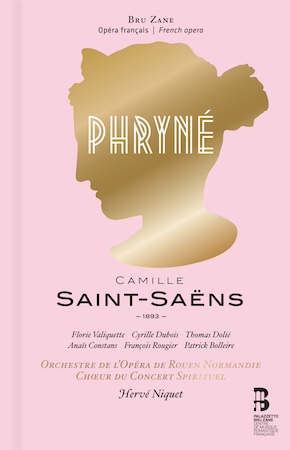 The latest release in the CD/book series from the Palazetto Bru Zane is Saint-Saëns’s 1893 opéra comique, Phryné, loosely based on an incident in the life of the famous 4th century BCE courtesan. It’s a two-act piece lasting about 65 minutes. The original was given with spoken dialogue, but as so often with this genre, recitatives (here added by André Messager in 1896) have been used in this recording, as they were in most contemporary performances.
 operaramblings