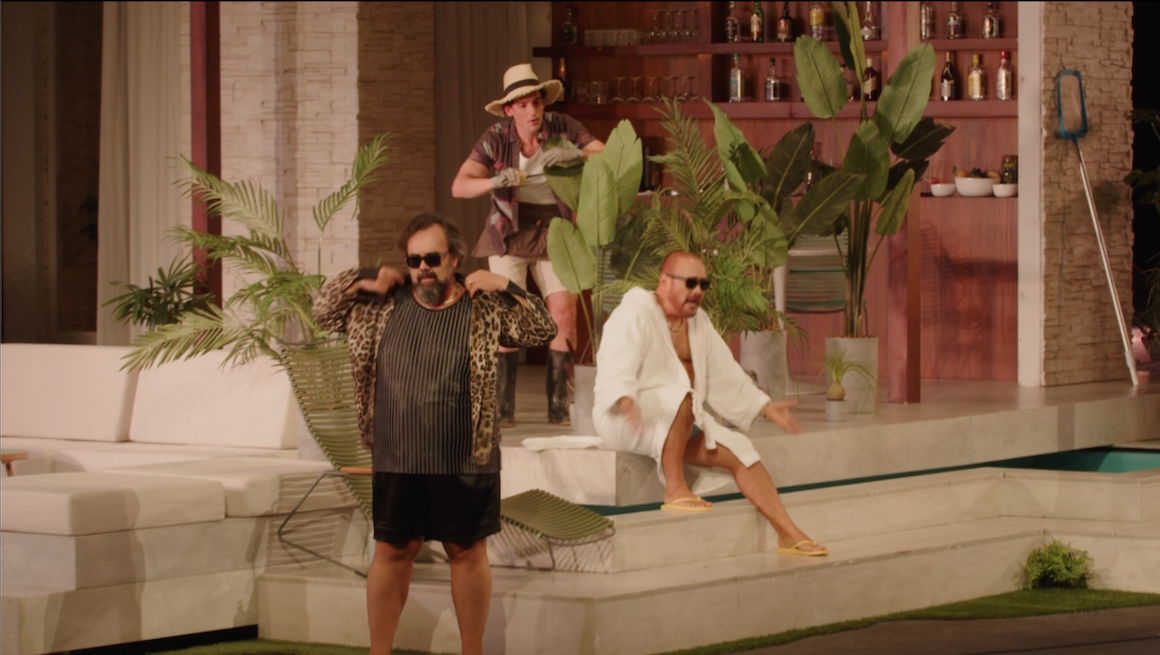
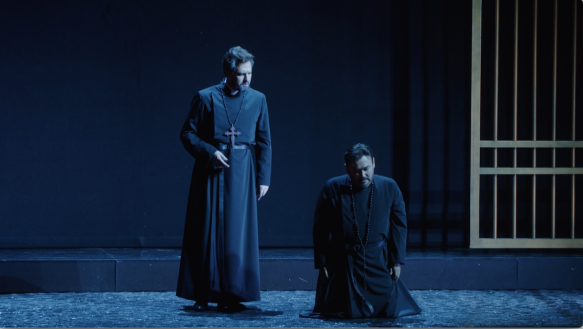
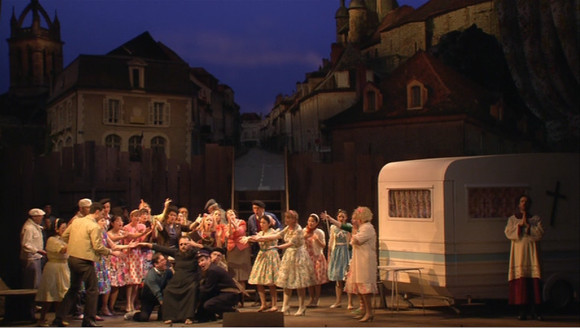
The production of Donizetti’s Don Pasquale recorded at the 2024 Donizetti Festival in Bergamo is lively colourful and, generally, well done. Amélie Niermayer’s production is essentially contemporary with a heavy emphasis on class difference between the relatively upscale Pasquale clan and the Malatestas who are shown as some sort of Italian equivalent of “Essex man”. Doctor Malatesta has tattoos and wears a heavy gold chain and when we first see Norina she’s in braids, a T shirt, fishnets and also sports tattoos. Her taste doesn’t improve much after the “wedding”. In contrast, Ernesto is more stylish and less of a dweeb than in other productions I’ve seen.
Tag Archives: camarena
La favorite
So here goes with a video recording of one of those 19th century Paris operas that nowadays, if they get done at all, tend to get done in an inferior Italian version. We are talking Donizetti’s 1840 opera La favorite written for l’Opéra de Paris. The recording is of a production given at the Teatro Donizetti in Bergamo in 2022 and it’s clear that both director and conductor have gone to some lengths to get as close to the spirit of the work as possible. I think by and large they succeed.

The other Otello
Just as Rossini’s version of Il barbiere di Siviglia completely eclipsed Paisiello’s version, so Verdi’s Otello sounded the death knell for an earlier version; ironically enough by Rossini. It’s a bit surprising as the Rossini version is not bad at all despite having a rather patchy libretto and being hard to cast. The first thing one notices is that the story isn’t even close to Shakespeare/Verdi. This is because the libretto was based on a French play by Jean-François Ducis that was popular in the 18th century. I don’t know whether the plot’s weaknesses are due to Ducis or the librettist but there are a few. There’s no Cassio so the motivation for Jago’s plotting is unclear. All the Venetian notables (bar perhaps the Doge) hate Otello but Jago doesn’t seem to have any special reason for animosity. Between the end of Act 2 and the beginning of Act 3 Otello is exiled. There is no explanation. The finale is abrupt and weak. Immediately after Otello kills Desdemona the gang of notables burst in to the room and appear to be completely reconciled to Otello and to him marrying Desdemona, despite having spent the rest of the opera chewing chips about this. In fact one could argue that the happy ending variant (yes, there was one) is the more plausible as it would only take the guys to arrive about ten bars sooner for that to be the logical outcome. As it is, Otello listens with incredulity to the change of heart and, not unreasonably, kills himself.
La Comtesse Cecilia
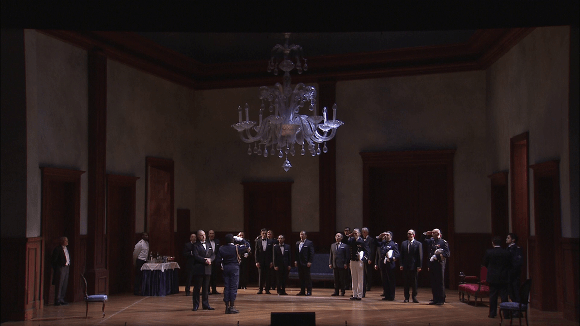
Rossini’s Le Comte Ory is extremely silly. It’s a crazy, gender bending romp with no real substance but plenty of rather crude humour and good tunes. I suspect it’s beyond the wit of any director than do more than make sure the mad cap elements are mad enough but one is, I suppose, bound to try. For their 2012 production in Zürich, Moshe Leiser and Patrice Caurier chose to set the piece in immediately post war France. It works well enough and allows for a few visual gags but it doesn’t really add much to the piece. Nor, though, does it detract.