
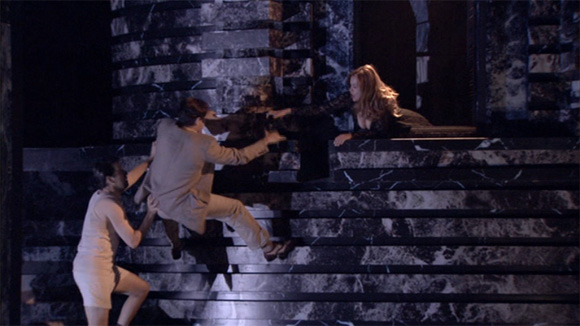
Jonathan Kent’s 2010 Glyndebourne production of Don Giovanni has a great cast and high ambitions but, ultimately, doesn’t really come off, largely because the relationships between the characters too often fall short of anything interesting. The concept, as explained in the two short bonus segments, is that Don Giovanni is set in a society in transition and that the title character is a sort of harbinger of the new mores. The “society in transition” chosen by Kent is a sort of hybrid of Fellini’s La Dolce Vita and the last years of Franco’s regime in Spain. He might have done better to just pick one as the Fellini elements get pretty much reduced to the costumes and the Franco elements really don’t go anywhere.
Gerry Finley’s Don Giovanni
5
 operaramblings