
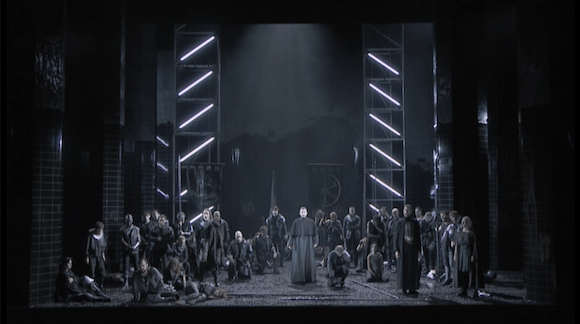
 Saint-Saëns Déjanire, of 1911, was his last opera. The plot is basically the same as Handel’s Hercules. Déjanire is infuriated by Hercule’s infatuation with Iole so he gives him a poisoned robe; itself a gift from the Centaur Charon, which kills him. There are a few plot tweaks. Iole is in love with Philoctète and agrees to marry Hercule to save his life. But, basically classic, simple plot.
Musically it’s tonal and elegant. It was well received by the critics who, correctly, pointed out that it looked backwards to Gluck and Spontini and owed little or nothing to Wagner. Premiering when it did; Petrouchka was playing in Paris and it was two years after the premier of Strauss’ Elektra, it seemed to belong to an earlier period. Perhaps unsurprisingly, in the wake, a few years later, of events louder, more dramatic and more dissonant than any musical composition it rather disappeared from the repertoire. Continue reading
 operaramblings