
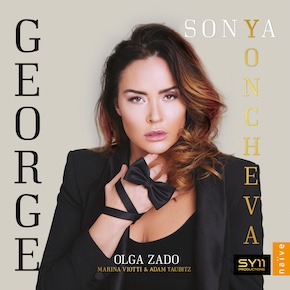
 George is a new CD from soprano Sonya Yoncheva and friends made up of music George Sand would have listened to and some readings fro her works. There’s a particular emphasis on Pauline Viardot; close friend of Sand and sister of Maria Malibran.
The music includes Chopin piano pieces played by Olga Zado, who also accompanies the songs. His Casta diva, based on the Bellini aria, is particularly interesting. There are songs by Leoncavallo, Delibes, Offenbach, Tosti and Liszt as well as piano music and songs by Viardot. On two of the songs Yoncheva is accompanied by mezzo Marina Viotti and Zado is joined by violinist Adam Taubitz for a Viardot Romance.

 I don’t spend a lot of time listening to disks of opera arias. I’s music I much prefer live and in context but right now a dose of good old fashioned verismo tenoring is very welcome! Piotr Beczala’s new CD Vincerò absolutely delivers it. There’s a reason this guy (normally) spends his time commuting between Vienna, Zurich, Salzburg and New York with the odd side trip to Bayreuth. He’s the real deal. There’s power to burn allied to control and proper ringing high notes. His diction is excellent too. There are no unnecessary histrionics, just top class delivery.
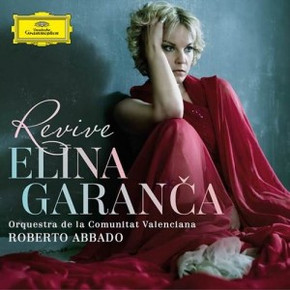 I’ve just been listening to Revive; a new recital disk from Elina Garanča. It marks her move into more dramatic territory as she enters her fifth decade. It also says quite a lot about how she wants to develop her career. There’s a very personal introductory essay titled Strong Women in Moments of Weakness and it seems to me that she’s looking to find her place in the 19th century French/Italian romantic/verismo repertoire as opposed to, say, Strauss or Wagner. Certainly the pieces on the disk represent roles like Eboli, Didon, Delila and Hérodiade, as well as some more obscure stuff like Musette from the Leoncavallo La Bohème and Anne from Saint-Saëns Henry VIII.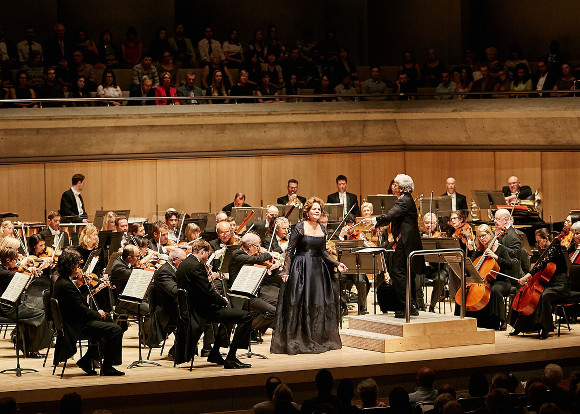
 operaramblings