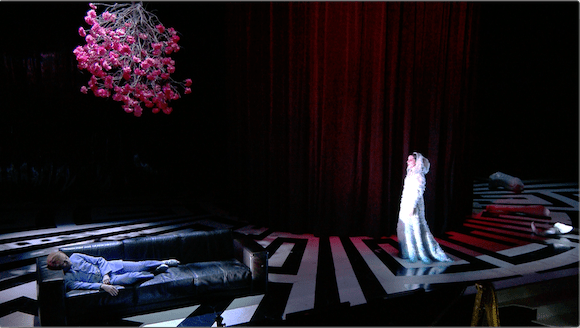
Stefano Landi’s La morte d’Orfeo of 1619 is interesting for several reasons. It’s one of relatively few operas from this early in the history of the art form that we have enough information on to perform. It was also written in and for Rome so it reflects the clerical influences of that environment rather than the more secular Venice of Monteverdi. It’s also an unusual take on the Orfeo legend. It takes off from where Monteverdi and many others leave off. Euridice is dead, for good this time, and the opera deals with the balance of Orfeo’s life. Briefly, he is heartbroken and renounces Pleasure; including wine and women. He compounds this by not inviting Bacco to a birthday celebration attended by most of the other gods. Bacco and his female followers are not pleased. Orfeo is torn to pieces by the Maenads. Orfeo is quite OK with this because now he will be united with Euridice but Charon refuses to take him; a demi-god, across the Styx. Mercury fetches Euridice from the Elysian Fields but she has drunk from Lethe and doesn’t recognise him. She’s quite clear that she wants nothing to do with this so-called Orfeo. Giove makes it up to Orfeo (who also drinks the water of Lethe and forgets Euridice) by making him into a constellation and all the gods rejoice. (for consistency’s sake I’ve used the Italianised versions of the Roman versions of the various Greek characters in the same way as the libretto).
Continue reading →

 operaramblings