
For many years Bavarian State Opera used a production of Johann Strauss’ Die Fledermaus that was created by Otto Schenk and Carlos Kleiber back in the 1980s. It was replaced in 2023 with a new production by Barrie Kosky and Vladiimir Jurowski which was issued on video.
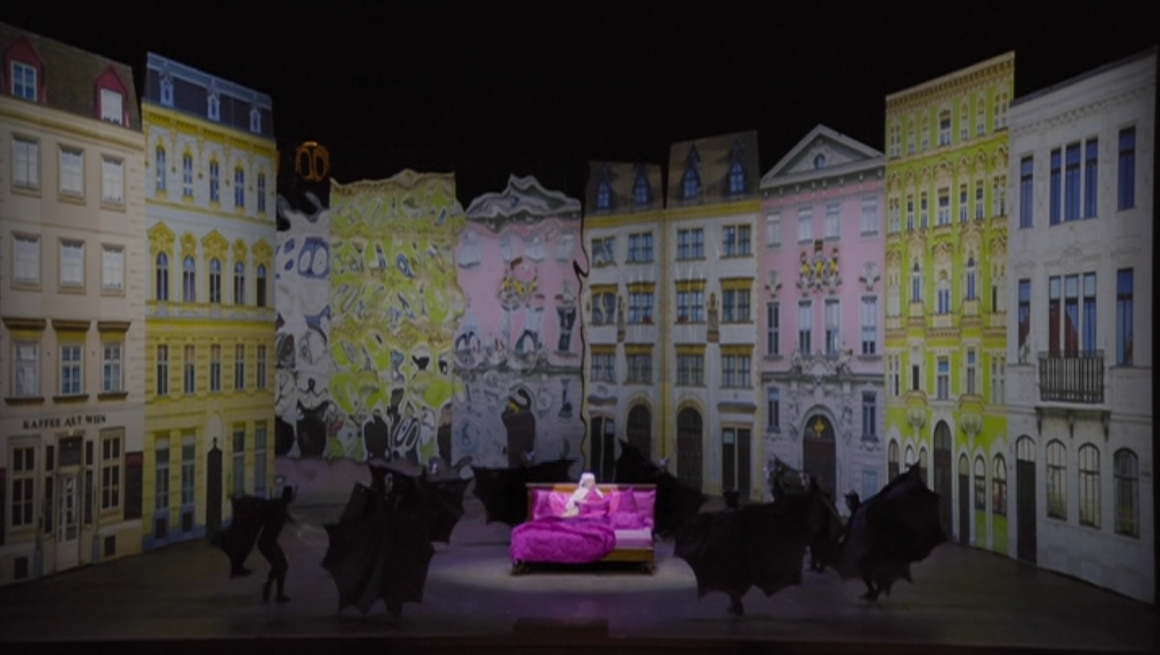
Barrie Kosky has probably directed more German language operettas than just about anybody and he has strong views on them that are broadly shared by Jurowski. You can get a feel for these both in the 10 minute bonus track and in the interview printed in the booklet. One commonality is that both take the genre in general, and Die Fledermaus in particular, very seriously and believe that they should be cast with first rate opera singers. They also share the view that the piece, especially Act 2, is essentially “Dionysian” which means that their concept is “anything goes”. It’s not a conventional bourgeois comedy. There’s homosexuality, cross dressing, eroticism as well, of course, as drugs and alcohol. It’s also “arch” in the sense that everybody has at least half an eye on the audience and its reaction. Plus there’s a hallucinogenic, or extreme fantasy, element. Is any of this real?
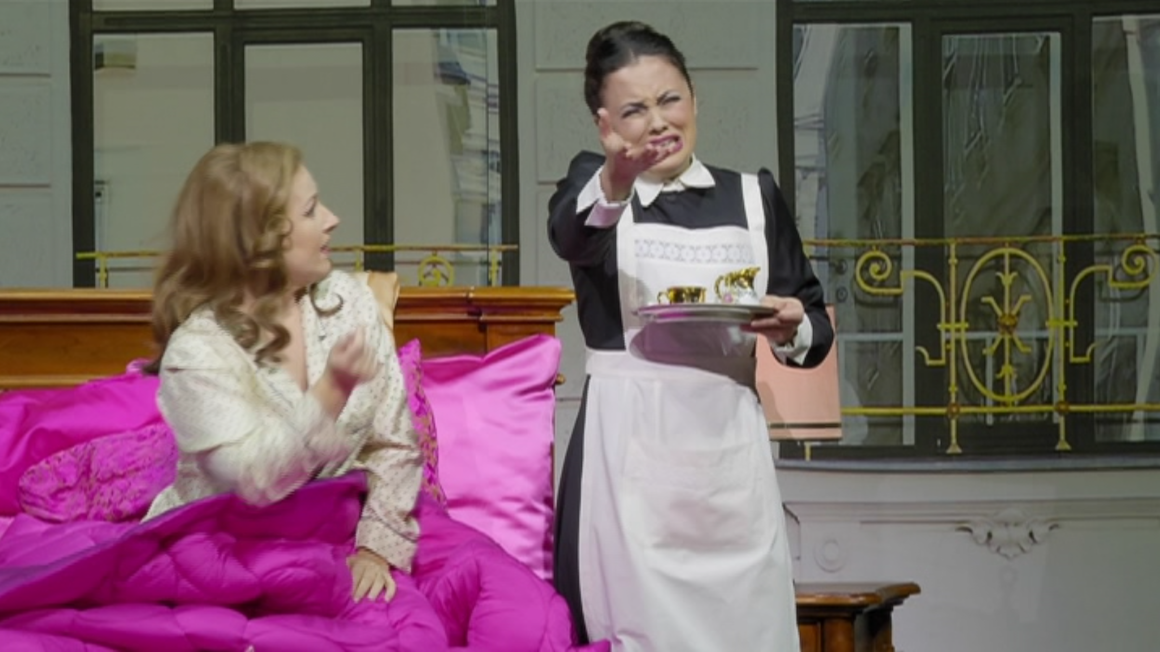
So we start off with Eisenstein, in bed, in the street outside his house, while dancers perform a rather sinister bat ballet. The dancers are really good and play a major contribution all through the piece. Other imagined characters appear; bat waiters and a bat Rosalinde. The “bed in the street” thing persists through the Eisenstein and Rosalinde scene where we get our first look at Diana Damrau. She’s very funny and she still has the high notes. Katharina Konradi also makes a very promising start as Adele. She is very funny and her high notes are great.
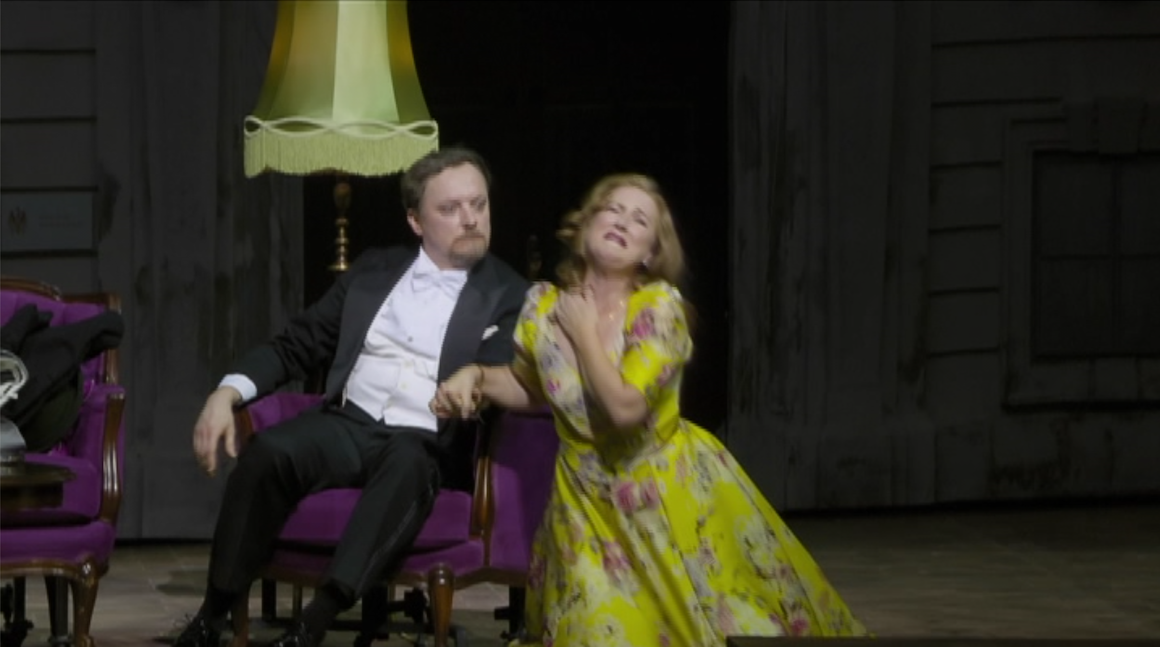
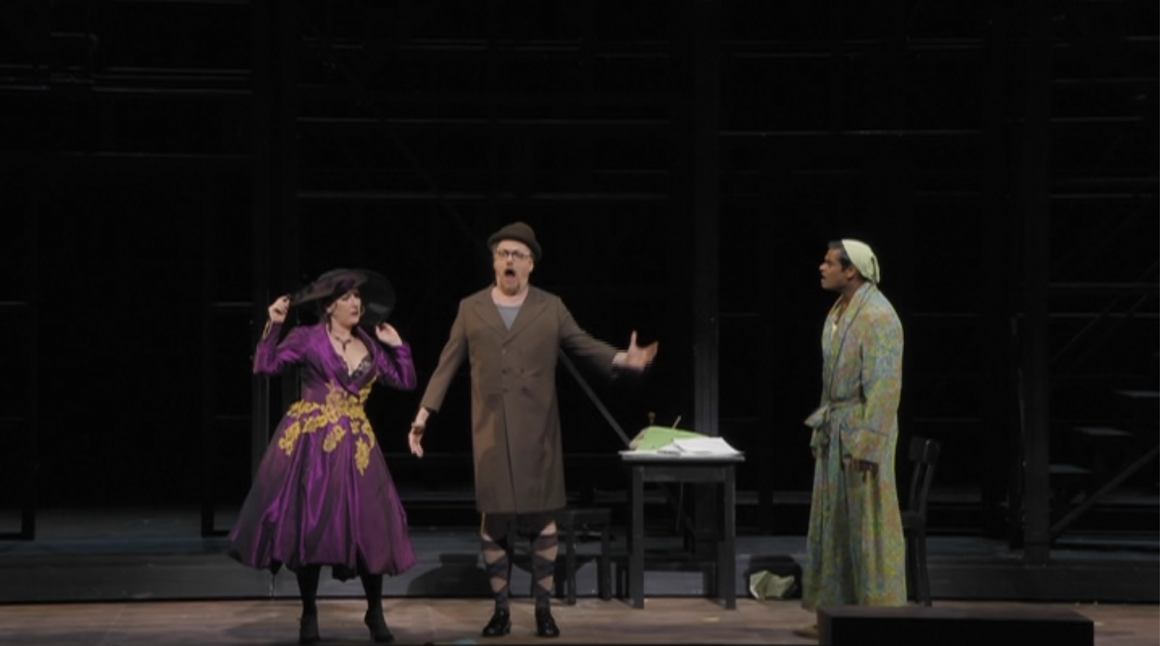
The scene transforms, still in the street, to the Eisenstein’s dining room where Rosalinde and Alfred dine tête-à-tête. Sean Pannikar is also excellent as the annoying tenor. It’s all very fast paced and physical with Damrau and Pannikar having lots of fun both before and after the arrival of Frank. Of course we also have the slapstick scene with Dr. Blind (Kevin Connors) and the context setting by Dr. Falke (Markus Brücke) but it’s mostly setting up things to come. There also appears to be something going on upstage with more bat dancers but it’s really not captured on the video.
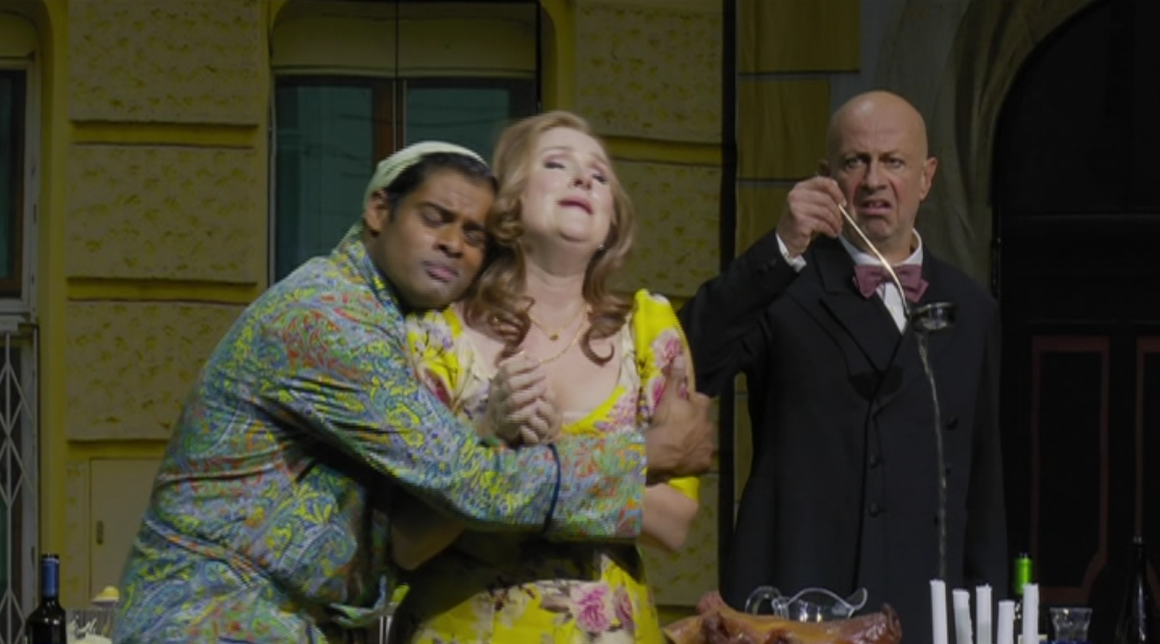
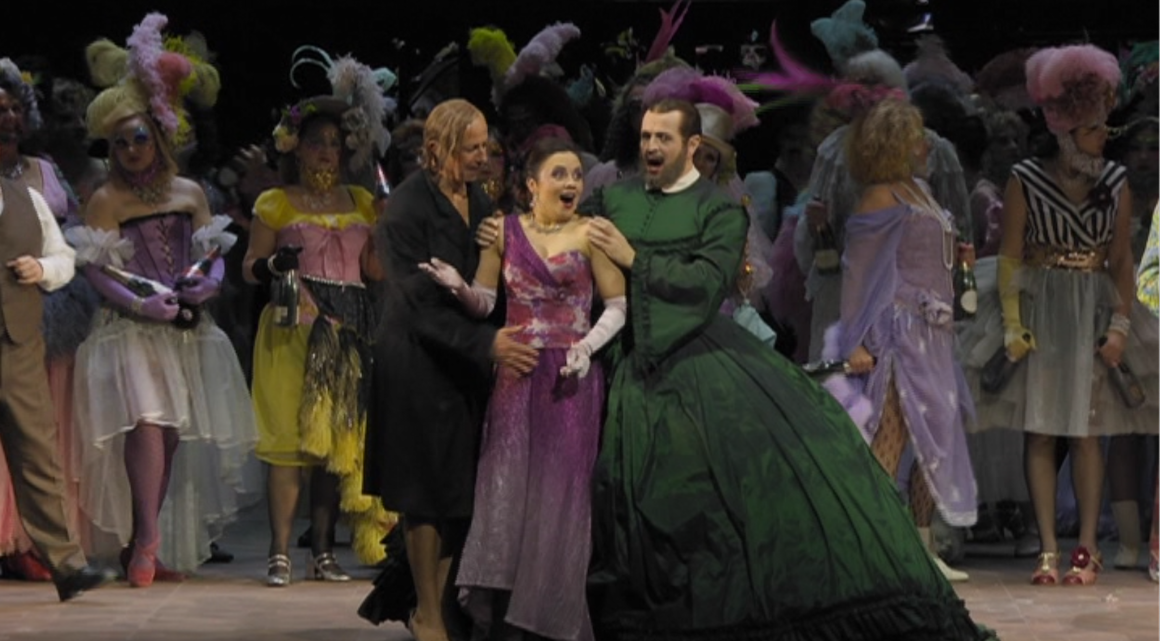
Act 2 is classic Kosky. There are tons of people on stage and it’s all very colourful and very kinetic. It reminded me a bit of his Saul at Glyndebourne though his Cleopatra’s Pearls at the Komische might be a better comparison. Orlofsky is counter-tenor Andrew Watts in a sort of Baba the Turk outfit. The silly scenes between the “chevalier” and the “marquis” are nicely done. Konradi is again excellent and proves a great mover while Miriam Neumaier, as Ida, could have stepped straight out of a Berlin cabaret a hundred years earlier.
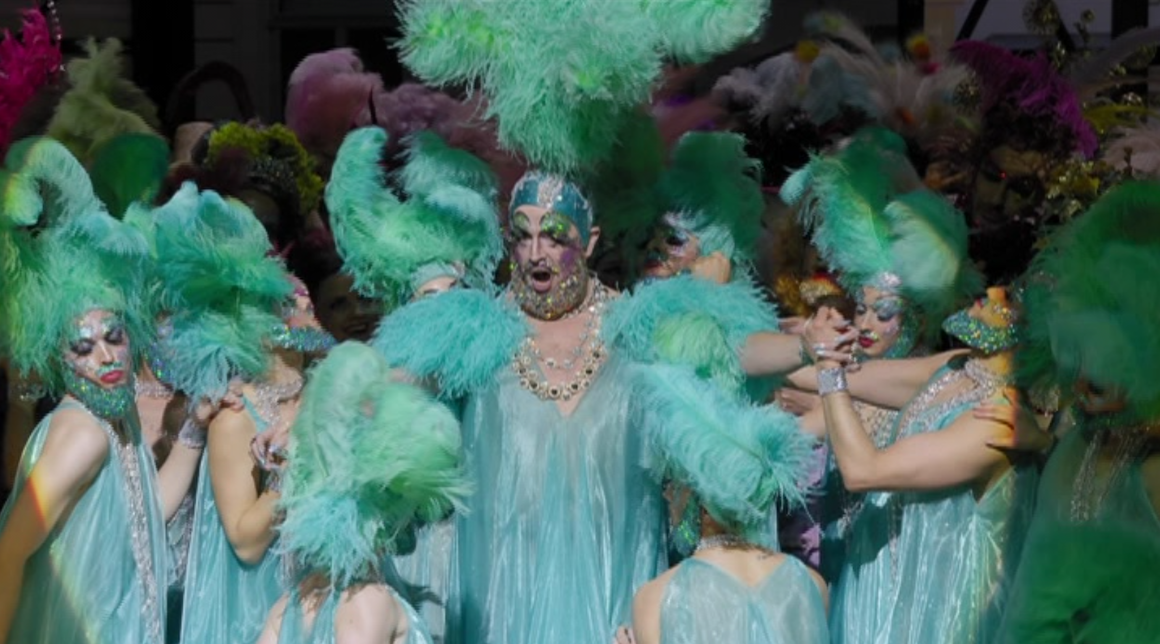
Damrau is brilliant as the “Hungarian countess”. Her singing is splendid; including of course the Csárdás, and she’s really very funny. Watts creates a suitably mad atmosphere and Winkler is more in evidence as the puppet-master. It really does deserve the label “Dionysian” and that’s reinforced by a very frenzied version of the interpolated Unter Donner und Blitz polka; a holdover from the Schenk/Kleiber version. Jurowski gets some really pacey but tightly controlled playing from the orchestra and the chorus is splendid.
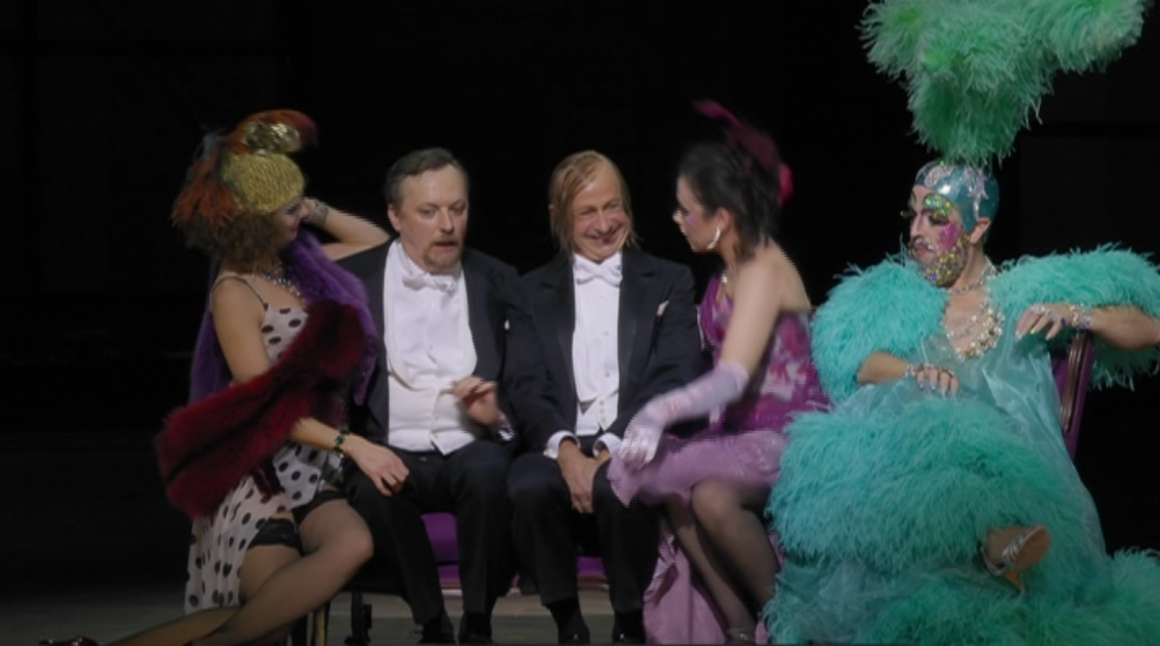
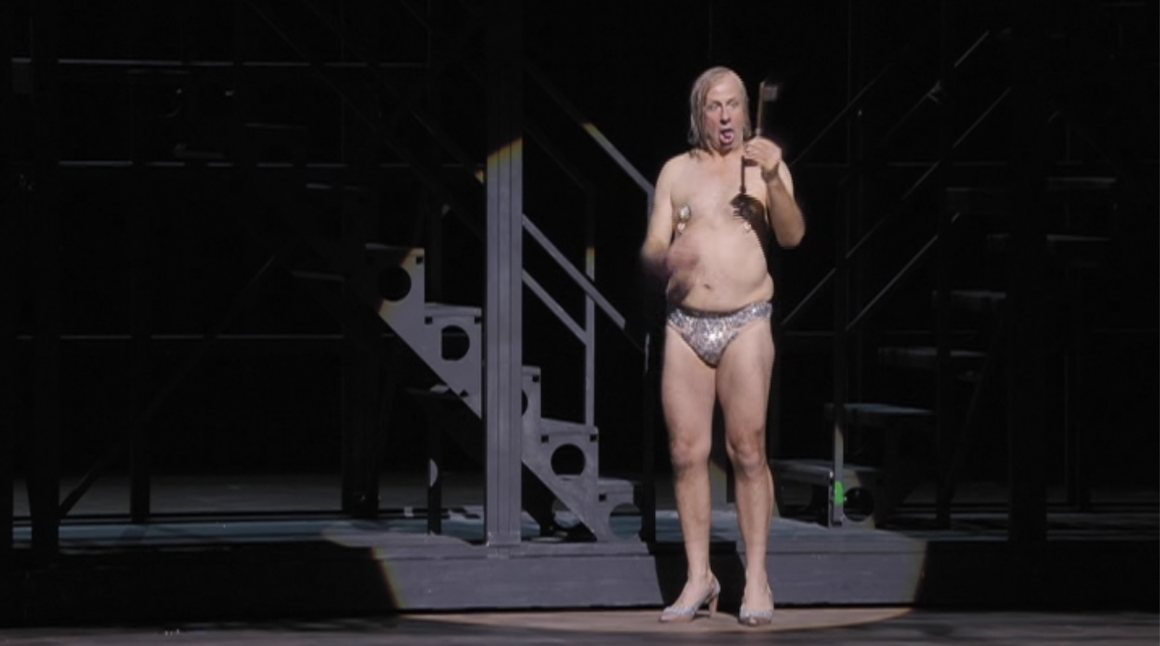
And so to Act 3. Here the set has switched to a maze of skeletal gantries and stairways. There’s the usual interpolated stuff for Frosch (there are actually six of them but only Max Pollak gets to do a comedy routine). He’s a percussive dancer (something of a star in that world apparently) so we get several minutes of tap cheek slapping along with encouraging the audience to join in; clapping along etc. I think I’d need a fair bit of Act 2’s champagne to find this amusing. And then Frank appears in high heels, jewelled panties and pasties and proceeds to rummage around for his keys in his penis pouch. Then he cleans his teeth so that he’s literally foaming at the mouth. All this is spot lit and really rather revolting.
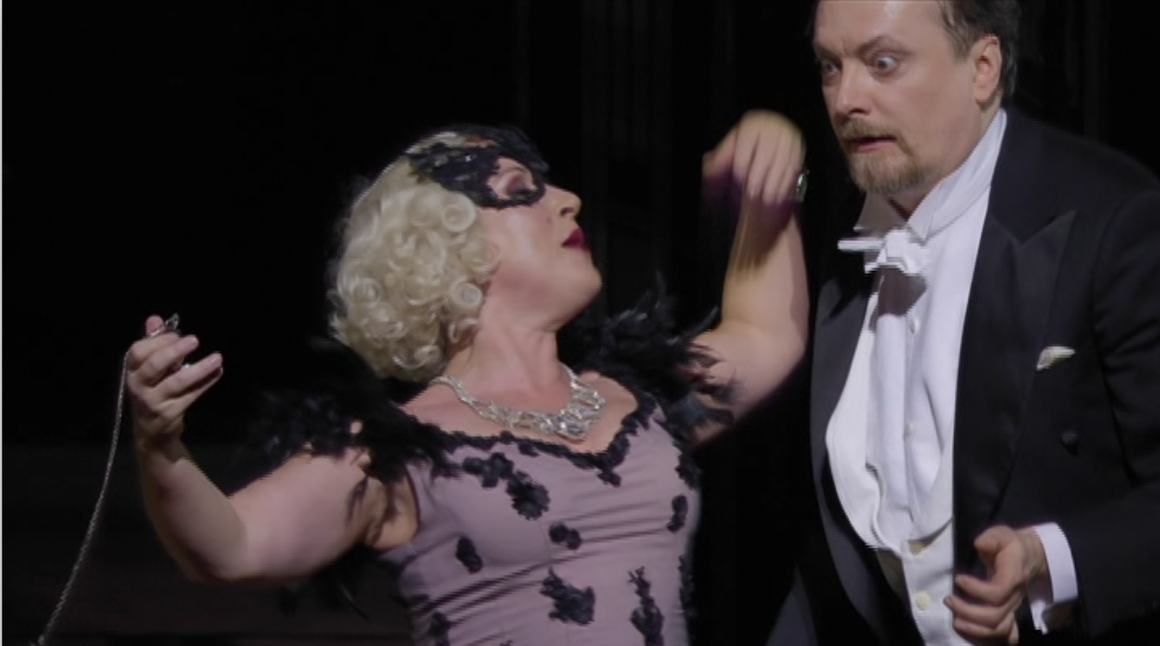
It gets better though when Ida and Adele arrive and Neumaier reveals herself to be rather athletic while Konradi puts on a coloratura display of real quality. The denouement is nicely staged and acted and Damrau, Pannikar and Nigle do a really good job with the Terzett. Watts closes things out very effectively in a rather striking dress.
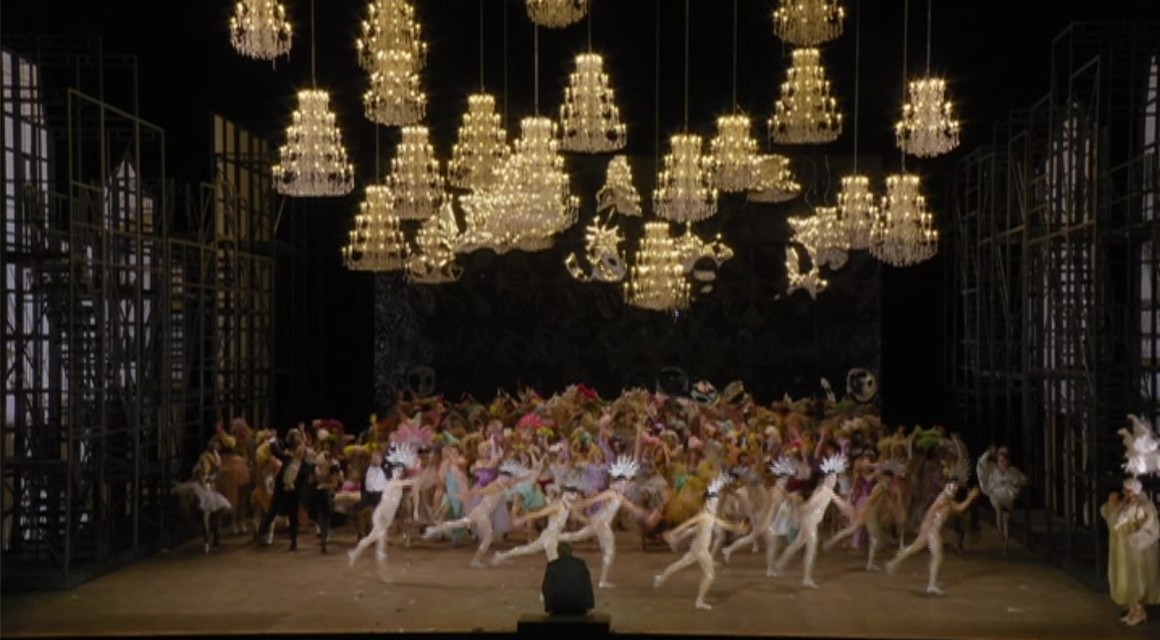
Basically I really like the production apart from the first few minutes of Act 3 which seem to pass for humour in Bavaria. It does what Kosky and Jurowski say they are trying to do. It’s fast paced, wild, Dionysian, colourful and stomps all over bourgeois norms. It also makes excellent use of dance; terrific dancers choreographed by Otto Pichler. The performances, especially, Damrau and Konradi, are really very good.
Video direction is by Myriam Hoyer and it’s OK. I did feel there were too many closeups during the “crowd scenes” in Act 2 and something was clearly missing in Act 1. I watched on DVD (Blu-ray is available) and picture and both stereo and surround sound tracks are fine. Besides the interview already mentioned there’s a synopsis and track listing in the booklet. Subtitle options are German, English, French, Korean and Japanese.
This is an interesting and worthwhile disk but I still think I prefer Stephen Lawless’ Glyndebourne version, also conducted by Jurowski.
Catalogue information: BSO Recordings BSOREC1005
 operaramblings