
Wednesday’s lunchtime concert in the RBA was given by Ensemble Studio graduates Samuel Chan and Rachael Kerr, reuniting for the first time since ES days. Nowadays Sam is Fest at Theater Kiel and the recital was built around his attempt to probe his identity as a Chinese-Canadian performing Western opera for (mostly) Germans. Sam is a pretty deep, thoughtful kind of guy so it wasn’t surprising that this was an unusual and carefully curated recital. It was also quite wonderfully performed.
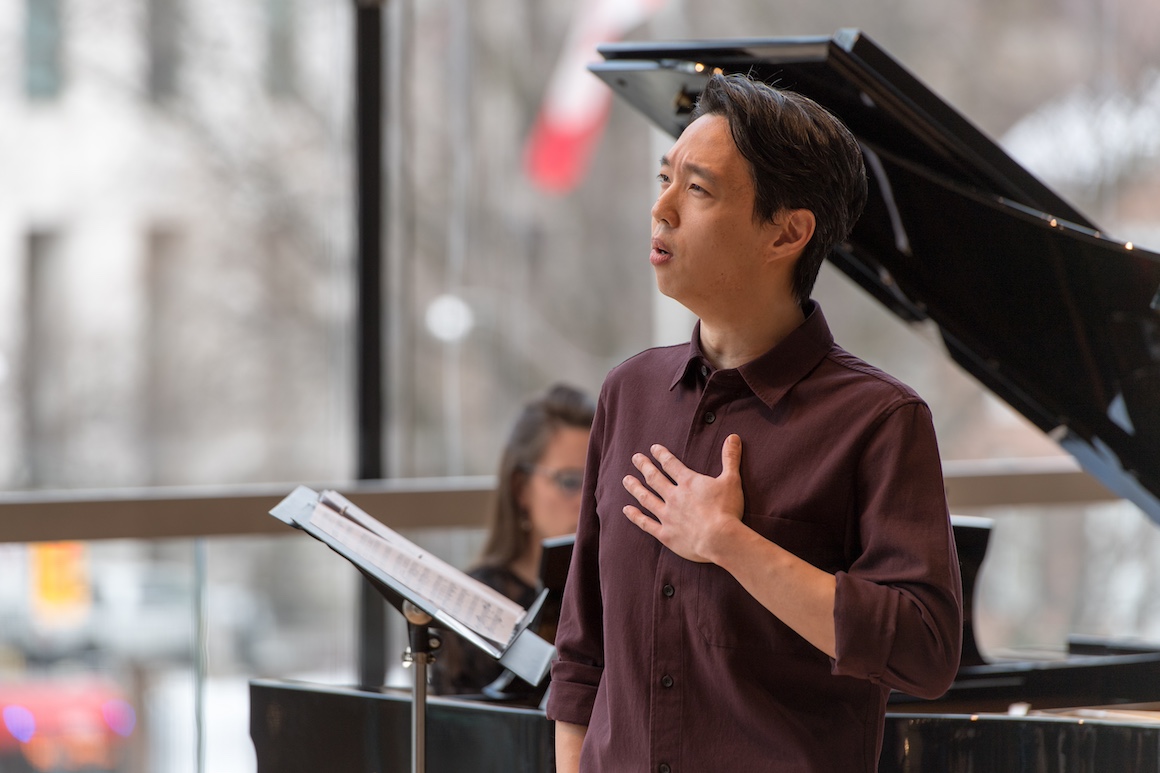
It started with one of the most German imaginable evocations of (Western) music as the highest form of artistic expression; “Blick ich umher” from Tannhäuser which was beautifully sung in impeccable German. Then we got a set exploring early European ideas of China; real or imaginary. Two arias from Vivaldi’s Il Teuzzone (the only work on the programme that was new to me) showed how it was possible to portray an imaginary China without patronising it. Musically the arias are typical very early opera seria demanding considerable athleticism from the singer. On the other hand Purcell’s “Yes Xansi” from The Fairy Queen is thoroughly patronising (it doesn’t help that it’s followed by The Monkey Dance) which surprised me. I had no idea that China impinged on the English consciousness in any significant way in the 1690s. One thinks of English imperial ambition in this period as concerning the Americas (and the African slave trade that buttressed it) with maybe a toe hold in India. In any case, thought provoking.
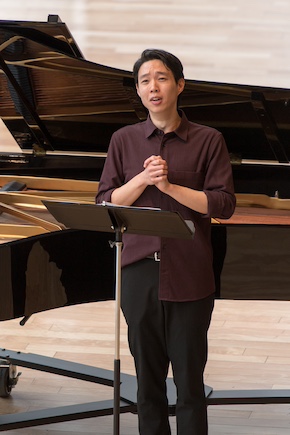 The next set showed a more realistic and sympathetic fusion of cultural traditions with four settings of Tang dynasty poetry. Two, in German translation, from Mahler’s Das Lied von der Erde (much credit here to the 86 piece Rachael Kerr Symphony) and two in English from Alice Ho. Musically ,of course, generations apart but showing similar sensitivity to the spirit of the text.
But just went it started to feel more comfortable Sam threw in two pieces by Western composers that look at class and capitalism as the problem underlying imperialism (Lenin would have liked this bit). First “Wir arme Leut!” from Wozzeck which, inter alia suggests that even if the poor reach Heaven they will be put to hard labour, which was sung with so much passion, and “I am old and cannot sleep forever” from Nixon in China where Chou En Lai muses on whether the revolution really benefited the workers and peasants. Finally we got “Venus of the East” from Tan Dun’s enigmatic Tea: A Mirror of the Soul which probably encapsulates a lot of how non Western sensibilities can find their way into an essentially elitist Western art form.
There’s so much wrong with how Asian characters and societies are presented in Westem opera and, ironically, of course Sam is currently singing in one of the worst culprits; Madama Butterfly. He asked some awkward questions with wonderful musicality and thoughtfulness but didn’t offer any answers. Are there any within the power structures and economic constraints of contemporary Western opera companies? I don’t know either.
Photo credits: Dan Truong
 operaramblings