
Dvořák’s Rusalka seems to be a favourite for directors to give the “high concept” treatment. That’s certainly the case with Philipp Stölzl and Philipp M. Krenn’s production for Dutch National Opera recorded in Amsterdam in 2023.
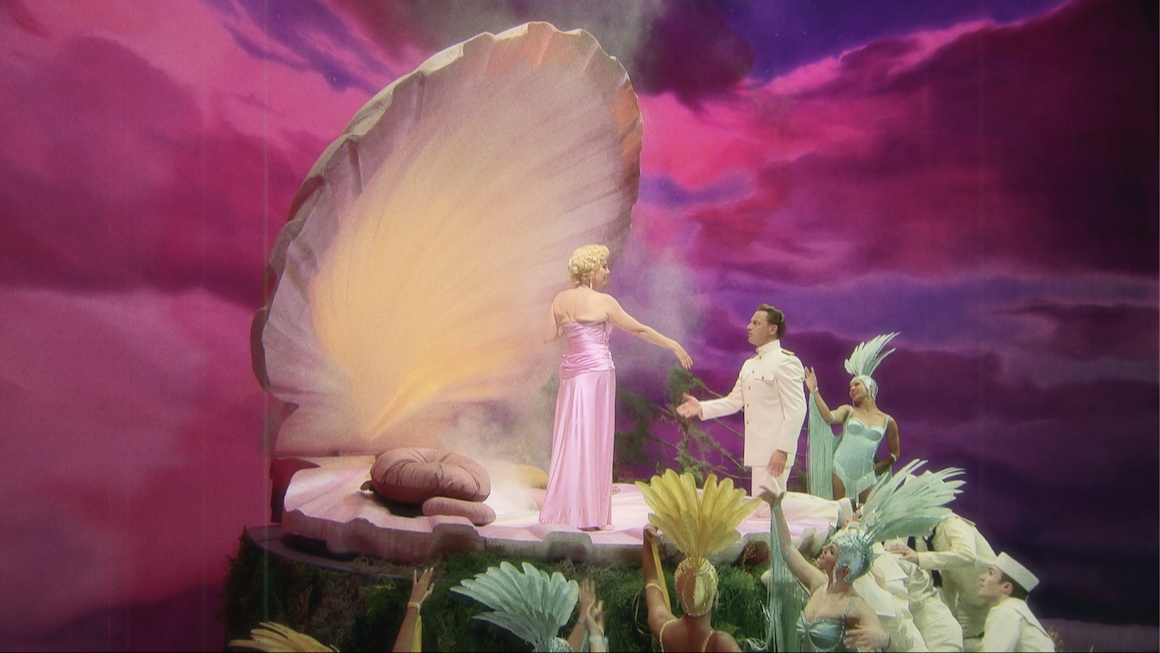
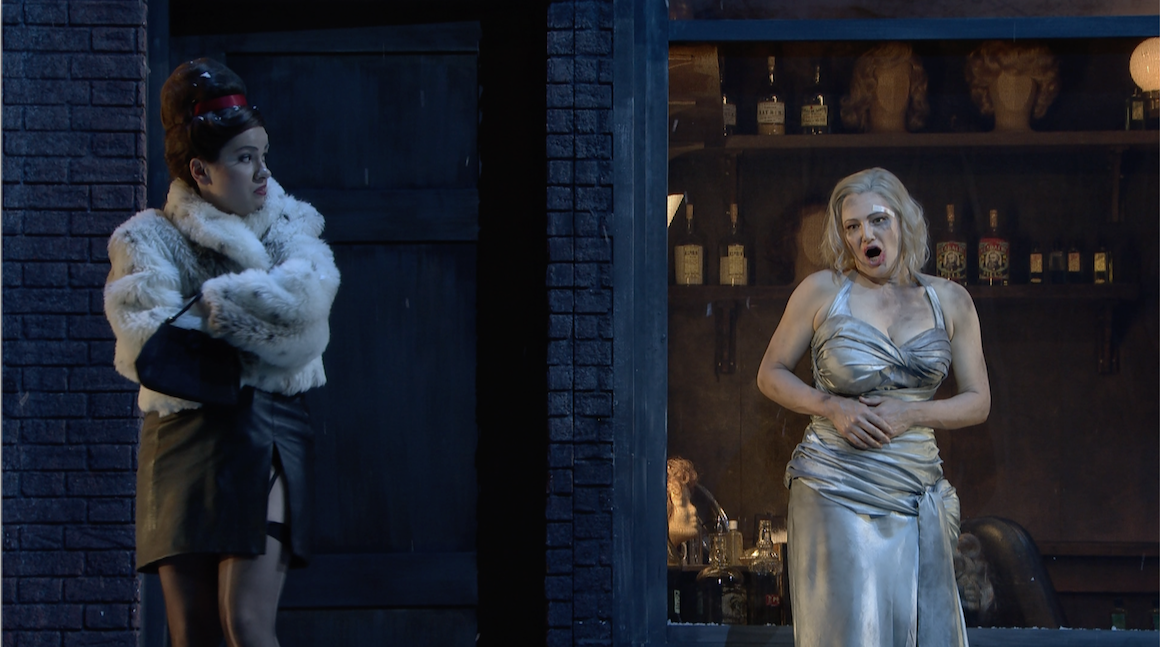
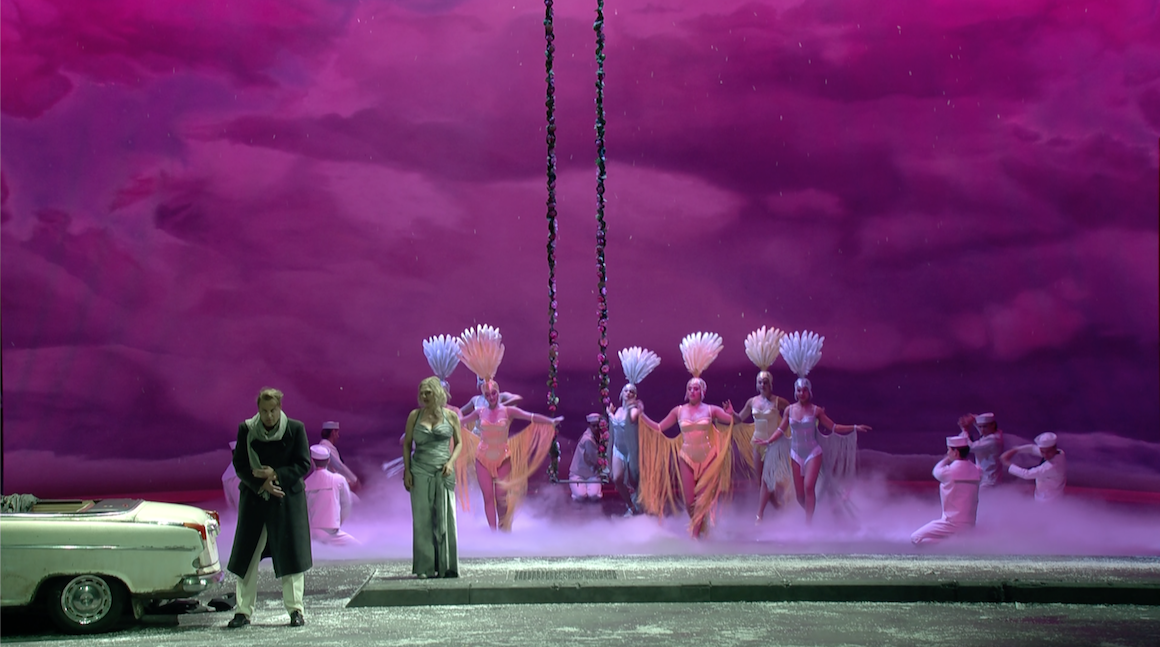
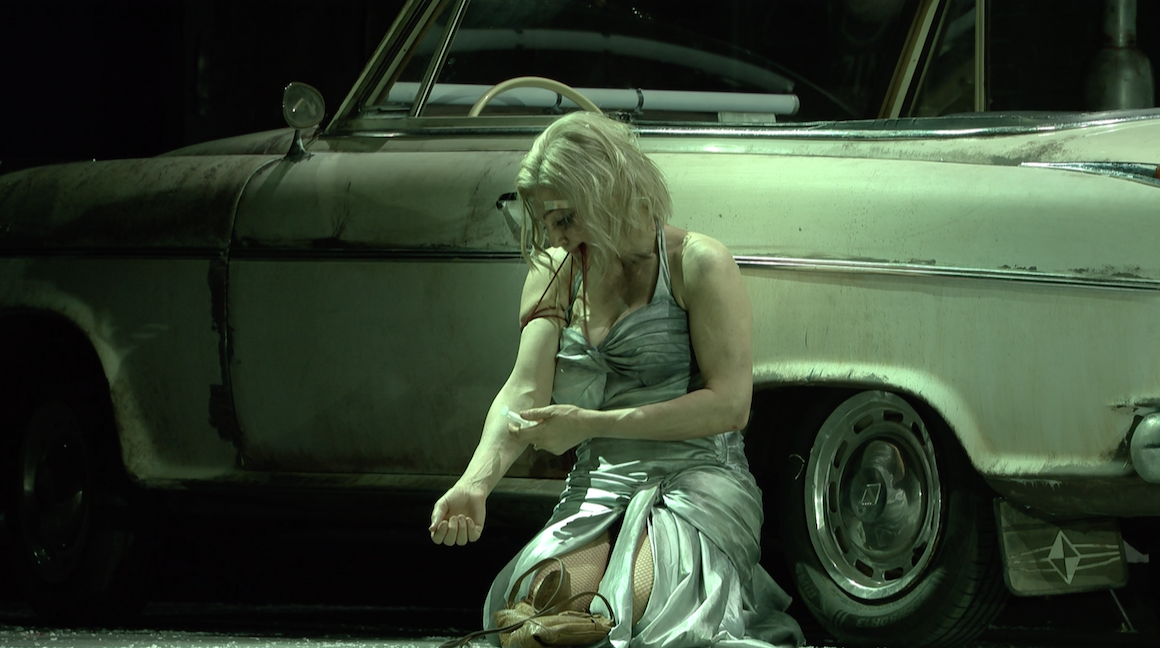
We open with the closing scene of a Hollywood extravaganza; The Prince and the Mermaid. Sailors, dancing girls aerialists doing their thing until the protagonists disappear into a giant clam shell… all in glorious Technicolor. It’s a massive contrast with the cinema exterior; a grimy street in Brooklyn. The water nymphs are prostitutes. Vodnik is their pimp. There are gangsters and plenty of violence. Rusalka is a rather dowdy employee of the cinema with a heroin habit; viscerally demonstrated during “The Song to the Moon”. Rusalka longs for the glamour of Hollywood and for the handsome man who plays the lead in the movie.
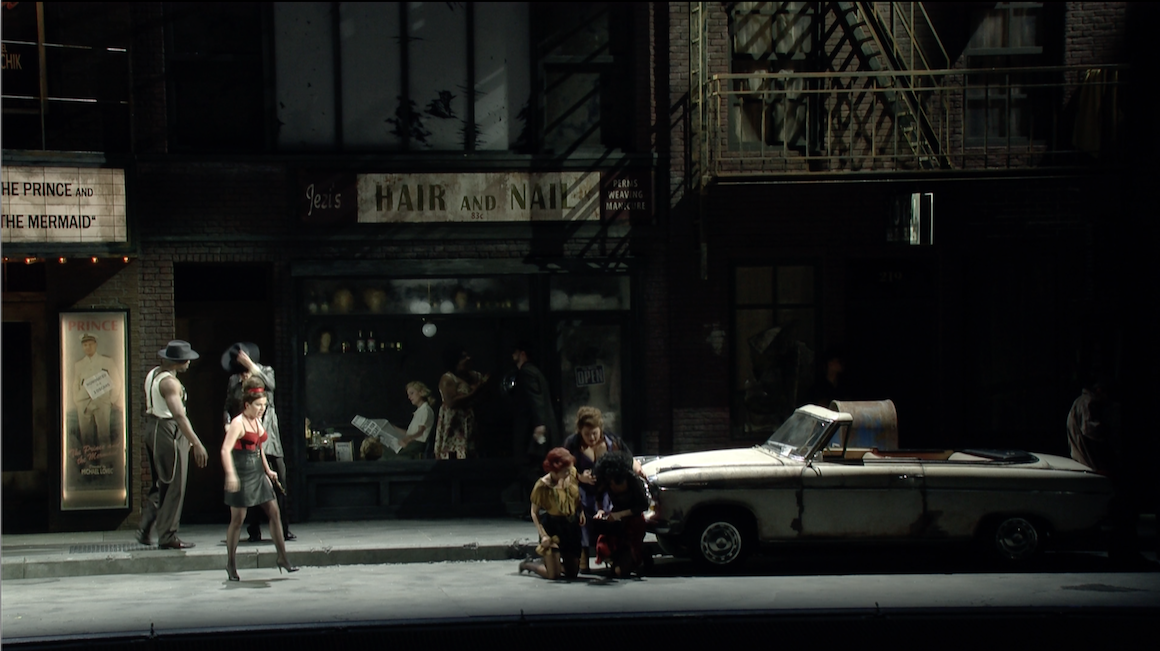
Ježíbaba, the proprietor of the next door hairdressing and nail salon facilitates the transformation of Rusalka into something suitably glamorous whereupon the scene moves to Hollywood where Rusalka takes up with her dream prince. The huntsman is the film director, the kitchen boy a make-up artist and the gamekeeper is (maybe) Prince’s agent. This plays out remarkably straightforwardly on a film set with paparazzi and so on.
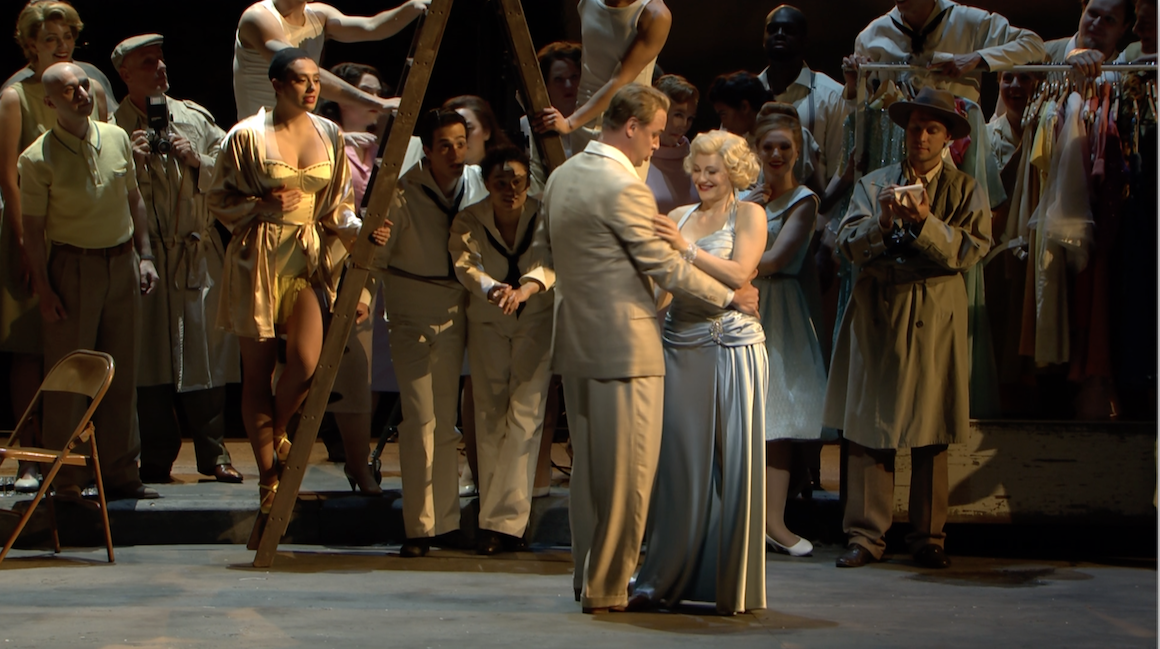
Enter the Foreign Princess. They are shooting the sequel to the earlier movie. Both the Prince and the Princess are doing coke and there is an energetic sailor ballet. At this point we have a sort of split screen with the Brooklynites following Rusalka’s adventures in the newspaper. This all builds up to a knife fight between the Foreign Princess and Rusalka in which both get cut up.
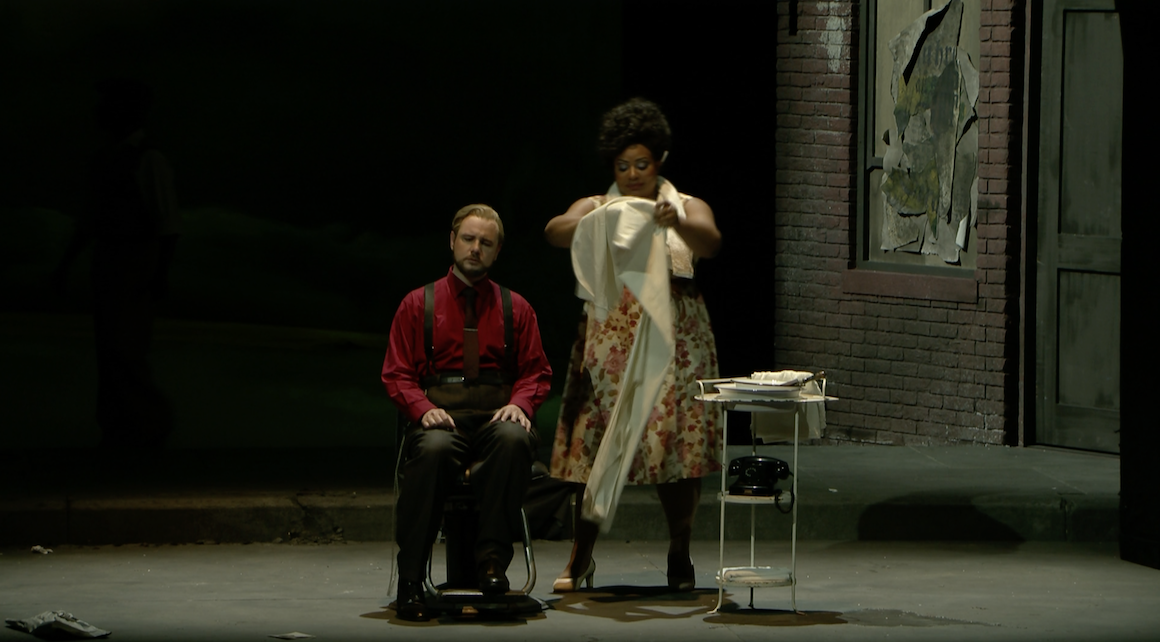
And so we are back in Brooklyn where the stars of “The mermaid Returns” are attending the premiere with their Oscars. The Prince tries to make up with Rusalka but, of course, dies. We see more excepts of The Mermaid Returns while Rusalka shoots up again in the street. It shouldn’t work but actually it does pretty well. Hollywood is unrealistic enough to carry the fairy tale elements. Only the ending is a bit weak but that’s not exactly the opera’s strongest point anyway!
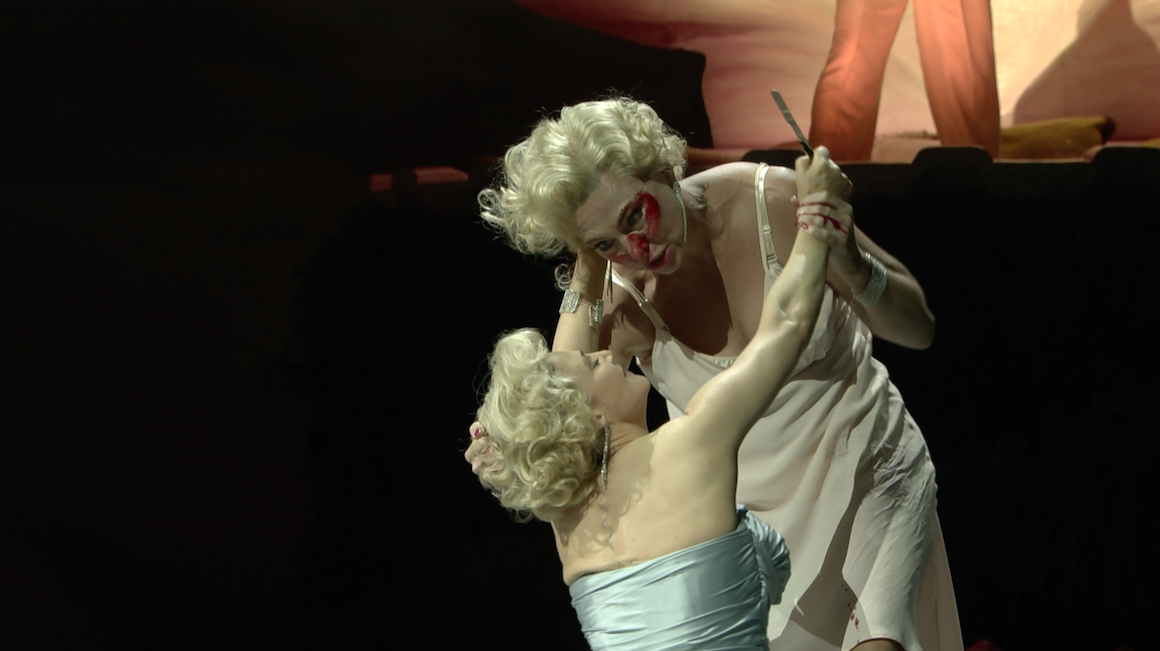
Musically it’s very strong. The orchestra here is the Royal Concertgebouw Orchestra, conducted by Joana Mallwitz, and they sound sumptuous. The singing is very good. Johanni van Oostrum is a sympathetic Rusalka and both she and Annette Dasch, singing the Foreign princess, manage to look and sound suitably glamorous. Pavel Černoch has film star looks and a really lovely and quite powerful tenor. He’s pretty much ideal as the Prince. Raehann Bryce-Davis’ rich, powerful mezzo and somewhat larger than life stage presence are ideal for this Ježíbaba; who is portrayed as at least as imposing as anyone else in the drama. Maxim Kuzmin-Karavaev is surprisingly lyrical and sympathetic as Vodnik. The chorus also does a great job as does a huge crowd of dancers, aerialists and other extras.
The sound (LPCM stereo and DTS-MA 5.1) and the picture are excellent on Blu-ray. Michael Beyer’s video direction is on point and shows off the cleverness of the set design and its seamless transitions. The voice orchestra balance is more natural than usual. The voices aren’t balanced implausibly far forward! The booklet is basic with a track listing and a generic synopsis. Subtitle options are English, German, Dutch, Korean and Japanese.
All in all this production works better than one might expect and certainly better than some of the competing recordings of Rusalka. Add to that the performances are strong across the board and there’s a lot to like. There several good Rusalka recordings and I did a round up of them here (last paragraph). The choice is largely a matter of taste as to production style.
Catalogue information: Naxos Blu-ray NBD0193V. Release date is 11th September 2026.

