
Ulrich Rasche’s production of Donizetti’s Maria Stuarda, staged in the Großesfestspielhaus at the Salzburg Festival in 2025, is austere and interesting. As most people know, the libretto, based oin a play by Schiller, is not at all historically accurate and invents a relationship between Robert Dudleigh, Earl of Leicester, and Mary Stuart that never existed but turns the opera into a love triangle in which the two queens are vying for Leicester’s attention! Rasche’s production runs with this angle and what little sense of actual political events there is n the opera is pushed into the background.
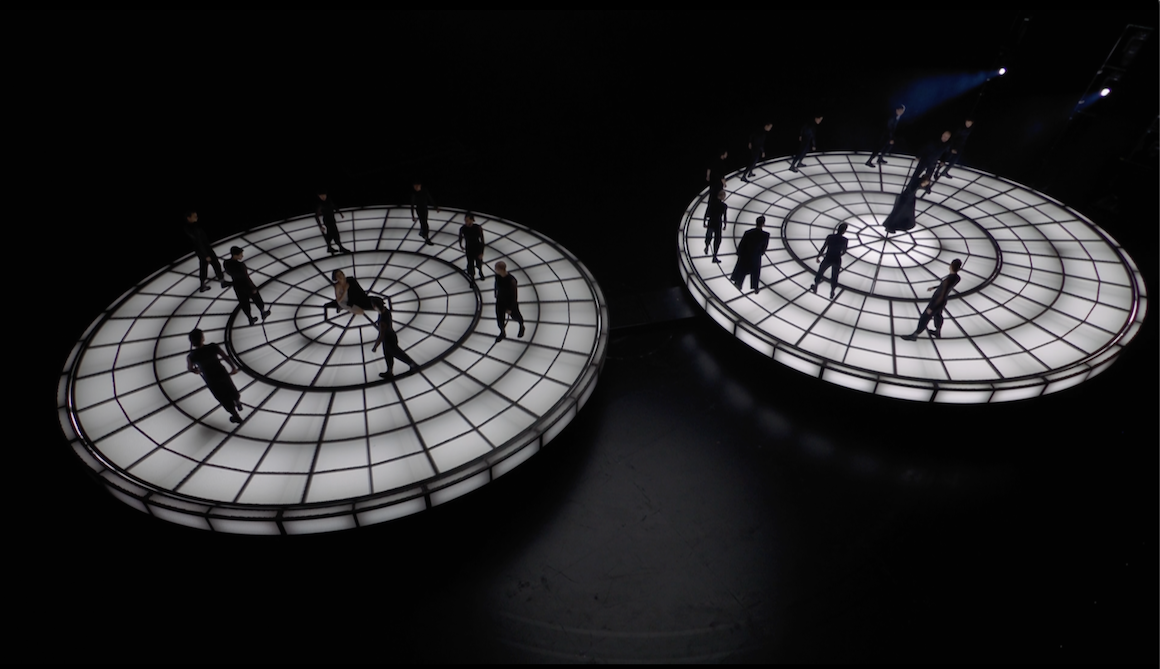
The set is austere. There are three large disk shaped platforms which move, tilt and rotate. Two are more or less at stage level; one for Elizabeth and one for Mary. They never leave their disk but other characters move between the two. The third disk is used mostly as a projection screen but descends at the end to wipe out Mary and her attendants. There are also dancers from the Salzburg Experimental Academy of Dance. The disks have a spider web pattern on them and rotate constantly so, treadmill like, the singers and dancers have to keep moving to stay in the same place. The inference, I suppose, is that all the characters; certainly the queens, are trapped in a destiny they cannot escape. Costuming is essentially black or white and fairly abstract; Elizabeth in black, Mary in white and other characters switching as the action proceeds.
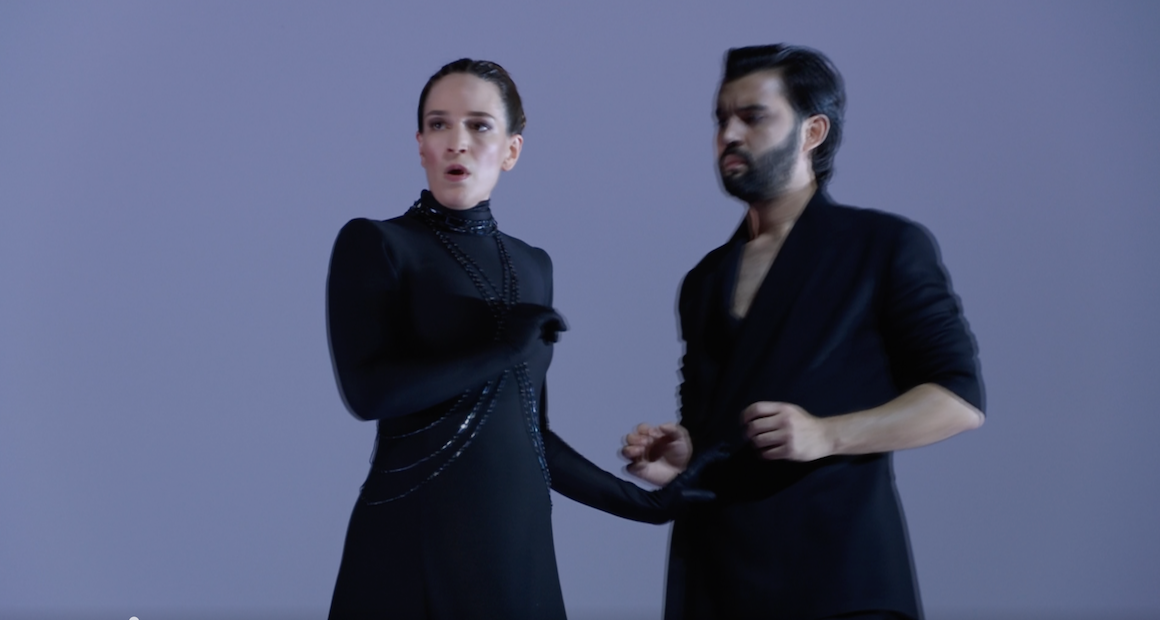
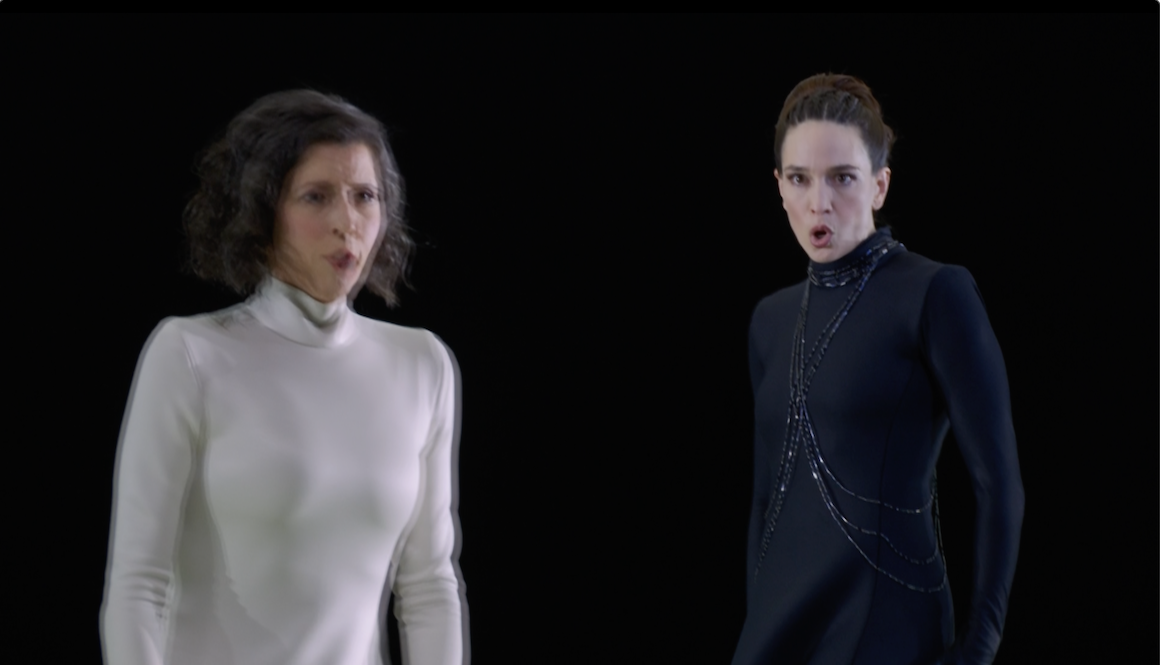
In Act 1 Elizabeth is wearing a severe but elegant black dress and is fierce. She’s sung by Kate Lindsey and it’s a performance that combines brilliantly stylish singing with terrific character acting. Mary, equally well portrayed by Lisette Oropesa, is in simple white. The confrontation scene is brilliantly done with Oropesa throwing out insults and brilliant coloratura in equal measure. Leicester, sung by tenor Bekhzod Davronov, is also excellent and flits (flirts?) between the two women. The dancers just sort of stalk Elizabeth.
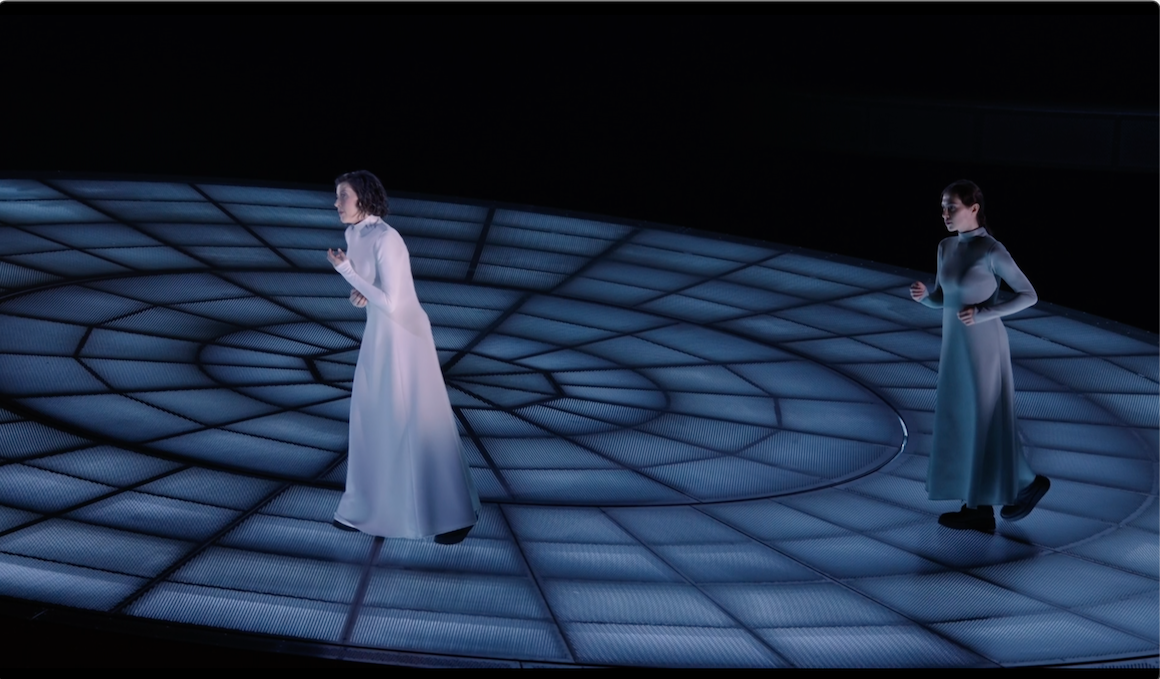
At the beginning of Act 2 Elizabeth appears dishevelled and distraught as if Mary has really got to her. The dancers now seem like Furies swarming Elizabeth. Cecil, sung impressively by a very cool and controlled Thomas Lehman, persuades her to sign the death warrant despite Leicester’s pleas. From now on the action is all about Mary but Rasche keeps Elizabeth stalking around her disk in the background.
The dancers, dressed in white loin cloths now, carry Mary in like an effigy. She then descends to the stage to mourn her situation with Talbot; well sung by bass Aleksei Kulagin. Cecil (in black) appears to tell her that her execution is imminent. Lehman is really good here; dignified but implacable. There are some very striking stage pictures created here! So on we go with Mary’s confessions to God and Talbot etc with Leicester, dressed in a long white skirt and T shirt (as is Talbot at this point) being restrained by the dancers. Mary walks up stage and the third disk descends at an angle, compressing and then obscuring Mary’s disk. Curtain. It’s a pretty effective ending in keeping with the aesthetics of the production as a whole.
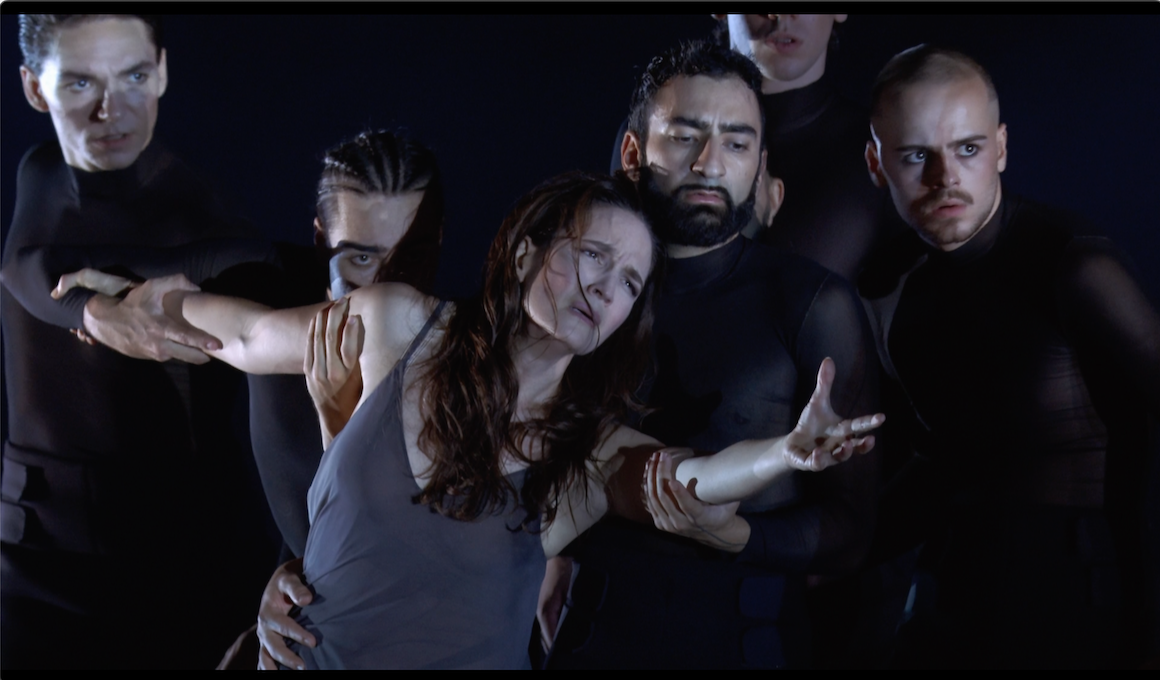
Paul Blackman’s choreography is consistently interesting and contributes a lot to the overall picture and his dancers are excellent. The chorus stays mostly in the background but sings really well. The orchestra is the Wiener Philharmoniker conducted by Antonello Manacorda. They do quite well enough!
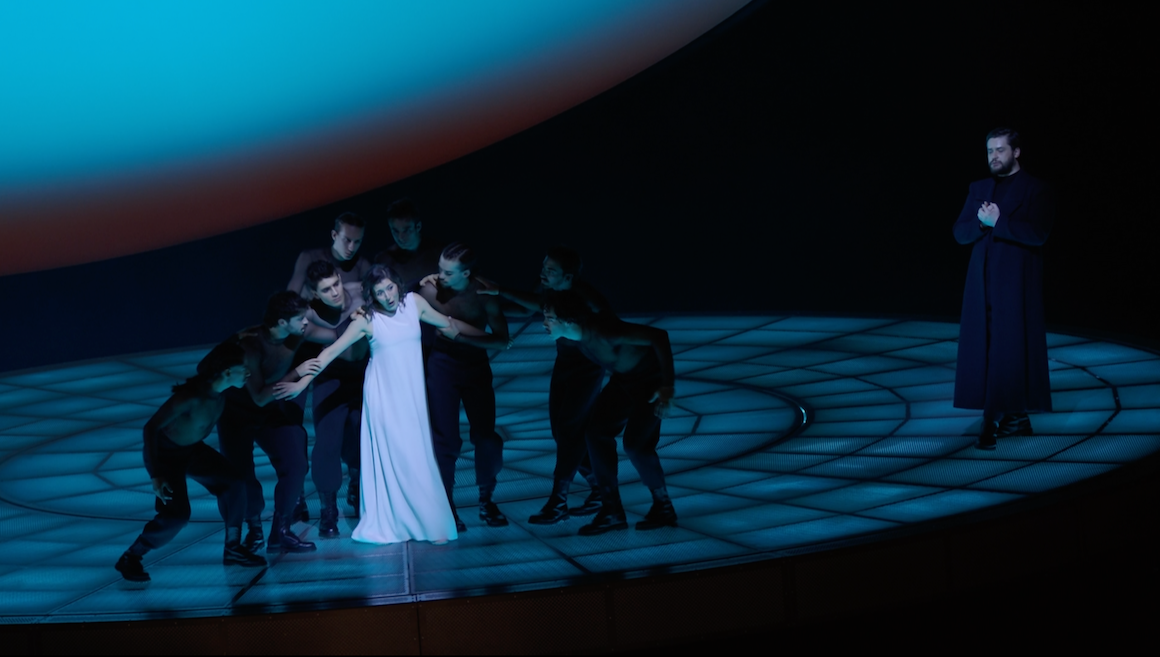
Video direction is by Michael Beyer. He chooses to film from some odd angles with quite a few close ups. It’s hard to figure out what the theatre audience saw and the projections get especially short shrift. That said, he creates some really striking images on screen and I doubt that anything essential is lost even if the experience is a bit disorientating. Best to think of it as a (rather good) film in it’s own right. On Blu-ray, picture and sound (LPCM stereo and DTS-HD MA 5.1) are excellent. The booklet has a track listing and synopsis plus, rather weirdly, a short note on “Bel canto and censorship” but no director’s notes. Subtitles are Italian, English, German, French, Spanish, Korean and Japanese.
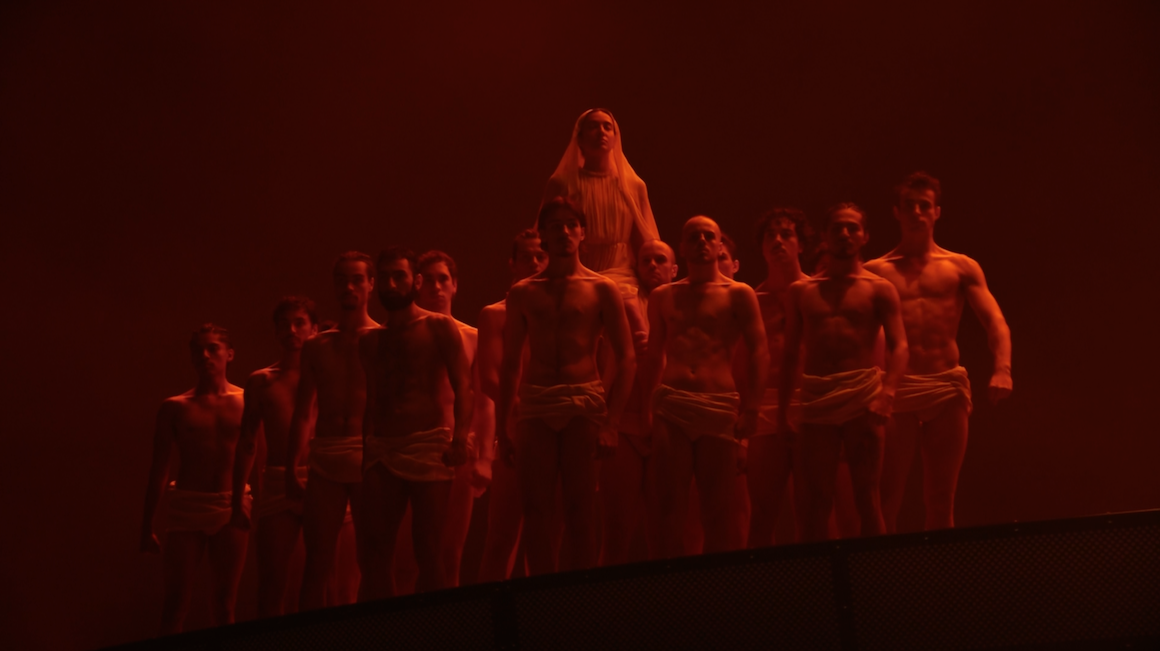
Obviously this production is not for those who think anything Tudor should be played in doublet and hose but it is coherent and I think it gets to the essentials of the drama very effectively. The performances; especially Oropesa and Lindsey, are absolutely top notch. It’s some of the best bel canto singing I’ve heard in a long time.
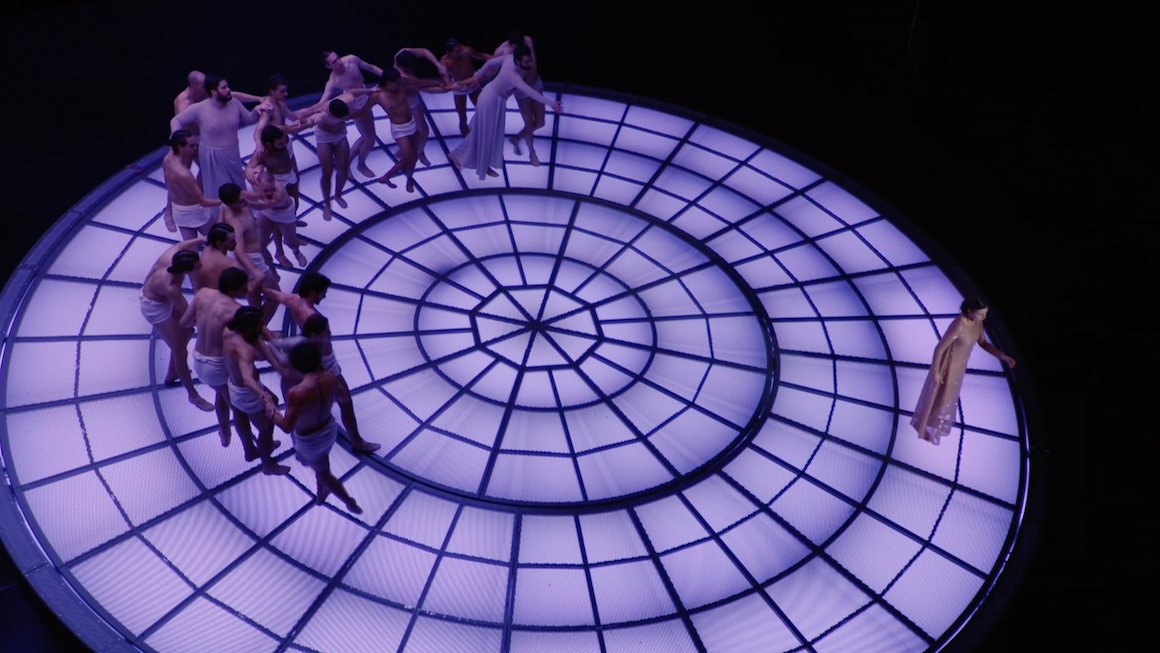
Catalogue information: C Major Blu-ray 773104

