
Alessandro Scarlatti wrote at least sixty operas but only one of the extant ones is a comedy; Il Trionfo dell’Onore which premiered in Naples in 1718. Cunningly Scarlatti insisted on an Italian, rather than Neapolitan, libretto so it soon got productions further north. It’s a piece of its time. It had only just become allowable to produce operas that weren’t based on classical myth or history. Even Cavalli’s most tongue in cheek works like Il Giasone had roots in the classics! But here we have an opera whose characters are quite ordinary though clearly based on the typical types of the commedia dell’arte.
It’s a take on the Don Giovanni story. Riccardo is a dissolute young man who has seduced Leonora than fled from Lucca to Pisa to avoid having to marry her. His sidekick is the soldier Rodimarte who is the classic soldier of comedy; boastful, lustful, flamboyantly dressed but not nearly as brave as he pretends to be! Leonora shows up unsure whether she wants to marry Riccardoor kill herself. She is taken in by Cornelia who is a rich old woman in love with Riccardo’s uncle Flaminio. Meantime Riccardo has promised to marry Doralice, who was previously engaged to Leonora’s brother Erminio and just happens to be Cornelia’s niece. To round things out Flaminio is pursuing Cornelia’s maid Rosina, who is in love with Rodimarte.

So there are the elements; a seducer who has betrayed two women; a betrayed woman unsure whether she wants reconciliation or to kill herself; a brother whose honour has been doubly outraged; a decrepit old man in pursuit of a pretty young girl and an oversexed older woman. After all kinds of shenanigans, a happy ending is contrived and the characters pair off in such a way that Honour triumphs. This is all spiced up a bit by having Riccardo played by a soprano en travesti while Cornelia is sung by a tenor! It’s fairly predictable but surprisingly enjoyable with some quite inventive music and many more duets and quartets than one might expect in an opera seria of this period. The arias are pretty much all in da capo form.
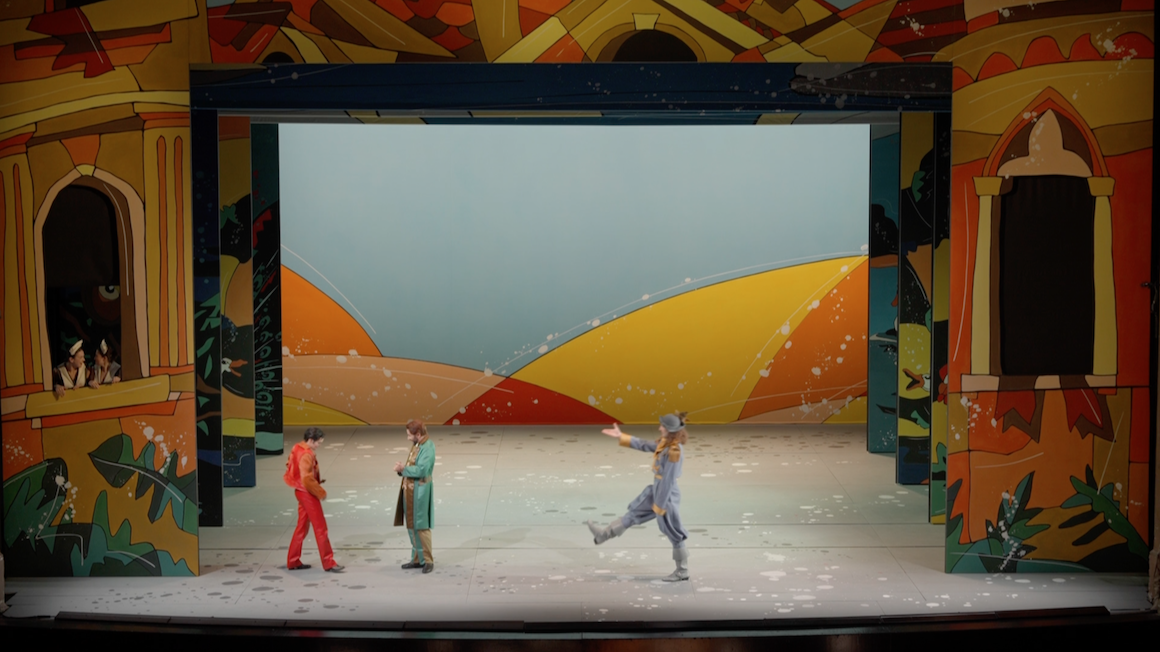
The recording is of a production directed by Stefan Vizioli at the Teatro Malibran in Venice earlier this year. It’s really rather good. Sets and costumes, by painter Ugo Nespolo are a sort of baroque pop art. There are flats and the costumes nod toward the commedia but the colours and the designs are very bright and cheerful. The director keeps the action moving and it never flags.
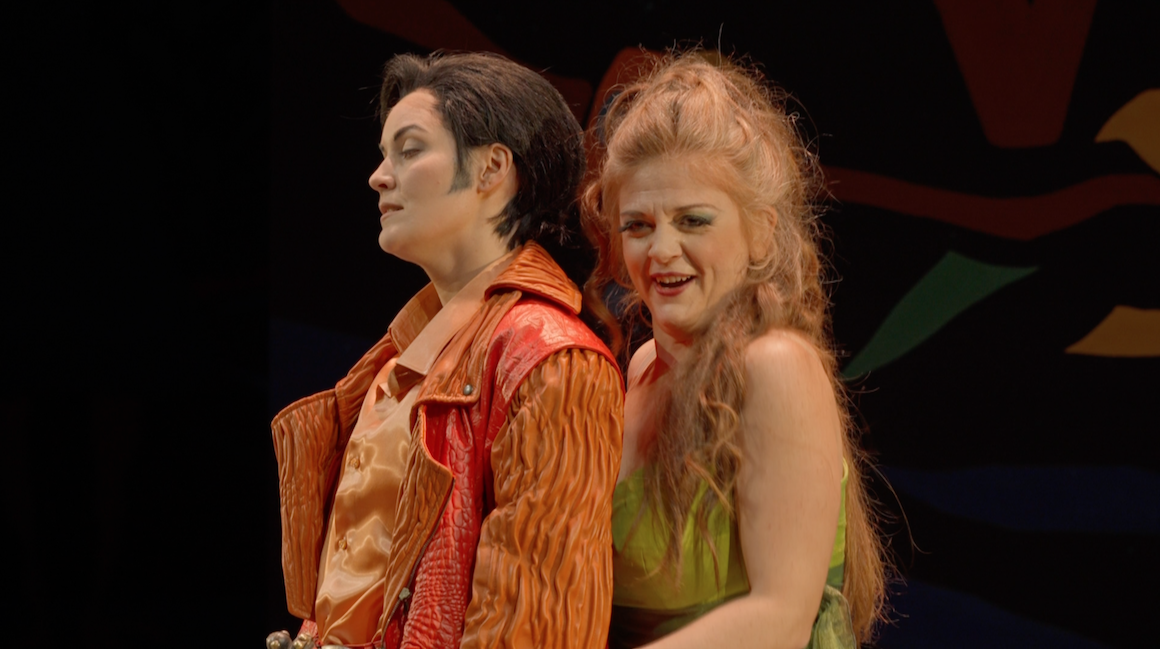
The performances are pretty good. It’s not a big name cast but they are mostly decent singers and ators. Giulia Bolcato, as Riccardo, manages to swagger in a masculine fashion and is a stylish singer though I might have preferred a bolder approach to the A repeats, which are very lightly ornamented, but that’s common to all this cast and seems to be the current fashion for the most part. Tomasso Berea is a suitably bombastic and silly Rodimarte. Raffaelle Pe, a counter-tenor, sings Erminio. His voice is a bit thin and his acting a bit frenetic. He’s convincingly ineffectual in a Don Ottavio sort of way but it didn’t really work for me.
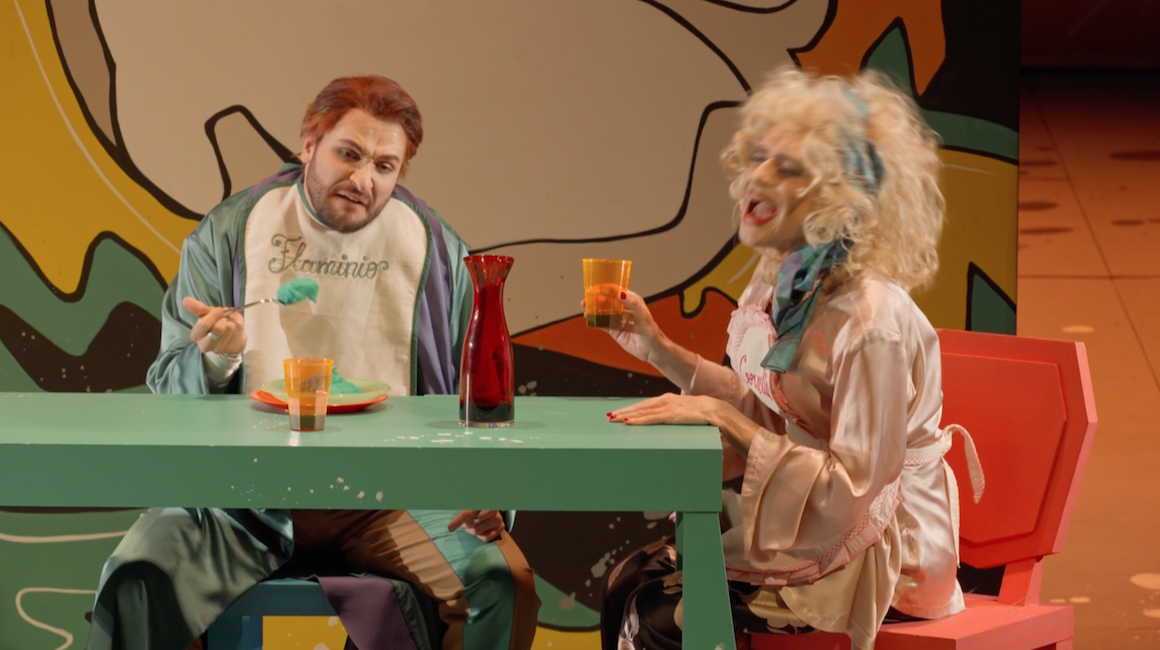
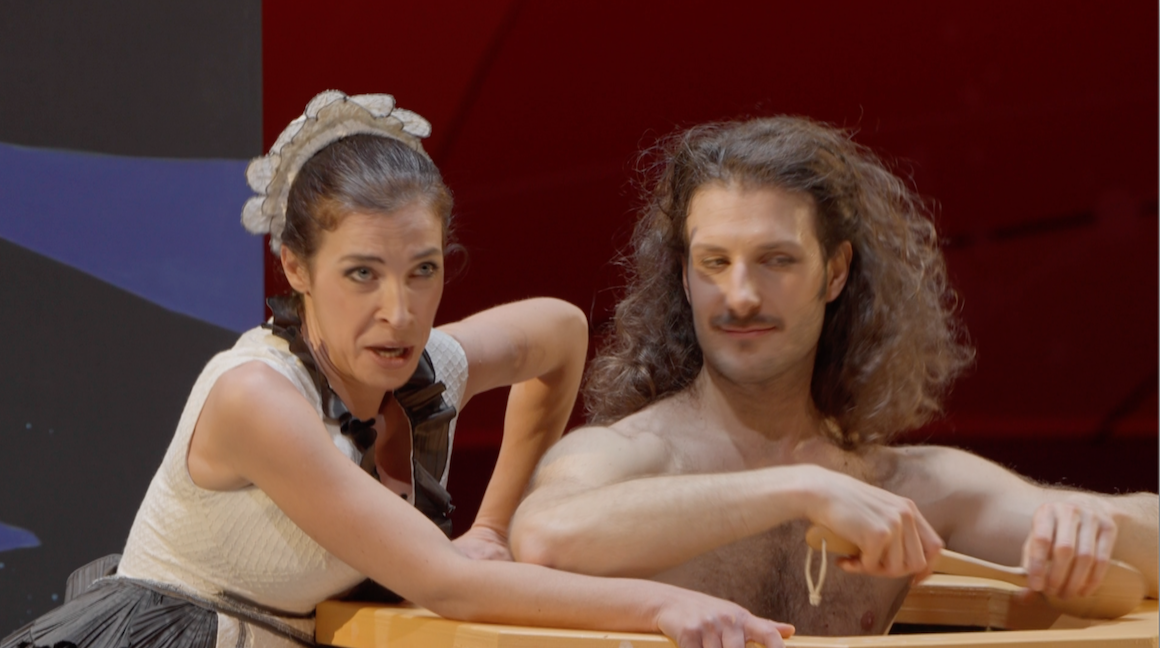
Rosa Bove, as Leonora, and Francesca Lombardi Mazzulli, as Doralice, make an interesting pair of rivals and, indeed, manage a cat fight in act 2. They are both acting up the “blowsy” side of their characters. Bove does have some impressive arias though and sings them in a smokey mezzo which contrasts nicely with the brighter voices. Dave Monaco does a good job of presenting the ridiculous side of Flaminio and Luca Cervoni plays Cornelia exactly as one would expect in the, even by 1718, venerable tradition of men playing elderly women in comedies. Finally there’s Giussepina Bridelli as Rosina. She sings rather well and is a great mover; a perfect combination for the “pert servant girl” role.
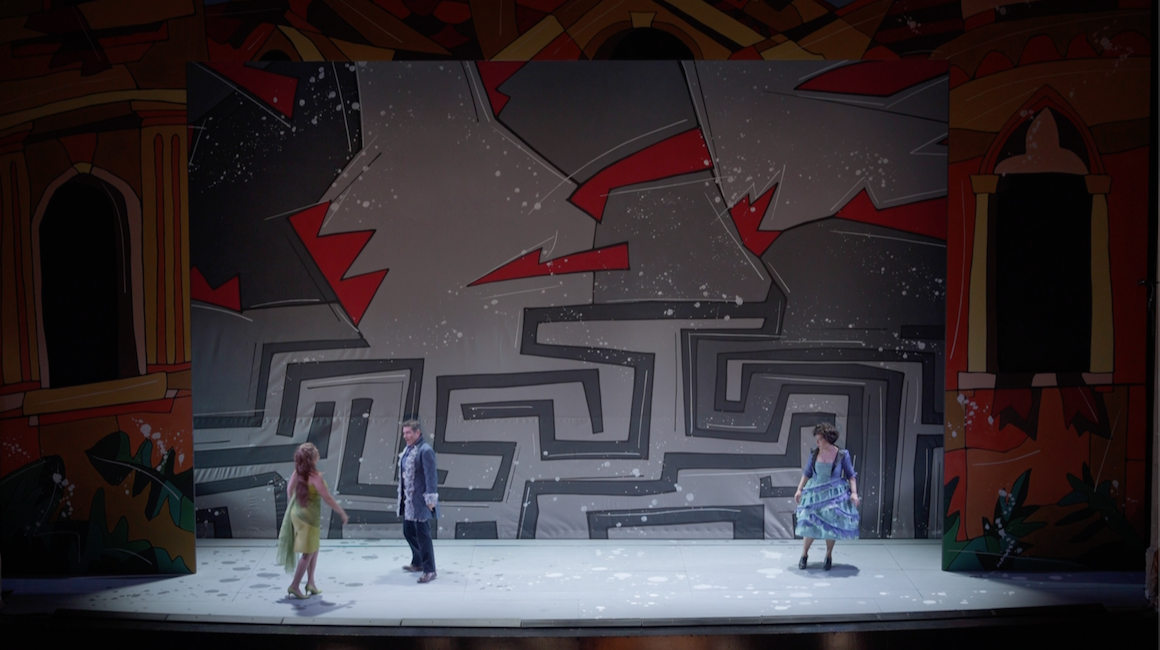
The orchestra is La Fenice’s house orchestra with harpsichord and cello continuo. That means it is modern instruments which is a bit of a shame. Period bands work much better for me in works from this period. Enrico Onofri conducts and it’s all quite sprightly and well paced.
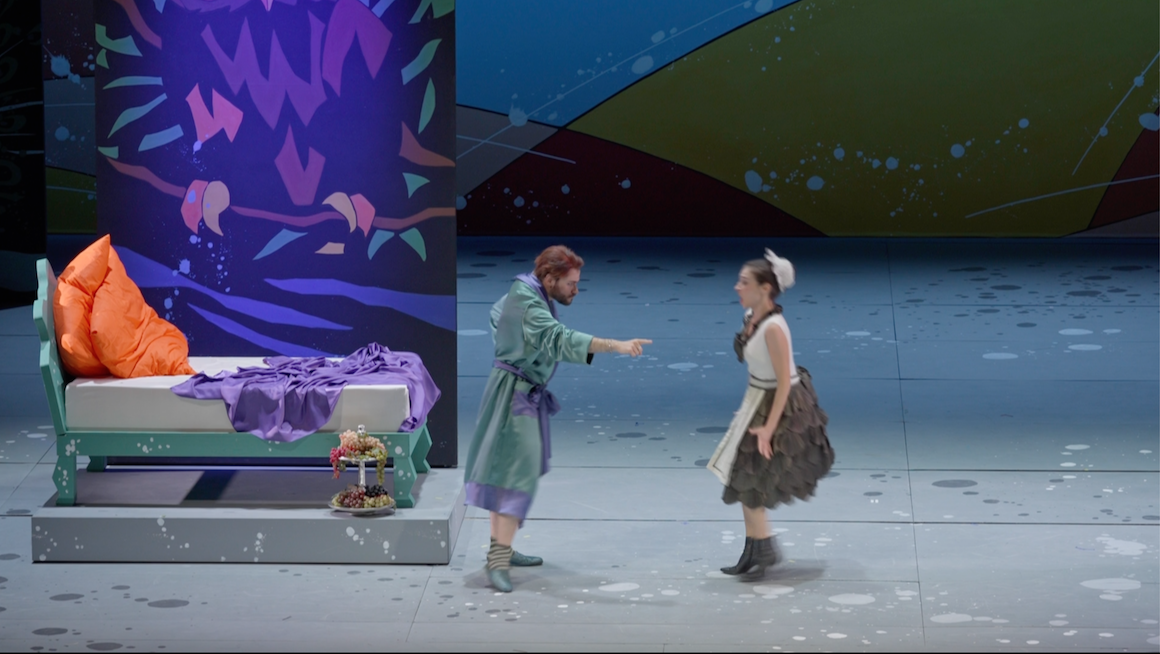
It’s not a complicated production to film and Tiziano Mancini does a perfectly adequate job of capturing it. It’s mostly bright colours, brightly lit and it looks excellent on Blu-ray. Both the stereo and surround (DTS-HD-MA) are excellent. The booklet has useful interviews with director and conductor as well as a track listing and synopsis. Subtitles are Italian, English, French, German and Japanese.
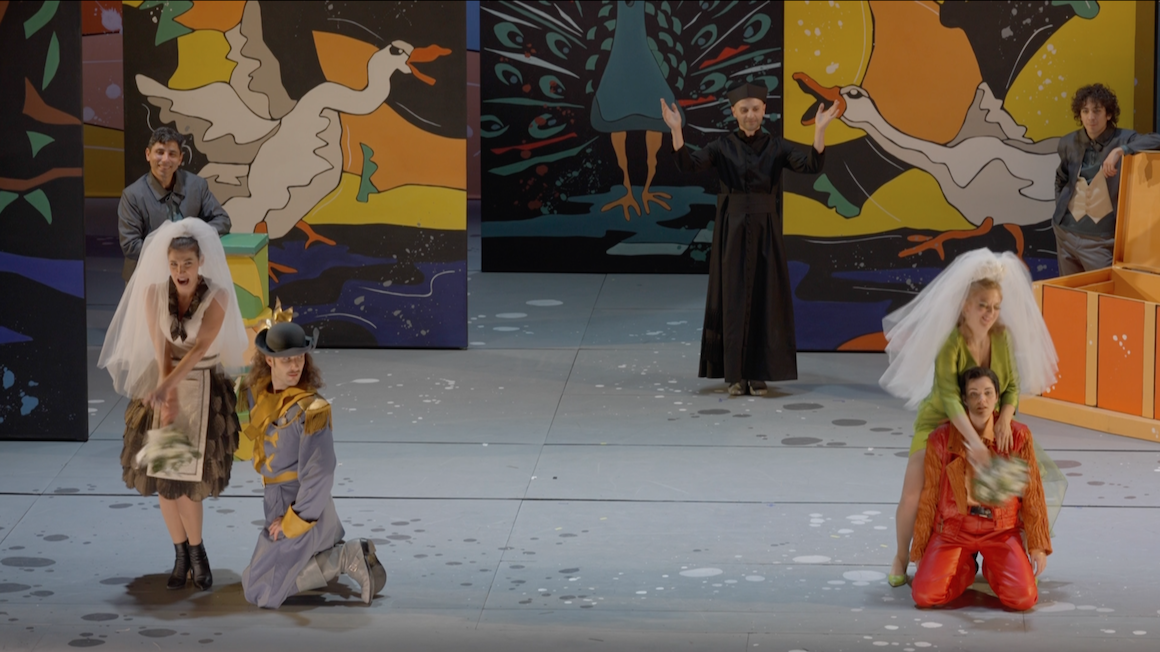
Il Trionfo dell’Onore is a pivotal work with claims to be foundational for the Neapolitan comedy tradition. It’s also musically rather good and quite amusing in a silly sort of way. The Venice production and recording make a good case for it.
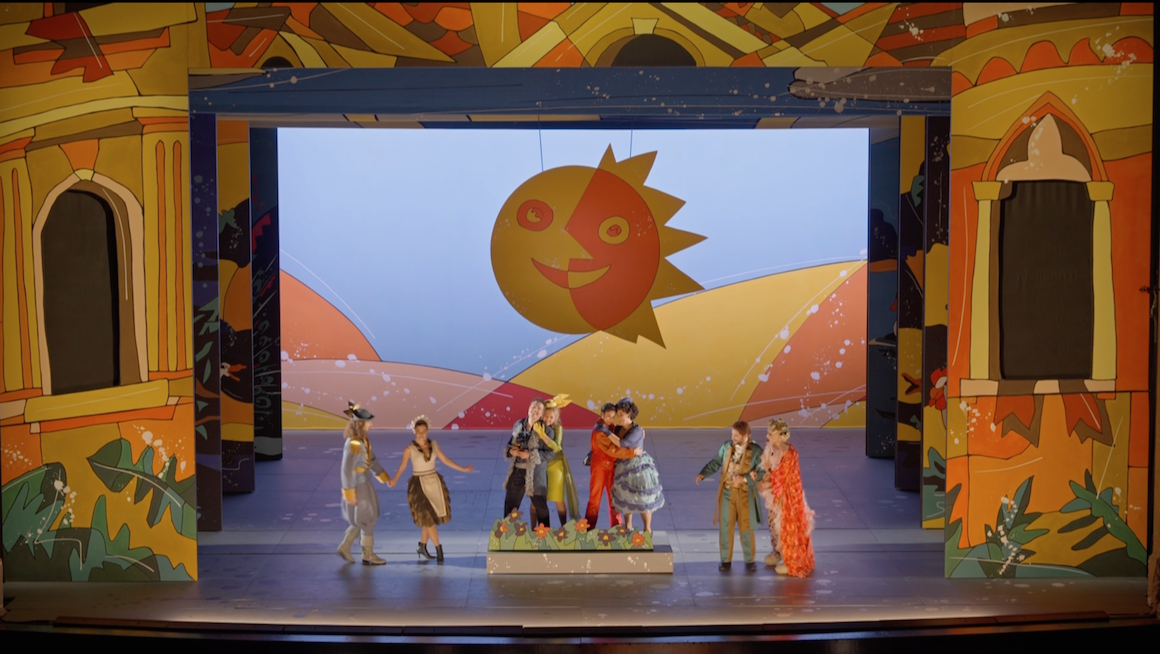
Catalogue information: Dynamic Blu-ray DYN58077
 operaramblings