
 Dmitri Shostakovich died on 9th August 1975; the day after my 18th birthday and I remember the feeling of sadness and hurt I felt when I heard the news. The 50th anniversary is being celebrated by a fair number of concerts featuring the great man’s works including one given my members of the COC Ensemble Studio in the RBA on Thursday.
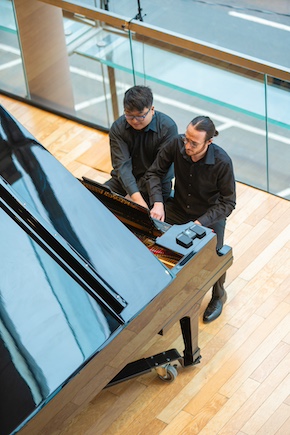
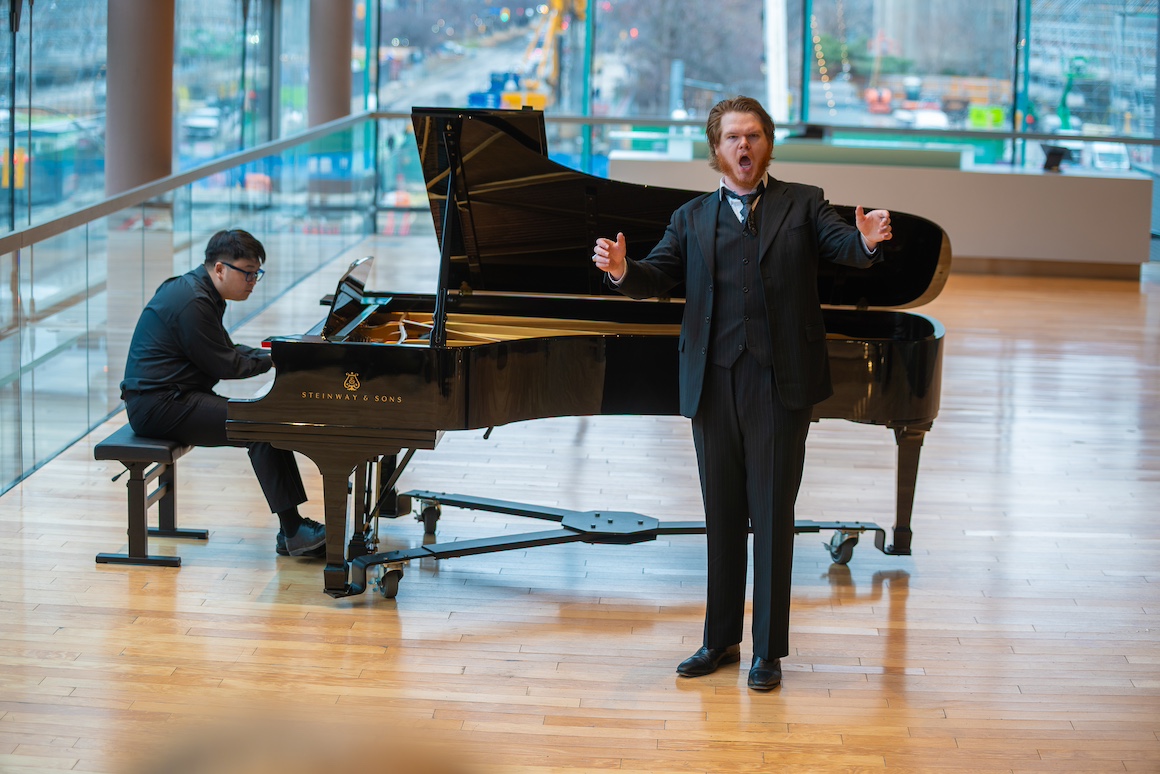
The material featured was comparatively unknown even by the standards of Shostakovich songs which are, in general, much less well known than his symphonic and chamber works. Matters started playfully enough with a four hands arrangement of Waltz No.2 played with appropriate whimsy by Brian Cho and Mattia Senesi It was followed by the first of two sets by Duncan Stenhouse; two of the songs from Four Romances on Poems by Pushkin, Op.46. Using text by Pushkin allowed the composer to express sentiments about authority that would otherwise have been very risky and these pieces are sombre. They were very solidly sung with some impressive floaty high notes, variation of colour and fine work by Senesi. Shostakovich rarely lets one forget he started out as a pianist!
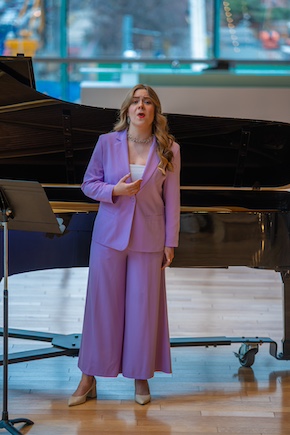
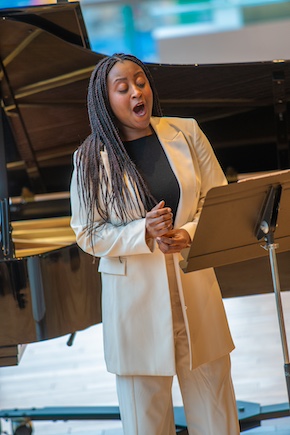 Next up was Queen Hezumuryango with four pieces from Spanish Songs, Op. 100. These were inspired by hearing folk songs sung by Spanish refugees after the fall of the republic to Franco. They are surprisingly playful with dance rhythms and more. Queen’s voice has a timbre that seems particularly well suited to singing in Russian. She was joined by Emily Rocha for the “Lament for a Dead Infant” from Jewish Folk Poetry, Op. 79, No.1; another piece where the source of the text allows the composer to hint at an anti-state line. Emily continued with three Rachmaninoff songs; “Night is Sorrowful”, “The Flower Has Faded” and “Oh, Never Sing to Me Again”. These much more overtly Romantic pieces were sung with skill and emotional sincerity.
 And finally, we got Brian Cho and Duncan Stenhouse with what is probably Duncan’s party piece; two songs from Four Verses of Captain Lebyadkin, Op. 146, composed near the end of the composer’s life. Basically, Dostoevsky’s Lebyadkin is a drunk who inflicts execrable poetry on anyone he can and then attempts, feebly, to explain it. For example, in a poem about a cockroach and flies, the old man who throws the whole thing in the trash is a metaphor for Nature. Obviously there is great scope for clowning here and Duncan slid unsteadily around the stage swigging from a hip flask while still producing some excellent singing. The piano part, which is also a bit nuts, was handled with aplomb by Brian. A most worthwhile tribute.
Photo credits: Karen E. Reeves
 operaramblings