
Resphigi’s 1931 work Maria Egiziaca was originally conceived as a concert work but very early on it became more common to perform it fully staged. That’s how it’s presented in a production earlier this year from Venice’s Teatro La Fenice though it actually took place in the smaller Teatro Maliban. It’s quite a short work; a little over an hour, and as the composer’s description of it as a “symphonic triptych” suggests it takes place in three scenes.
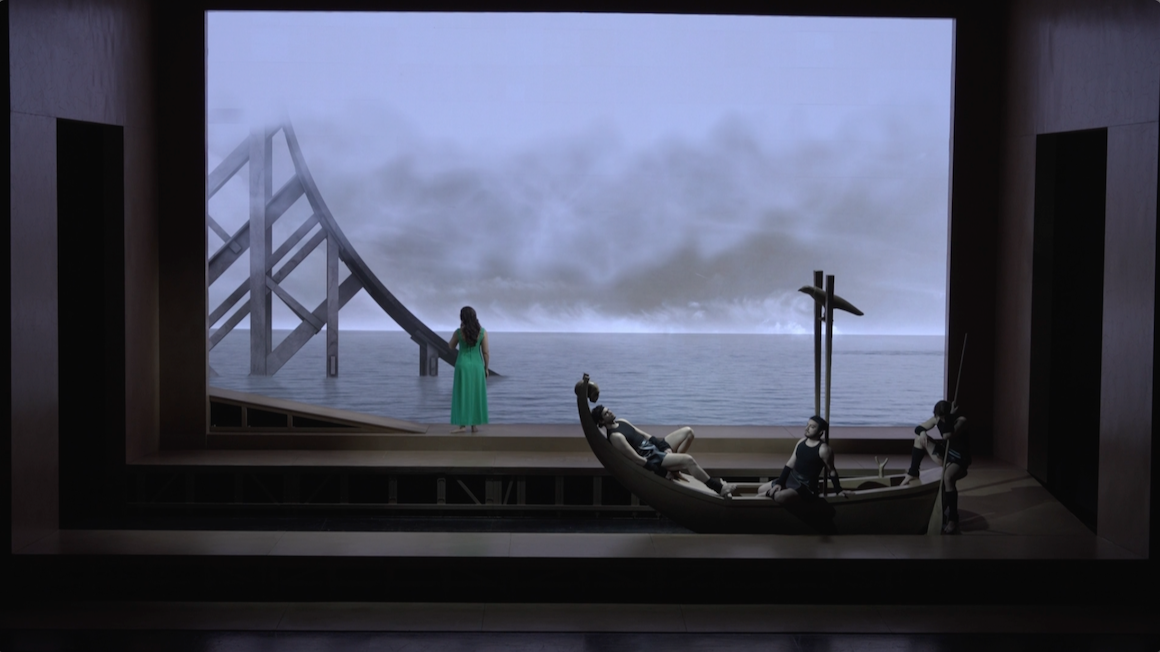
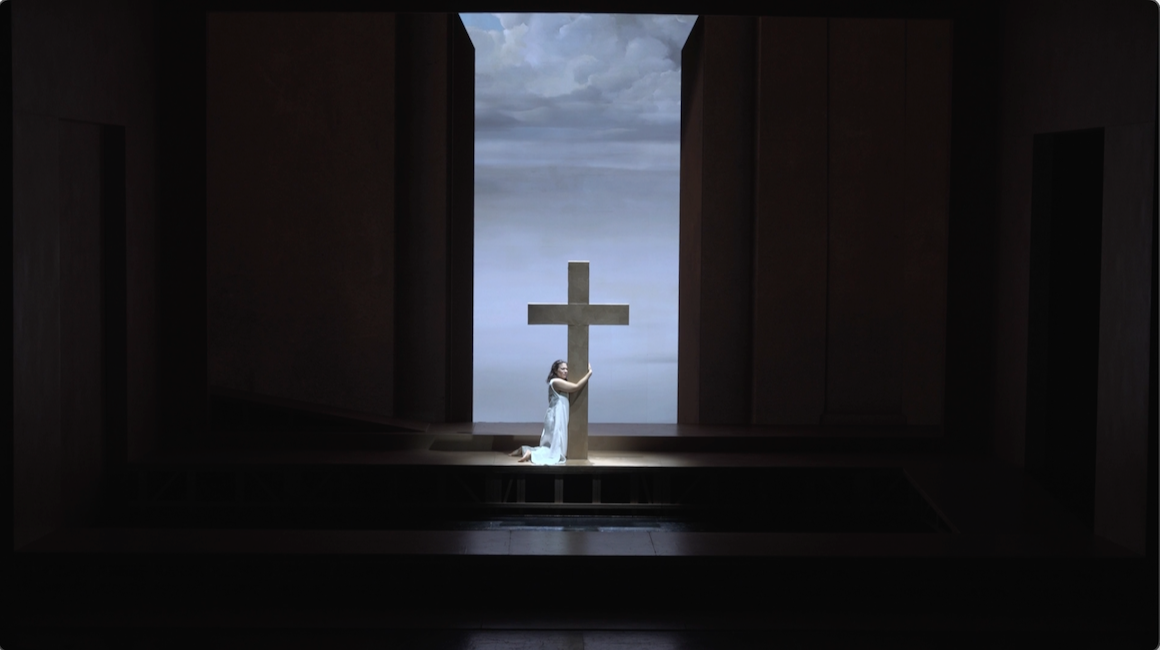
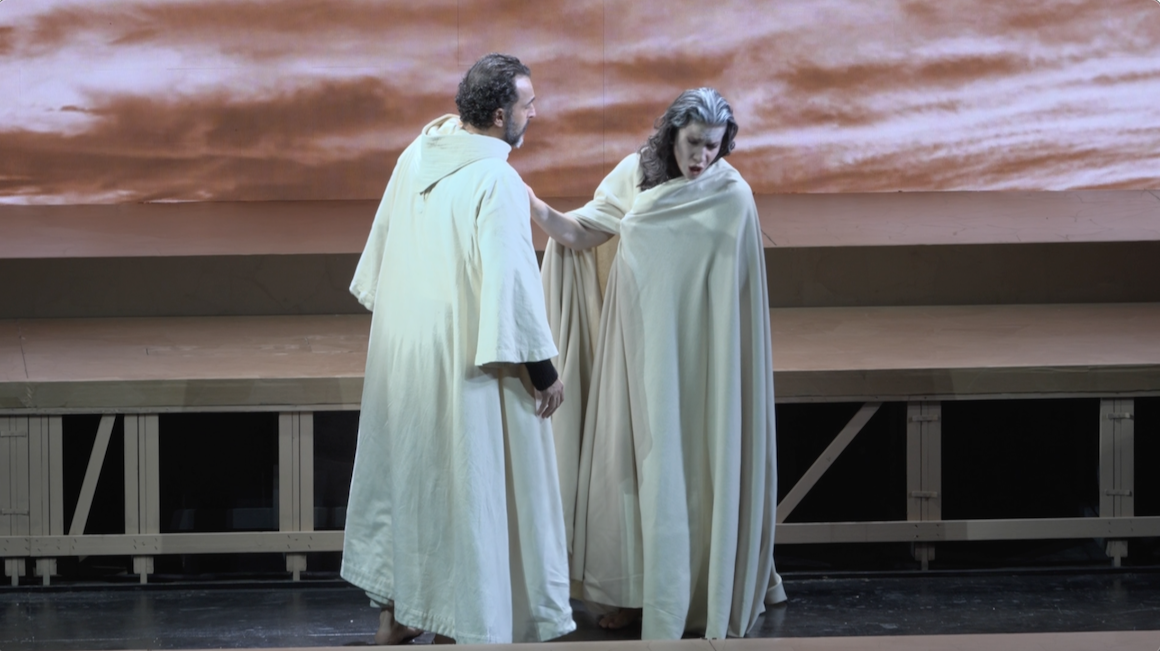
In the first we are in Alexandria in early Christian times. Maria is a prostitute who is fed up with life and decides to hook up with some sailors who are off to the Holy Land in return for services rendered, much to the disgust of the austere pilgrim who is also Jerusalem bound. Next we are outside the Temple in Jerusalem and Maria has befriended a blind girl. More ranting from the self righteous pilgrim and assorted heavenly voices persuade Maria to seek a new way of life. In the third scene we find her at the end of a life of penitence in the Egyptian desert where she encounters the pilgrim, now transformed to the abbot Zosimo who absolves her of her sins after which she dies. It;’s a sort of mini Thaïs.

Musically it’s pretty rich. It’s scored for chamber orchestra and is largely tonal with the orchestral writing denser and more complex than the vocal line, especially in the symphonic interludes between scenes. There are clear hints of Strauss and maybe also of Mahler. Certainly the first scene has hints of Salome in the writing for Maria.
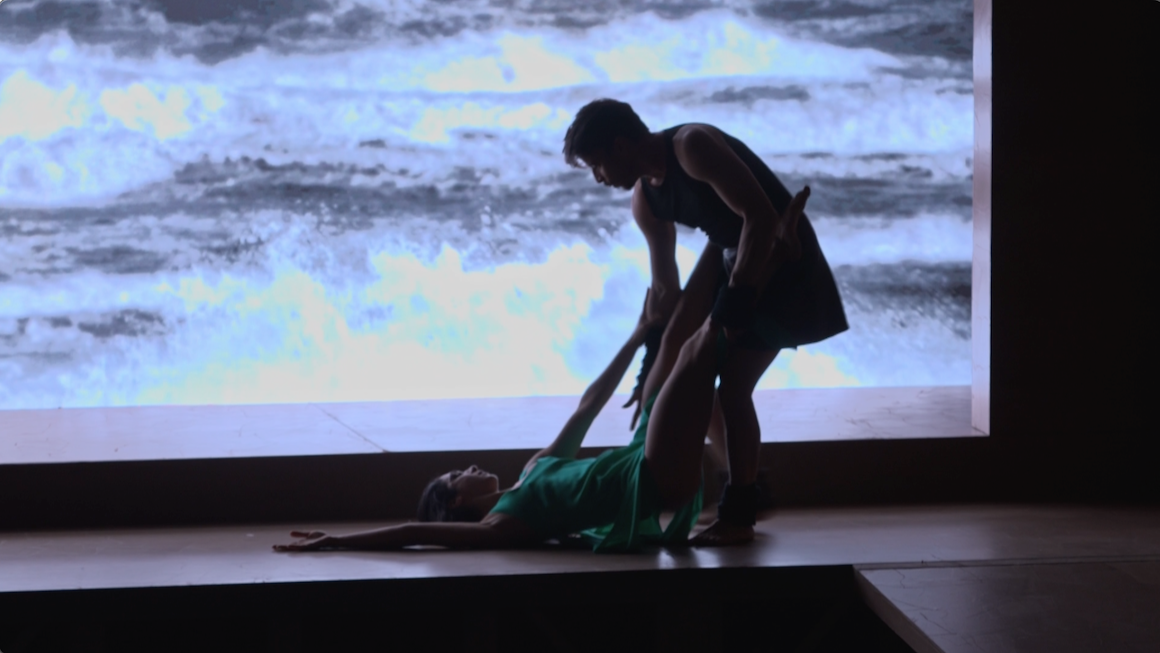
Pier Luigi Pizzi’s staging is quite abstract. There’s no sense of it being of any particular period and quite a lot of the visual interest comes from really rather good projections. He uses a dancer double of Maria to good effect during the transitional passages. Scene 1 is a boat in a harbour where Maria (Franceska Dotto) flirts with the sailors in a carefree sort of way. In Scene 2 we are in front of the Temple in Jerusalem and Dotto sings with more gravity; somewhat darkening her voice. In the last scene she has become, convincingly, an old woman with a significant change in body language and vocal production. It’s a very fine performance. Simone Alberghini too manages a dramatic and vocal transformation from the harsh and self-righteous pilgrim in the early scenes to a much more sympathetic and “softer” character as the abbot. The other roles are quite minor and are done well by young, mostly Italian, singers.

The La Fenice chorus, singing from the gallery, are pretty good and Manilo Benzi conjures up a very rich sound from what seems to be a fairly small orchestra (also from La Fenice) though one with quite a variety of woodwinds. The dancer, Maria Novella Della Martitra, is very talented indeed.
Filming, by Tiziano Mancini, is entirely straightforward and effectively backed up by excellent video and sound (DTS-HD-MA and 24bit stereo) on Blu-ray. Besides a track listing and synopsis there’s a useful interview with the conductor and a short historical essay in the booklet. Subtitles are Italian, English, French, German, Japanese and Korean.

So, a rarely seen work but one of some interest very convincingly realised on disk.
Catalogue information: Dynamic Blu-ray 58050
 operaramblings
Another fine, accessible short study of a rarity that would be of interest to us opera people (opernvolk?) With your usual antennae for politics and zeitgeist, I anticipated there might be something about Respighi and fascism vis a vis this work. That there isn’t is more an afterthought than an enduring concern.
I expect I would have picked up any hint of Fascism but I really can’t see one in this piece. And, thank you!