
Robert Carsen’s 2021 production of Monteverdi’s Il ritorno di Ulisse in patria was recorded at the Teatro della Pergola during the Maggio Musicale Fiorentino. The theatre, opened in the 1660s and very much a “renaissance theatre”, is very much part of the production; the loge boxes are used during the prologue, entrances are made through the unusual parterre (individual chairs not rows of seats) and the gallery behind the stage is used by the gods to observe the action below. Monteverdi used three distinct styles of music for gods, royals and lesser folk, Carsen mimics this by giving the three orders distinct costume and acting styles. The gods (and there is the full pantheon, not just the ones who appear in the opera, each with his or her distinctive emblem), costumed in opulent crimson 16th century style costumes, act in a stylised manner. The royals get smart modern dress and naturalistic acting while the others are scruffier and act more broadly.
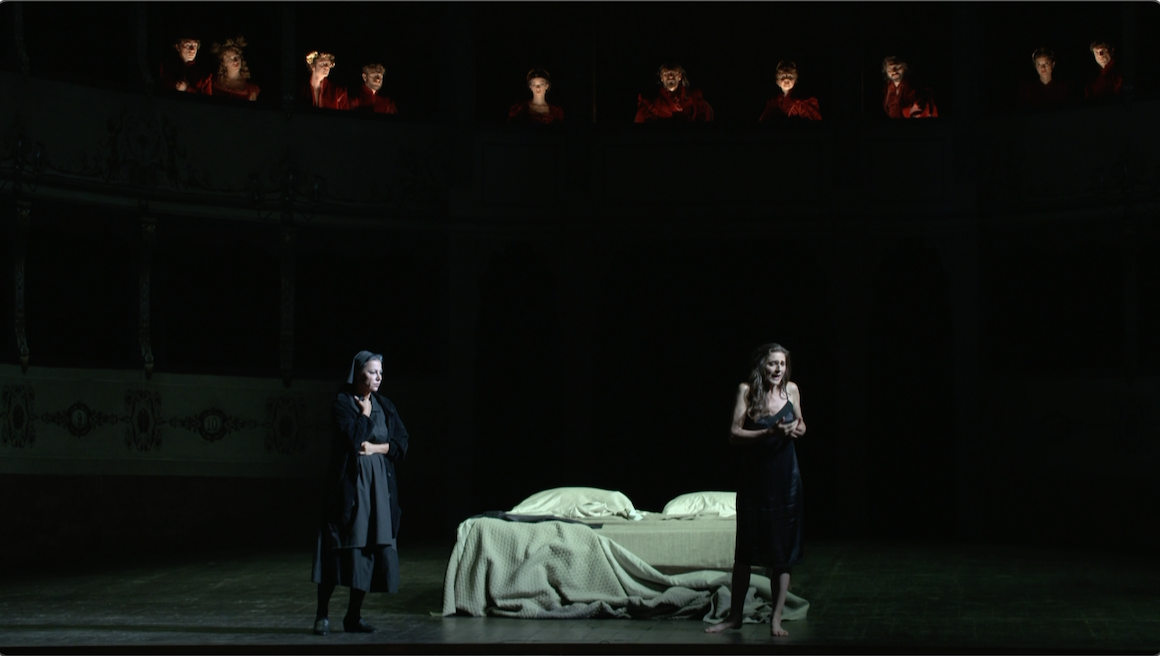
Most of the action plays out on a bare stage with props being moved in and out of place by either the gods’ staff (again in crimson 16th century dress) or Penelope’s (in modern uniform). In typical Carsen fashion this is used to inject some humour. For example, in Act 1 when Melanto and Eurymachus have “flirted” to the point where they are enthusiastically making out in their underwear on Penelope’s bed, six extras march on and ceremoniously carry the bed, and them, off backstage. In a nice little touch we see Jupiter very much enjoying these antics while Juno is notably less impressed.

So it goes on with the gods largely observing the action and playing out in small ways what we know about them. Venus flirts with Mars to Vulcan’s discomfiture for example. Minerva, of course, moves between the two worlds and there is one scene where Minerva, Jupiter, Juno and Neptune are on stage together. Only at the very end do the gods collectively descend to, as it were, bless the reunion of Ulysses and Penelope.
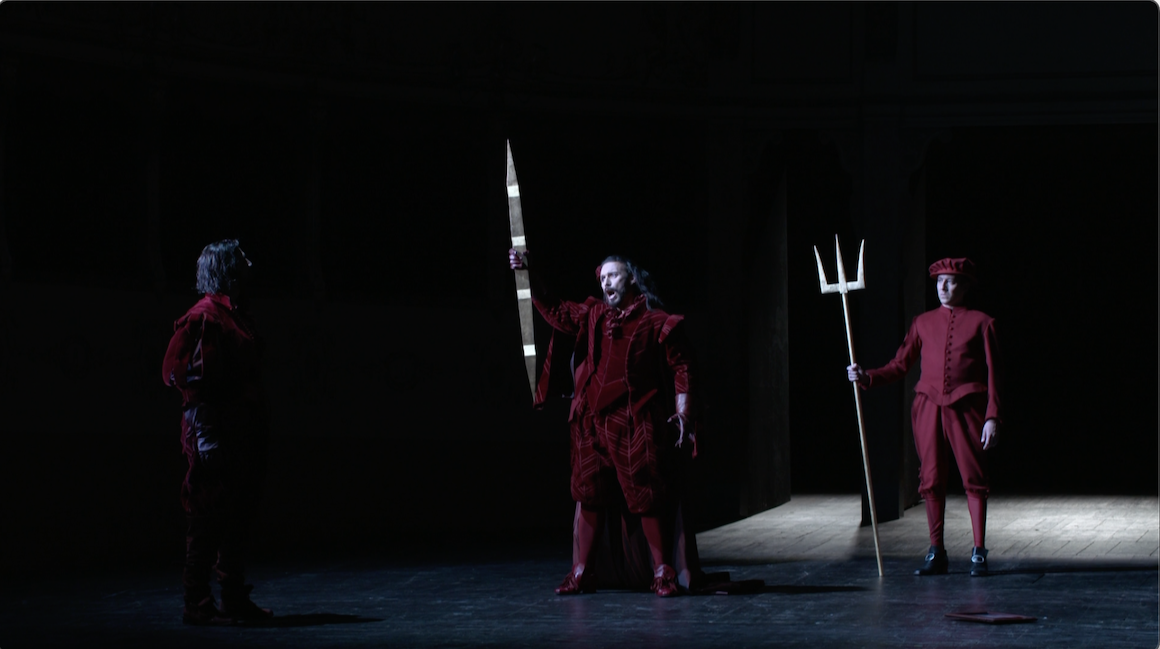
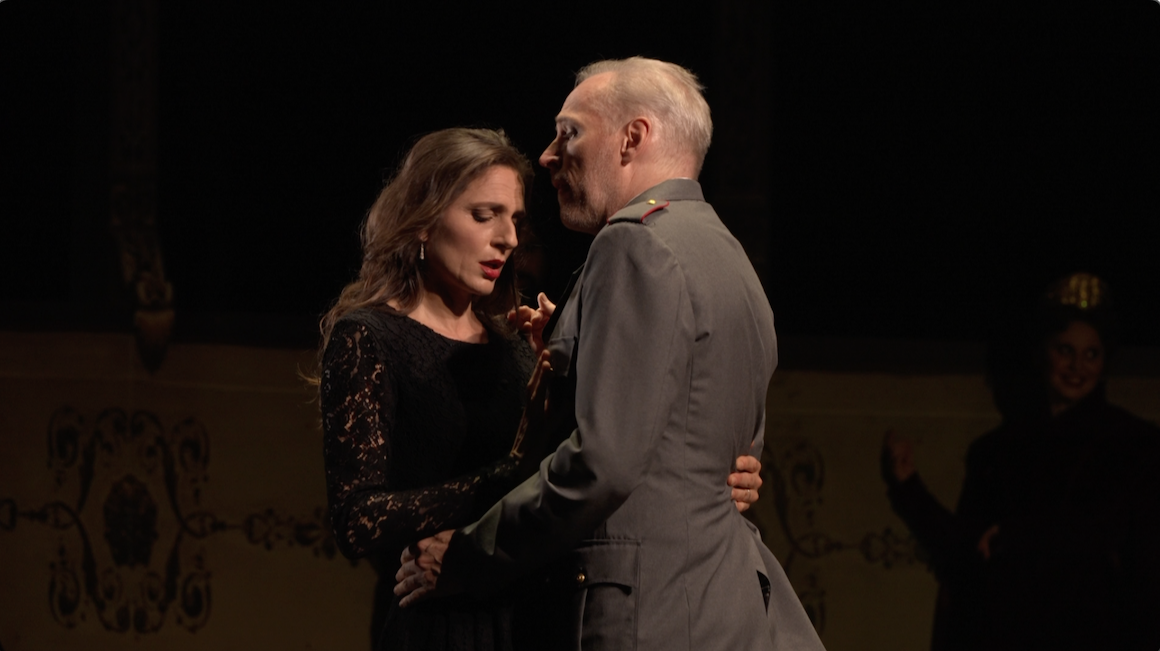
So it’s a carefully thought out and designed production with lots of little touches that will appeal to the classically minded but it’s the quality of the singing and the acting that really makes this a bit special. Charles Workman is an excellent Ulysses. He’s completely vocally solid and stylish but it’s his ability to transition ambiguously between hero Ulysses and the old beggar that most impresses. His Penelope, Delphine Galou, is perhaps even better. Some beautifully stylish singing is backed up by a convincing portrayal of a woman torn between despair and hope. Fittingly the final duet is most beautiful and moving.

It’s a very large cast and all play their part in a fine ensemble but the Minerva of Arianna Venditelli deserves a mention. There’s a fierceness about her, she clearly enjoys destroying the suitors, that is fitting but that she manages to lose completely in her shepherd persona. Miriam Albano and Hugo Hymas as Melantho and Eurymachus also work very well together and inject some playful humour. The Accademia Bizantina are in the pit with their music director Ottavio Dantone. No details of the band are given but I’m guessing about a dozen musicians making a thoroughly idiomatic and appropriately scaled accompaniment.

This is not an easy show to film. Much of it is very dark with small, intense, pools of light. Tiziano Mancini makes judicious choices and the film gives one a very fair idea of what Carsen is doing both on stage and in the gods’ gallery, though inevitably details are missed. On Blu-ray the picture is good enough to capture the essentials despite the difficult lighting. The sound is excellent.

All in all this is a very well done production, very well recorded, and makes one wonder why this work isn’t done more often in our opera houses.
Catalogue information: Dynamic Blu-ray DYN 57927
This review first appeared in the Summer 2022 edition of Opera Canada.
 operaramblings
Teatro della Pergola
Renovated in the early 1900s.
Fixed. Thanks