
Wine in the Wilderness is a 1969 play by Alice Childress set in Harlem during the 1964 riots. It’s currently playing at Canadian Stage Berkeley Street in a production directed by Jordan Laffrenier (who also directed Slave Play). It’s a deceptively complex and nuanced analysis of the intersection of race, class and gender in the African-American community at a time of considerable change. The Civil Rights Movement is under way. Educational opportunities have opened up enough to allow the emergence of an aspirational African-American middle class. But this is still a deeply racist USA with police brutality a common occurrence and plenty of people left behind in an increasingly polarized African-American community.
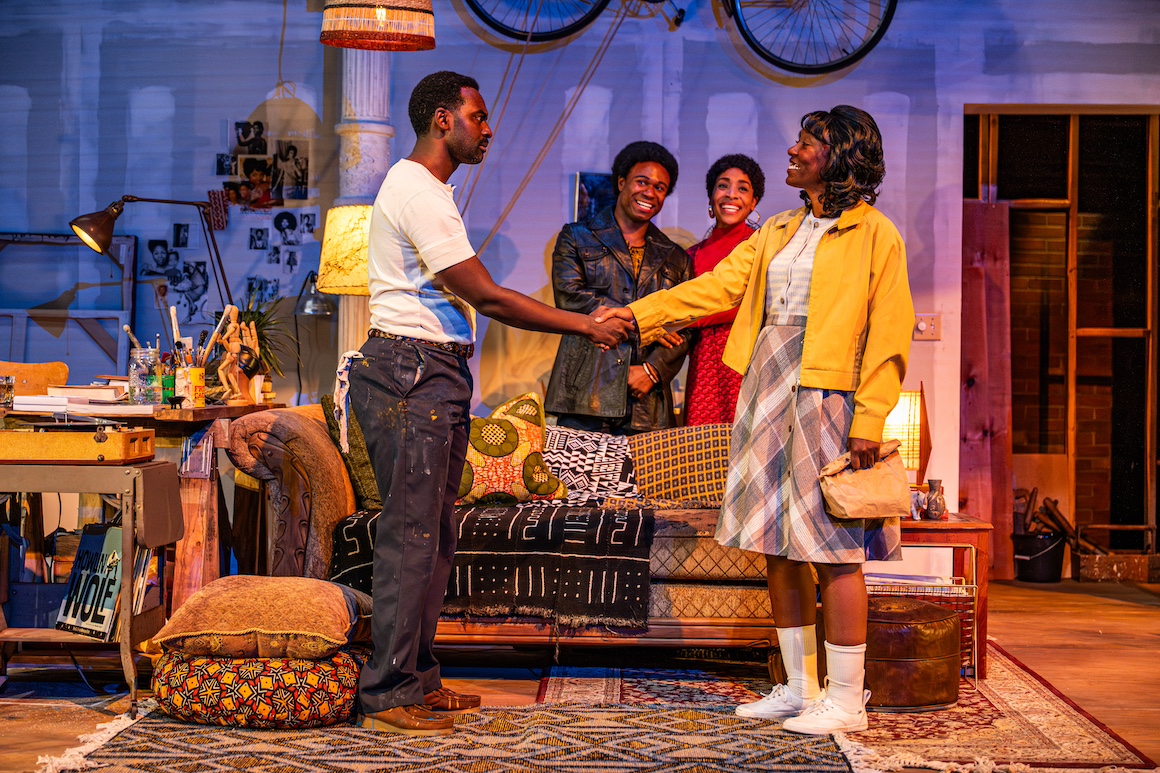
Bill (Mazin Elsadig) is a painter. He is working on a triptych. The first two parts are done; an angelic little African-American girl and a powerful “Queen of Africa”. He intends to complete the work with a portrait of a “messed up girl”; a young African-American left behind and at the bottom of the race/class hierarchy; “ignorant, unfeminine, coarse, rude… vulgar… a poor, dumb chick that’s had her behind kicked until it’s numb”. I have been unable to work out the logic for this which appears to defy pretty much every rule of triptych composition but it’s what the play says and it’s crucial to the plot.
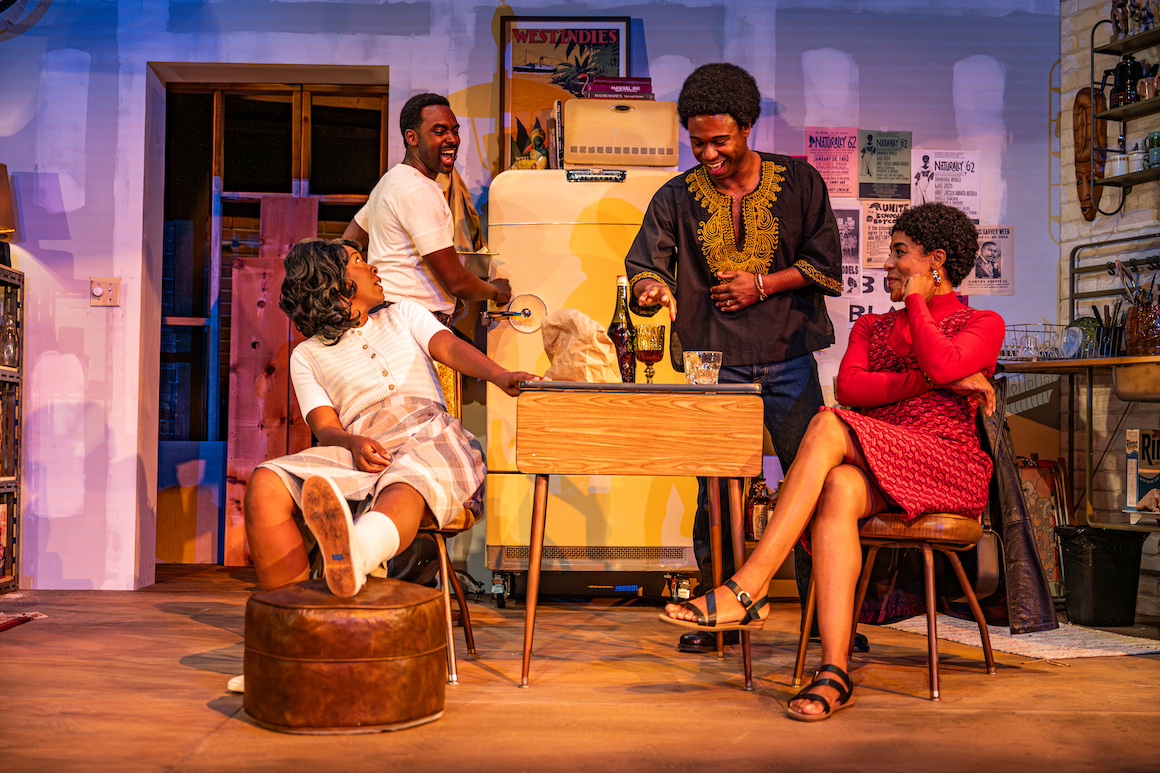
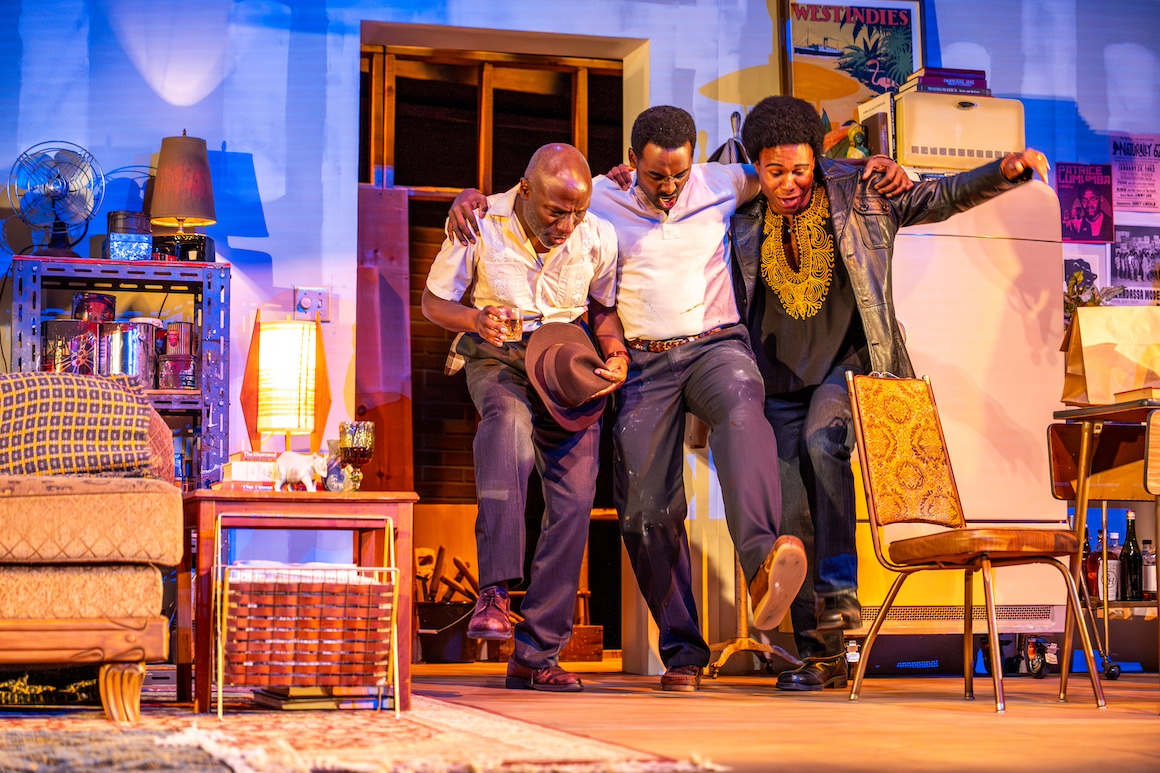
The riots are raging outside when Oldtimer (Andrew Moodie) arrives. He’s carrying swag which he has picked up from loot discarded or dropped by more active participants in the looting that accompanies the rioting. He serves to remind us that there were African-Americans who didn’t have access to college/scholarships etc and therefore constitute a more homogeneous group. Next, the very middle class couple of social worker Cynthia (L.A. Sweeney) and her husband Sonny-Man (Jamar Adams-Thompson) show up. She’s fashionably dressed in what might be called “white style” while he is a poster child for African chic. There are many ways of constructing African-American identity. The reason for their visit is that they have found the model for “messed up girl”.
Enter Tomorrow Marie, or Tommy, (Virgilia Griffith). She has been burnt out of her apartment by the riots and is dressed frumpily with a tacky wig; perhaps as one might go to work in a sweatshop or similar. All she knows is that Bill wants to paint her for some reason. She doesn’t know about the Triptych. But it’s late, he’s a bit drunk and she’s hungry. He goes out to get food while Cynthia and Tommy argue about what is appropriate feminine behaviour. She freshens up and reappears in an African style wrap and her own hair. She no longer looks like “messed up girl”. The others leave and Bill and Tommy go to bed.
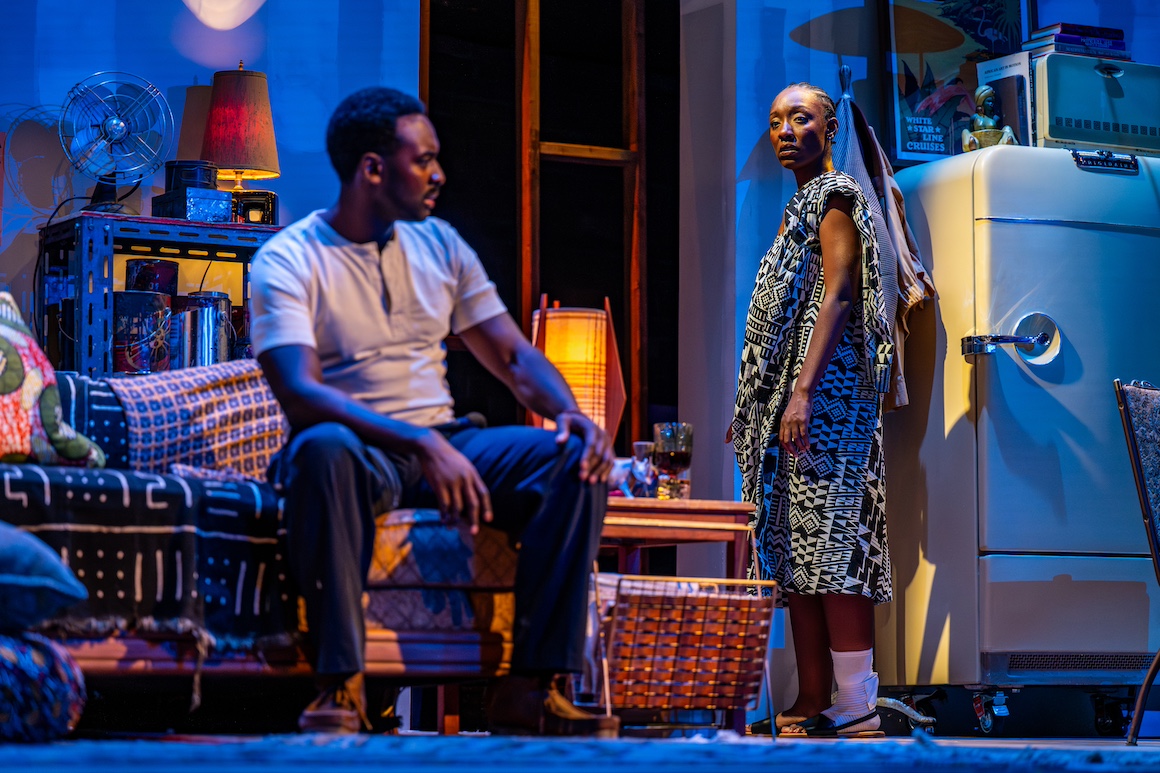
In the morning Oldtimer arrives again and lets slip the real reason Tommy is there. She, of course, is furious and when Cynthia and Sonny-Man arrive she accuses them of using her. She takes them all to task for assuming that her lack of education makes her, and similarly situated women, worthless. In doing so she demonstrates where the real power lies in African-American women. She’s closer to the ideal “African Queen” than Bill’s synthetic version. The plan for the triptych is revised!
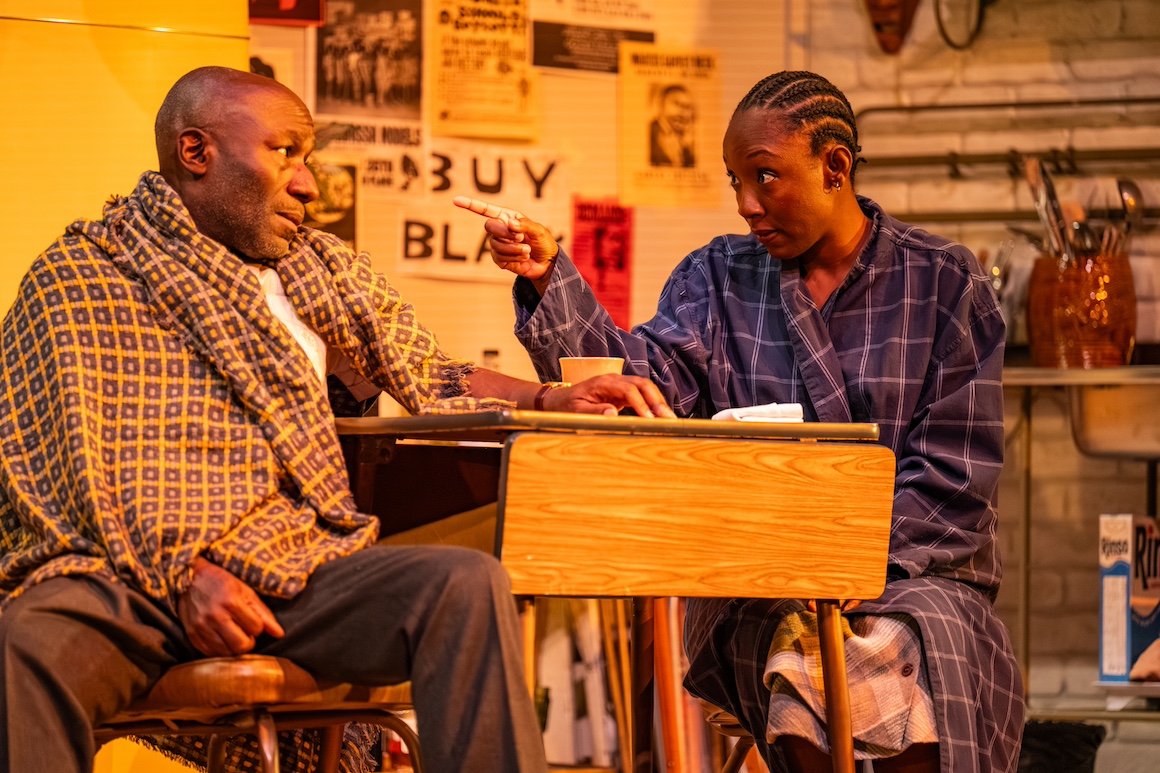
The above may read like a lot of spoilers but this play is not really plot driven. It’s a very effective framework framework for a whole lot of subtle and nuanced dialogue of what it means to be African-American and, especially, an African-American woman in the society they live in. It’s really well written and brilliantly acted. Virgilia Griffith is particularly impressive but it’s an excellent ensemble cast and the direction is pacy and crisp. It’s also technically rather good with excellent lighting (Daniel Bennett) and rather spectacular sound design (Olivia Wheeler). It’s the sort of play that will have you dissecting it for hours afterwards; trying to mentally reconstruct the 1960s (which after all are pretty ancient history now) and why these characters are who they are. It’s also of its time and that means the n-word is used almost as frequently as cognates of “fuck” in more recent plays. That may sit pretty uncomfortably but the nuances of the n-word are integral to the ideas that are being kicked around.
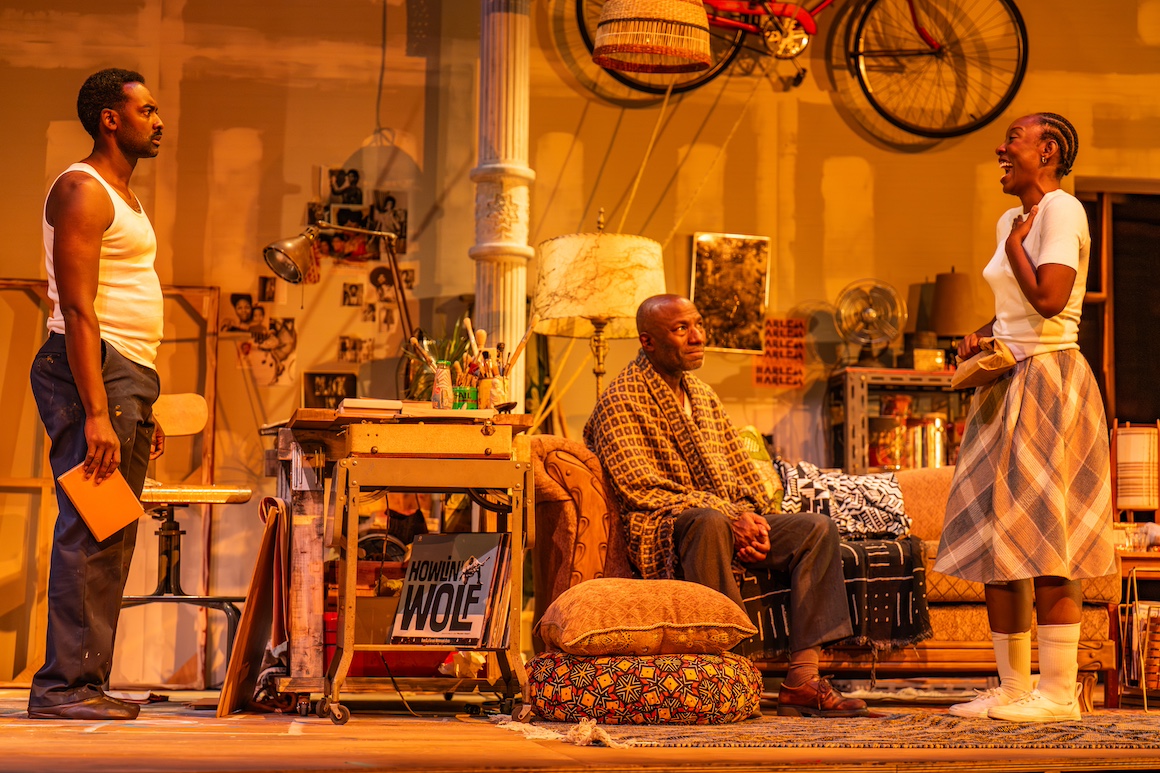
All in all this is 85 minutes of really thought provoking theatre that effectively evokes what was like to live through a pivotal period in American history. Wine in the Wilderness runs until October 4th.
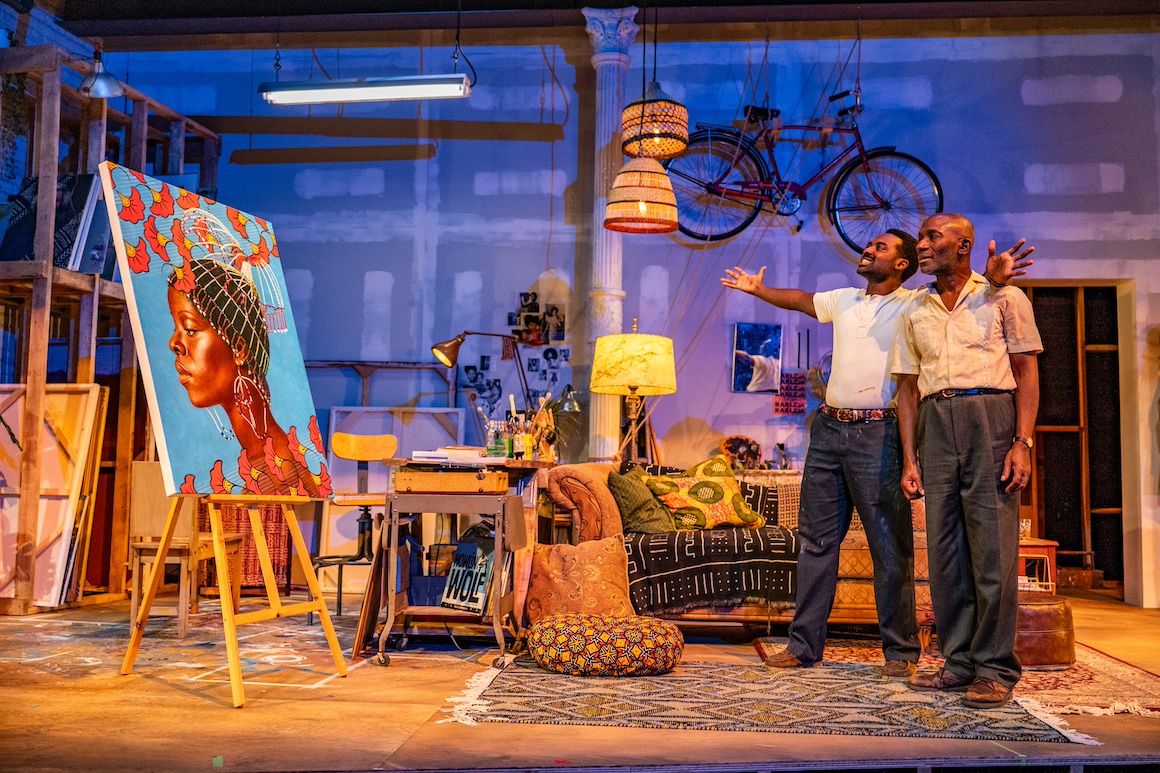
Photo credits: Dahlia Katz

