
Offenbach’s The Tales of Hoffmann is a rather difficult opera to stage. There’s no definitive performing edition and there’s a lot of (too much?) material to work with so decisions have to be made about what to cut. There’s also the fundamental problem of how to frame the stories of Hoffman’s three great loves as he’s supposed to be recounting them in a bar, while drunk, some years after the events described. Plus, there is some sense that all three are really just projections of his current infatuation; the opera singer Stella.

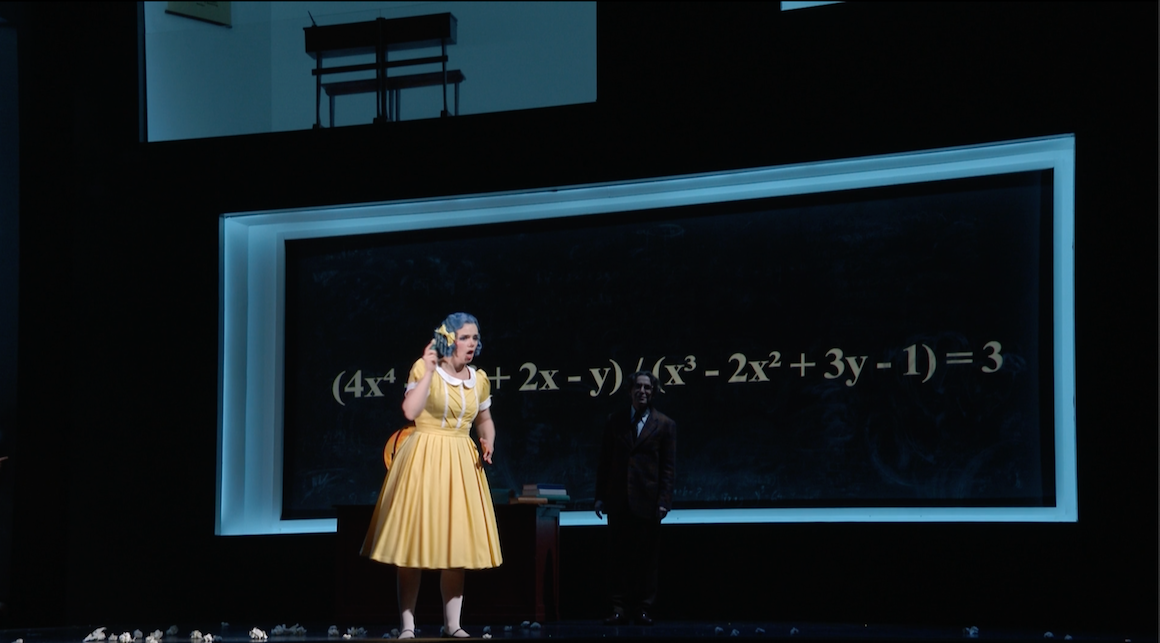
Damiano Michieletto’s solution, in the production recorded at Covent Garden in 2024, is to make the three key acts take place at different points in Hoffmann’s life as looked back on by him in, essentially, old age. So, the Olympia act is staged in a schoolroom with a schoolboy Hoffmann crushing naively on schoolgirl/robot Olympia with Spalanzi trying to keep some kkind of order in an unruly class provided by the chorus. Most of the plot about Spalanzani bilking Coppélius is cut leaving the focus firmly on Hoffmann and Olympia. This sort of simplification is repeated in the other acts.
For Antonia we have young (but adult) Hoffmann fixated on the love of his life who is here portrayed as a dancer rather than a singer. I’m going to come back to the use of dance in the production but here it’s especially important. We see young girl Antonia danced by a young girl while adult Antonia hobbles around on crutches. Only under the influence of Dr. Miracle does she recover the ability to walk and it kills her. Meanwhile we see young Antonia dancing with an adult ballerina who is, one supposes, her mother.

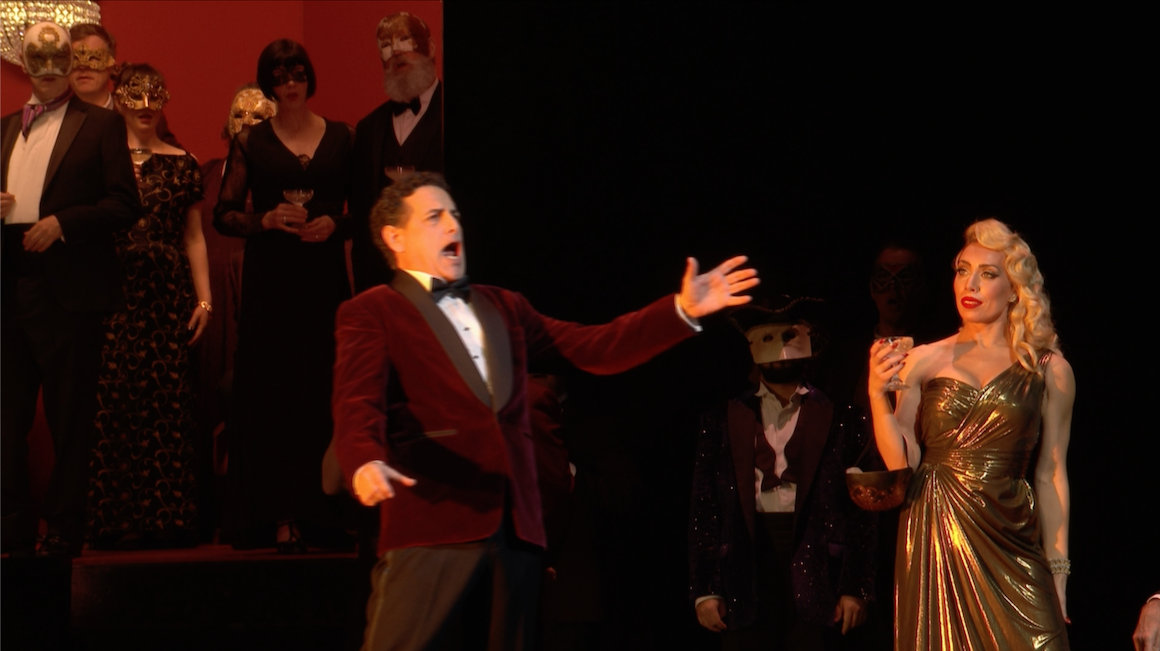
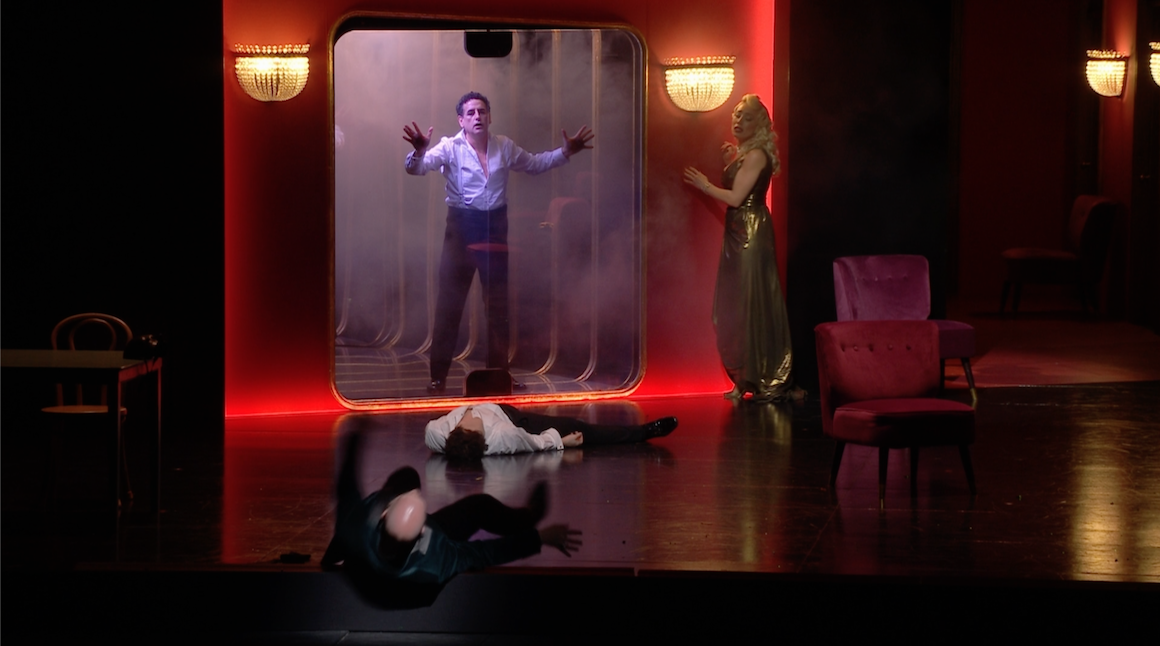
The Giulietta act is set at an expensive party. Everyone is in evening dress. Hoffmann is clearly bored of “love” at this point and it’s pretty clear that his relationship with the courtesan is transactional. “Courtesan nature” is pretty well presented here and it definitely made me think of Socrates visit to Theodote in Xenophon’s Memorabilia. There’s some very neat staging for the capture of Hoffmann’s reflection but the cuts made here means there’s no explanation of how he gets it back. No fight, no nothing.
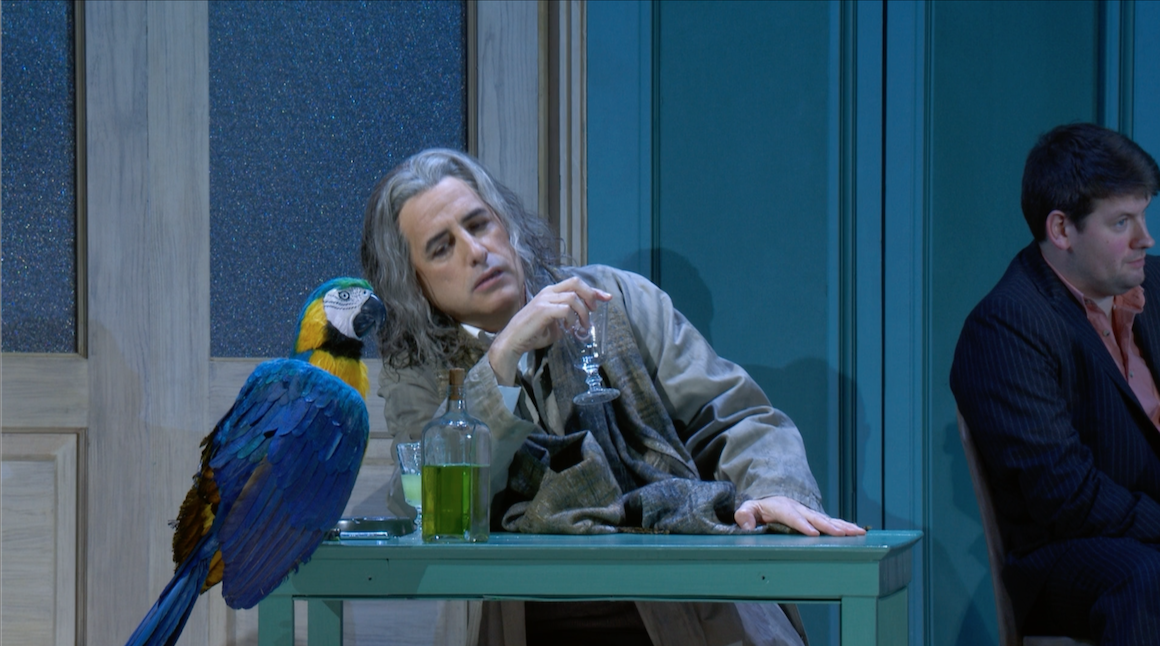
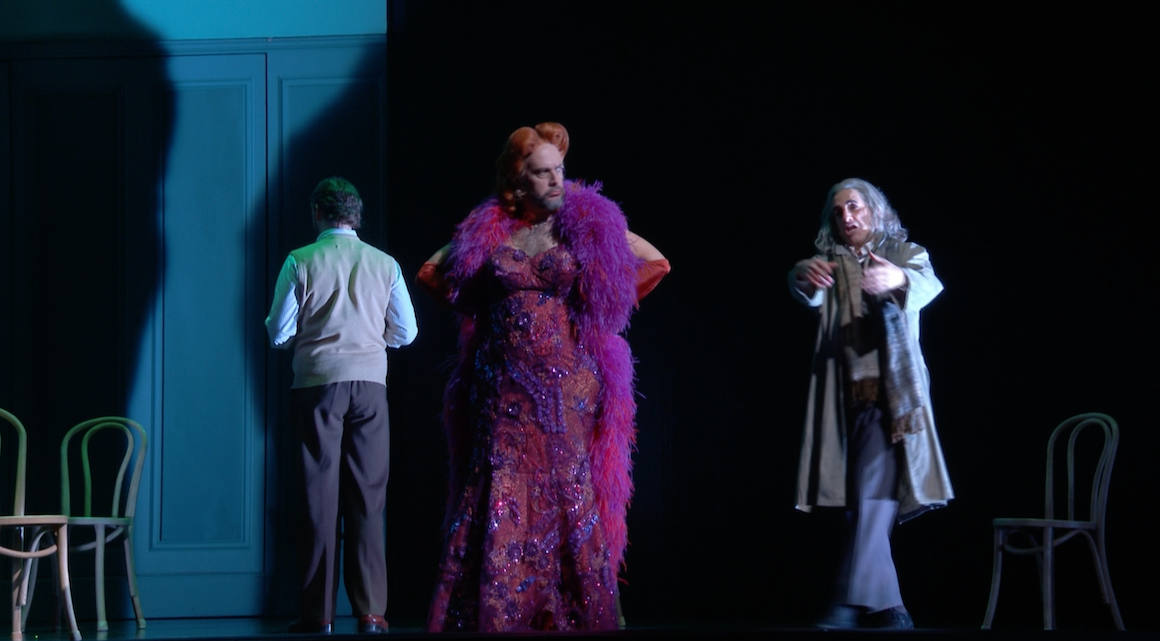
The presentation of Stella, the Muse of Poetry and Nicklausse is also interesting. They are three distinct characters though Stella’s part is reduced to almost nothing, especially since in the Epilogue she’s actually replaced by Lindorf dressed as her. The Muse though gets a big role. Prominent, in fact, in all five acts. She’s costumed as the Green Fairy because, at least in the Prologue, absinthe is Hoffmann’s drink of choice. Nicklausse is a parrot with Julie Boulianne in a sort of parrot outfit carrying a large stuffed parrot around. This may at this stage sound a bit complicated and confusing but I found it had the opposite effect. The story telling is very clear with the focus on Hoffmann and his loves and some of the more extraneous elements eliminated. Creating a distinct character for the Muse also simplified matters.

So to dance. The use of dance in this production is extensive and very high quality. There are two recurrent themes; the Green Fairies and the Devils. I think they intervene in every act including Prologue and Epilogue; emphasising Hoffmann’s relationship with drink and Lindorf etc’s identification with Satan. There are multiple Olympias dancing in Olympia’s act. There are classical ballet dancers; young and old, in Antonia and showgirls in Giulietta. There’s also a very impressive stilt walker. The standard of the choreography (Chiara Vecchi) and the dance performance is really high. I think the only other house I’ve seen integrate dance into an opera so effectively is Paris.
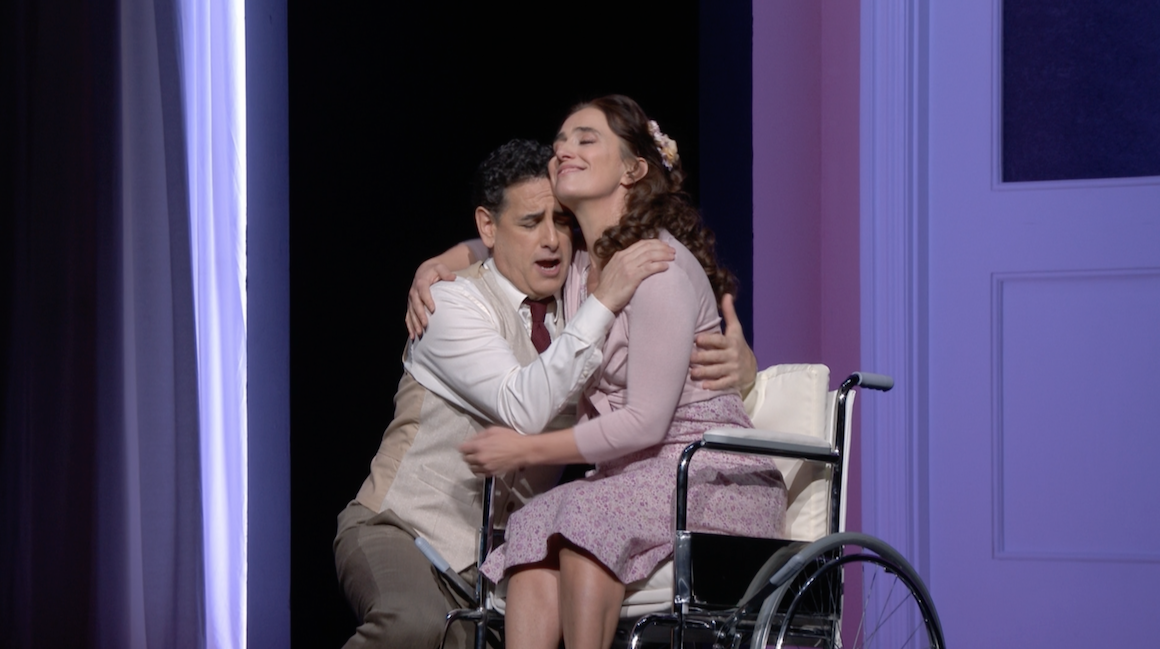
All of this is backed up by really strong performances by the principals. Juan Diego Flórez is Hoffmann and one gets the feeling that this is a role he’s been waiting to play. He still has thrilling high notes but he’s matured as an actor and creates a distinct Hoffmann for each act here. It’s impressive. Olympia is Olga Pudova and she’s perfect. Her coloratura is brilliant and her robotic acting (maintained at curtain call) is rather wonderful. Ermonela Jaho, as Antonia, does what she does best, which is rip your heartstrings out. Does any singer do “vulnerability” as well as she does while singing with exemplary choice of colour and dynamics? Marina Costa-Jackson is a suitably sultry Giulietta with some darker colours to distinguish her from the other two.

There’s a very playful performance by Christine Rice as the Muse. It’s sort of like Puck had joined the WI. Julie Boulianne actually does rather well as a parrot! She’s also musically very good in her big numbers like the Barcarolle duet.Then there’s Alex Esposito as Lindorf and his avatars. He is splendidly creepy. He’s not quite as “fire and brimstone” as some playing this role but I really liked the somewhat more subtle approach. The myriad of other roles are also done very well. Antonella Manacorda conducts. He goes for “grand” and gets it. The orchestra and chorus respond extremely well and the overall sound is both dramatic and impressive.
Video direction is by Rhodri Huw and he does a good job of capturing a set that often has multiple elements in play at the same time. Picture quality is the usual high Blu-ray quality and sound is maybe a bit better than most releases (which may be contributing to how good the orchestra sounds). The stereo track is 96kHz/24bit and you can notice a teeny bit more detail and solidity than usual. The surround track is equally good and presumably was mixed from equally hi-res sources.
There are actually extras on the disk (which doesn’t happen much these days). There’s a good discussion with the director and a short film of the three sopranos discussing their roles with the conductor and each other. Well worth watching. The booklet is basic with a synopsis and a rather cursory track listing which doesn’t actually help much unless one has the score handy. Subtitle options are English, French, German, Japanese and Korean.
There are a lot of very decent modern recordings of this work but this one, I think, goes to the top of my list. The production tells the story well and the singing and acting is exceptional.

Catalogue information: Opus Arte Blu-ray OABD 7330D
 operaramblings