
Richard Strauss’ Intermezzo is a very strange semi-autobiographical piece apparently dealing with the married life of Richard and Pauline Strauss thinly disguised as Court Composer Robert Storch and his wife Christine. What is really a bit weird is how these two characters are presented. Herr Storch is a bit stuffy and self absorbed but Frau Storch is just awful. She is rude to everyone, especially her long suffering maid and other servants, and she overreacts bizarrely to just about everything. She’s spoiled, self-centred, vain and generally a giant PitA.
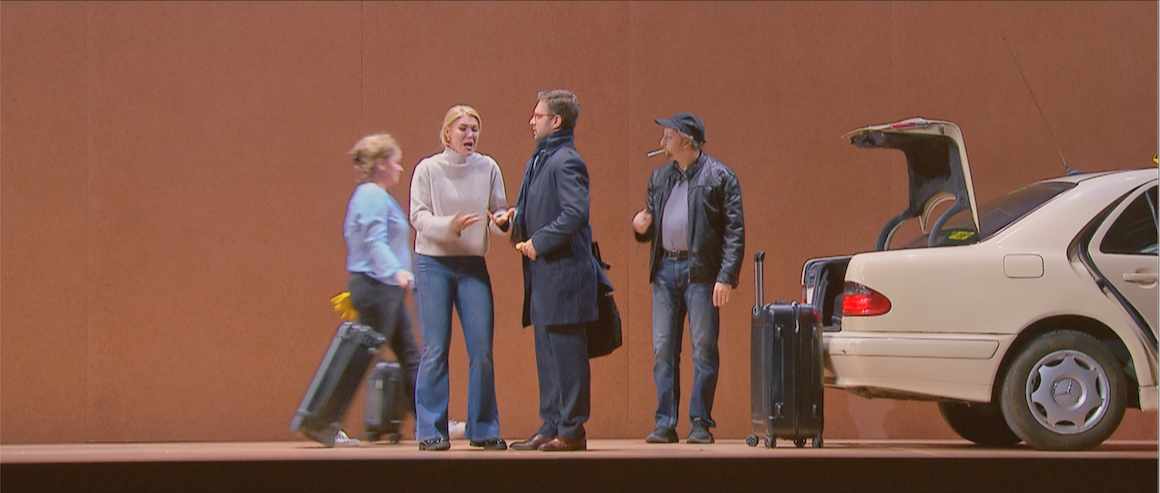
The plot is straightforward enough. Storch is off on tour. Christine meets a young Baron Lummer who she finds an amusing companion until he asks her for money. A letter from one Mitzi Mayer addressed to Storch causes Christine to go nuts, demand an immediate divorce and throw the household into total confusion. Storch discovers the letter was misaddressed; in fact being intended for his colleague Stroh. The Storches reconcile… sort of. It’s structurally weird too. It’s broken up into a series of scenes, some of them as short as two minutes, between which the orchestra plays “symphonic interludes”; some of which are quite interesting and are, in many ways, the most Straussian thing about the opera.
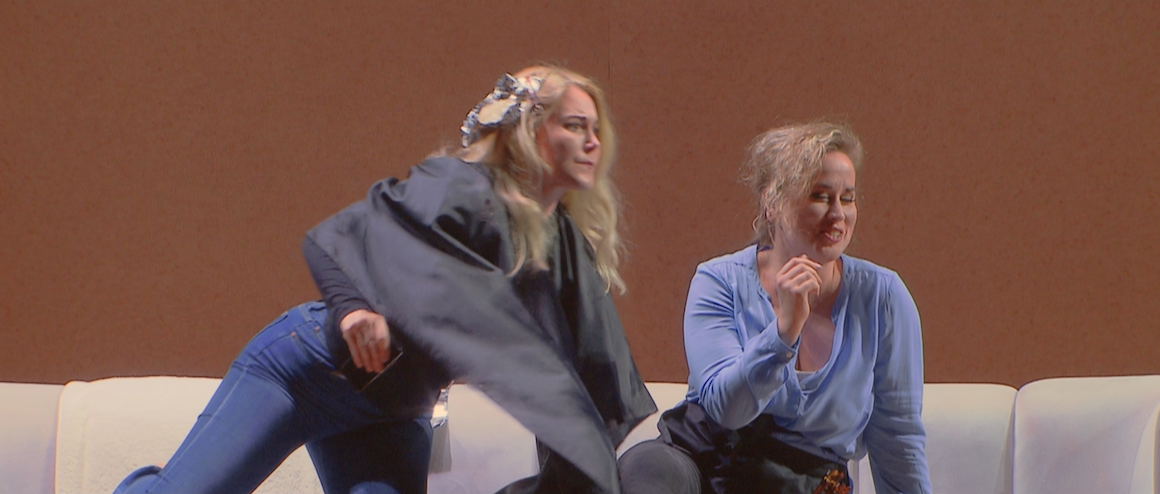
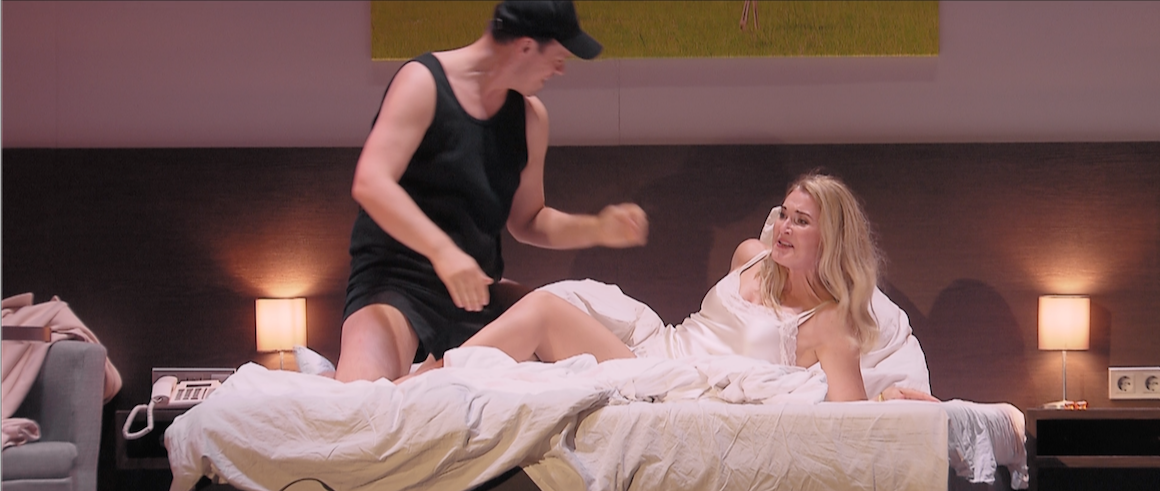
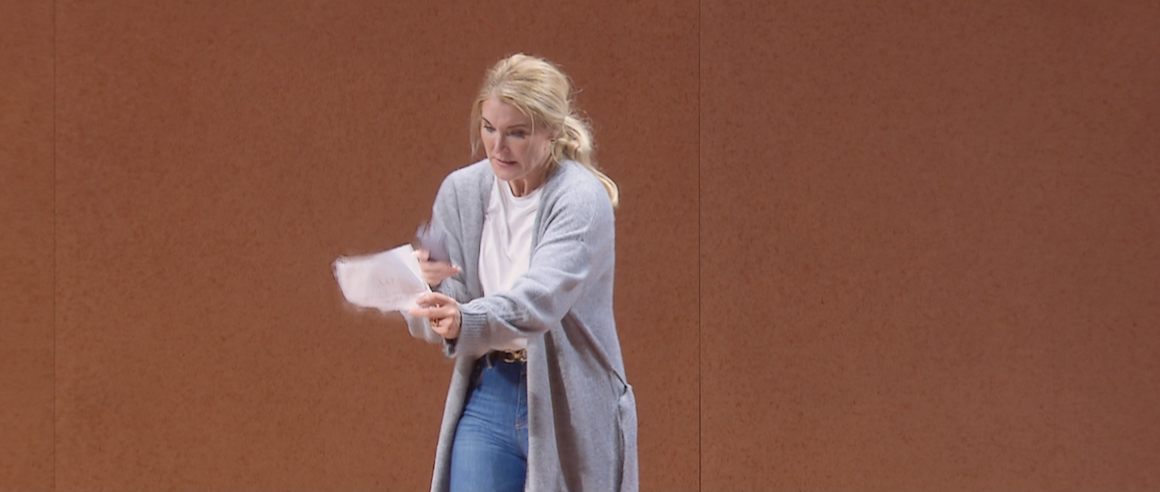
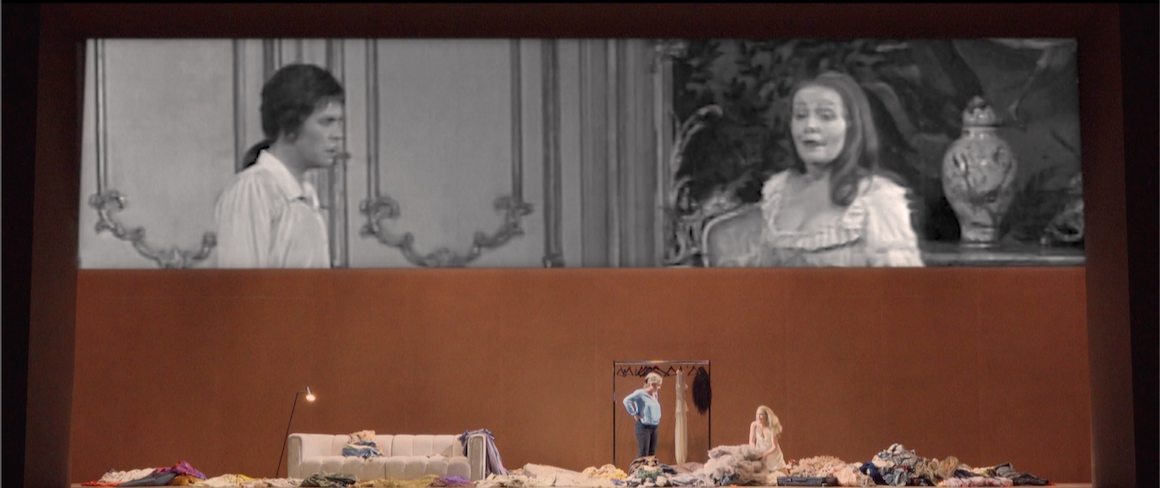
Tobias Kratzer’s production for Deutsche Oper Berlin, recorded in 2024, is characteristically inventive and, equally characteristically, makes extensive use of video projections. In fact the upper half of the stage is a giant video screen with live action beneath it for the most part. He has updated the setting to a contemporary one so letters and cables become text messages and emails, mobile phones are much in evidence and various other elements are updated; Storch returns from tour by plane for example, but it still works more or less as written. The one big exception is that when Christine and her boy toy are discussing whether or not to keep dancing and Christine is complaining that Robert doesn’t dance anymore they are in bed together. Which puts an interesting spin on Christine’s view that Robert having an affair is the end of the world.

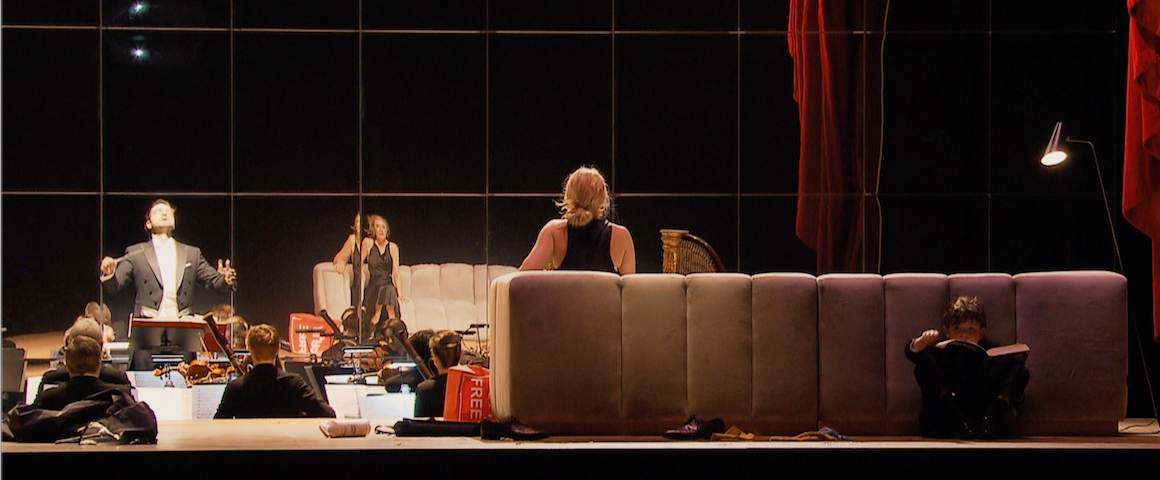
The orchestral interludes see the pit filmed live and the footage projected on the screen. At least in Act 1. In Act 2, as the action gets more tempestuous, we get the orchestra being conducted by Storch rather than Runnicles, a sequence where the wind machine appears to be blasting into the pit and another one where the pit is deserted.
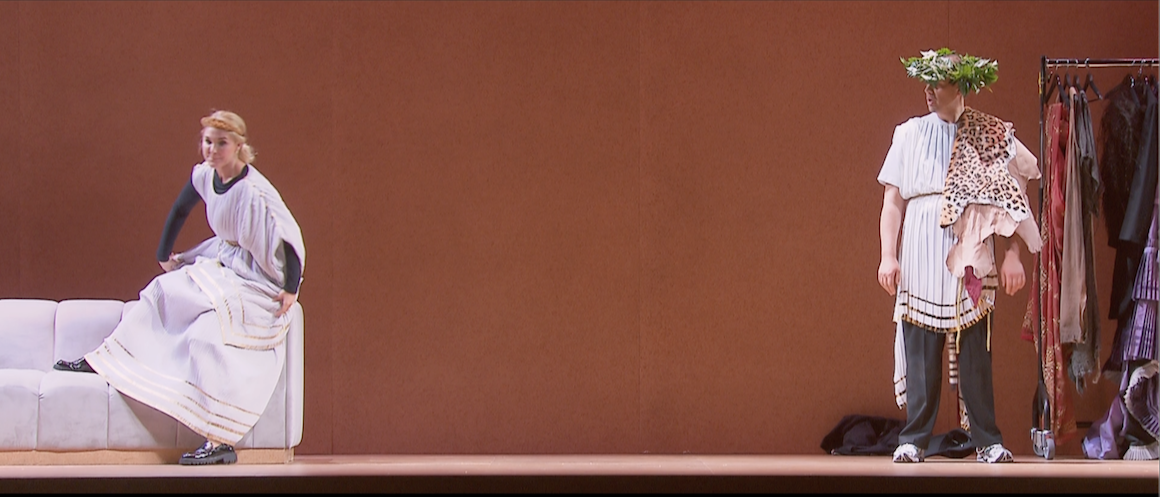
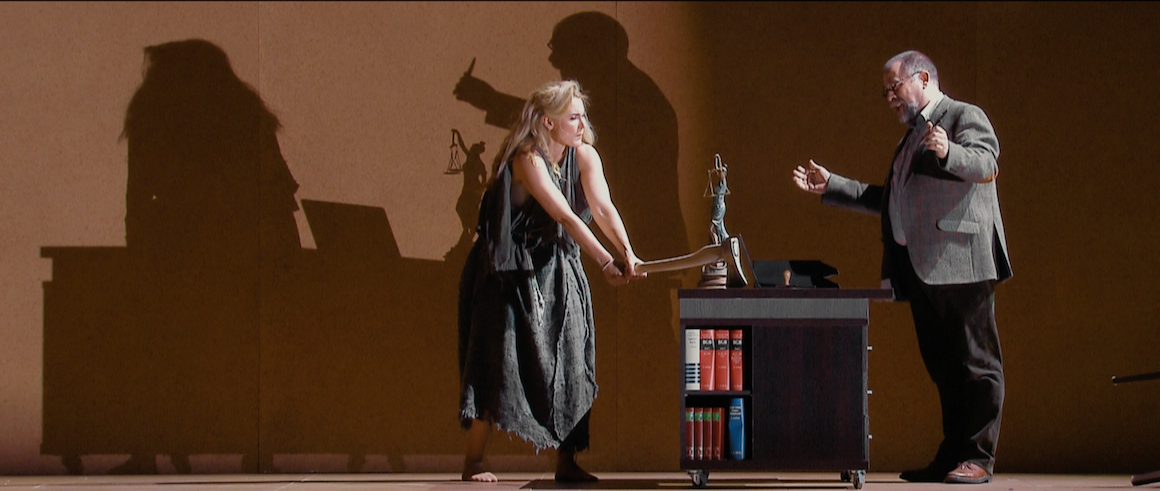
There are cute references to a whole raft of other Strauss operas. In scene 5 where Lummer asks for cash it’s set in a scene where he and Christine are playing dress up with various Strauss characters and he’s miming the Presentation of the Rose when he actually asks for the money. There are other points where the projections are old black and white film of various Strauss opera productions but best of all is when Christine goes to the notary to demand a divorce. She’s dressed as Elektra and is swinging a very large axe in a most dangerous fashion.
There are other cute touches too. The Storch’s son appears numerous times in miniature evening dress and with a toy piano, not to mention a Lego set of the Sydney Opera House. Towards the end the barrier between “art” and “life: dissolves further. A giant mirror behind the stage is revealed and we see Storch conducting a reflection of the orchestra while Christine sings off her score and the boy conducts his own score from behind the sofa.
Musically it’s pretty mixed. The orchestral interludes, especially in Act 2, are interesting but for the most part the vocal line is unrewarding and the singers, while dealing with quite difficult music, don’t have much opportunity to sound good. A fair chunk of text is spoken anyway. Musically quite disappointing really.
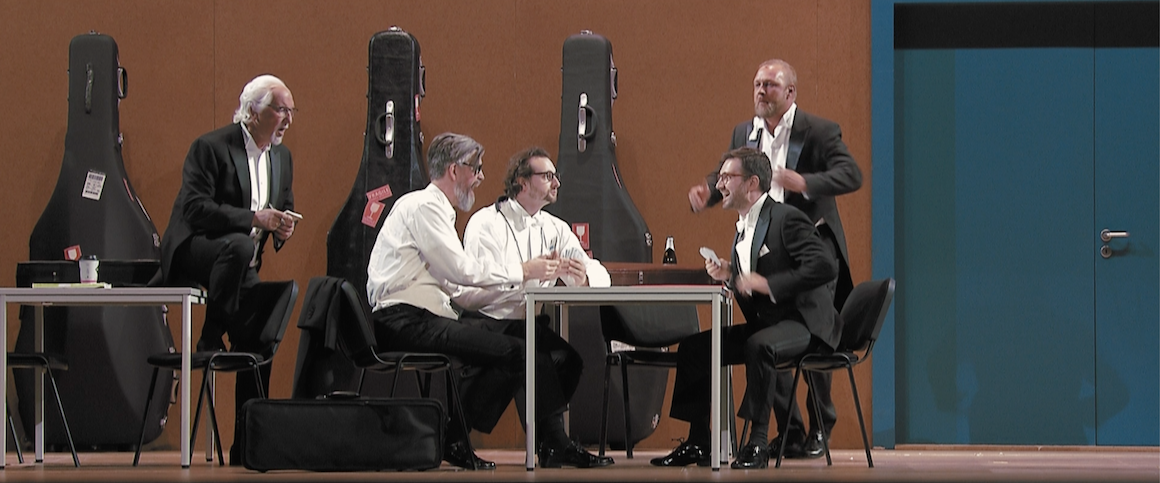
Performances are pretty good. Pride of place goes to Maria Bengtsson as Christine. She’s just the right amount of Over The Top and she’s vocally solid. Philipp Jekal is quietly solid as Storch. Anna Schoek is rather good as the long suffering maid Anna. Thomas Blondelle is suitably gormless as Baron Lummer and has a rather nice tenor. Joel Allison has an Act 2 cameo as the Commissioner; the one character who is prepared to give his honest opinion of Christine. Elliott Woodruff is charming as the son Franzl. The other minor characters are all perfectly adequate. Donald Runnicles conducts and makes the interludes sound suitably Straussian.
Video direction is by Götz Filenius. He manages the tricky job of letting is see the live action and the videos. The pit videos are simply presented as they were seen in the house. Blu-ray sound (the usual stereo and DTS-MA-HD) and picture are just fine. The booklet has a track listing and synopsis and an interesting interview with Kratzer. Subtitle options are English, German, Japanese and Korean.
I’m not convinced by this opera at all but I can’t imagine it getting a significantly better production and the performances are well up to standard.
Catalogue information: Naxos Blu-ray NBD0188V
 operaramblings
Thank you for the thoughtful review.