
Sometimes opera directors come up with a twist to a plot hat is illuminating without requiring pretzel logic to actually align it with the libretto. I think Jossi Wieler and Sergio Morabit’s production of Wagner’s Lohengrin for the Wiener Staatsoper in 2024 manages that pretty well.
The twist is that Elsa does murder Gottfried and Ortrud sees her do it. In the production we see it happen during the prelude. After that the piece plays out pretty much straight until the final denouement when it’s rather cleverly wrapped up but I’ll not do a spoiler on that. It raises all kinds of questions. If Elsa is guilty what is the source of Lohengrin’s power? Indeed who/what is he? Is Ortrud right about what happens to a people who forsake the old (true?) gods for some Middle Eastern cult? Or is it all just the sort of mess that happens when people put belief in their Invisible Friend ahead of what is in front of them? One could go on…
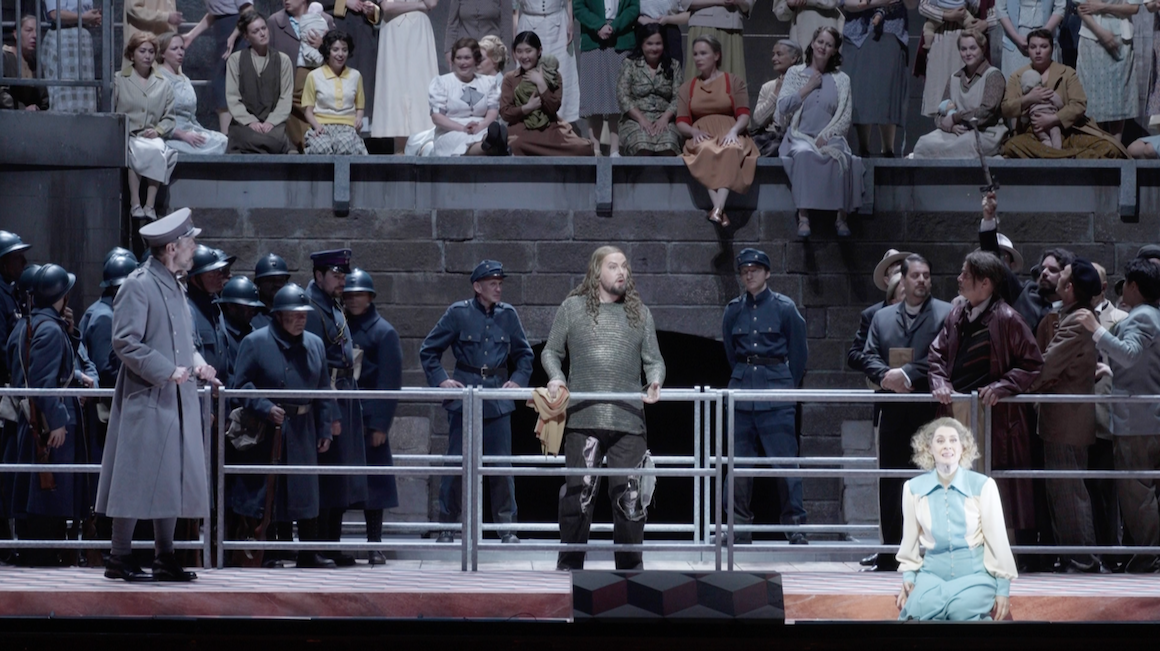
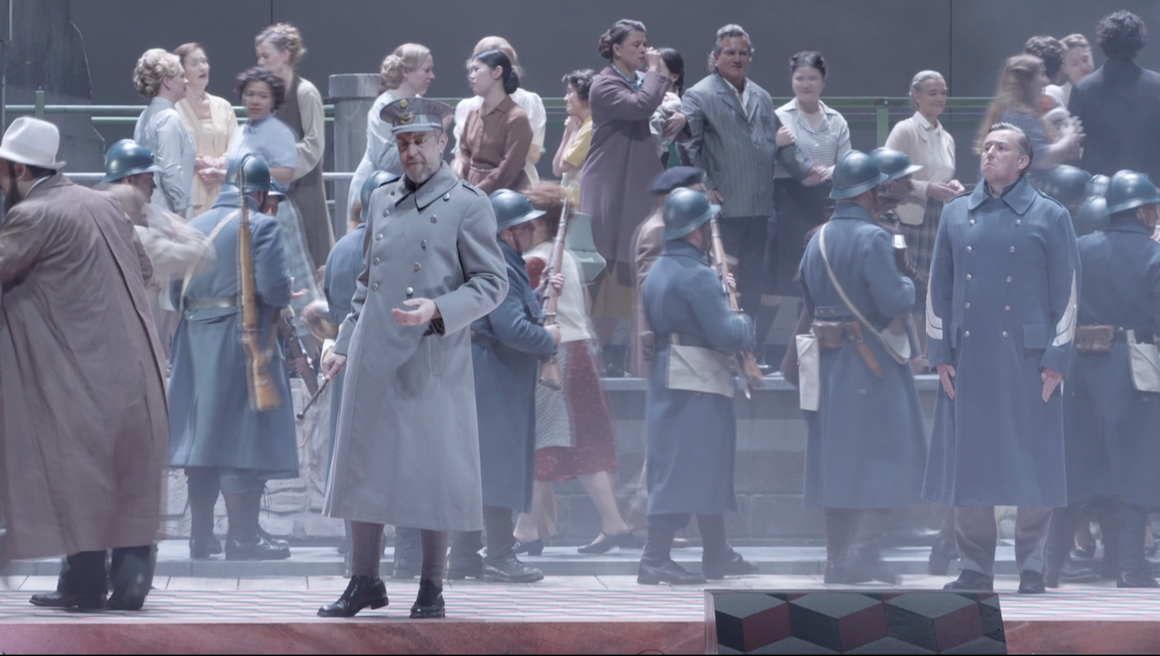
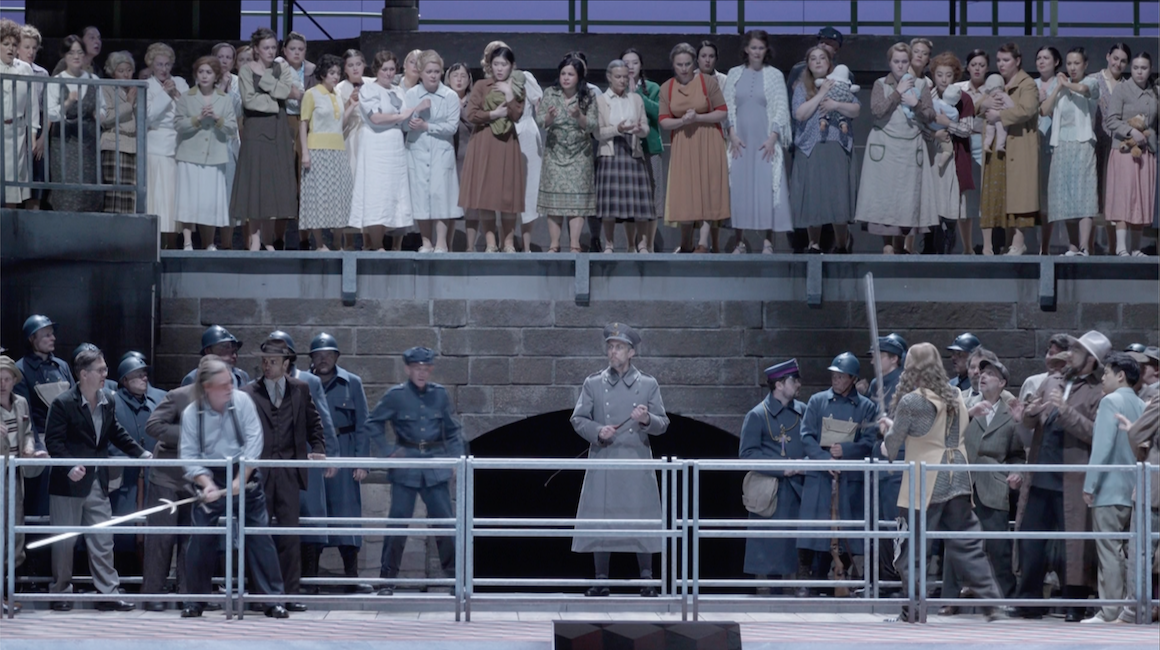
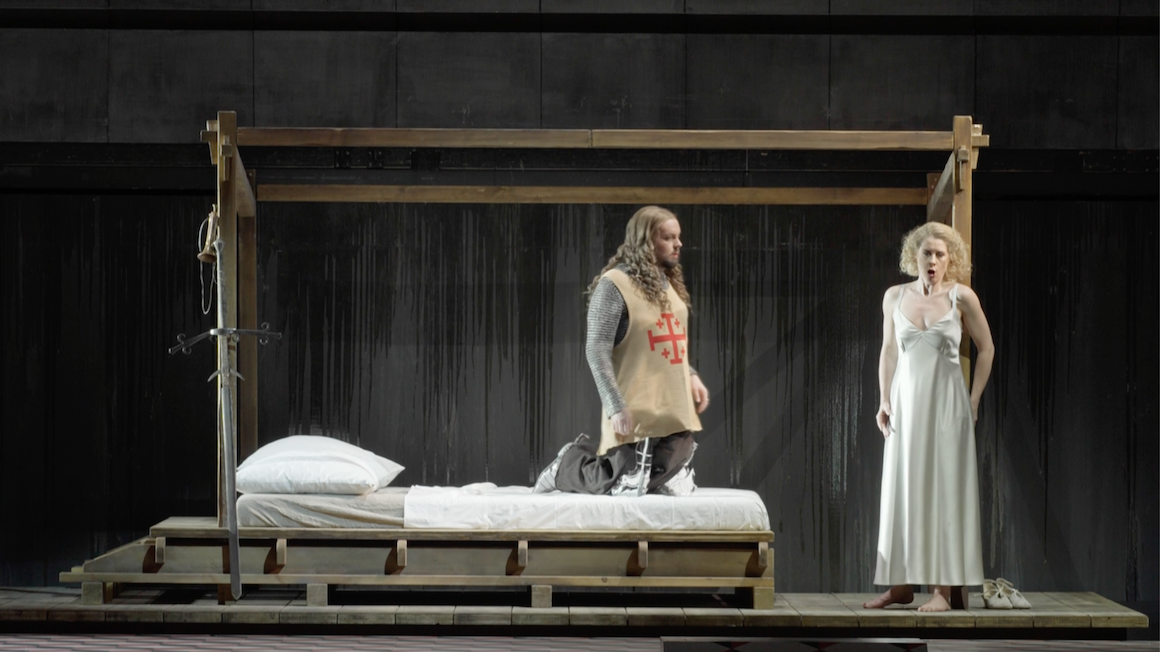
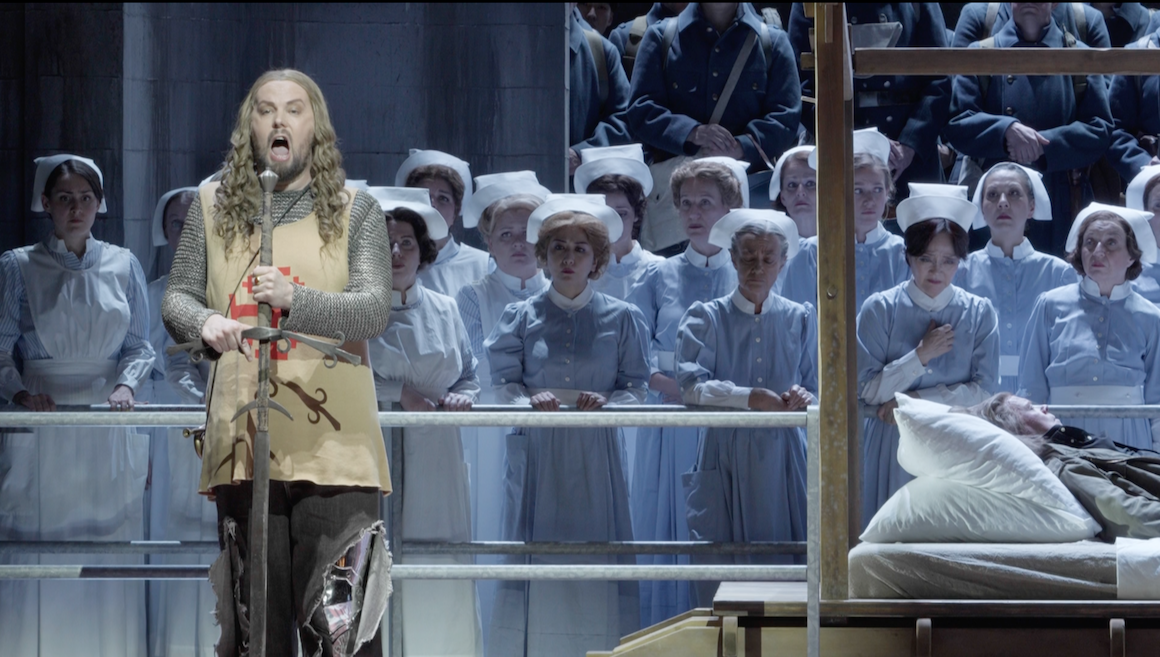
In other respects it looks like it’s set in 1920s Belgium. It’s a bit grungy with a canal and soldiers in uniforms of that period. The take on König Heinrich is interesting. He’s portrayed more as a kindly old gentleman who, for example, conducts the choir at the Elsa/Lohengrin wedding than a war lord. There are only a few things that are anachronistic in the 1920s setting. Lohengrin is wearing 12th century-ish armour and when Telramund demands Lohengrin spill the beans he’s carrying a much too modern rifle. And the swan? The only swan we see is a pendant, presumably Gottfried’s, that Ortrud fishes out of the canal. Along the way from murder to denouement there are a series of subtle visual and dramatic touches that just keep the tension up.
Musically it’s about as good as it gets. The singing is terrific but in some ways the orchestra is the star. Christian Thielemann extracts supreme subtlety and beauty from the pit. Lohengrin may well be Wagner’s most obviously beautiful, lyrical score and after listening to this version you’ll probably concur with that.
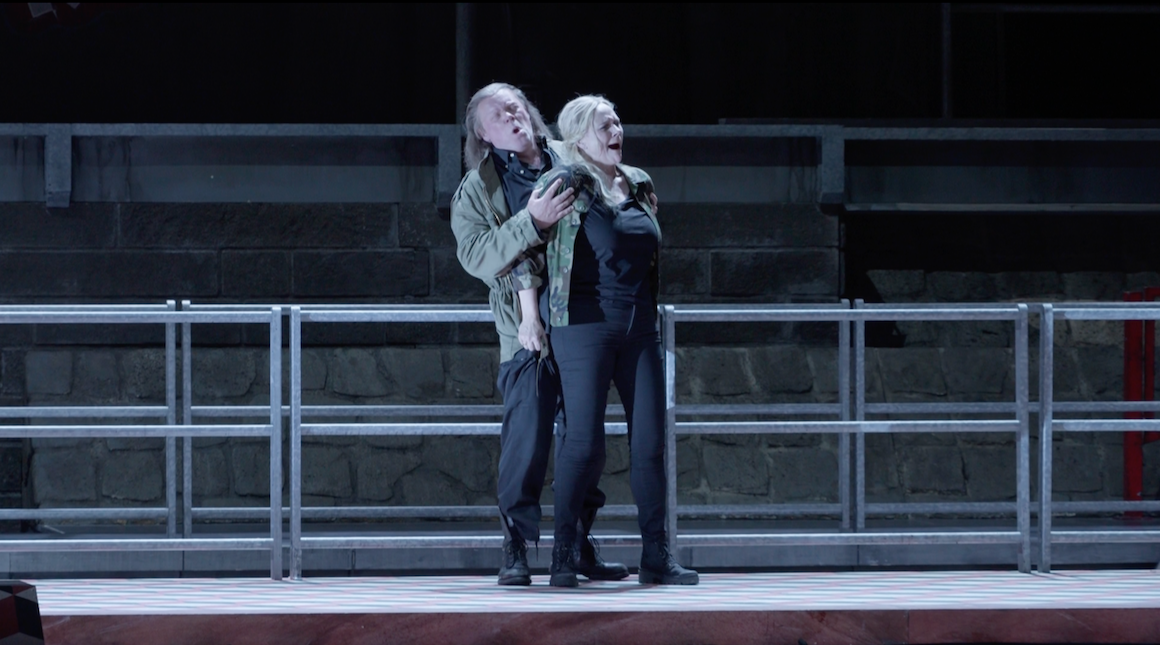
I don’t want to downplay the singing and acting though because it’s terrific. Is there a better König Heinrich around than Georg Zeppenfeld? I really doubt it. He always sings the part with a beautiful solidity and he seems capable of becoming whatever the production needs. The Lohengrin here is David Philip Butt and he’s just gorgeous to listen to. Malin Bystrom, as Elsa, is capable of a mosttv gorgeous, ethereal sound. “Einsam in trüben Tagen” is really impressive. But she can also act and make her voice wilder which she does in Act 3 as Elsa becomes progressively unhinged. Martin Gantner and Anja Kampe are a bit terrifying as Telramund and Ortrud. They have terrific chemistry and Gantner’s swaggering, over confident persona is balanced by Kampe’s icy, sardonic, self control. There’s some powerful singing too from Attila Mokus as the Herald. The minor roles are all more than adequate and the house chorus is excellent.
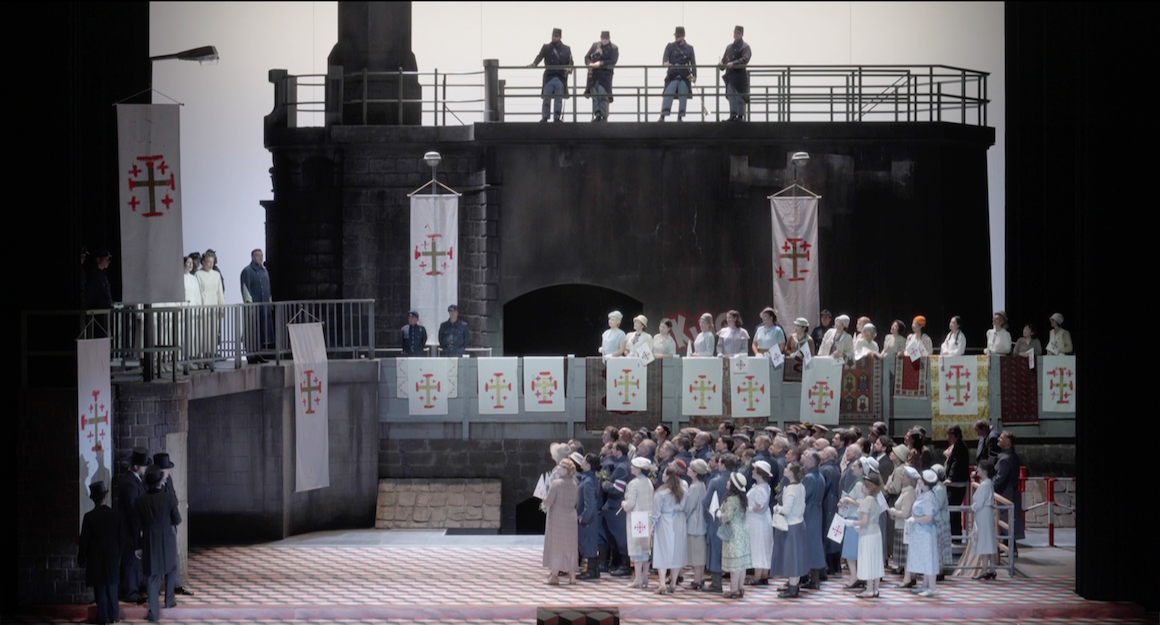
The filming is by Tiziano Mancini and it’s nicely judged so with Bluray standard video and excellent surround and stereo sound it makes a good package. The booklet has quite useful notes as well a synopsis and track listing. Subtitle options are English, French, German, Spanish, Japanese and Korean.
Where does this stand relative to other (fairly) recent recordings? First let’s say that for a “traditional” recording of Lohengrin you have to go back to the last century with all that that means in terms of technical quality so we wont go there. Among “high concept” productions this new one stands up well to some strong competition. Hans Neuenfels Bayreuth production remains a personal favourite though Yuval Sharon’s later Bayreuth production is interesting if a bit puzzling. Both are excellent musically. YMMV.
Catalogue information: Unitel Blu-ray 769504
 operaramblings