
Siegfried has been described as the scherzo of the Ring cycle and Andreas Homoki seems to have at least partly run with that. There are quite a few places, including some less obvious ones, where he seems to be going for laughs. The obvious ones are obvious enough. You can’t really have a bear in the first scene without it being comic but there were also times when Wanderer was camping it up a bit. We’ll come back to that.
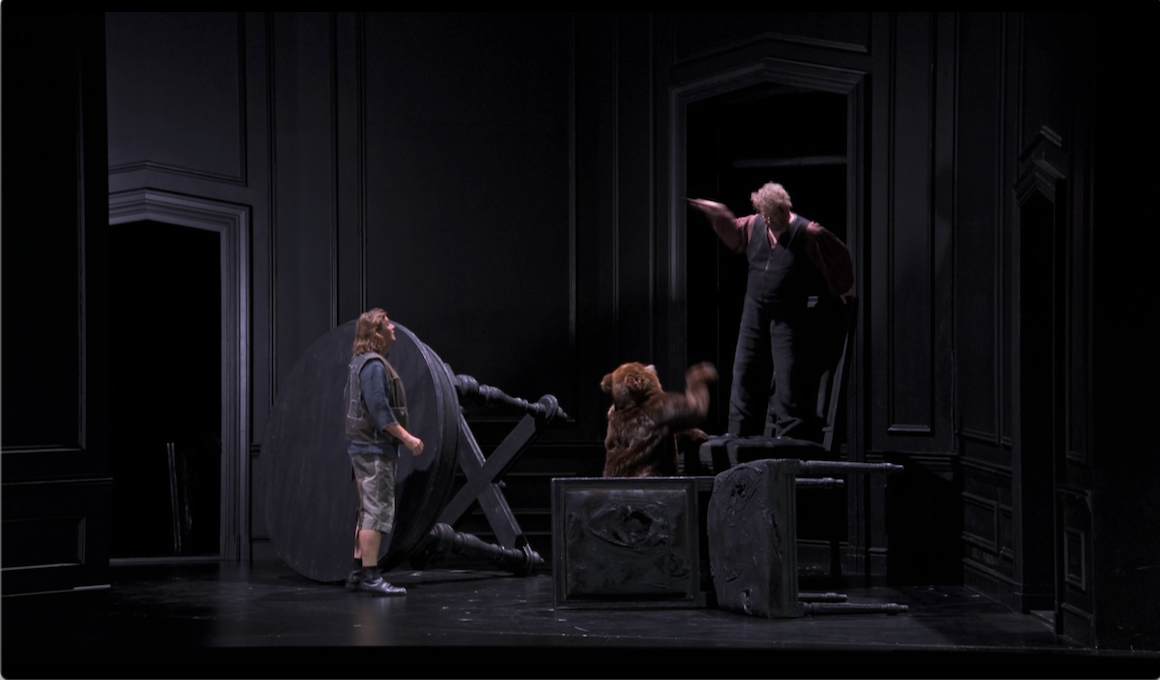
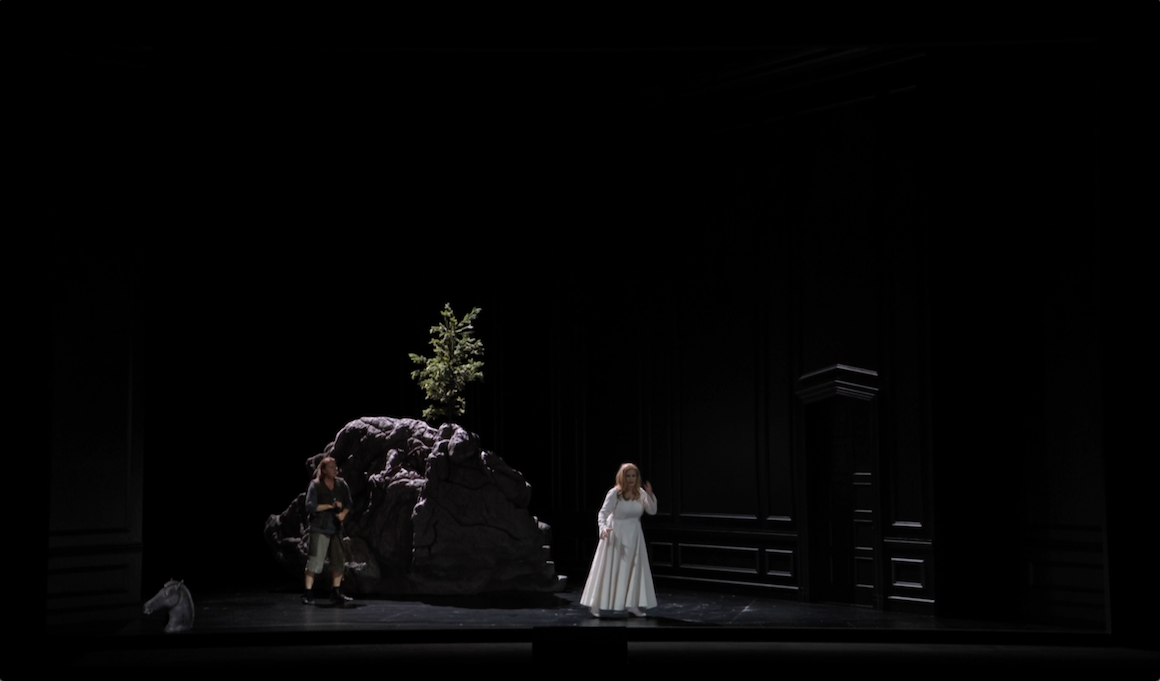
There are continuities and discontinuities with the earlier two operas. It’s the same “rotating mansion” set up but much, much darker. It’s almost like it’s been painted dark grey. It doesn’t rotate nearly as much here either. Long stretches take place with no change of set. One set, used for several different purposes consists of very oversized and rather tatty furniture strewn around.
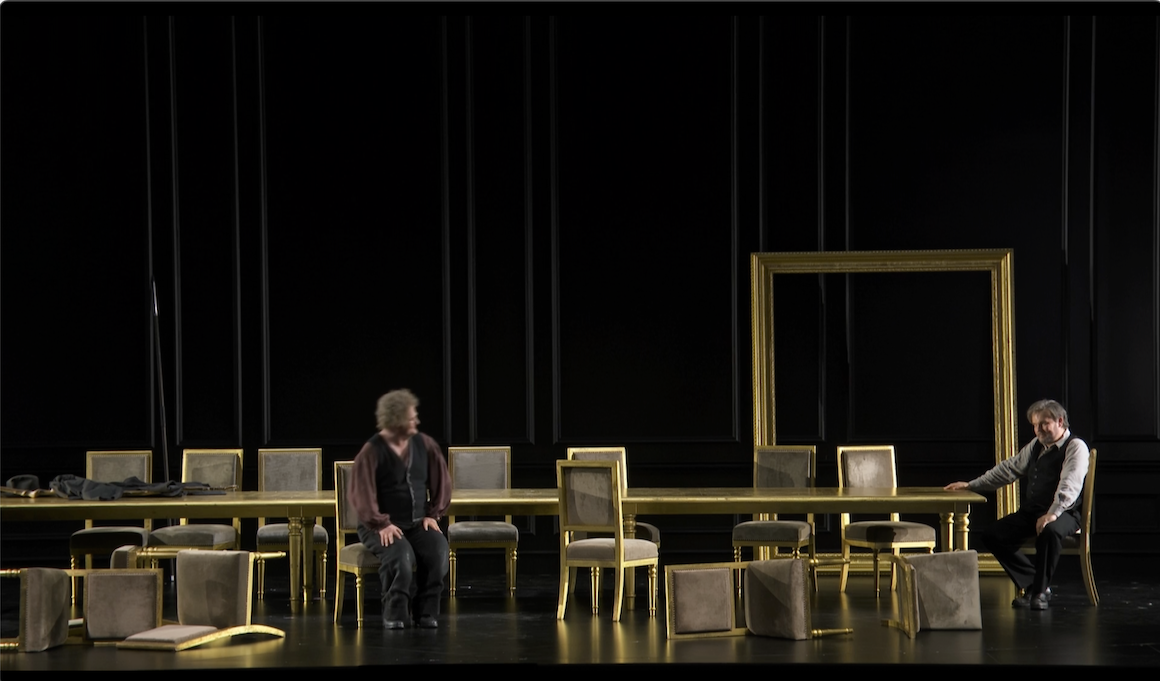
Other settings are very literal. There’s a forge with lots of flame. The rock in the final scene is a rock. Fafner is a dragon. The Woodbird is a soprano in white with flapping wings. But some other, more abstract, elements remain. At key points; right at the end of the riddle sequence, when Wanderer summons Erda and the final confrontation between Wanderer and Siegfried, we are back in the “boardroom” at Valhalla complete with, now empty, picture frame.
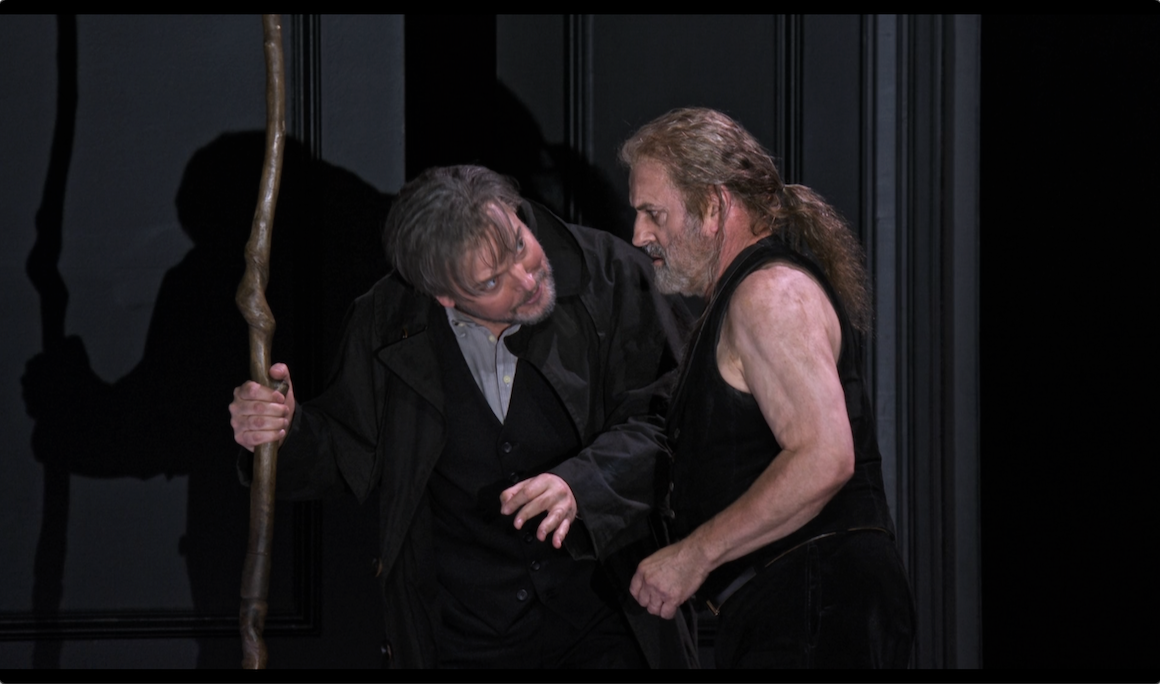
So what’s going on? I think Homoki is really focussing on the development of the Wotan/Siegfried axis. Siegfried, sung by Klaus Florian Vogt comes over as very young and very naive. Konieczny’s Wotan seems increasingly unhinged. He’s losing control of himself as well as the situation and he doesn’t care. He seems to revel in his powerlessness in the Act 3 encounter with Siegfried and in his rejection by Erda (and by implication Brünnhilde). It’s a really interesting reading that probably needs more than one viewing to unpack.
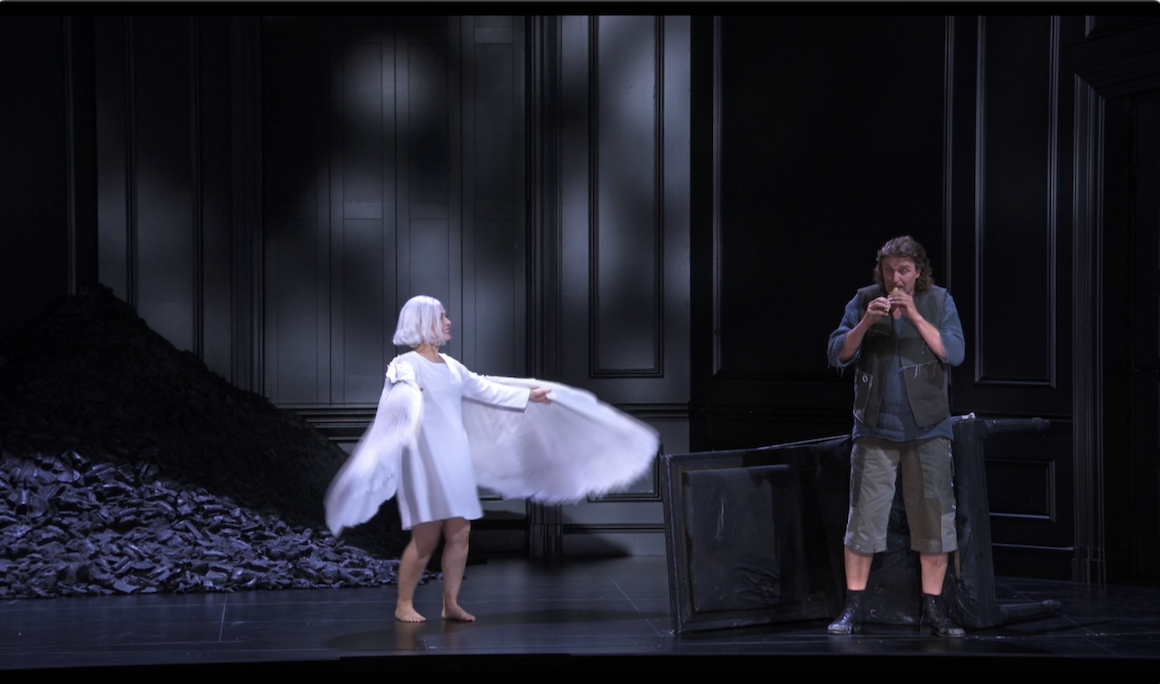
The performances continue to be excellent. Chris Purves is back as Aberich with Wolgang Ablinger-Sperrhacke as Mime and both are as good as in Das Rheingold. The latter is probably even better. David Leigh takes over as Fafner and he’s weightier, bassier and more dramatic than either giant from the earlier opera. He’s really good and quite touching. There are effective cameos from Anna Danik as Erda and the rather charming Rebeca Olvera as the Woodbird.
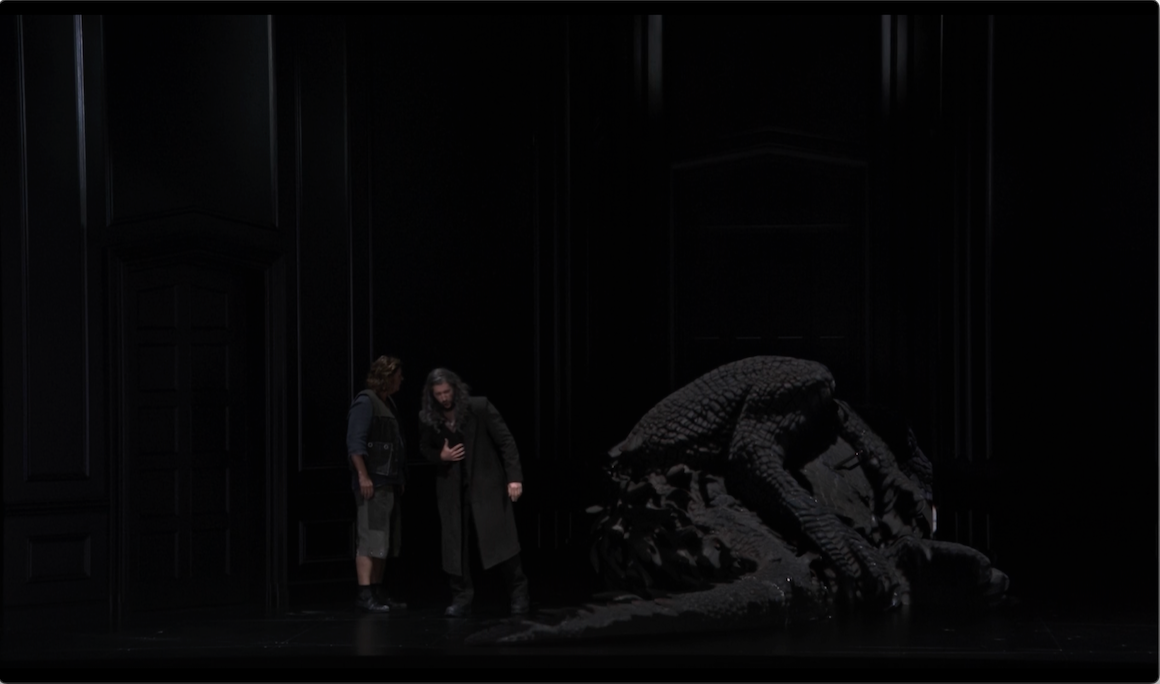
Since we’ve already covered Konieczny that leaves Camilla Nylund’s Brünnhilde and Klaus Florian Vogt’s Siegfried. Nylund carries on from where she left off in Die Walküre. She sings radiantly and is absolutely solid. She also has great chemistry with Vogt. He’s perhaps brighter of tone and maybe a little lighter than the average Siegfried but he’s got great agility and can cope with Gianandrea Noseda’s pretty fast and rhythmically tight approach. He has great high notes too and he can act. In fact he’s a pretty good comedian. If he does have the heft to sing the role in a bigger house Nylund and Vogt could be the Brünnhilde and Siegfried of choice for a while to come.
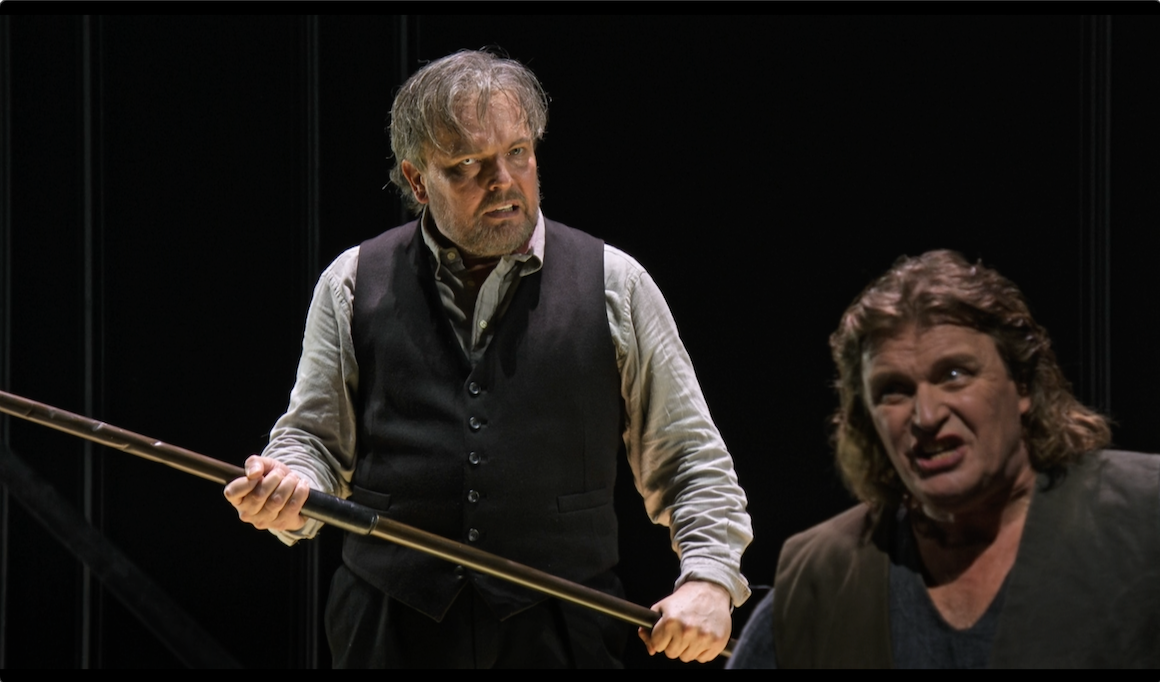
Michael Beyer changes up his approach to filming a bit here. He has to. It’s really dark in places so he has little choice but to use more close uos. What’s lurking in the dark? Who knows? Otherwise technical details are the same as the first two operas and are discussed in the Das Rheingold review.
Das Rheingold
Die Walküre
Götterdämmerung
Final thoughts on the Zürich Ring
Catalogue information: Accentus Music ACC60656 (4 Blu-ray disk boxed set)
 operaramblings