
Walter Sutcliffe’s staging of Handel’s Brockes Passion, recorded at the Halle Festival in 2023, would be disturbing under any circumstances. Watching it during and just after the US elections borders on the unbearable.
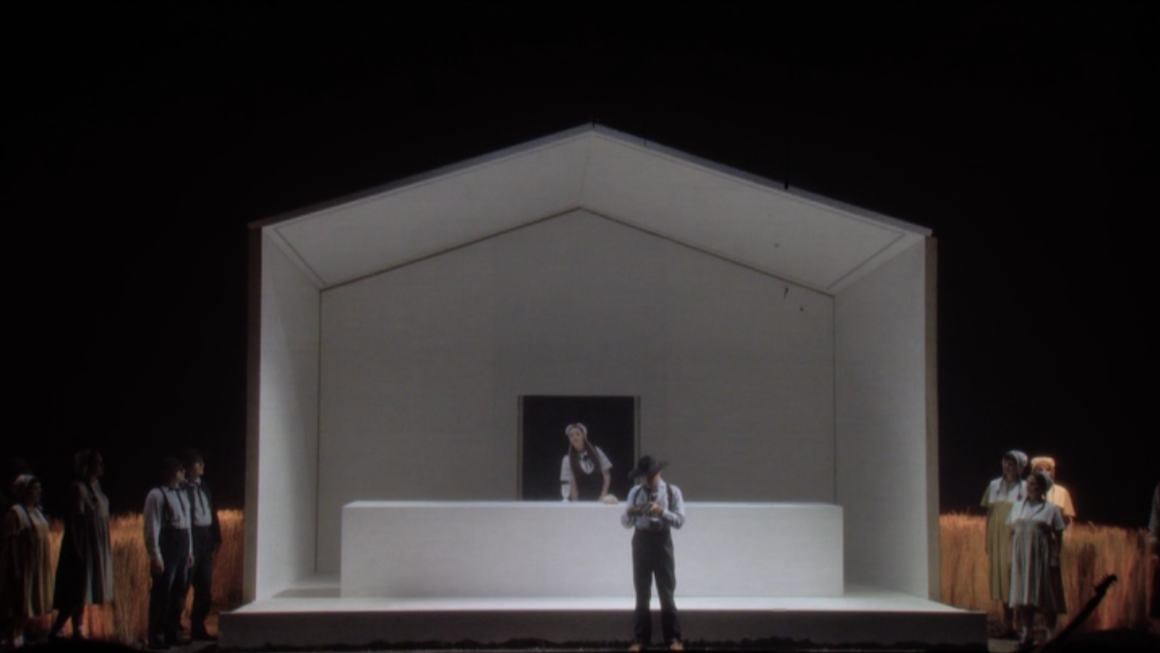
The work itself falls into two halves. In the first we see the events from the Last Supper to Jesus’ appearance before Caiaphas. The text is pretty straightforward but derived from Scripture rather than actually using the words as in Messiah. Besides the characters who appear in the story we have the Daughter of Zion and the Evangelist, who do much of the narration, plus a chorus of worshippers.
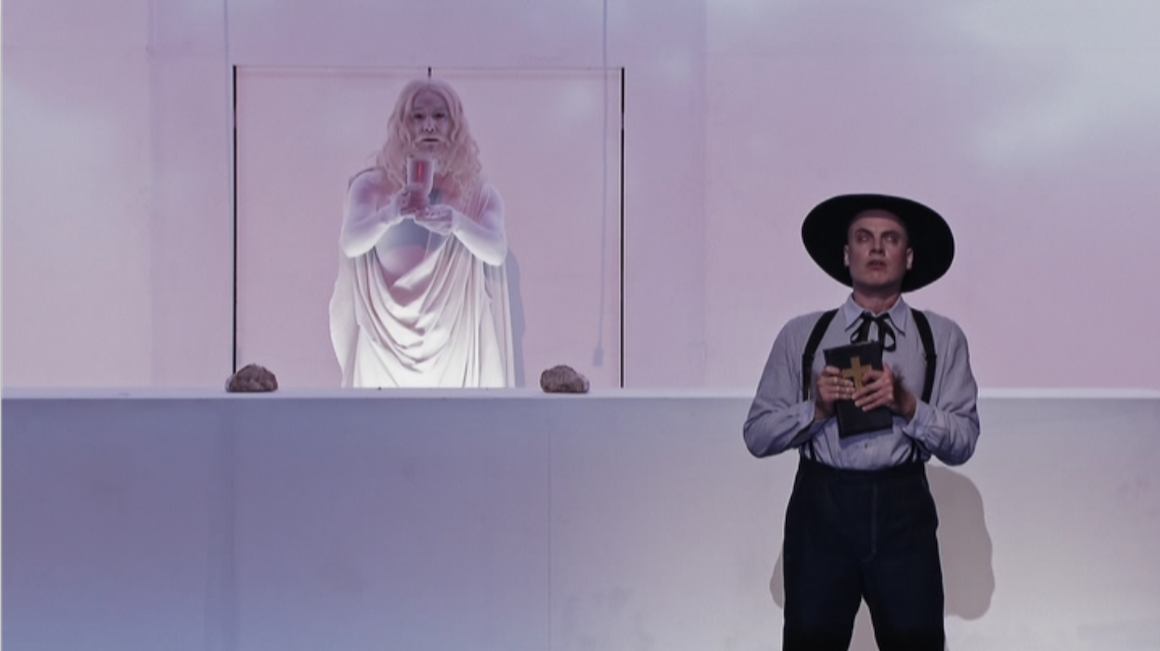
In this staging we see the the Daughter of Zion present a Bible to the Evangelist who often reads the story from it. Before even this happens we see a tableau of maybe cave art accompanied by “In the Beginning Was the Word” in multiple languages. This is clearly going to be about textually derived religion/belief. To reinforce this, in a nod to Halle’s Pietist traditions, and to prefigure what will happen in the second part, the Daughter of Zion, the Evangelist and the chorus are dressed as Amish. The “story” is mostly acted out in a white box with all the biblical characters also very, very white.
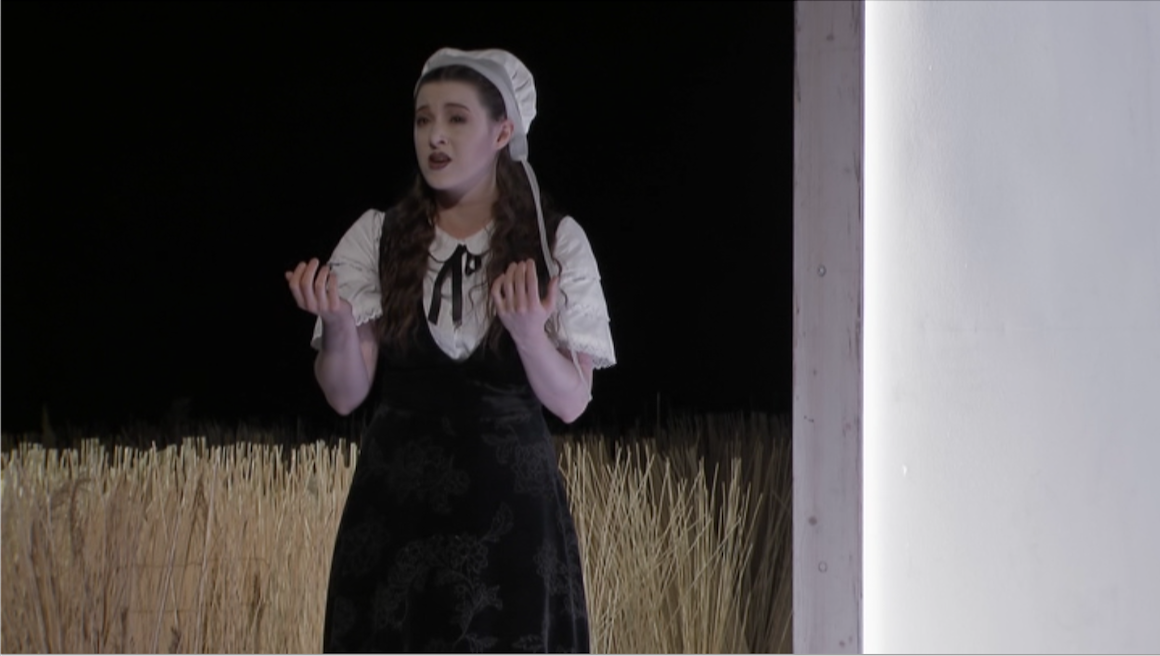
The scenery and props that surround the white box are very rural mid-west; corn fields and so on. We are seeing the idea of “religion as text” as transferred to the New World created for (White) Man; who in turn is created in God’s image and given Dominion over Creation. This is the fundamental DNA of the United States (and to some extent Canada, see my review of Civilized.). In the first part we also get a taste of what’s to come in the Daughter of Zion’s lengthy aria describing Christ’s Passion to come in gruesome detail and, apparently, with relish.

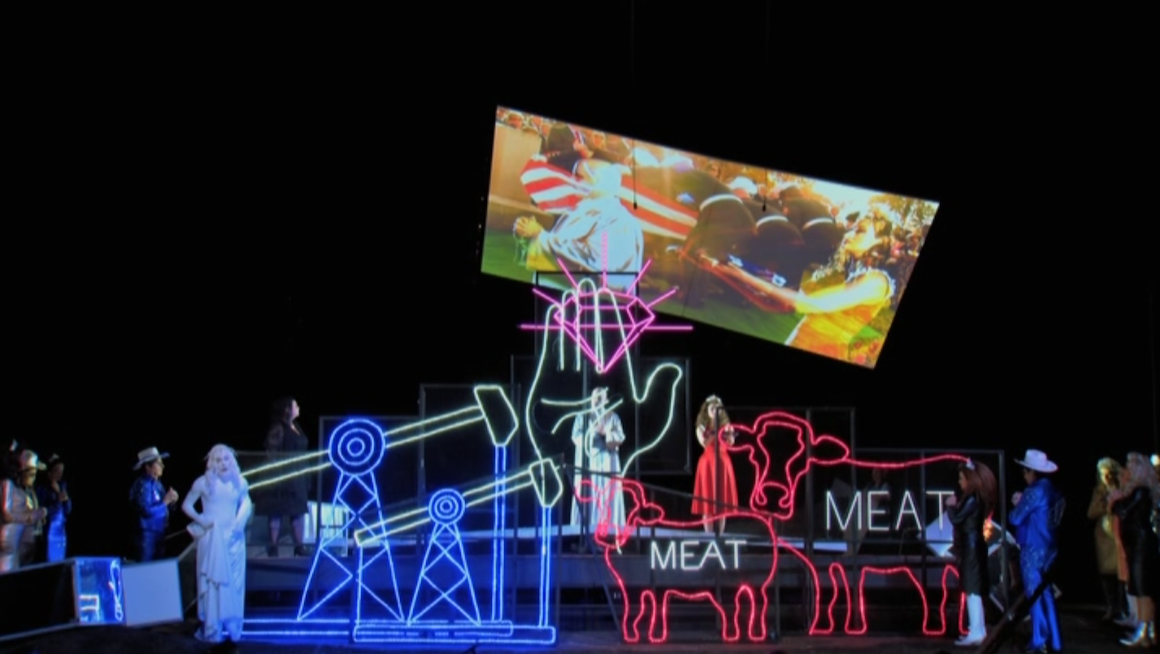
The second part really changes gears. The white box and everything to do with it is shattered but the story characters are still white. Jesus is tried by Pilate and the daughter of Zion is clearly delighted by the sentence. Scenes ffrom(1950s?) America are projected on a screen. The Believing Soul enters dressed as some kind of prom queen. Jesus’ various torments are described in too much detail while images are projected of “the good life” and it’s consequences.
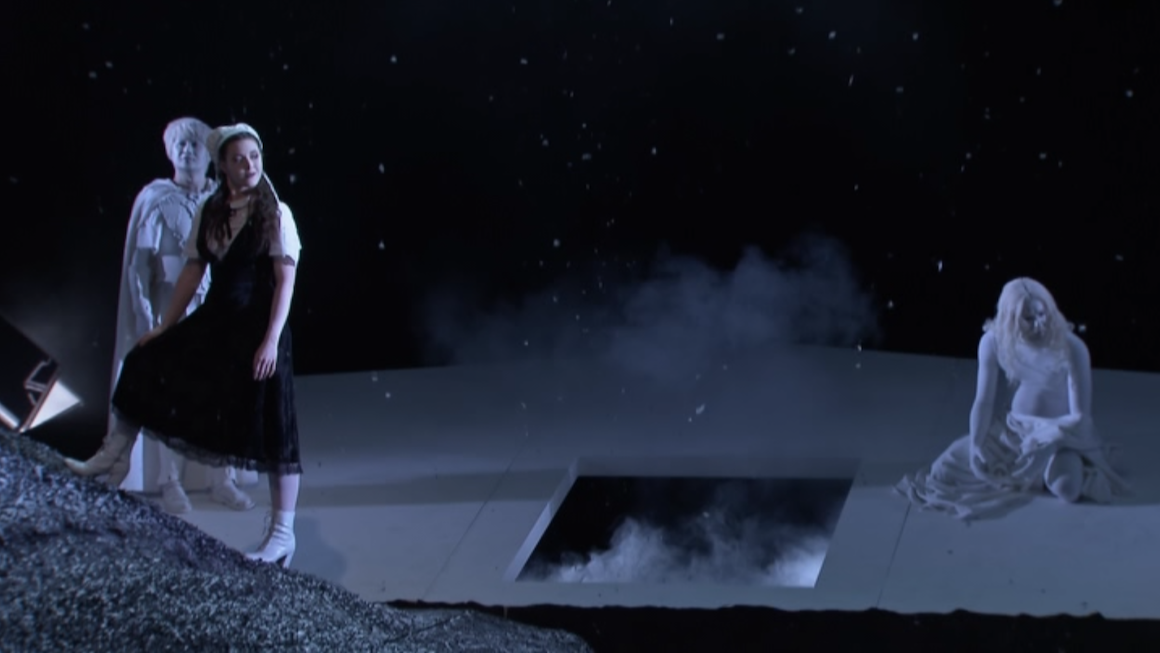
Jesus’ suffering sets the seal on the Covenant that gives (White) Man his Dominion. Christ’s blood is shed for a fitted kitchen but with it comes terrible environmental degradation and ultimately, I suppose, He Who Shall Not Be Named. The chorus has transformed into garishly dressed Texans. The Evangelist trades his Amish Gear for an Elvis suit and becomes an object of worship. The formalism of religion has been retained but the piety is gone. But with, finally, Christ’s death it all starts to fall apart. The USians resort to ever more blatant consumption and sex. The Evangelist retreats to his bunker. Even the Daughter of Zion seems to be having second thoughts.
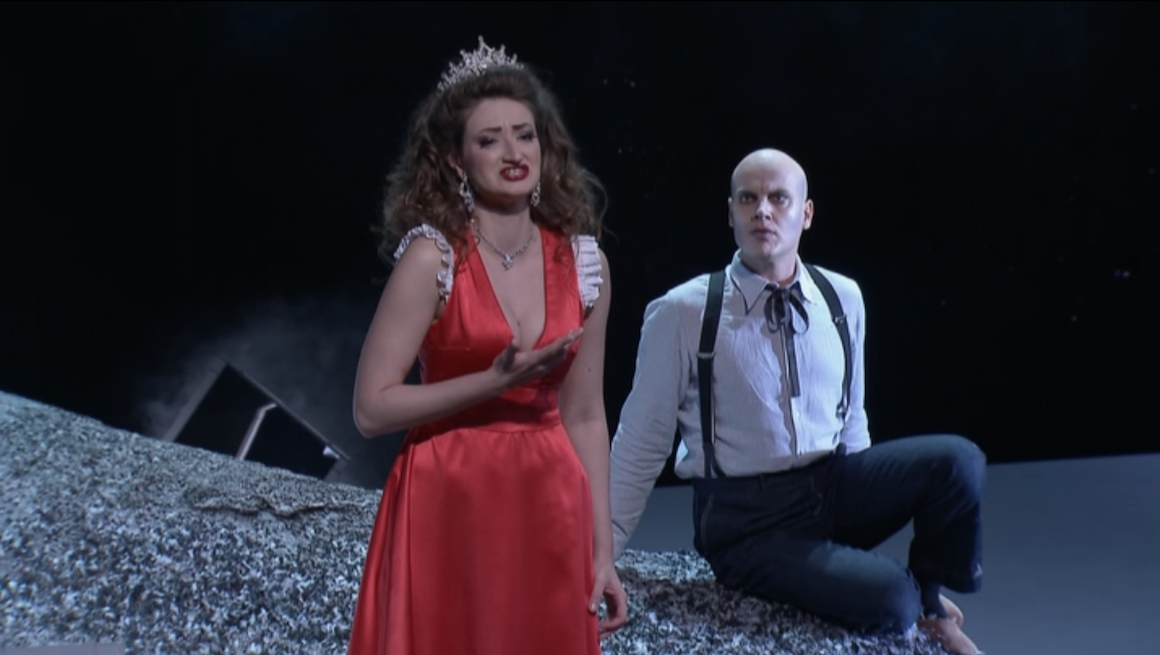
What makes this work, and I think it does, is that Brockes’ text is so obsessed with every detail of Christ’s torments. Every wound, every drop of blood is described. It’s BDSM porn. There’s no Resurrection and only right at the end is the “pay off”of Eternal Life given a fleeting mention. It just seems to fit so well with Sutcliffe’s basic idea of the fundamentally destructive tendencies of text based Fundamentalism.

Musically it’s curiously undramatic until right at the end. One might mistake it for Bach because it has the same beautiful simplicity which is reinforced by using Lutheran hymn like chorales for most of the choruses. It’s not like any other Handel work I’ve seen or heard. It’s played and sung here beautifully. The orchestra is the 21 piece Händelfestspielorchester Halle on period instruments. The chorus and soloists are all drawn from Oper Halle.
There really are some very good solo performances here. I would single out Vanessa Waldhart as the Daughter of Zion. She sings in a simple but stylish and beautiful way and is really a rather subtle actor. Robert Sellier is the Evangelist and is utterly convincing in his, I suppose, spiritual journey from cave man to witness to something akin to a Megachurch shyster. All this based on a solid and attractive tenor voice.
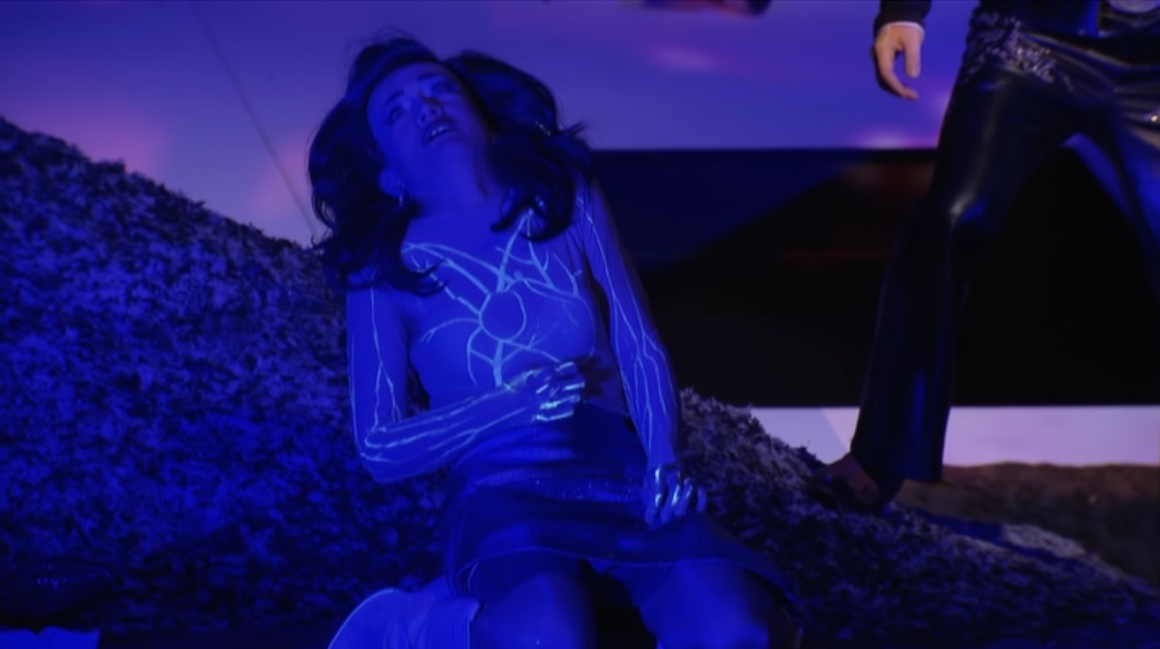
Bass Michael Zehe is remarkably good as Jesus. Although, obviously, he’s at the centre of the story he doesn’t have a lot to work with but he convinces. There’s also some very good work in the second half from mezzo Yulia Sokolik as the Believing Soul/Prom Queen. She sings quite beautifully and best of all are the duets with Waldhart. Michael Hofstetter conducts idiomatically.

Video direction is by Götz Filenius and it’s generally good though there were times when I felt I was losing the big picture. I watched on DVD (it’s also available on Blu-ray) and both picture and sound (DTS 5.1 and Dolby Digital 2.0) were really pretty good. The booklet has a track listing and synopsis and a really informative interview with Sutcliffe. Subtitle options are English, german, French, Korean and Japanese.

Brockes Passion is a rarely performed and in some ways untypical Handel work. This staging really brings it to life and is well worth seeing.
Catalogue information: Naxos DVD 2.110755
 operaramblings