
Bohislav Martinů’s The Greek Passion is a 1961 opera based on the novel Christ Recrucified by Nicos Kazantzakis. The English language libretto is by the composer. It was staged in the Felsenreitschule in Salzburg in 2023 in a production directed y Simon Stone and recorded for video.
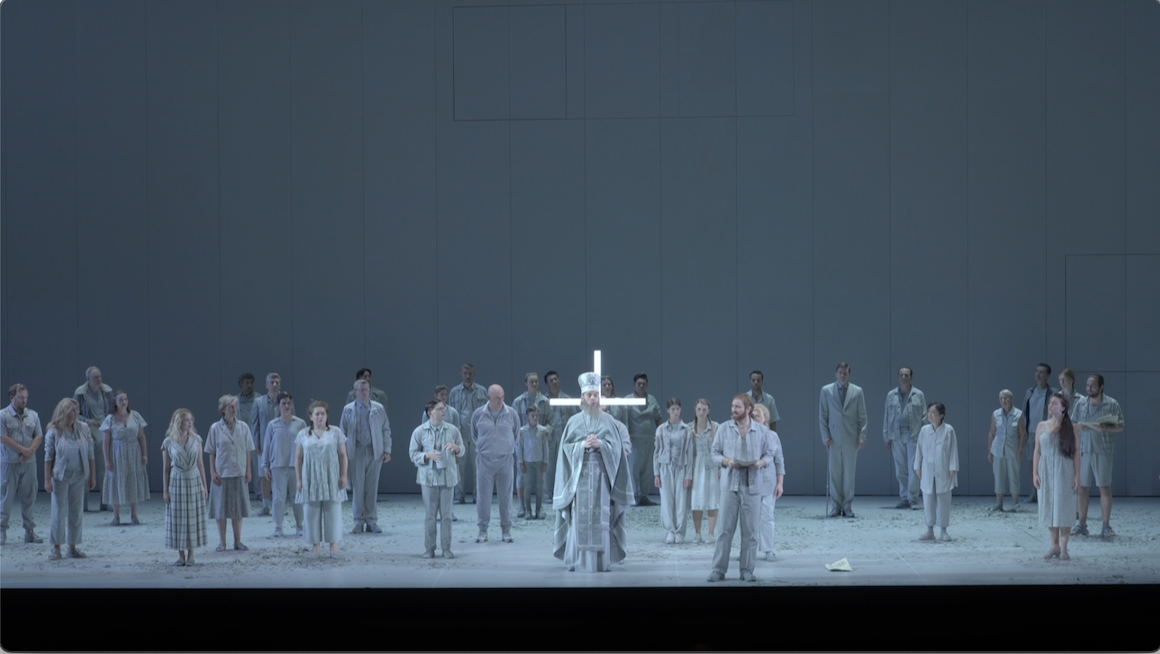
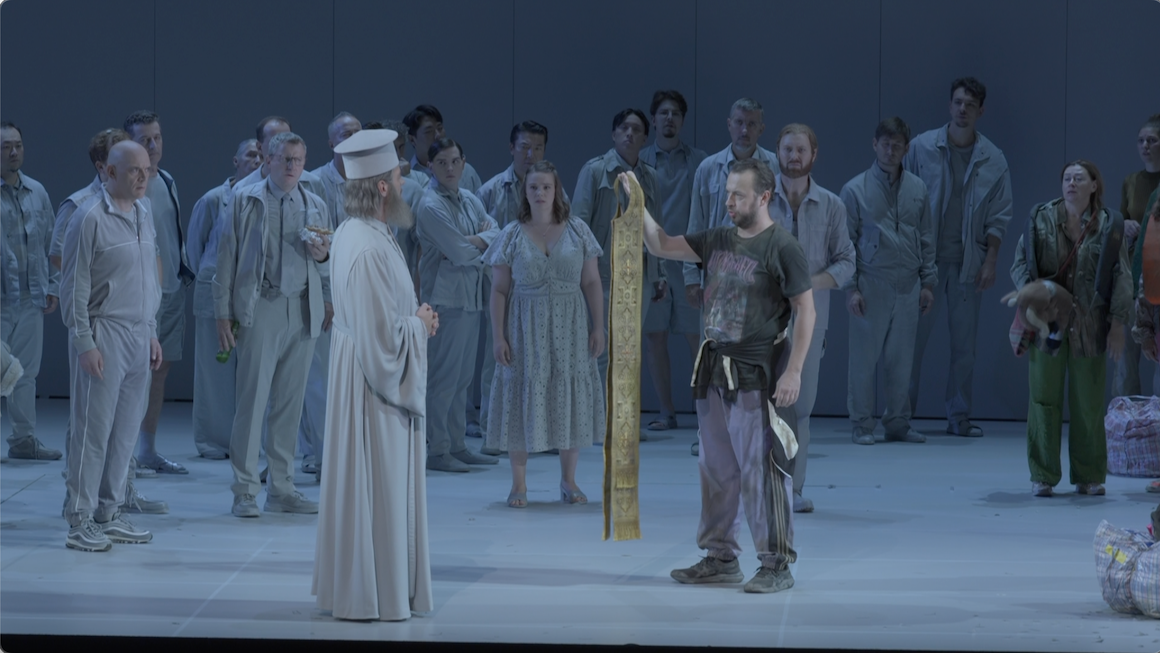
The plot concerns a Greek village where the priest and the elders have just cast the next year’s Passion Play. Immediately after this another priest arriives leading a band of refugees who have been driven out by the Turks. They receive a frosty welcome except from the shepherd Manolios, who has been chosen to play Christ, and Katerina, who will play Mary Magdalene. Tensions mount as Manolios increasingly takes on the role of Christ in the life of the village and persuades some of his fellows to help the refugees. The village “big man”, the local gangster and the priest conspire to throw Manolios out, drive away the refugees and restore “order”. In the scuffle that follows Manolios’ excommunication he is stabbed to death by Panais; the villager chosen to play Judas Iscariot.
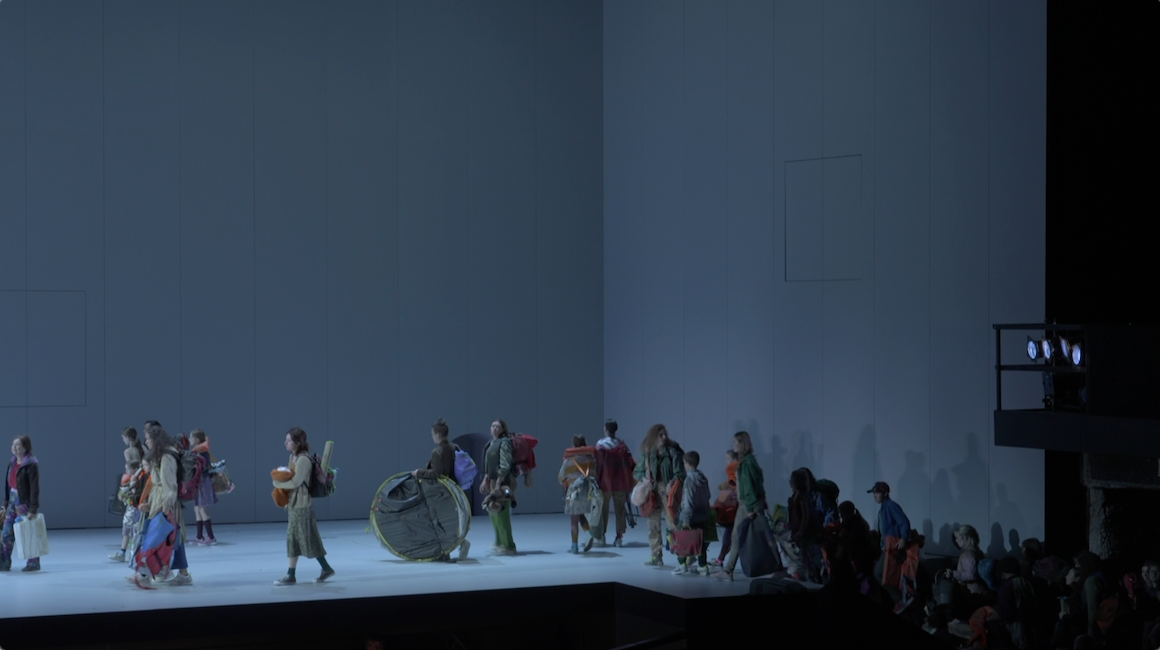
There’s nothing specific to the war between Turkey and Greece in the 1920s and the expulsion of millions of Greeks from their ancestral homes. It could be anywhere. Compassion for refugees is in pretty short supply nowadays not least among “Christians” so an opera about the conflict between “religion as ritual” and “religion as compassion” is pretty timely. This one plays out with great emotional intensity; on a par perhaps with Dialogues of the Carmelites.
The action is well supported by both score and production. Martinů’s music is right on the edge of tonality in a very Czech way. It’s hard not to be reminded of Janáček but the score also incorporates both Greek and Moravian folk and church music influences. It’s dense and rather beautiful.
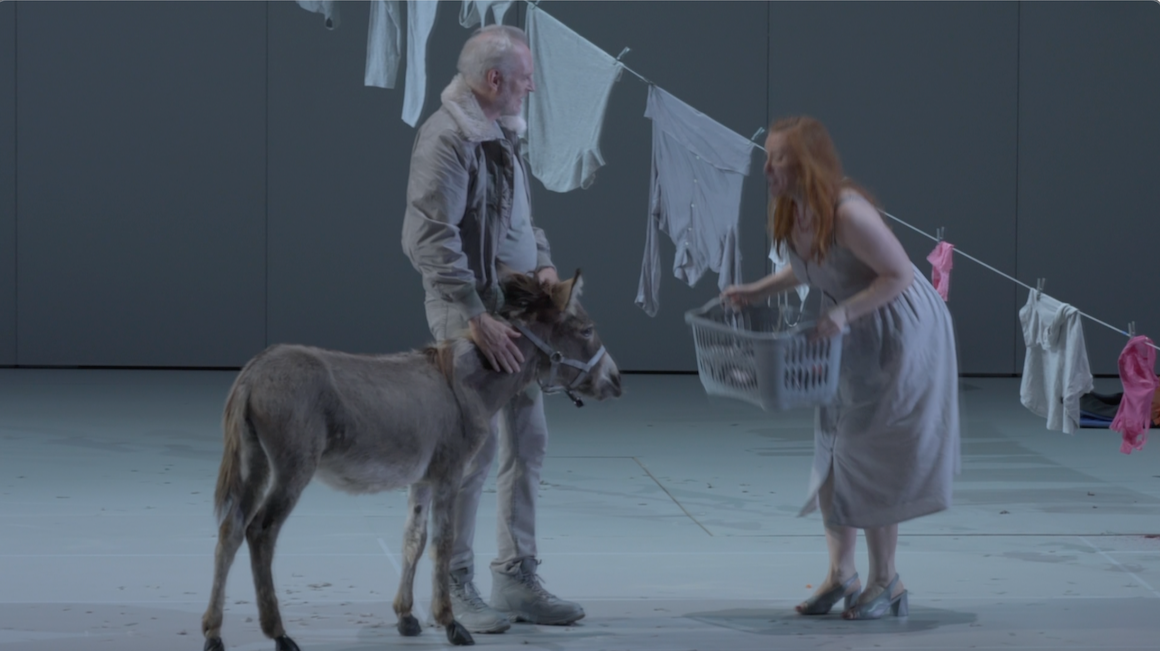
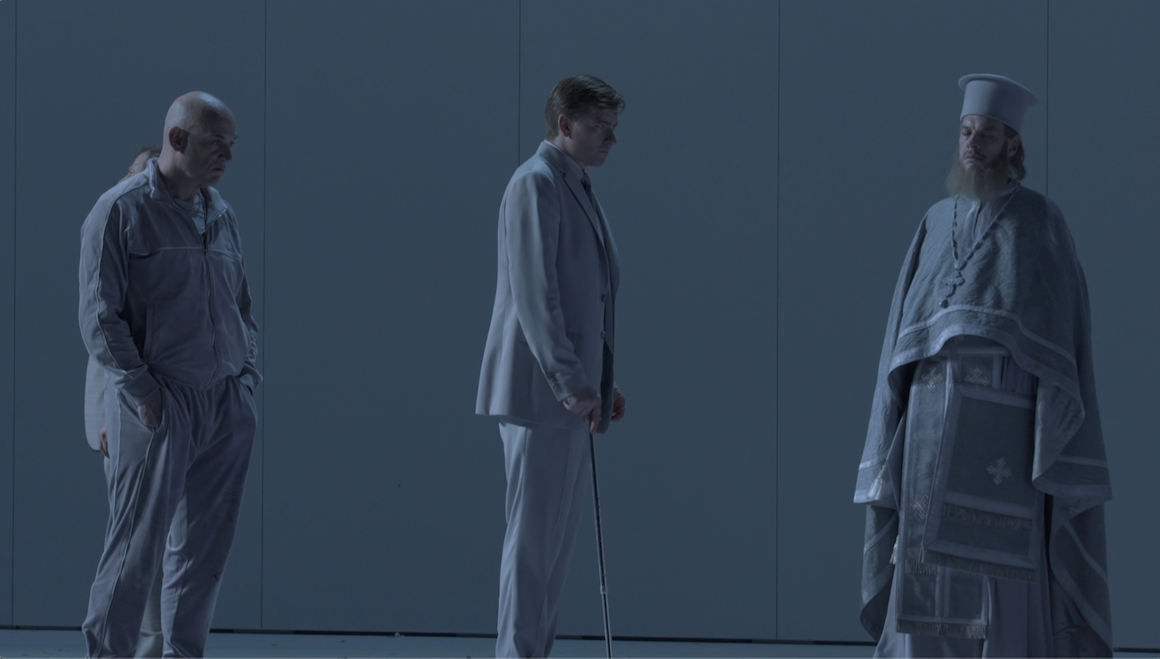
The production is very austere. Set designer Lizzie Clachan has turned the whole width of the Felsenreitschule stage into a white box up to just below the highest ring of arches. Doorways appear in the back wall and lifts are used extensively to bring characters into play. There’s not much colour in a world that’s mostly grey and white which really focusses attention on the relationship between the characters but set against that is the fact that the chorus; representing villagers and refugees, is huge so there’s an element of the individual versus the mass.
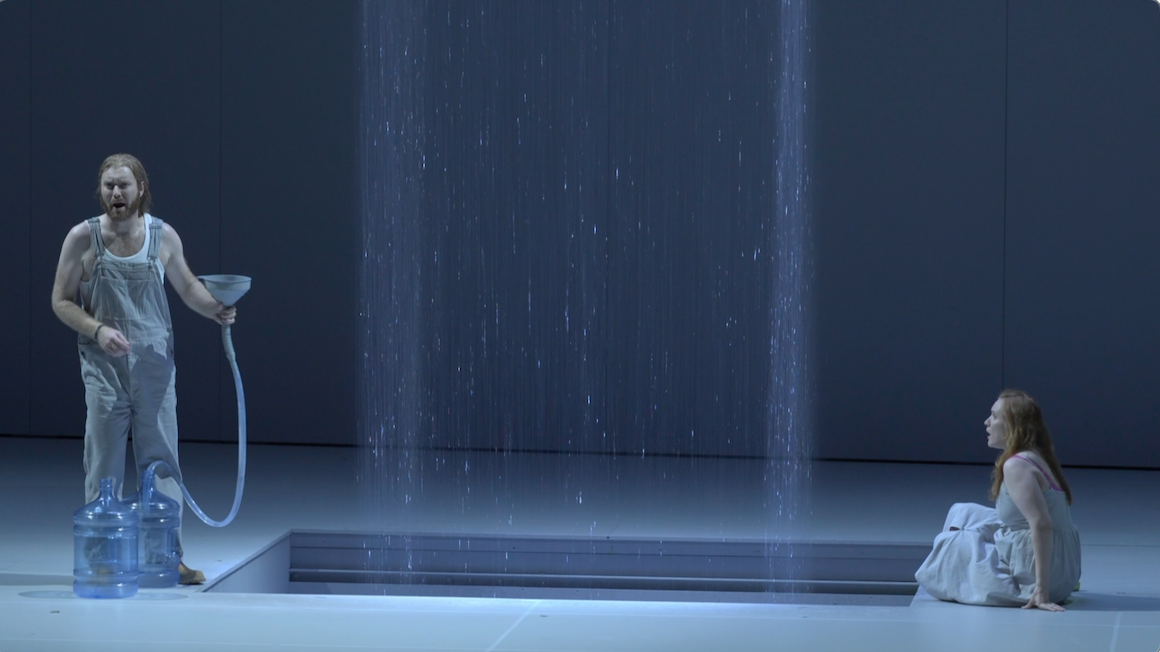
There are some terrific performances. The pair of German tenor Sebastian Kohlhepp as Manolios and American soprano Sara Jakubiak as Katerina are terrific and well matched. Both are stylish singers with more than adequate heft and both are excellent actors. The chemistry between them is great. Charles Workman is also excellent as Yannakos, the dealer, acting beautifully and with the voice still sounding fresh. There’s a lovely cameo by Christina Rausch as the flirty Lenio. Her brighter sound makes a pleasant contrast with Jakubiak’s richer soprano.
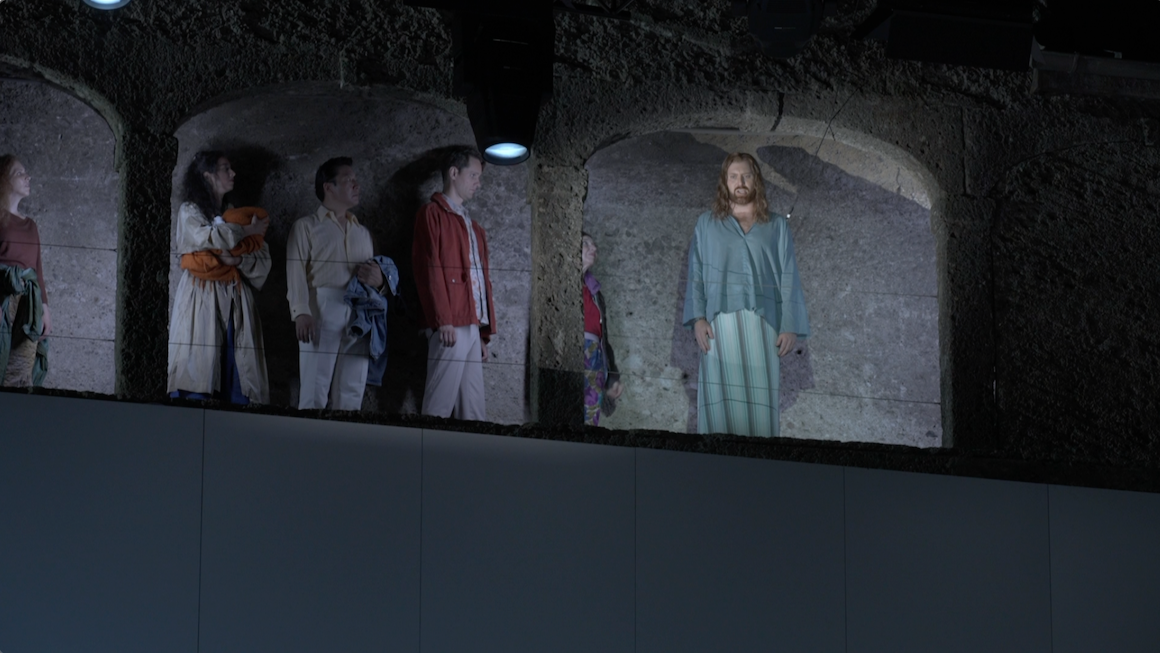
Priest Grigoris, the establishment man, is sung with great gravitas by baritone Gabor Bretz. He’s well matched by Łukasz Goliński as Priest Fortis, the leader of the refugees. The speaking role of the gangster Ladas is played chillingly by Robert Dölle. There are many other supporting roles and I didn’t notice any weak links. The chorus is the Konzertvereinigung Wiener Staatsoper with the children of the Salzburger Festspiele und Theater Kinderchor. They are excellent, especially the kids.
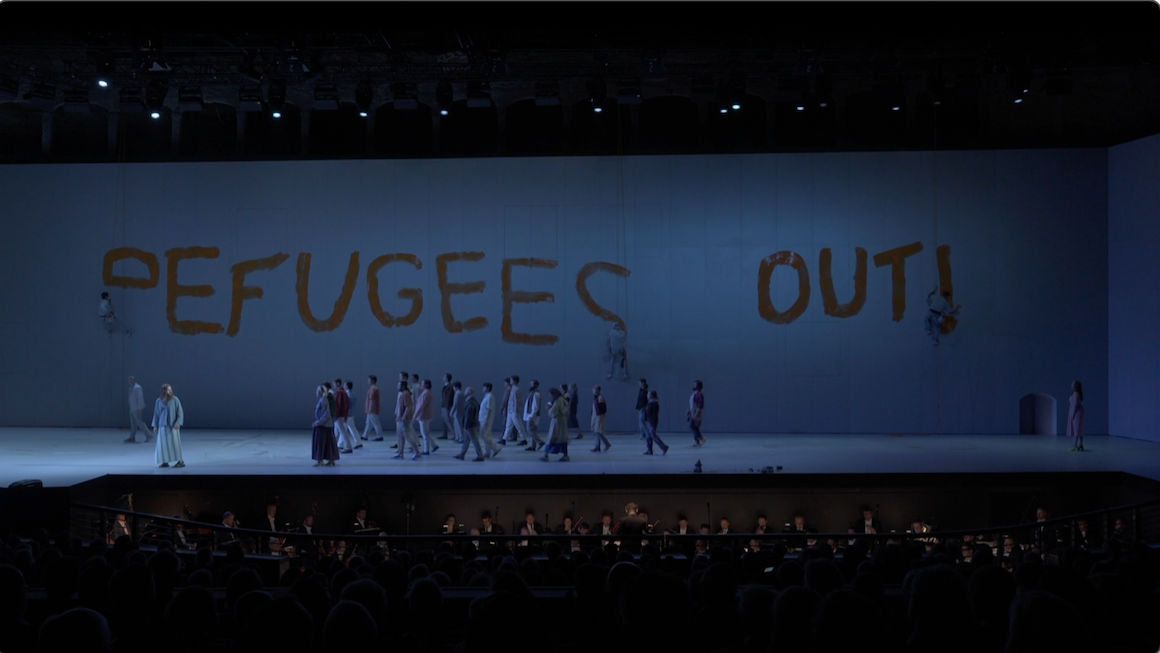
Maxime Pascal conducts with the Wiener Philharmoniker in the pit. He gets a wonderfully radiant sound from the orchestra while keeping things nicely in balance. That’s no mean feat with a dense score, multiple chorus elements and singers spread out over a huge stage.
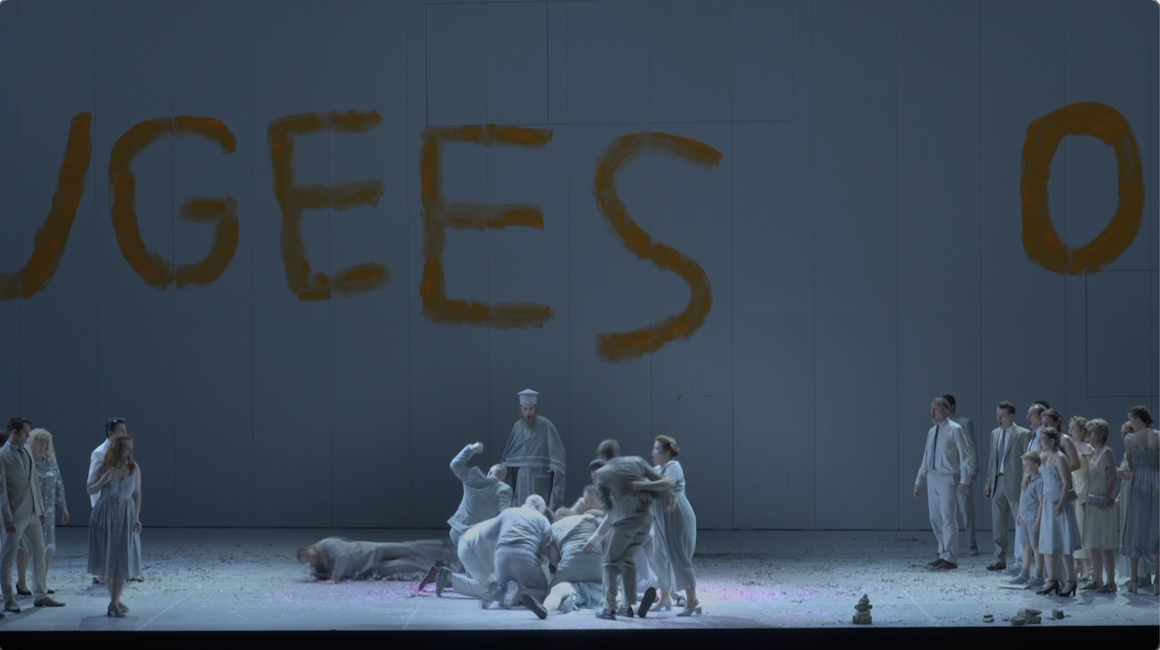
Video direction by Davide Mancini is excellent. He balances capturing the austere grandeur of the design with the intimacy of many of the scenes really well. He’s backed up by first class video and audio (PCM stereo, DTS-HD-MA surround) on Blu-ray. The booklet has a synopsis, a track listing and a historical essay. Subtitle options are English, German, French, Korean andJapanese.
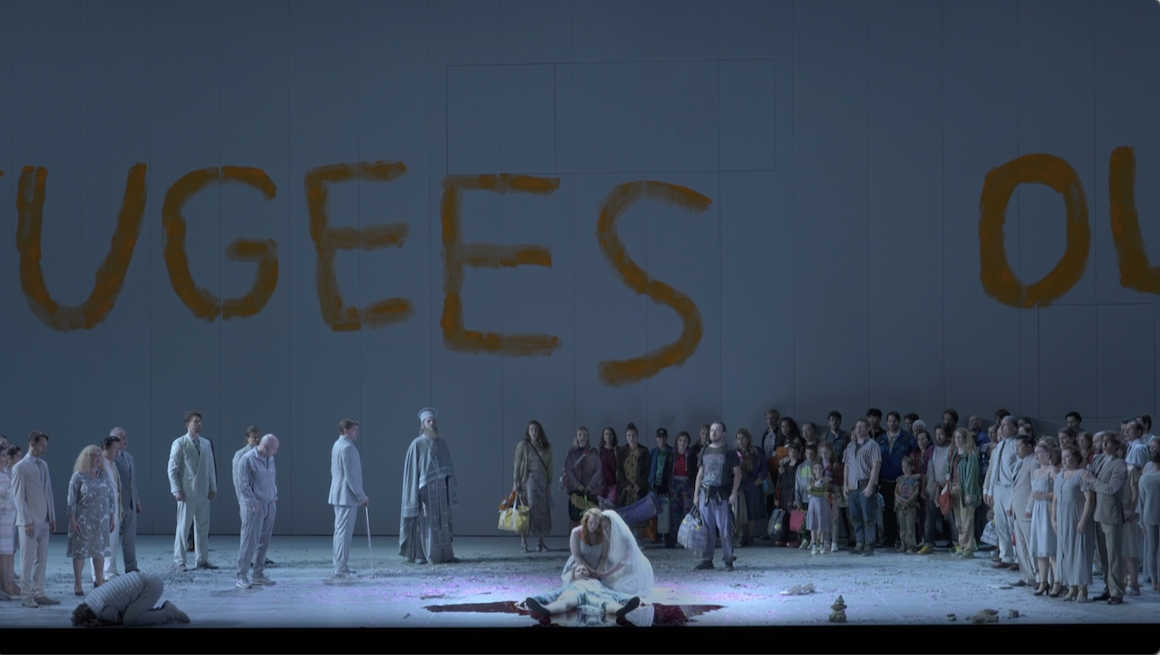
This is a very beautiful and dramatic opera that deserves to be better known. It gets a worthy production and performance on this recording.
Catalogue information: Unitel Blu-ray 81104
 operaramblings