
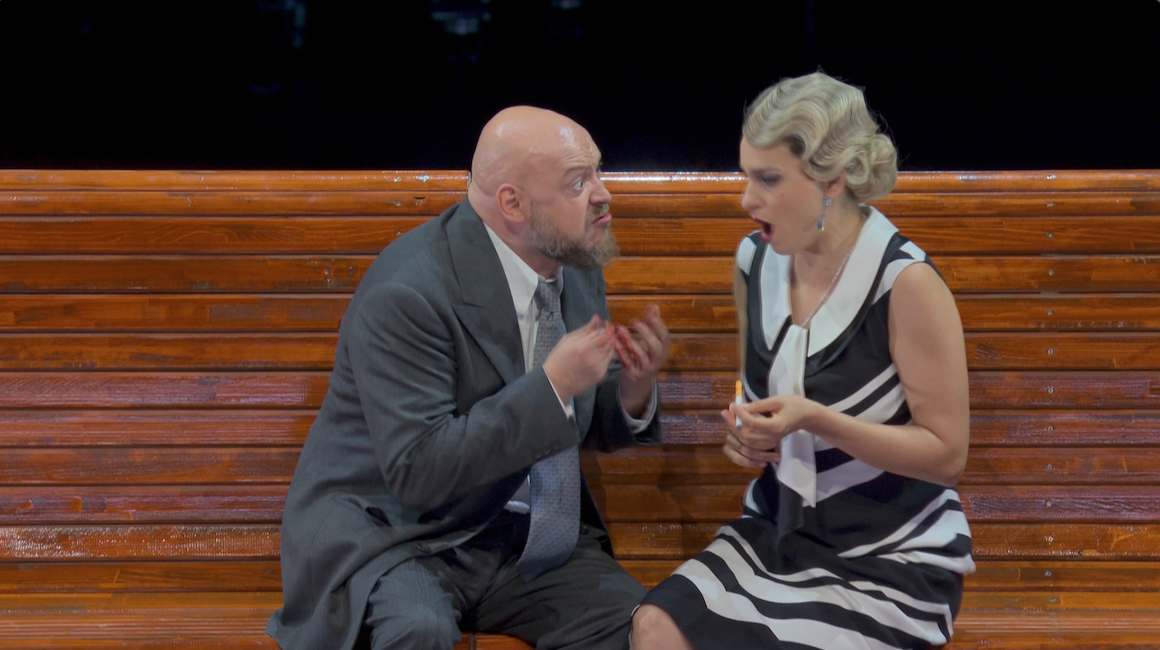
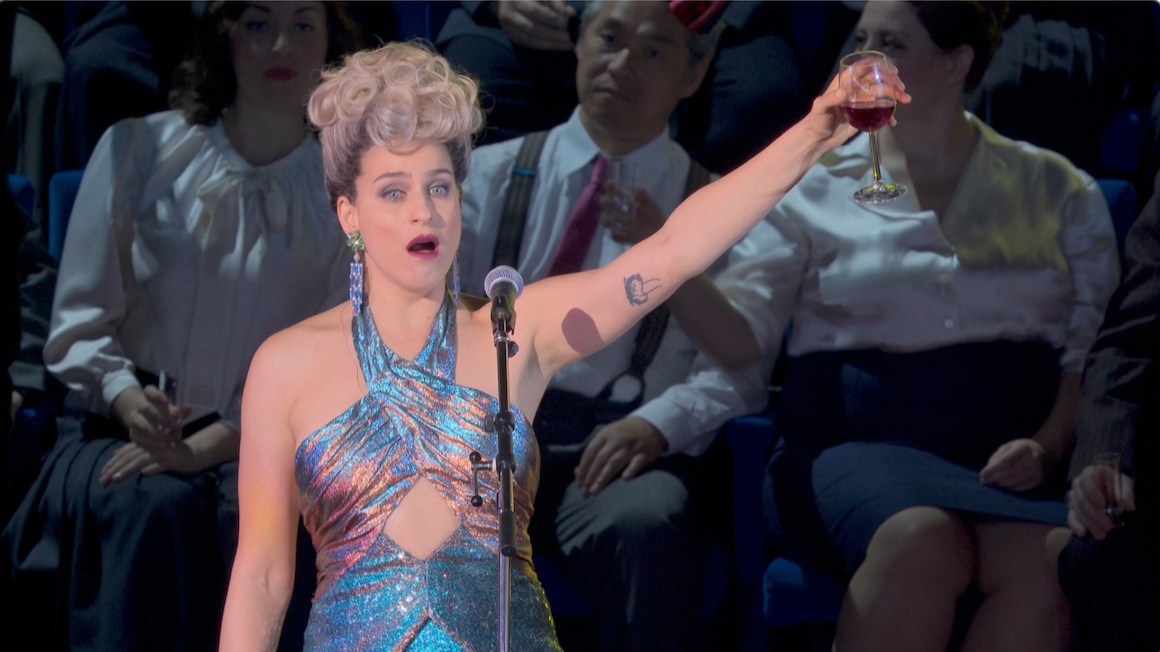
Krysztof Warlikowski’s production of Verdi’s Macbeth; recorded for video at Salzburg in 2023 is certainly not short of ideas. Whether it all hangs together is another matter. There seem to be two main ideas in play. We are in a 1940s-ish fascist state with party armbands and so on. This gets more explicit as the piece develops. On top of this there’s a foregrounding of Lady Macbeth as the real driving force of the drama coupled with the idea that what’s driving her is her inability to provide an heir. For example, she’s clearly the one being crowned after Duncan’s murder and babies are a recurrent visual motif.
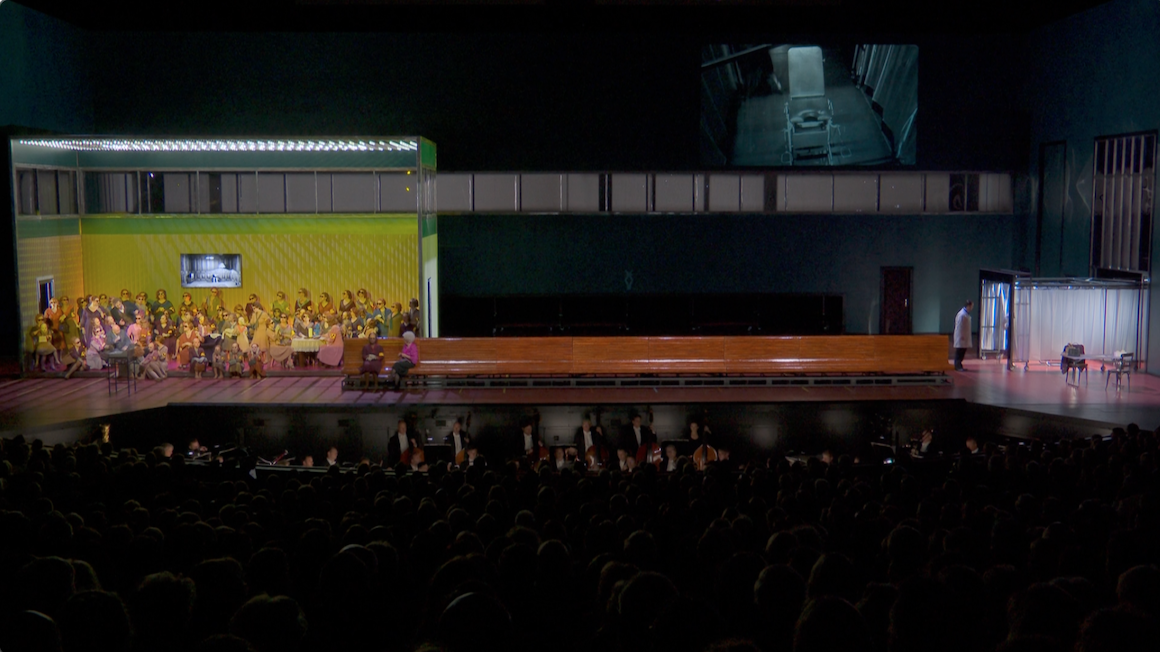
This all plays out in rather complex ways that aren’t all easy to decipher from the video. It’s performed in the Grosses Festspielhaus so the stage is massive and often multiple things, including video, are going on at the same time. For example, in the opening scene the chorus, with armbands, some weird masks and dark glasses are performing stage right under a video of a baby and trees (is this a flash forward to Birnam Wood?) while at the same time on the other end of the stage Lady Macbeth is consulting with her gynecologist. That kind of business occurs throughout and it isn’t easy to unpick. There are also lots of children doing various odd things mostly of a witchy nature.
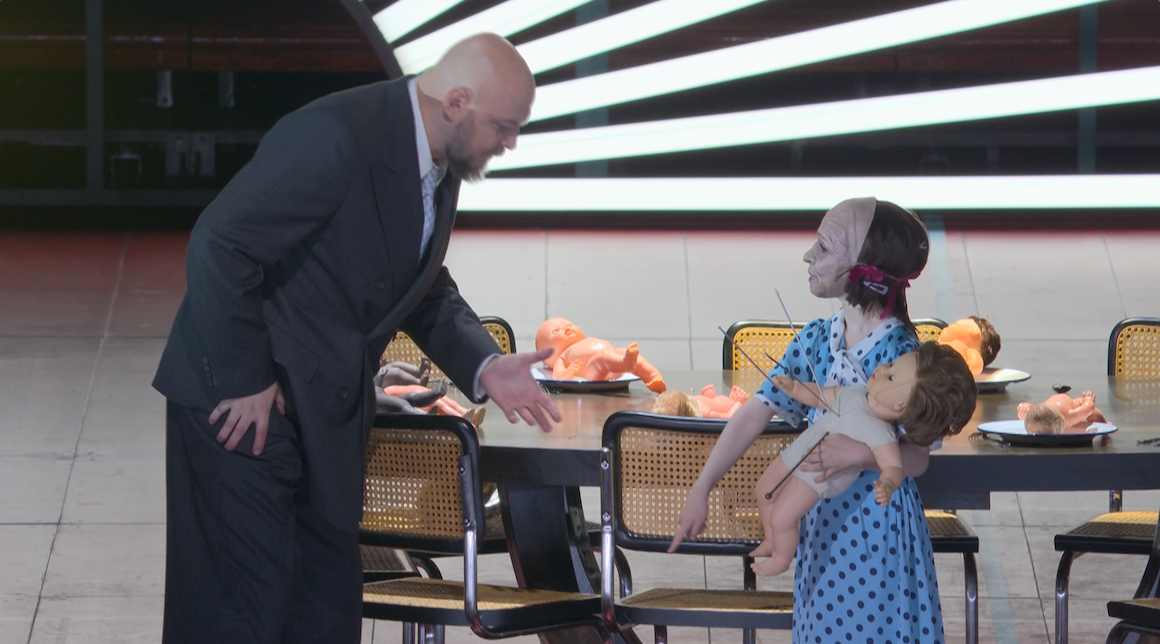
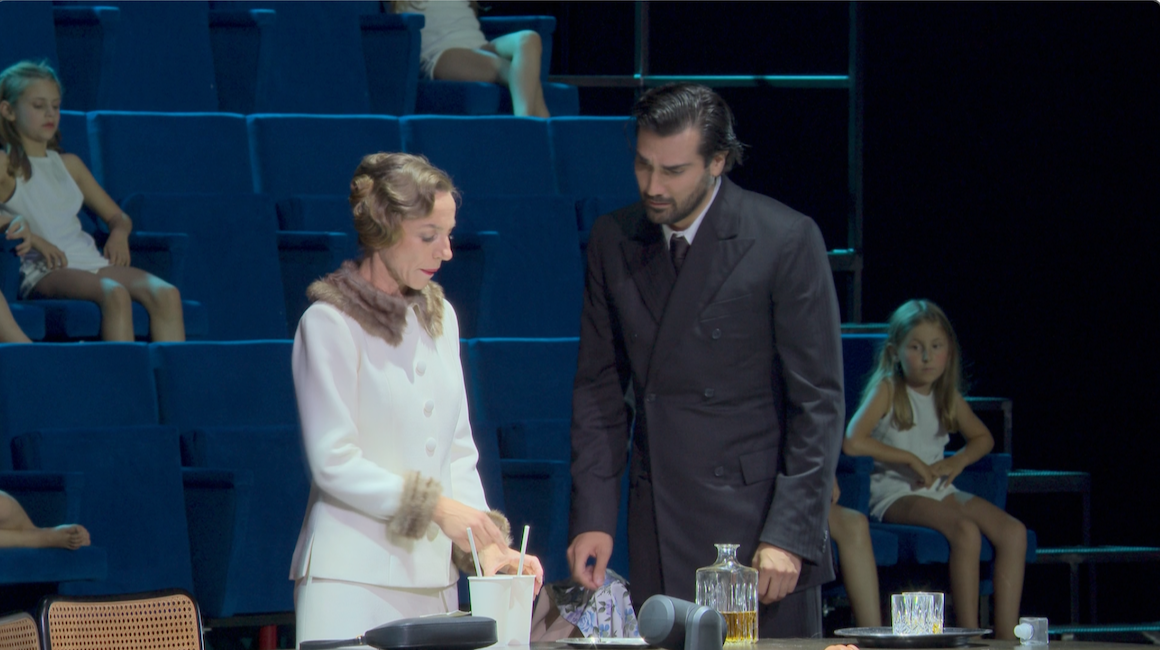
That said it plays out fairly straight (albeit with some rather disturbing iconography) until towards the end of Act 3 when it gets seriously weird. During Macbeth’s final meeting with the witches the needles being driven into effigies actually appear to be wounding Macbeth because at the end of the Act he has collapsed in a pair of bloody underpants and is patched up in a general’s uniform and bundled into a wheelchair by his aides. So, as we transition to Act 4 Macbeth is watching Macduff (who is knocking back a lot of whisky; even for a Scot) sing “O figli, o figli mei” while Lady Macduff gives a drink to serried ranks of children in underwear. As she looks disturbingly like Magda Goebbels you can work out what’s going on.
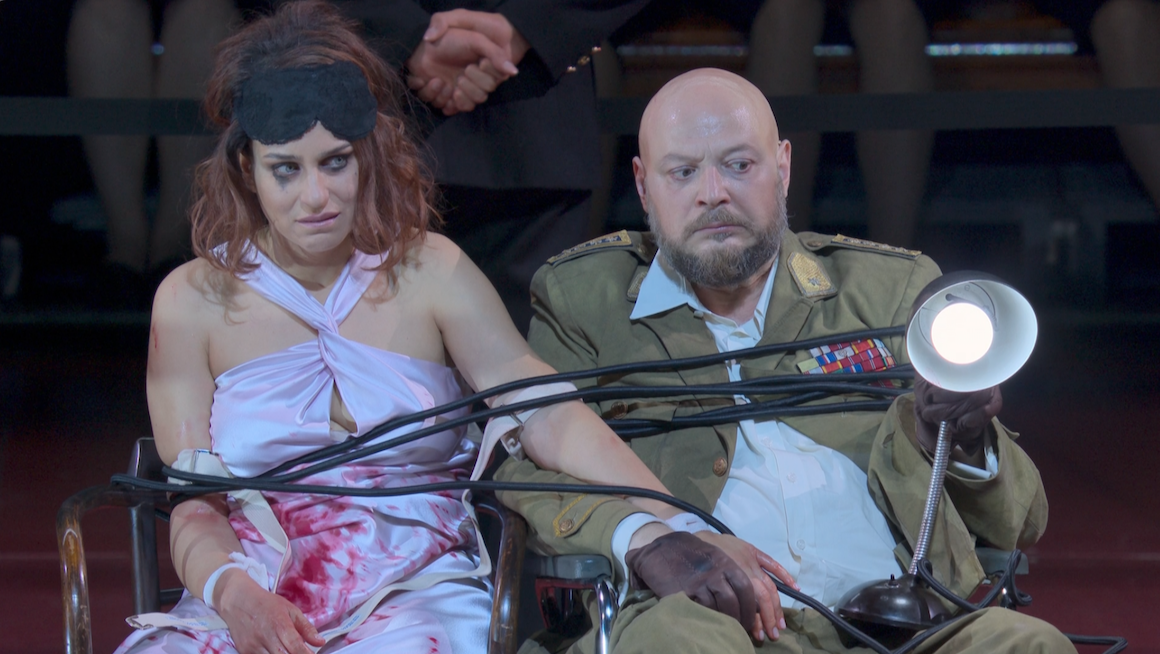
So to the sleepwalking scene where Lady M wanders around dementedly with a desk lamp before cutting her wrists but doesn’t succeed in killing herself despite what the chorus is singing. So when Macduff and Malcolm burst in Macbeth is in a wheelchair and a blood soaked Lady Macbeth has just been patched up by the doctor. Yhere’s no fight to speak of. Malcolm wraps the pair of them in the (very long) power cord of Lady M’s lamp and Macduff repeatedly threatens to shoot them but doesn’t. Meanwhile a miniature Banquo (we’ve already had a few of those) watches and a video of witches plays behind the action until the curtain comes down. To be honest I really don’t know what was supposed to be going on at this point. Suffice it to say that the director got a rather mixed reception at curtain call from an audience that had been enthusiastically applauding the singers.
Now having said all that about the staging it must be said that the singing and acting is superb and Philippe Jordan directs a musically thrilling performance with excellent support from the Vienna Philharmonic. It’s hard to ignore Asmik Grigorian as Lady Macbeth. She always seems to steal the show and when she’s abetted by the director she becomes even more central. I can’t imagine a finer combination of drama and stylish musicality than she gives here and her acting is mesmerizing. Just watch her in either the coronation scene or the final couple of scenes. Despite this she doesn”t really out stage Vladislav Sulimsky as her husband. It’s really good stuff from him too; eally soli d singing and terrific acting. All this is backed up by a proper bass Banquo, Tareq Nazmi, with tectonic low notes and great presence. There’s some equally fine dramatic singing from Jonathan Tetelman’s Macduff and no weak links in the supporting cast.
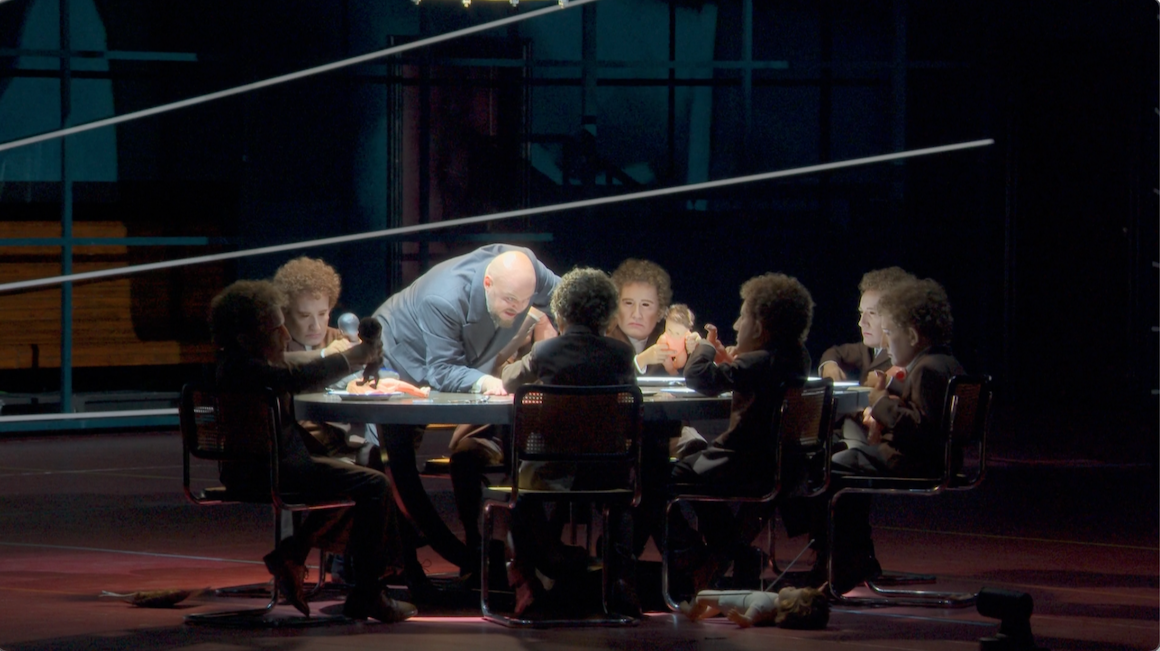
The chorus (from the Staatsoper) is also excellent and the children deserve a special word. The one’s who sing (Apparitions) are from the St. Florianer Sängerknaben and are brilliant (which always seems to be the way with these roles in Germany/Austria). The ones who don’t sing, and there are lots of them, are also really, really professional despite many clearly being very young.
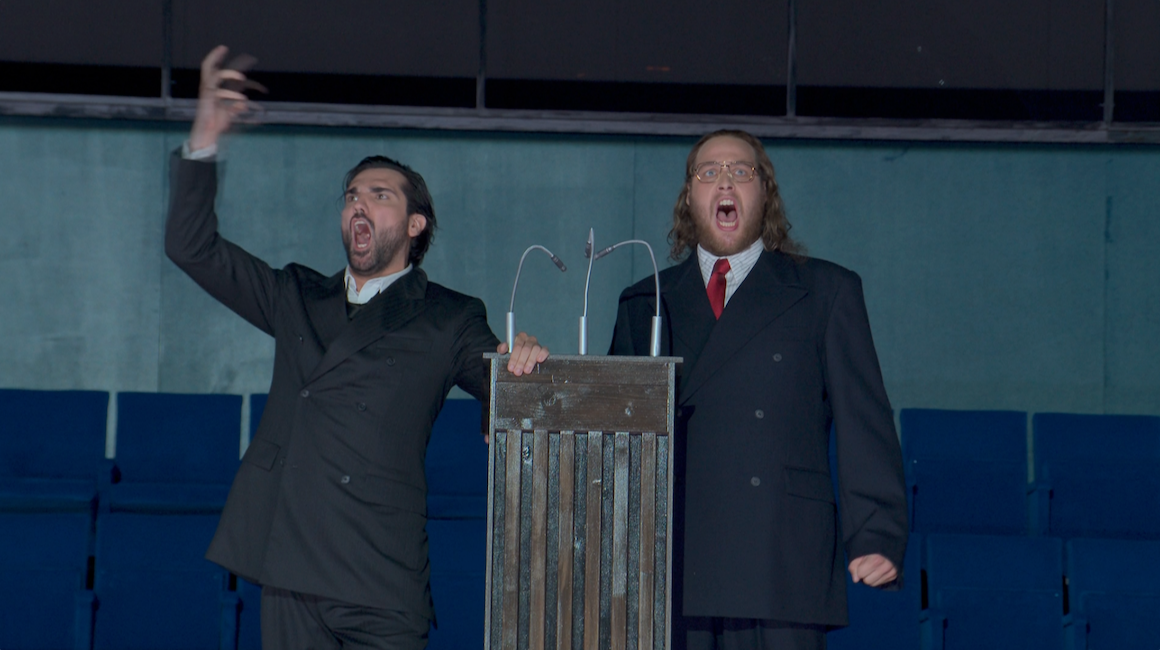
Henning Kasten directs the film. There are two theatres in the world I would hate to direct a video and they are both in Salzburg. The challenge of filming a stage as wide as the Grosses Festspielhaus is immense and I think it’s done pretty well here. The audience at home definitely misses stuff but I think he makes it as coherent as possible. He’s backed up by excellent sound (the usual PCM stereo and DTS-HD-MA options) and video quality on Blu-ray. The only extras on the disk are trailers for other Grigorian performances. The booklet has some, but not nearly enough, explanatory material as well as a synopsis and track listing. Subtitle options are Italian, English, German, French, Spanish, Korean and Japanese.
This disk is musically fabulous and the staging does have some interesting ideas but, ultimately for me, too many of those ideas are confusing and don’t really illuminate the story or comment on it in any kind of useful or engaging way. Grigorian fans will want to see it anyway though! For those seeking something more straightforward there actually aren’t a whole of modern options available but the ROH version with Keenleyside and Monastyrska is very good and much more traditional.
Catalogue information: Unitel Blu-ray 810704
 operaramblings