
William Christie and Les Arts Florissants kicked off Toronto Summer Music on Thursday evening at Koerner Hall with a version of Purcell’s The Fairy Queen which is currently on a sort of world tour. This production, conceived by Christie and Paul Agnew is quite radical. Let’s look at what they have done.
The Fairy Queen is a semi-opera; a uniquely English 17th century genre that took a play with actors and interspersed the scenes with vaguely related (at best) musical numbers; both song and dance. It tended to make for a long evening and the interruption to the narrative flow is generally not to the taste of modern audiences. To calibrate, when Christie conducted the piece in a “conventional” production (with sixteen actors, multiple soloists and a full chorus) at Glyndebourne in 2009 it ran ten minutes shy of four hours.

This production ditches all the spoken dialogue scenes, dispenses with scenery and takes a minimalist approach to costume. Pretty much all the music is there but, sans dialogue, it comes in a little short of two hours (plus interval). The “structure” of the play (itself loosely based on Shakespeare’s A Midsummer Night’s Dream) is gone completely leaving five acts that have “moods” rather than narrative. But, if narrative structure is missing it’s more than made up for by sheer energy.

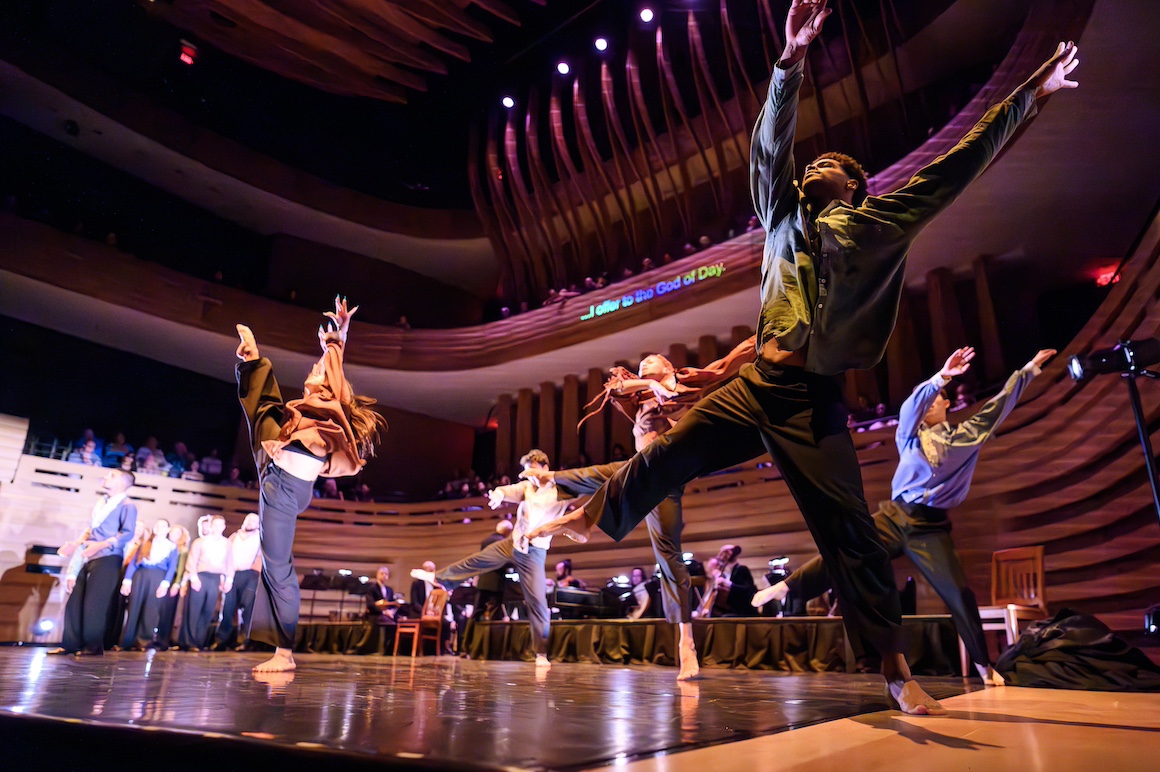
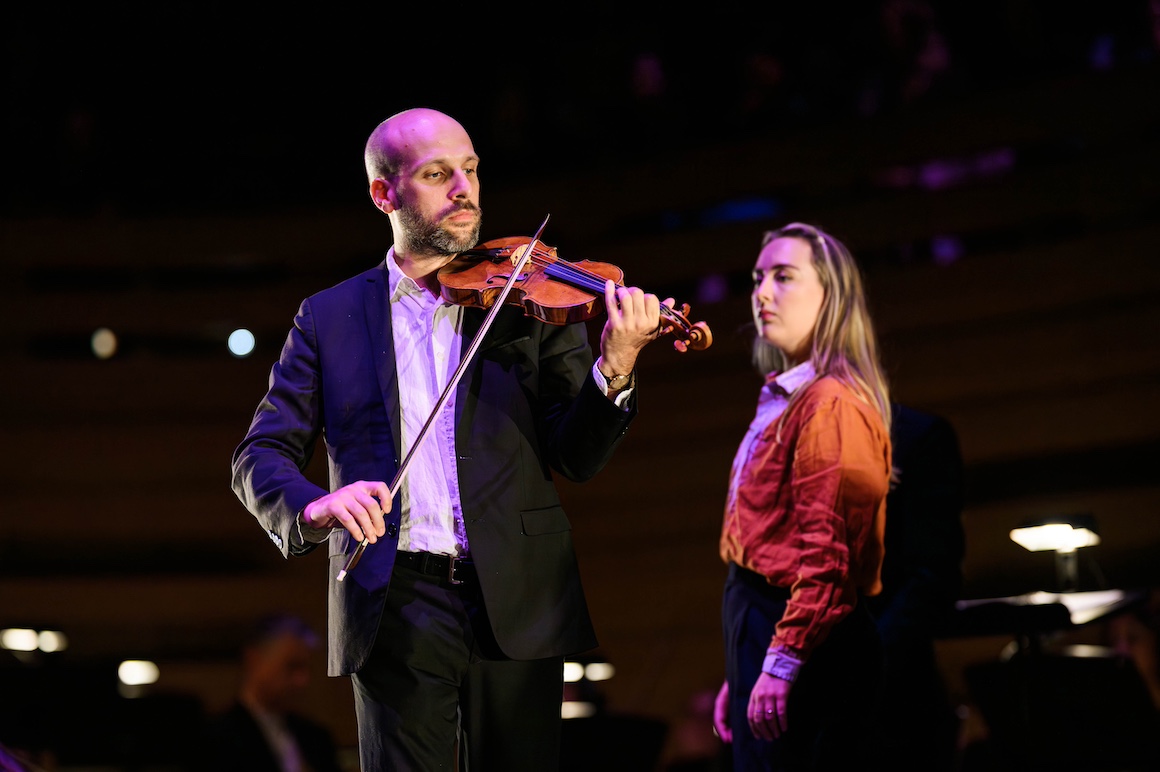
The scenes combine really fine baroque singing from an ensemble of young singers [1] with street style dance from a troupe of seven dancers [2]. They are pretty amazing; genuine athletes who at times seem to defy gravity. The eight singers of Le Jardin de Voix not only sing extremely well and with due attention to period style but are fully integrated into the action in Mourad Merzouki’s choreography. This is pretty clever as the singers’ dance skills vary from not far short of professional dancers to not so much and that’s skilfully taken into account. There’s no chorus as such. The ensemble, with at times it seemed some help from the dancers, sing the choral numbers. Supporting all this is the superlatively appropriately stylish playing of arguably the world’s top period band and, since they are on stage behind the action, it’s easy for instrumentalists to be incorporated into the action as appropriate.
For the Purcell fan this is a treat. Some of his best loved songs come from The Fairy Queen and there’s some really good dance music too. Minus the somewhat clunky play the music comes to the fore and the, on the face of it inappropriate, dance style works wonderfully well. I find it interesting that 17th century sensibilities sometimes seem closer to ours than some of the intervening periods. The end result is a rambunctious but tuneful romp that flies by. Great fun!
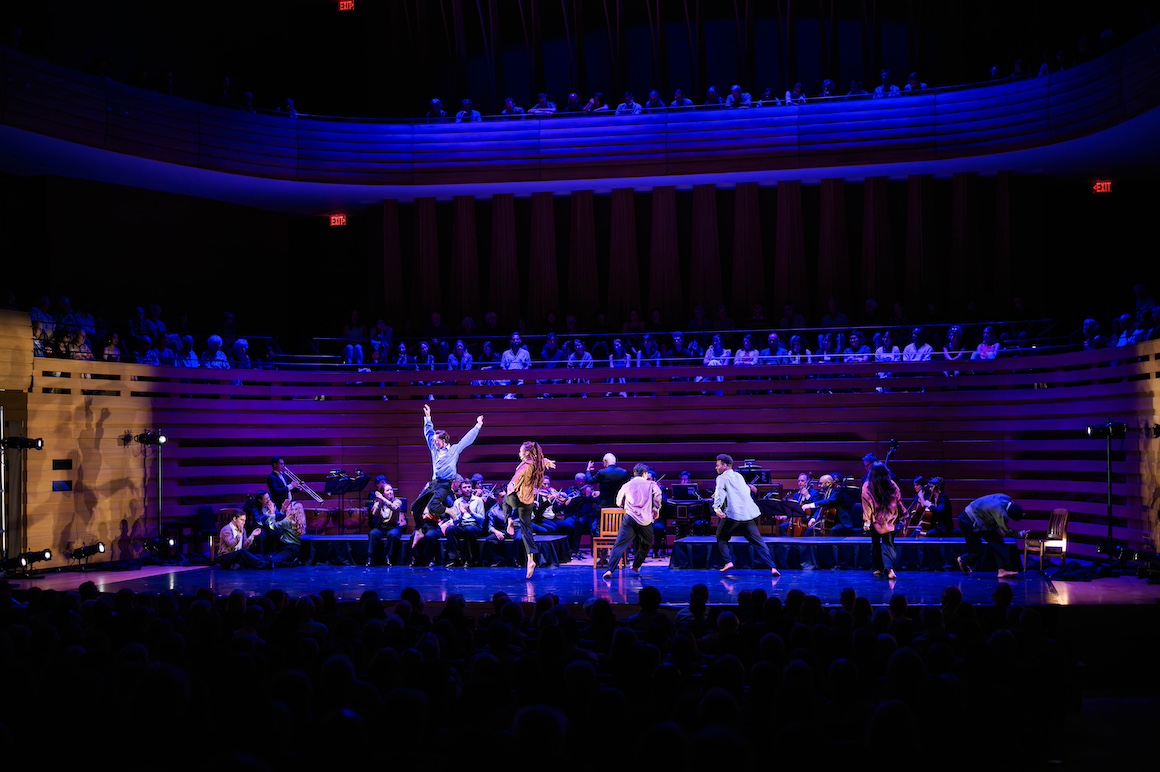
Final thought; in the increasingly difficult economic situation that opera faces in Canada can we not learn from a show like this? Modest forces. A show that can easily be toured to any theatre with a decent size stage. neither orchestra pit nor complex scenery handling gear needed. It worked for Britten and Pears in the UK in the 1950s and 60s.
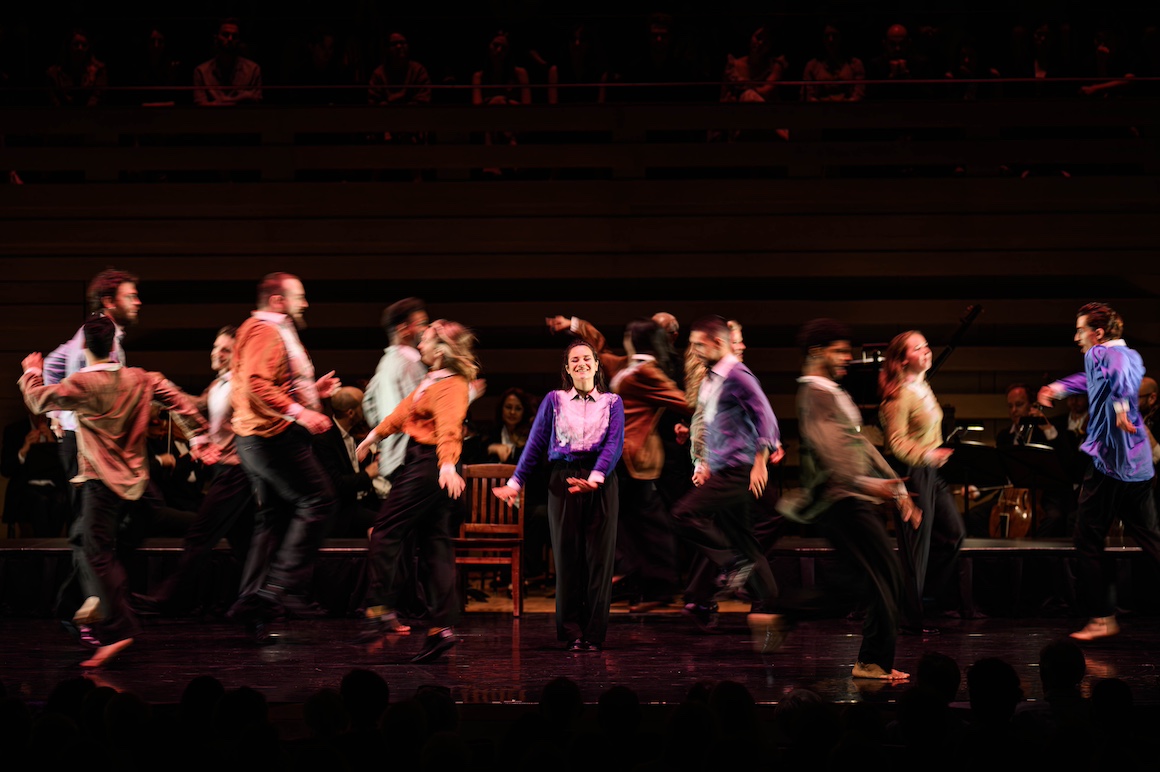
Photo credit: Lucky Tang
fn1: Paulina Francisco, soprano
Georgia Burashko, mezzo-soprano
Rebecca Leggett, mezzo-soprano
Juliette Mey, mezzo-soprano
Ilja Aksionov, tenor
Rodrigo Carreto, tenor
Hugo Herman-Wilson, baritone
Benjamin Schilperoort, bass-baritone
fn2: Baptiste Coppin (Compagnie Käfig)
Ian Debono (Juilliard School)
Samuel Florimond (Compagnie Käfig)
Anahi Passi (Compagnie Käfig)
Alary-Youra Ravin (Compagnie Käfig)
Daniel Saad (Compagnie Käfig)
Timothée Zig (Compagnie Käfig)
 operaramblings