
Forty years after its first appearance Ann-Marie MacDonald’s Shakespeare mystery comedy, Goodnight Desdemona (Good Morning Juliet) is back at CanStage in a production directed by Alisa Palmer and starring the playwright as Constance Ledbelly. It’s a strange but rewarding and very funny play. It takes two iconic Shakespeare heroines and tells their stories as they might have wanted to see them told. It’s part academic/literary mystery story with elements of panto including an impressive number of double entendres. It also mixes actual Shakespeare text, pseudo Shakespeare and something much more demotic to great effect. There’s been some mild updating since the 1980s but it’s not intrusive.
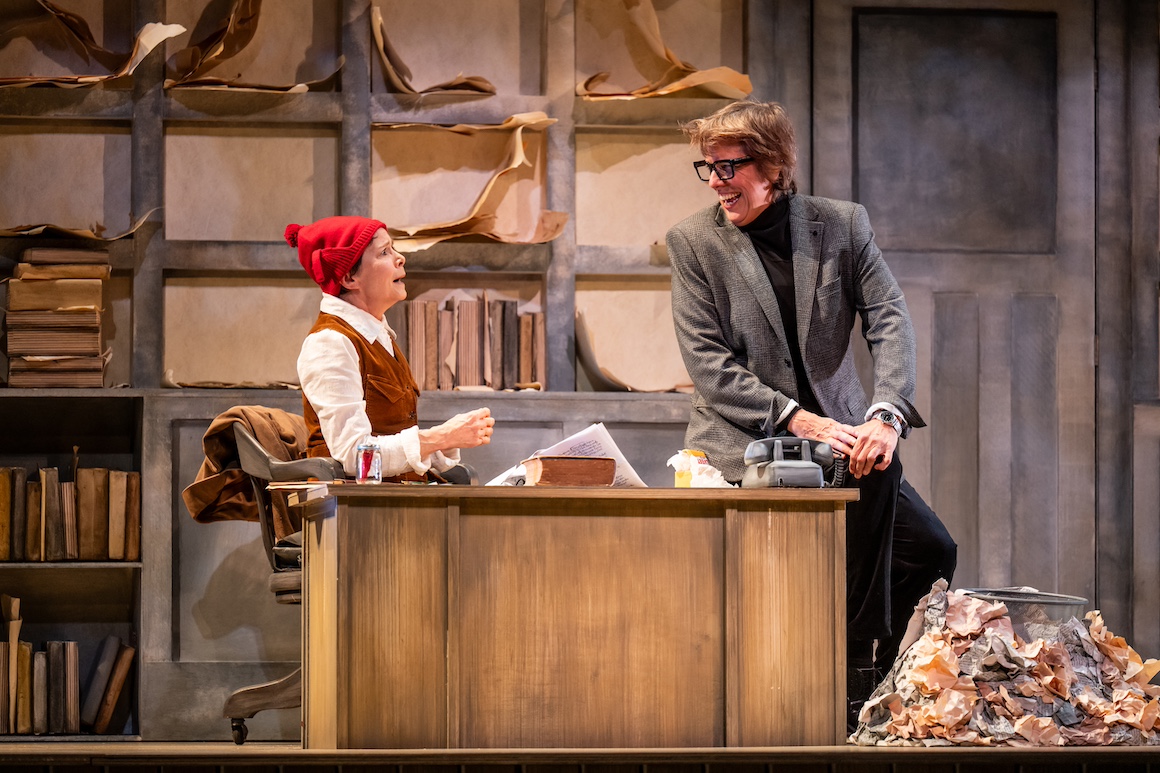
So what’s it about? Constance is a mousy Assistant Professor of English Literature at Queen’s. No longer young, she has a long standing crush on the dashing but indolent Professor Night who has been claiming Constance’s work as his own for years. Constance’s research is esoteric. She is in possession of the indecipherable Gustav Manuscript that she is convinced will confirm her theory about Othello and Romeo and Juliet; to whit that they were based on comedies, long lost, each of which included a Wise Fool, possibly the mystery author. Her belief is based on the fact that neither play is a really a tragedy in Aristotelian terms; the most flimsy evidence (the handkerchief) and a series of implausible coincidences take the place hubris. Minor interventions could give either play a happy ending. Shakespeare scholars thinks she’s mad but then most of them believe the plays were written by a semi-literate from Stratford so go them.

Matters come to a head when Night announces he is leaving to take up a post at Oxford and marry the glamorous Rhodes Scholar Ramona. Constance is not glamorous! Having decided to resign she starts to sort out her possessions which somehow results in her being translated to Cyprus just in time to set Othello right about Iago. Desdemona turns out to be a blood thirsty Amazon with great curiosity about these Queens of whom Constance is, she believes, one. Iago, reduced to cleaning out the privies, plots. He succeeds in persuading Othello and Desdemona both that Constance is a witch and a Saracen spy as well as having an affair with Othello. As Desdemona, not averse to lopping off heads, closes in Constance is once again transplanted. This time to Verona. Along the way there are cryptic clues to the nature of the manuscript including a scroll in Sumerian found in the mouth of a severed head.
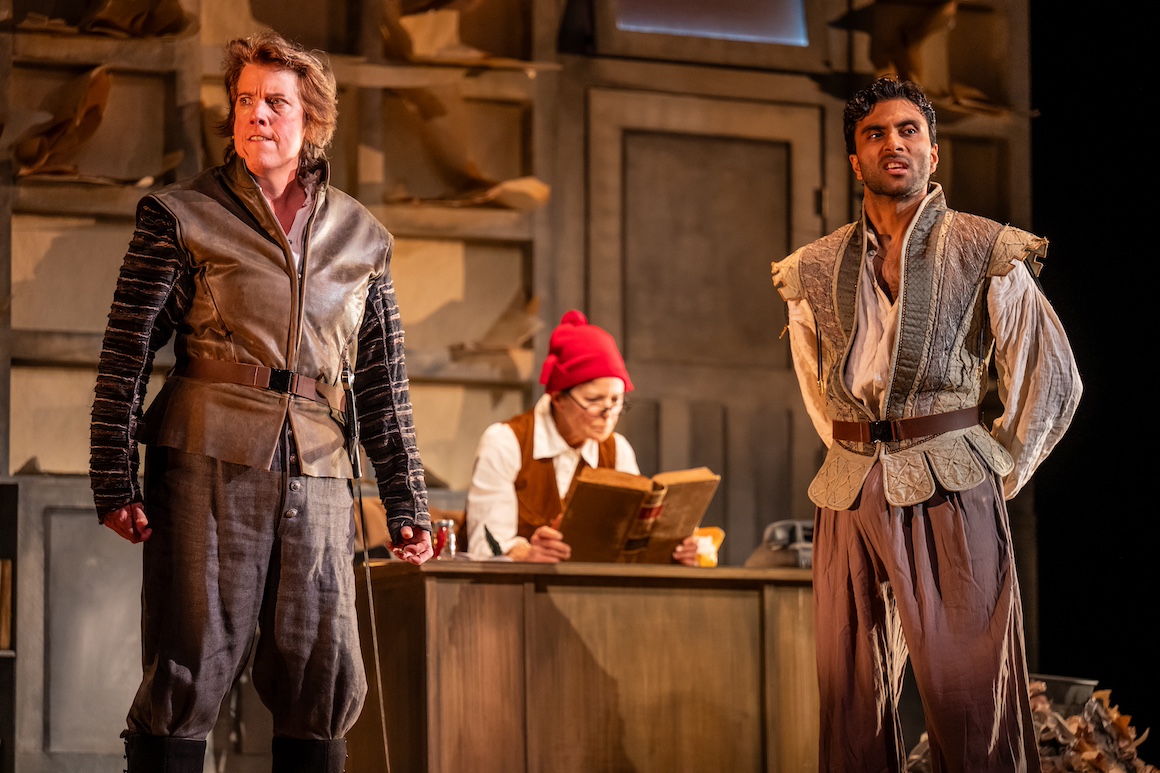
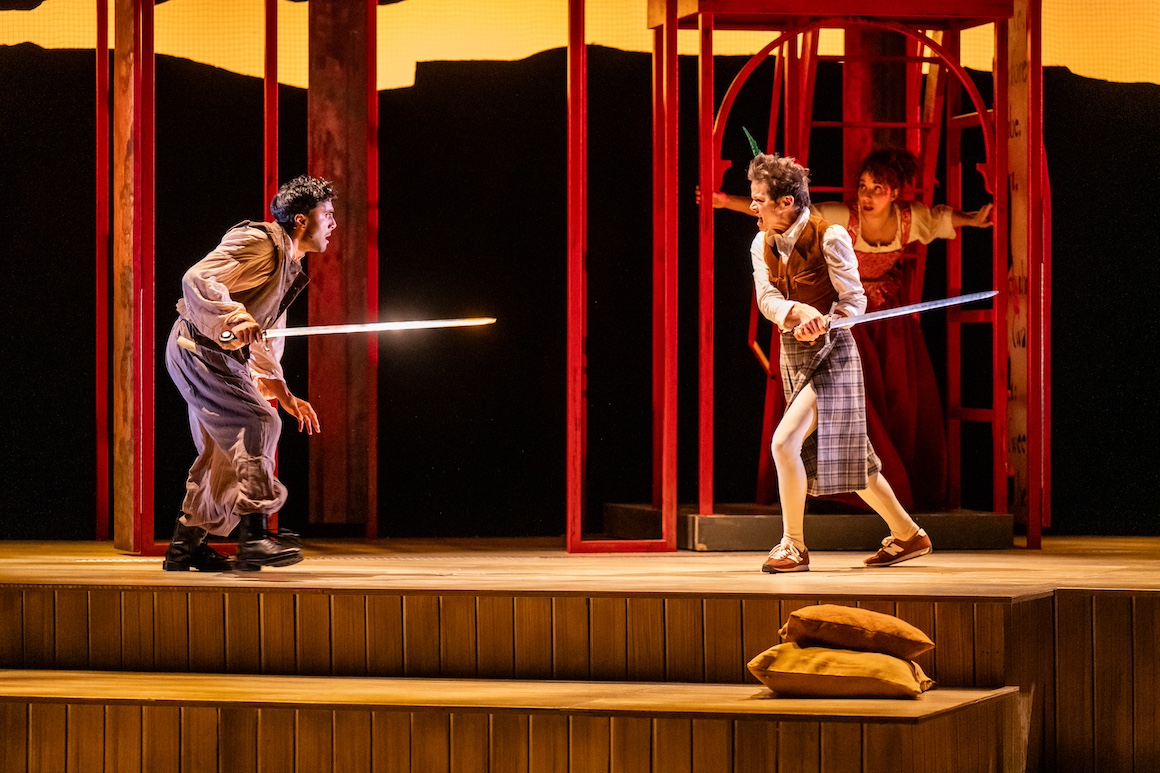
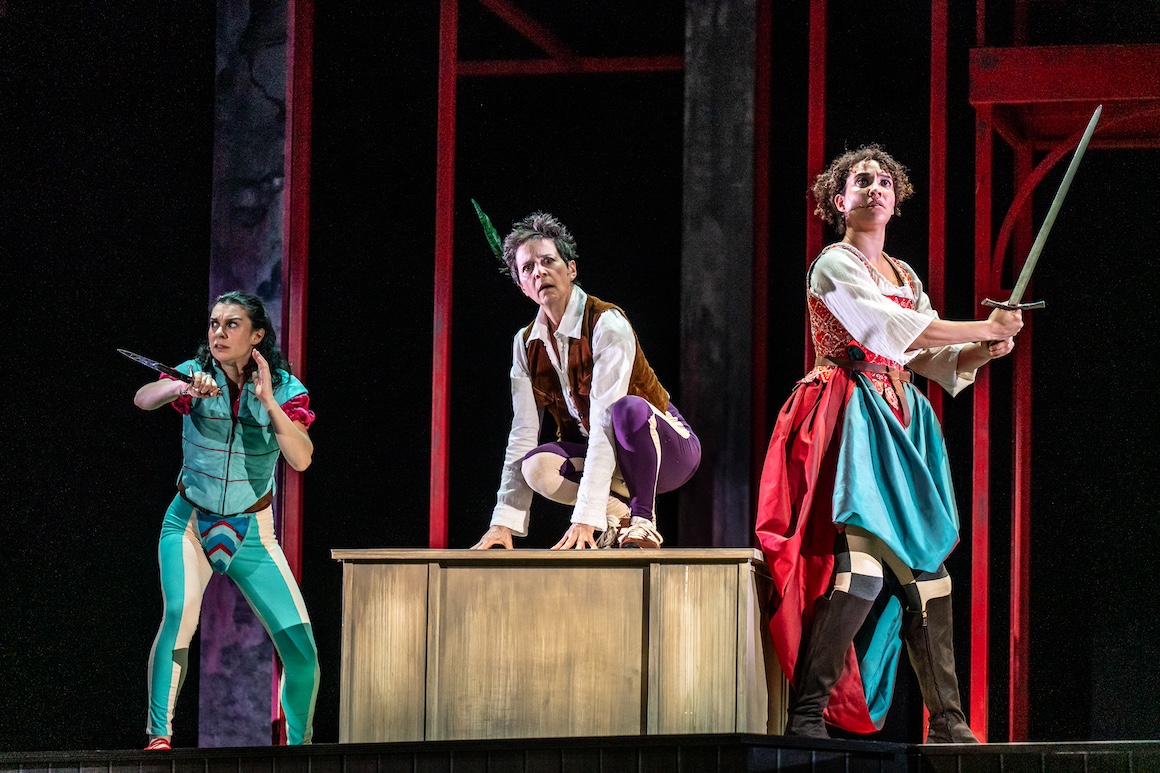
Constance turns up in Verona; disguised as one Constantine, just in time to stop the duel between Mercutio and Tybalt by pointing out that they are now cousins. All should be well except that Juliet, obsessed with sex and death, is fed up with Romeo who is apparently gay. She fancies a fling (i.e. a night of passion and a double suicide) with Constantine but having seen him/her in a clinch with Romeo decides that she’d better impersonate a boy. When she finds out Constance is cross-dressing too she’s delighted and imagines (in considerable detail) their potential Lesbian affair (and, of course, suicide). Romeo, having been rebuffed by Constantine, decides to try his luck as a girl. Along the way there’s an apparition; Yorick (no you’r it)? who claims that the Fool is “a lass” or alas! More clues are found. By now Tybalt has seen enough and he decides to kill the “Greek deviant”. Constance plays dead and Tybalt hauls her off to the vault where Juliet shows up to demonstrate her passion by topping herself but Desdemona, skirts up and sword in hand, tries to stab Juliet and then smother Constance with a pillow. Constance persuades the young ladies that their tragic impulses are unhealthy, realises that she is the Author and the Wise Fool and is transported back to Queens.
It’s a crazy complicated plot, even if one knows both plays well, but it’s very cleverly structured. The “intervention scenes” are staged as Shakespeare wrote them and then restaged with Constance’s intervention. The pseudo Shakespeare dialogue is brilliant particularly when it’s Constance, speaking modern English, interacting with other. characters speaking verse with all kinds of very funny misunderstandings on both sides. Juliet’s description of what she wants from Constance (as boy or girl) are hilariously explicit but sound quite other in verse. I’m not sure the plot ever quite makes sense but that’s perhaps rather the point. After all, fifty some years after I studied Romeo and Juliet for “O” level I still don’t think it makes sense and Othello is worse.
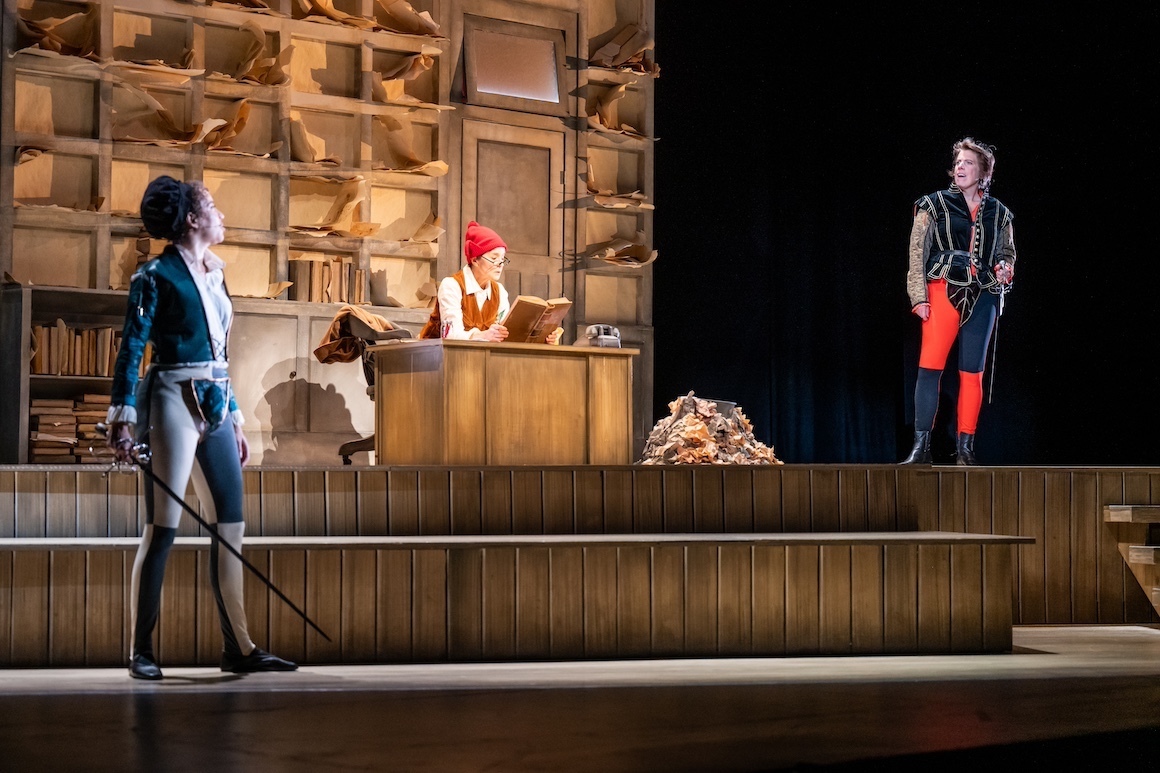
The acting is terrific and diction is excellent across the board. MacDonald is brilliant. She creates this air of diffidence that persists even when she is doing “heroic” things. Carolyn Taylor plays a variety of (mainly) male roles Othello, Tybalt, Professor Night, in a sort of androgynous way that just works. It’s a bit camp but not too much. Jessica Hill plays Ramona, Desdemona and Mercutio. She’s imposing and very athletic. With her skirts pinned up and sword in hand she could be playing a Pirate Queen (one of several nods to panto). Caroline Toal, as Juliet, is especially funny when she’s dressed as a boy; tight hose suits her! (more echoes of panto) and her ability to convey Juliet’s over the top passion for sex and death (probably in that order) is remarkable. Unsurprisingly in a play that’s all about reclaiming female agency the one male on stage tends to get the shitty end of the stick (sometimes literally) but Praneet Akilla makes the most of rather pathetic, diminished versions of Iago and Romeo. He’s also very funny as the Ghost.
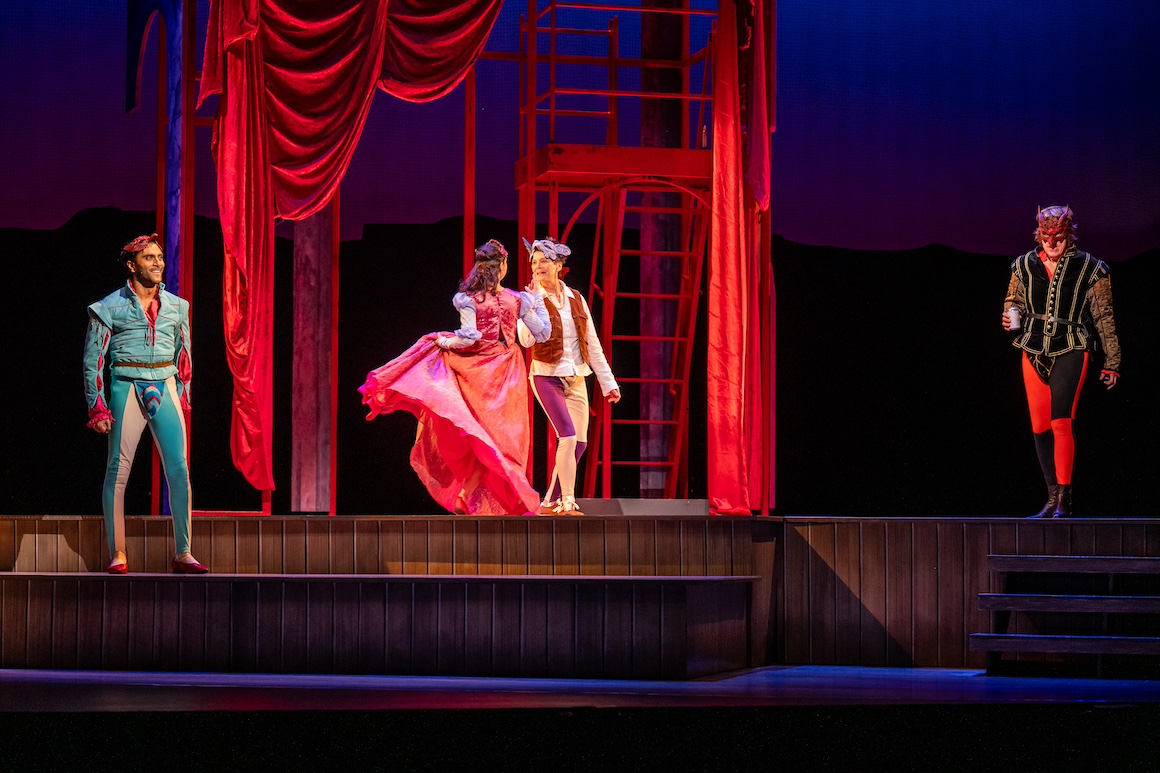
The direction is slick too, aided by some efficient and effective designs. The pace never falters, scenery moves in and out with minimum fuss, characters appear and disappear in unexpected and effective ways. Sound and lighting enhance the action and effectively cover necessary stage-handing. It’s all very professional.
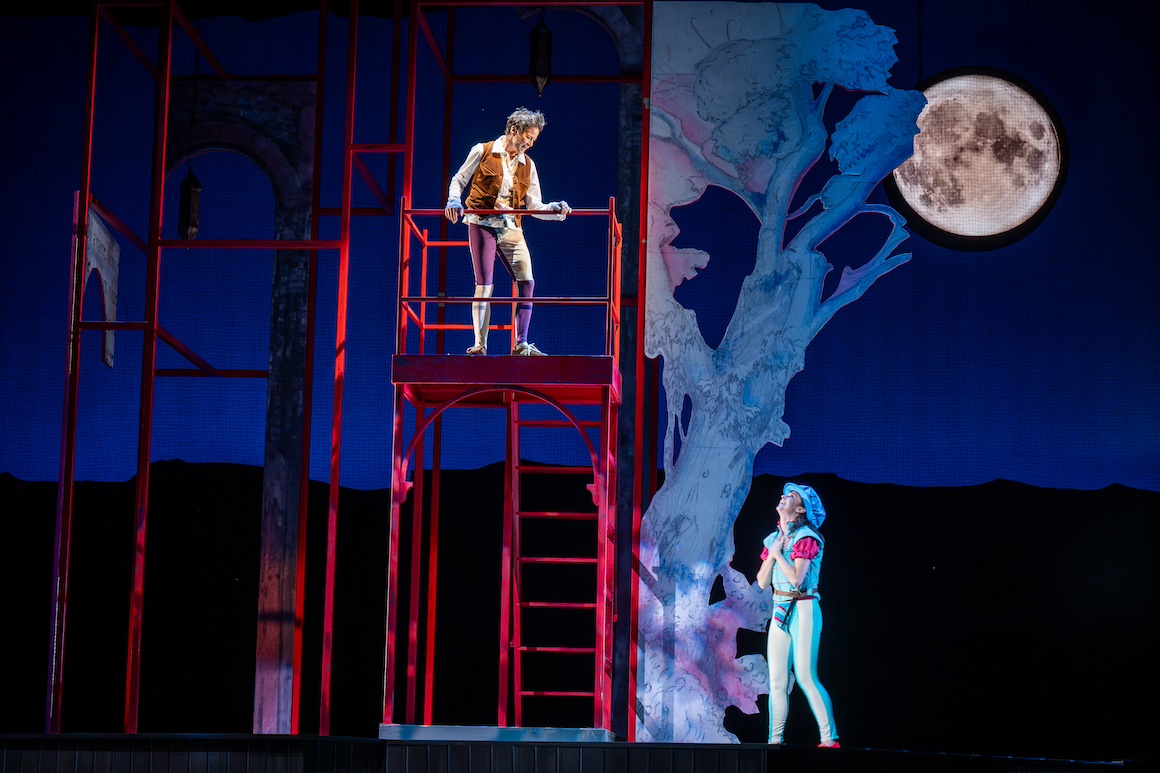
All in all, this is a play like nothing else I have seen. I’m not sure I got it all or, indeed, whether anyone would get it all on one watching. There are layers on layers; academic jokes, iambic pentameters, characters mysteriously translated in time and space, puns and double entendres by the bucketful, the versions of Juliet and Desdemona we get are uncanonical but entirely plausible and, by inversion, so are the men. I’m tempted to see it again!
Goodnight Desdemona (Good Morning Juliet) runs at the Bluma Appel Theatre until November 22nd.
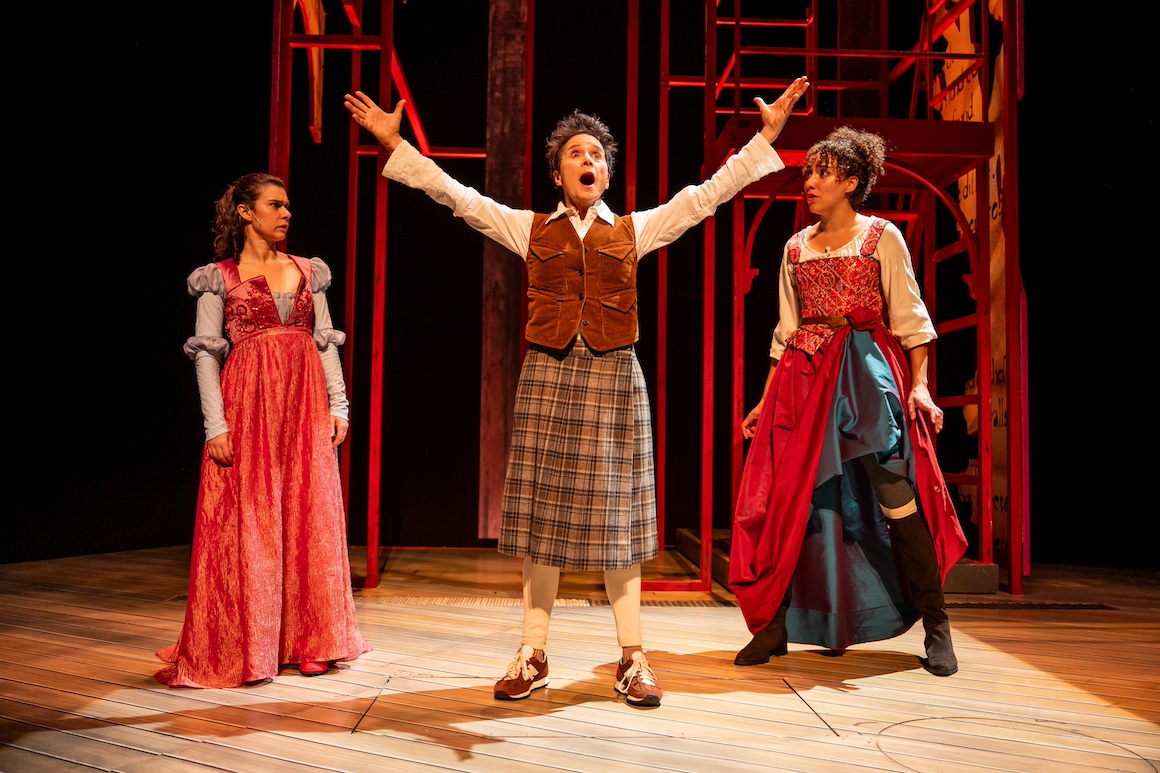
Photo credits Dahlia Katz

