
So the other Pressburger and Powell film that I recently acquired is their 1951 version of Offenbach’s The Tales of Hoffmann. There have been claims that this is the first film made of asn opera as opposed to a film of an opera performance but, assuming one accepts that Die Dreigroschenoper is an opera then that prize surely goes to the 1931 Pabst film.
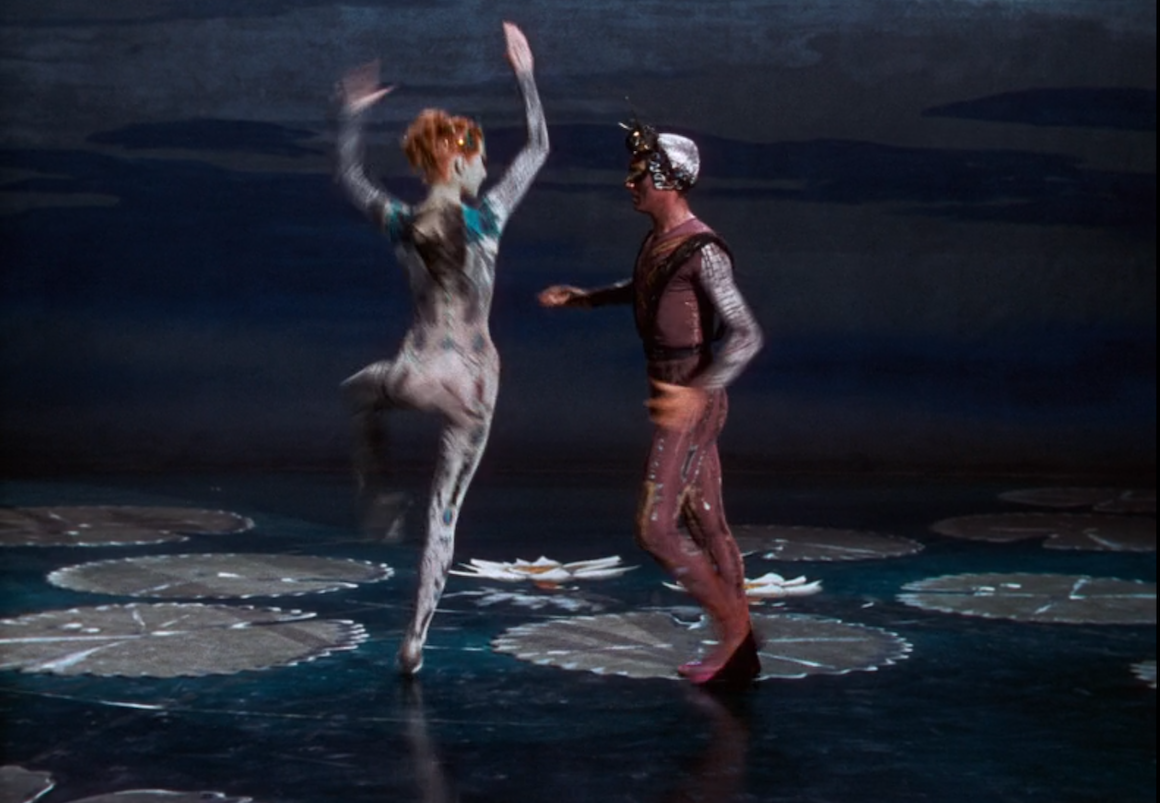
In any event the film of Hoffmann is very different from a live performance. For starters the only singers who appear are American tenor Robert Rounseville as Hoffmann and American soprano Ann Ayars as Antonia. All the other characters are played (in fact danced) by members of the Royal Ballet with the singing, by an assortment of the London based singers of the day, dubbed in. It’s an intriguing concept and they go whole hog with it. There are serious names from the dance world involved. The choreography is by Freddie Ashton (who also plays Cochenille), Stella and Olympia are played by Moira Shearer and Giulietta by Ludmilla Tcherina. The orchestra is the Royal Philharmonic with Thomas Beecham conducting. It was filmed in Technicolor and got a cinema release. How times have changed!
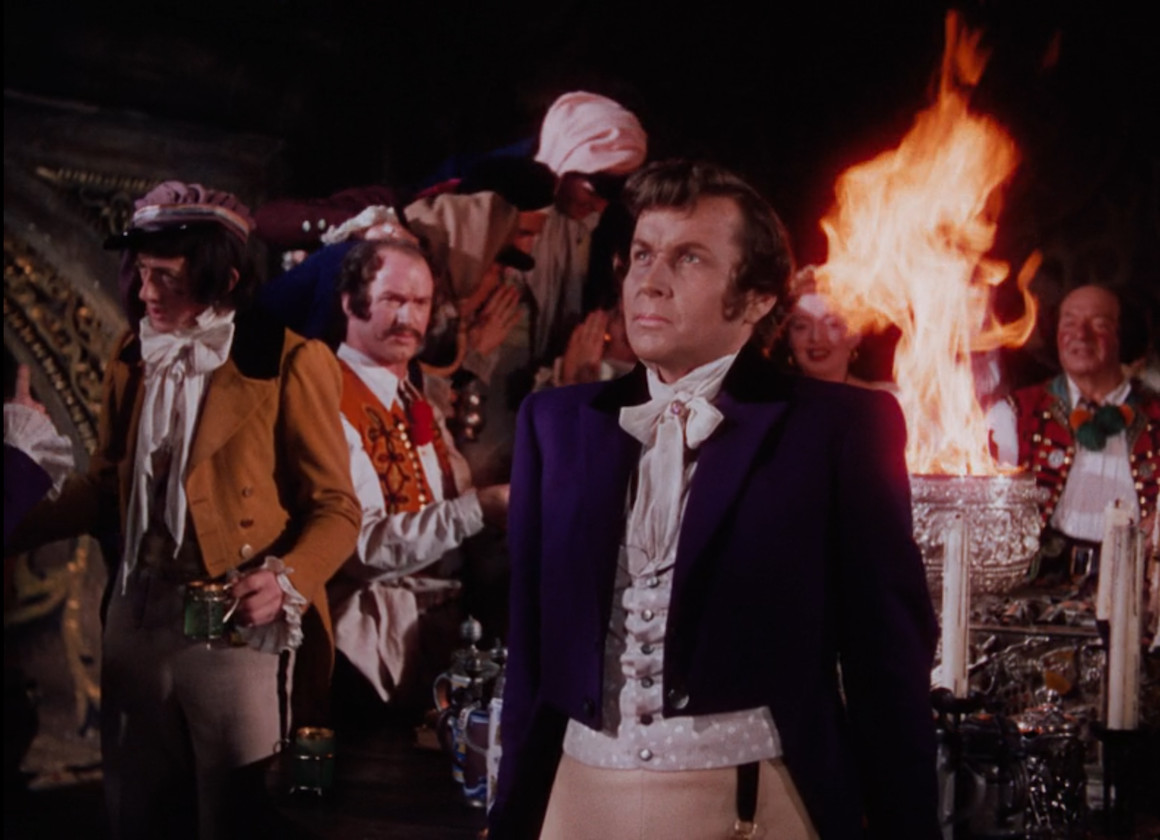
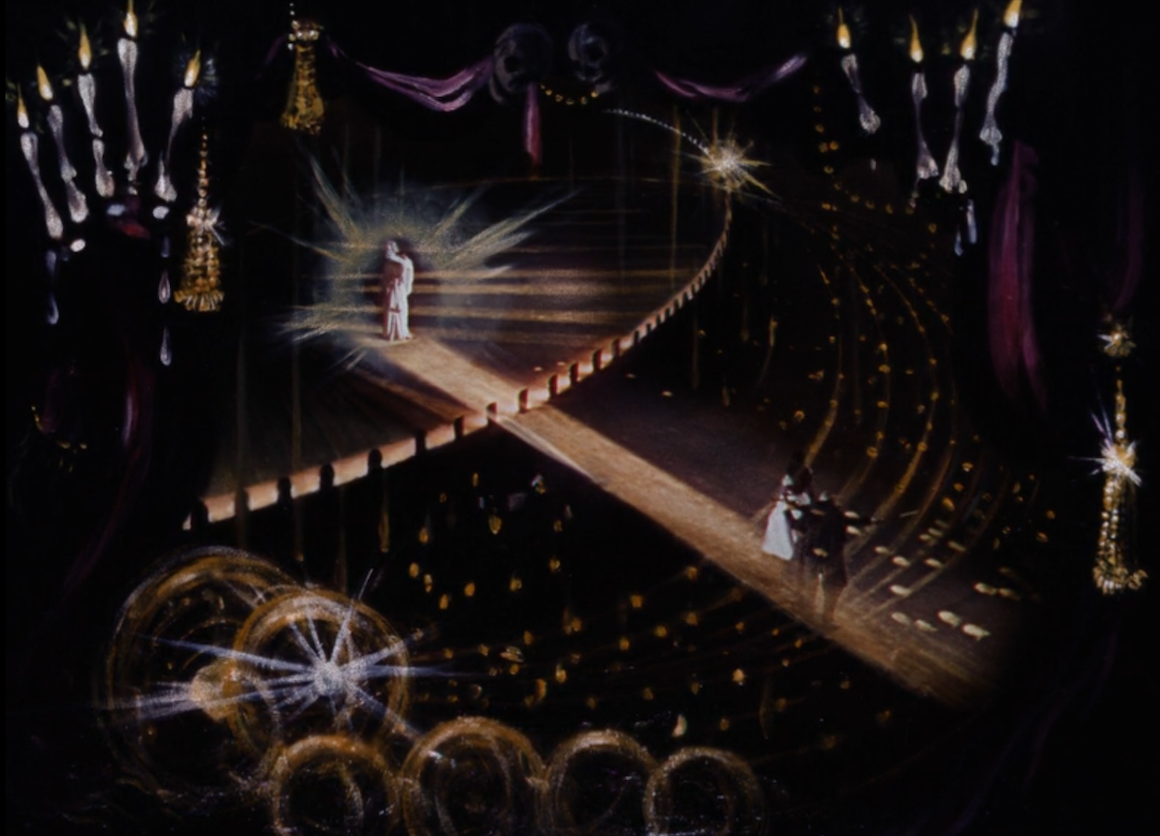
The aesthetic of the film is interesting. It gets a sort of Regency setting and some elements are very grand. The Antonia act for instance seems to set in a very large and elaborate clifftop villa, a bit like a Greek temple, and there are some carefully composed shots suggesting that Antonia is suspended between this world and the next that are very reminiscent of A Matter of Life and Death.

There are, of course, lots of cuts. The Muse of Poetry is gone completely, Nicklaus’ role is considerably shortened and the Giulietta act seems heavily cut. Generally the Lindorf villains are rather downplayed except in the Antonia act. (The acts are presented Olympia, Giulietta, Antonia). This makes room for an introductory dance number in the prologue featuring a body suited Stella/Shearer in the The Enchanted Dragonfly while still keeping the film down to about two and a quarter hours.

The singing is mostly pretty good. It’s in English and the translation is fine. Rounseville has a rather pleasant tenor. He’s not Juan Diego Flórez but he’s pretty good and he’s a good actor and, importantly, a good mover. Bruce Dargavel makes the most of what’s left of the villains with a pretty good stage performance by Robert Helpmann. Dorothy Bond sings Olympia with excellent, precise coloratura. Margharita Grandi is quite good as Giulietta with a very decent Barcarolle though the singing, is to my taste, a touch overwrought which is probably more a case of the preferred style of the period than anything else. Least successful vocally for me was Ann Ayars as Antonia. She has her moments but stylistically she is very much of the time with rather exaggerated diction. She acts well though.

It’s the dancing that stands out though, especially Shearer. The Enchanted Dragonfly is a real test piece requiring great precision and athleticism and looks real quite modern. She’s also excellent as a suitably robotic Olympia. Tcherina totally looks the part as Giulietta and glides sultrily through her act which includes a rather louche party, going on orgy. The chorus are all dancers too and act as a corps de ballet portraying drinking students, marionettes at Olympia’s, orgy guests in Giulietta and dancing couples in the finale. There are nearly forty dancers and singers, excluding chorus, credited so it’s just not possible to do them all justice.
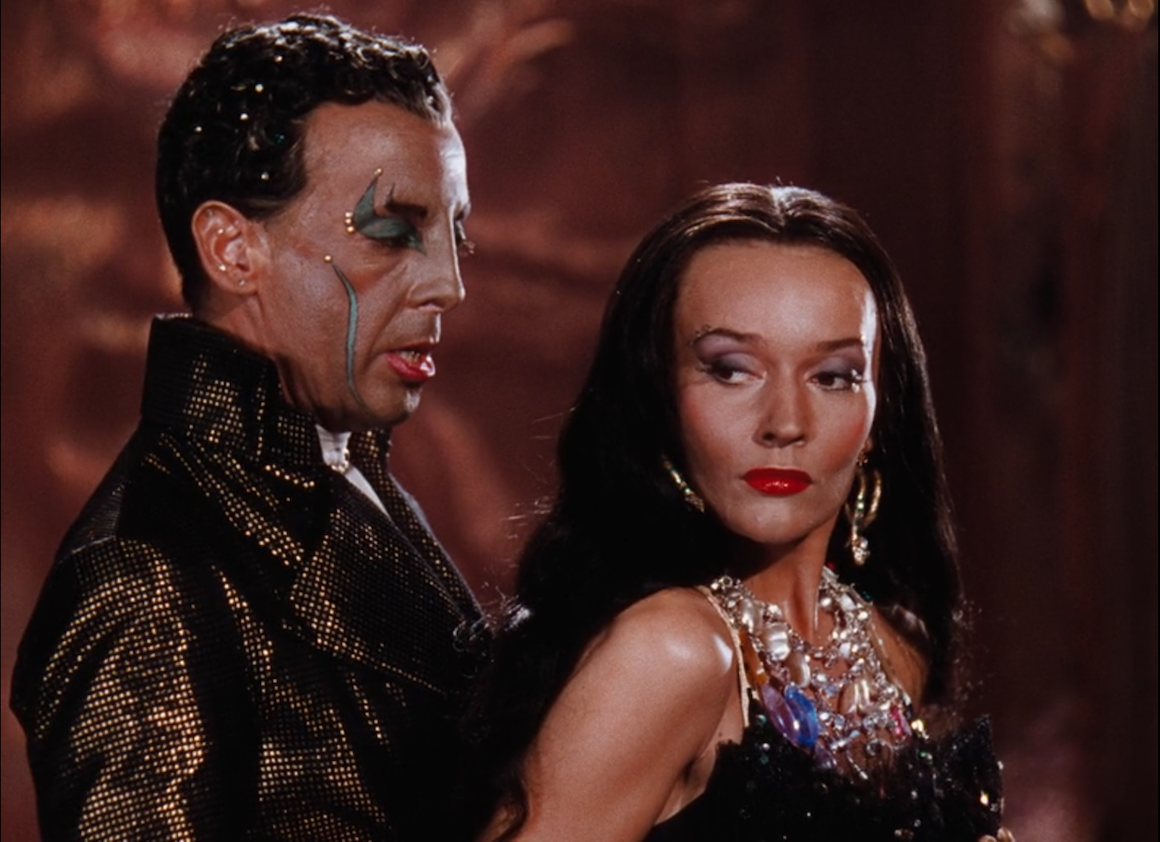
There are lots of surreal moments along the way. Clocks come to life at Luther’s. The dismemberment of Olympia certainly couldn’t be managed on stage and there’s cool stuff with mirrors and gondolas in Giulietta as well as the otherwordly stuff in Antonia. Even the credits sequence is rather cool. In short, it’s classic Powell and Pressburger.

The restoration for Blu-ray release (Scorses and the BFI again) is just excellent and it’s readily available as part of the Criterion Collection. The picture is super detailed and the colours vivid. The stereo sound is good early 1950s stereo. This is enjoyable to watch as well as being an important milestone in the history of opera on film.
Catalogue information: Criterion Collection Blu-ray UPC 715515272810
 operaramblings