
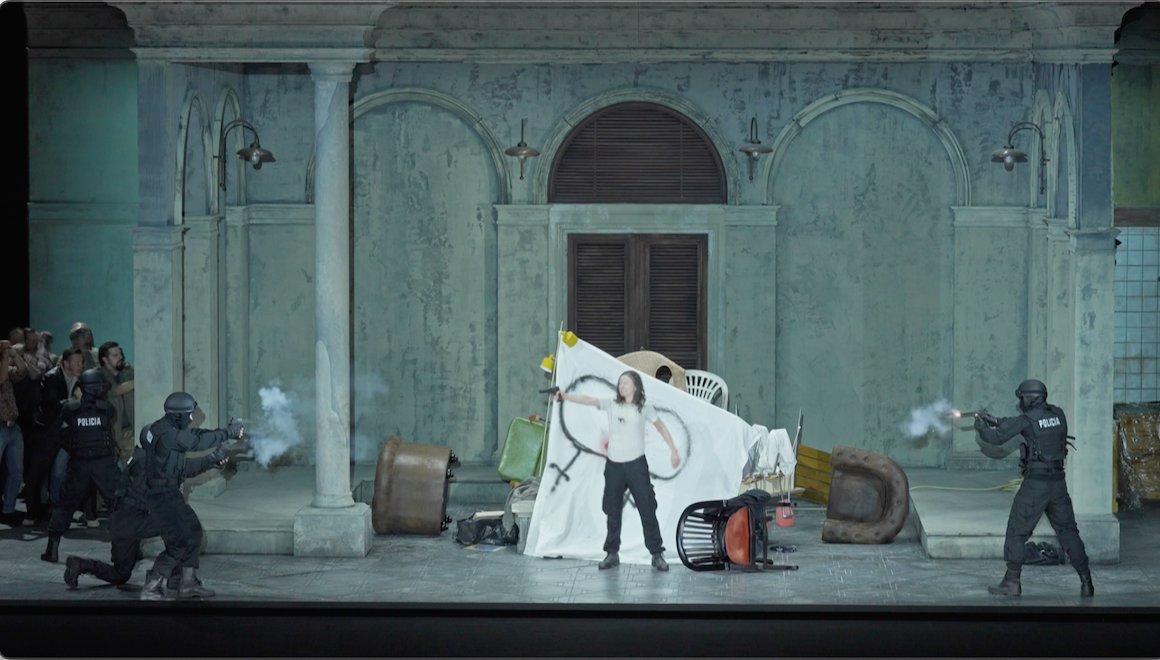
Rossini’s early opera seria Tancredi is set in Syracuse in the early 11th century and turns on two rival families coming together in the face a threat from both Byzantines and Saracens. The hero is the knight Tancredi, secretly in love with the daughter of one of rival families. Jan Philipp Gloger’s production filmed at Bregenz in 2024 updates it to the present with the families being rival drug gangs and the “threat” the police. There’s a further twist. Tancredi is a mezzo role and always sung by a woman. Here Tancredi is played as a woman pretending to be a man; at least to everyone except her lover Amenaide.
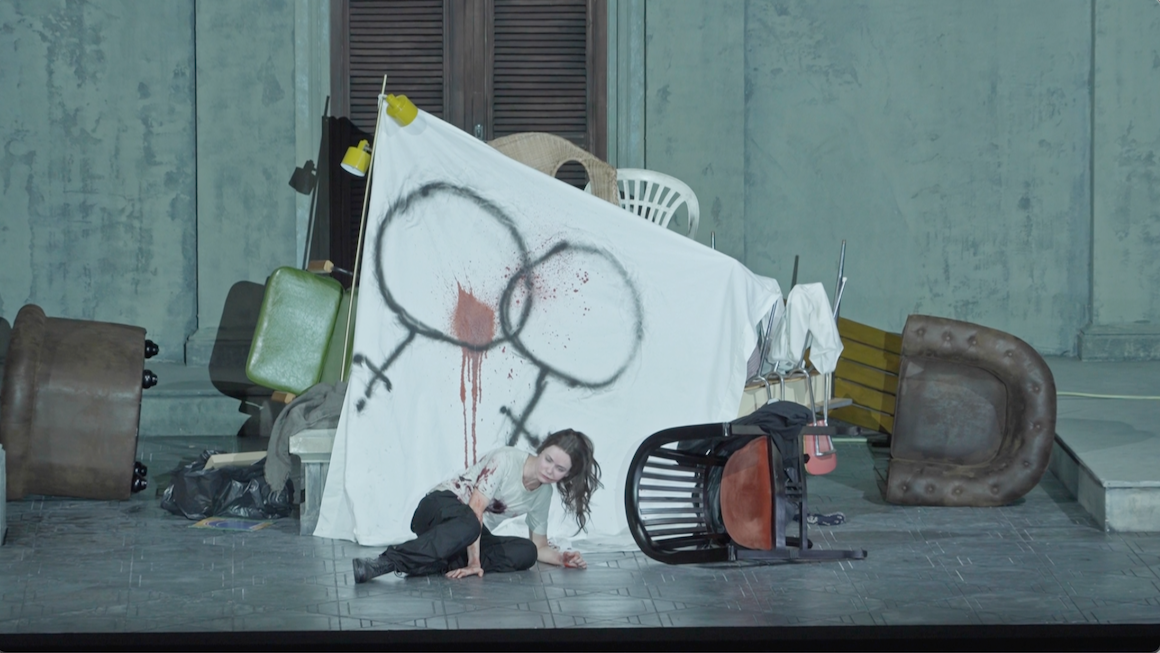
The complication is that Amenaide’s father Argirio has promised her to his rival Orbazzano as part of the peace deal. Amenaide sends a letter to Tancredi suggesting he take over the gangs but there’s no addressee so when it’s intercepted everyone, including Tancredi, assumes they’ve been shopped to the cops. Amenaide is sentenced to death but Tancredi decides to defend her in a duel with her accuser Orbazzano. He wins, so Armenaide is safe, but he still thinks she’s a traitor and so gets himself killed in a shoot out with the cops; albeit after a farewll with Amenaide that takes about 35 minutes. (for Rossini experts this is the Ferrara ending where Tancredi dies, not the happy Venice version)

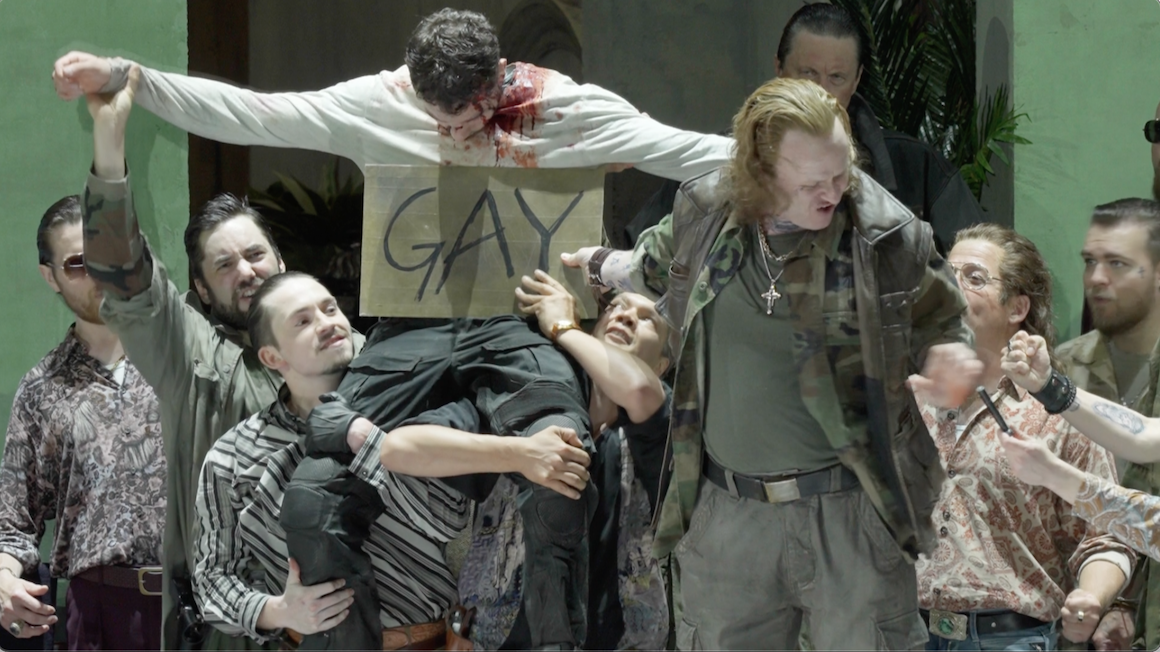
The atmosphere is patriarchal, mysogynistic, brutal and Catholic. Early on we see the gory killing of a gay man and it’s pretty clear why Tancredi and Amenaide are keeping the nature of their relationship secret. Only right at the end does Tancredi reveal herself as a woman but immediately thereafter she goes down in a hail of bullets. All the other characters are taken away by the cops leaving Tancredi to die alone and hallucinating about what might have been. This is a very simple summary. The production has a number of interesting dramatic and visual twists which keep the interest up.
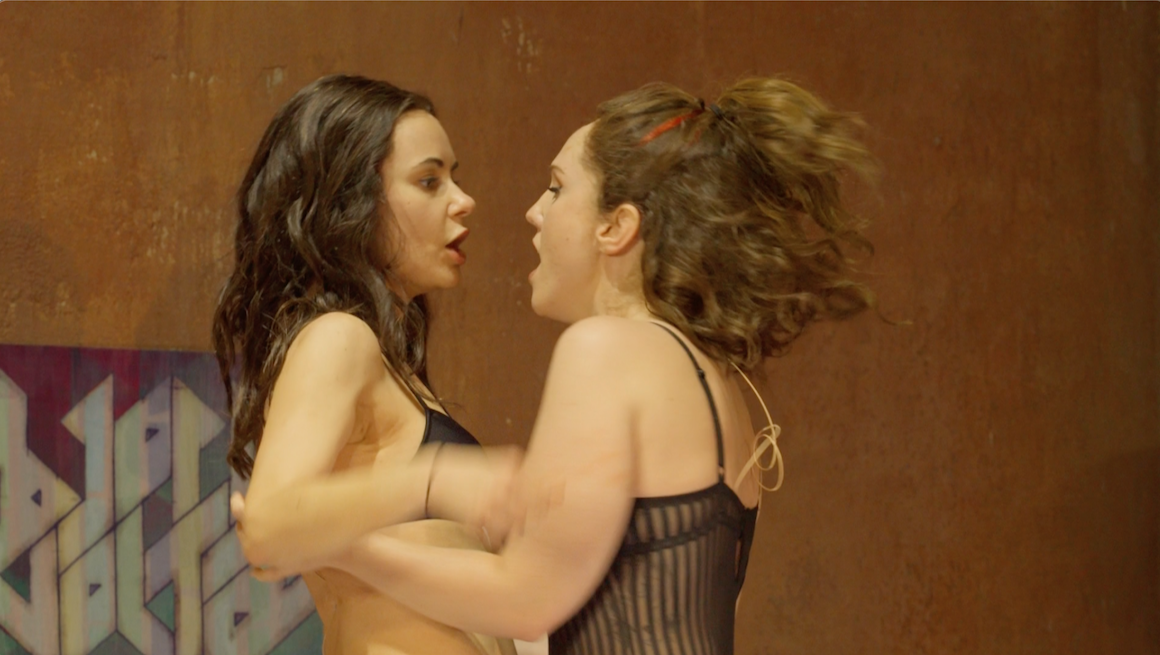
Musically it’s pretty classic early Rossini. It has lots of good tunes with some well crafted arias and duets. The ones for the two girls are especially lovely. The male chorus gets quite a work out too. My only real caveat is that it’s sometimes rather too bouncy (the chorus “Regna il terror” is a prime example) for the rather serious subject matter but then I could say that about many bel canto operas. I’m also not sure the plot really is up to two and a half hours of music but see previous remark about bel canto!
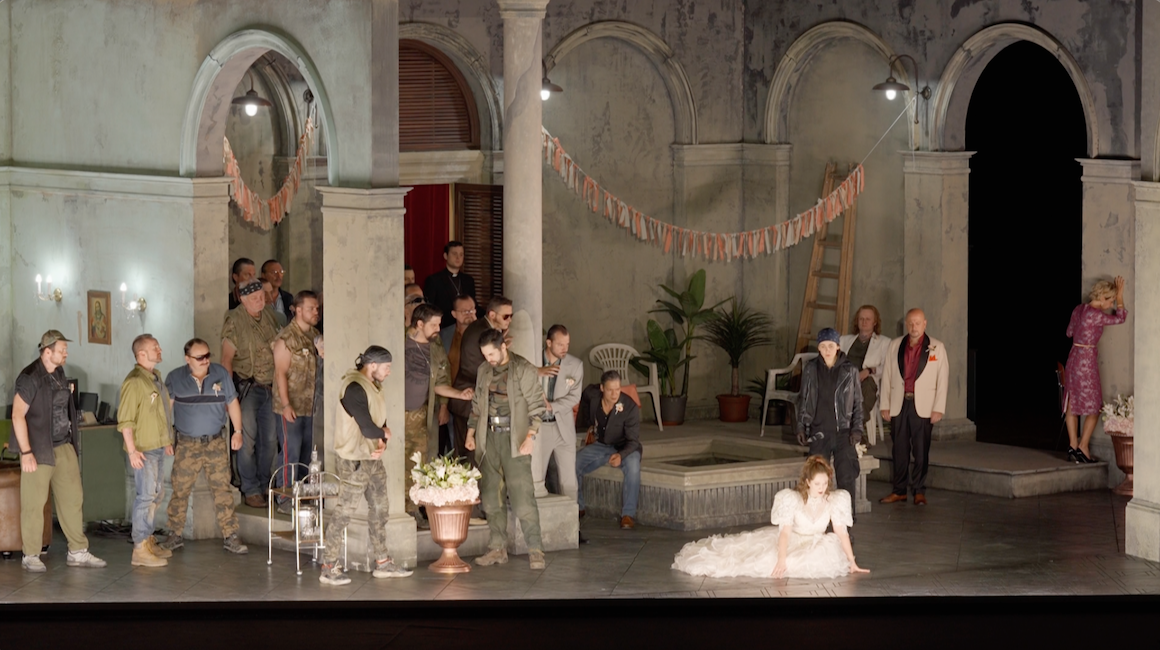
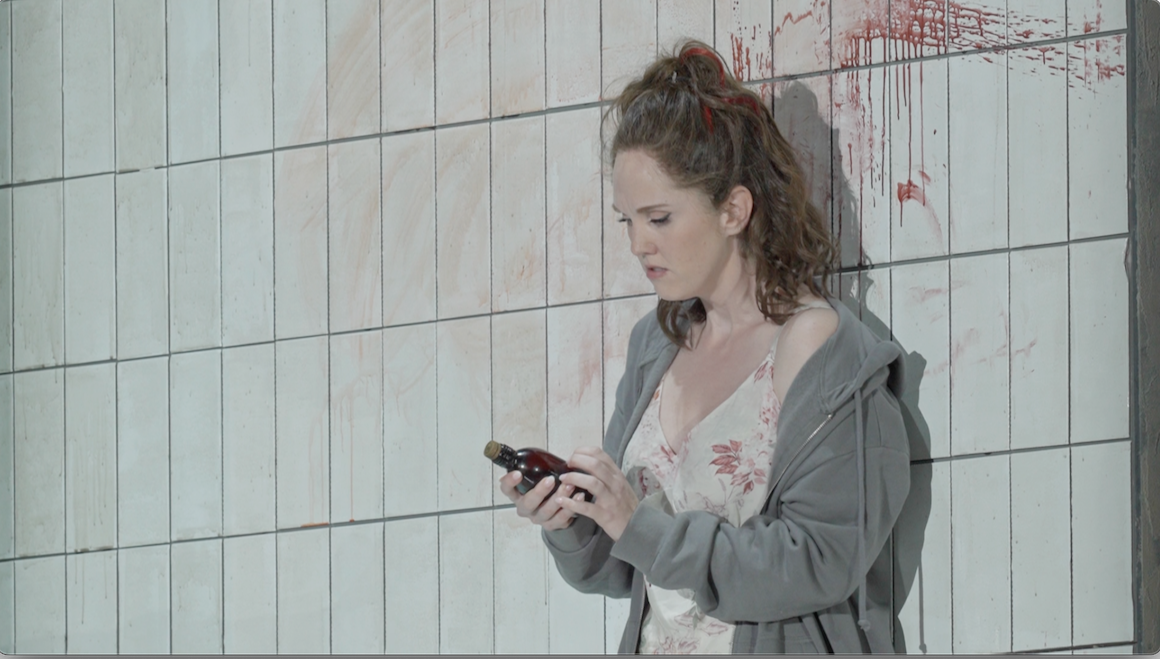
The real strength of this recording though is the singing and acting of Mélissa Petit as Amenaide and Anna Goryachova as Tancredi. Petit’s coloratura is exquisite and she has beautiful tone. It’s a lovely contrast with Goryachova’s darker, heavier but still very agile voice. They are also very touching together. They are well backed up by solid performances by tenor Antonino Sitagusa as Argirio and bass-baritone Andreas Wolf as Orbazzano. There’s a useful contribution too from Laura Polverelli as Amenaide’s mother Isaura. The gentlemen of the Prague Philharmonic choir throw themselves into some crazy action while singing very competently. The Wiener Symphoniker play idiomatically and conductor Yi-Chen Lin makes judicious pacing choices and keeps it all together nicely. It’s really quite satisfying.
The “multi-cell” set gets judicious film treatment from Davide and Tiziano Mancini backed up by an excellent picture and first class sound (LPCM and DTS-HD-MA) on Blu-ray. The booklet has a full track listing and short but useful notes. Subtitle options are Italian, English, German, Korean and Japanese.
This is the only video recording of this opera currently availableand it makes a pretty good case for it. It’s certainly worth watching for the performances by Goryachova and Petit. FWIW there was a version recorded at Schwetzingen in 1992 but that’s long gone from the catalogue.
Catalogue information: C Major Blu-ray 769304 (due for release 4th July 2025)
… and this is the 700th video disk review on Operaramblings…
 operaramblings