
Thursday lunchtime in the RBA saw Teiya Kasahara, Chihiro Yasufuku and Simone Luti perform 歌曲 Kakyoku: Journey in Japanese Song. It was an interesting contrast with Sam Chan’s exploration of Western representation of Asia and Asian in Western classical music the day before. This time all the music was by Japanese composers setting Japanese texts but (in some sense at least) in the Western classical style/tradition. In its way it forms part of the broader “modernisation” of Japan that took place after the Meiji Restoration.
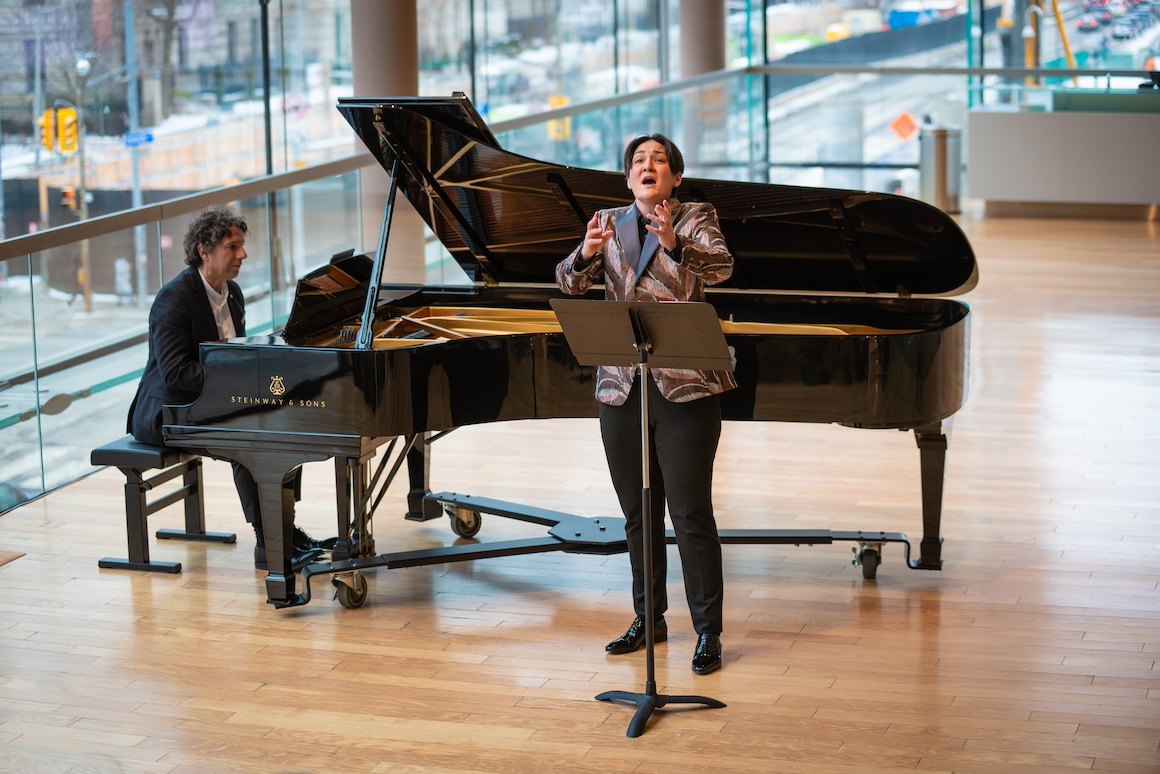
The oldest pieces, by Kōsaku Yamada dated from the 1920s. He had studied in Germany with Bruch and perhaps unsurprisingly this music sounds like early 20th century German Lieder. What was more surprising to me was that the post WW2 music, including by Sadao Bekku; who studied with Messiaen, sounded quite retro with perhaps nods to the Great American Songbook rather than, say, the Second Vienna School. The most recent piece though; an aria from Tamiya Terashima’s opera Crimson Goddess did sound more like an attempt to break away and find a more contemporary Japanese sensibility.
 I am, of course, just reflecting on the tiny sample of a very considerable corpus of 20th century Japanese art song and mostly I want to know more. Are there songs out there that reflect a more “modern” sensibility? Did the extreme conservative nationalism of the 1920s and 1930s deter, or even prevent, composers from following Western trends? Non conformity and intellectual exploration wasn’t exactly encouraged in Japan in that period. What was the influence of American occupation after 1945? There are aspects of Japanese culture where I would have answers to some at least of these questions but on music I’m at sea but very curious.
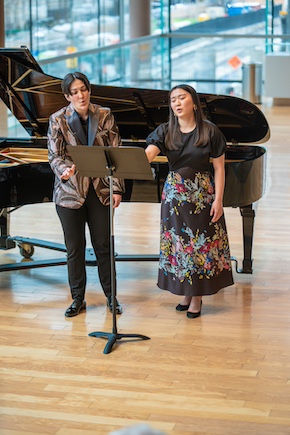
The performances were excellent and an interesting contrast. Teiya Kasahara sounds more dramatic I think every time I hear him and it’s no surprise that he’s covering Cio Cio San in the current COC run of Madama Butterfly. His voice is still pretty flexible but it’s big. Chihiro Yasufuku is much younger and has a much brighter sound. She’s one of the rising stars at UoT opera right now and I’ve seen her as everything from an Ugly Sister to a fake nun. Unsurprisingly she sounded excellent in this music. Fine piano playing from Simone Luti too, of course.
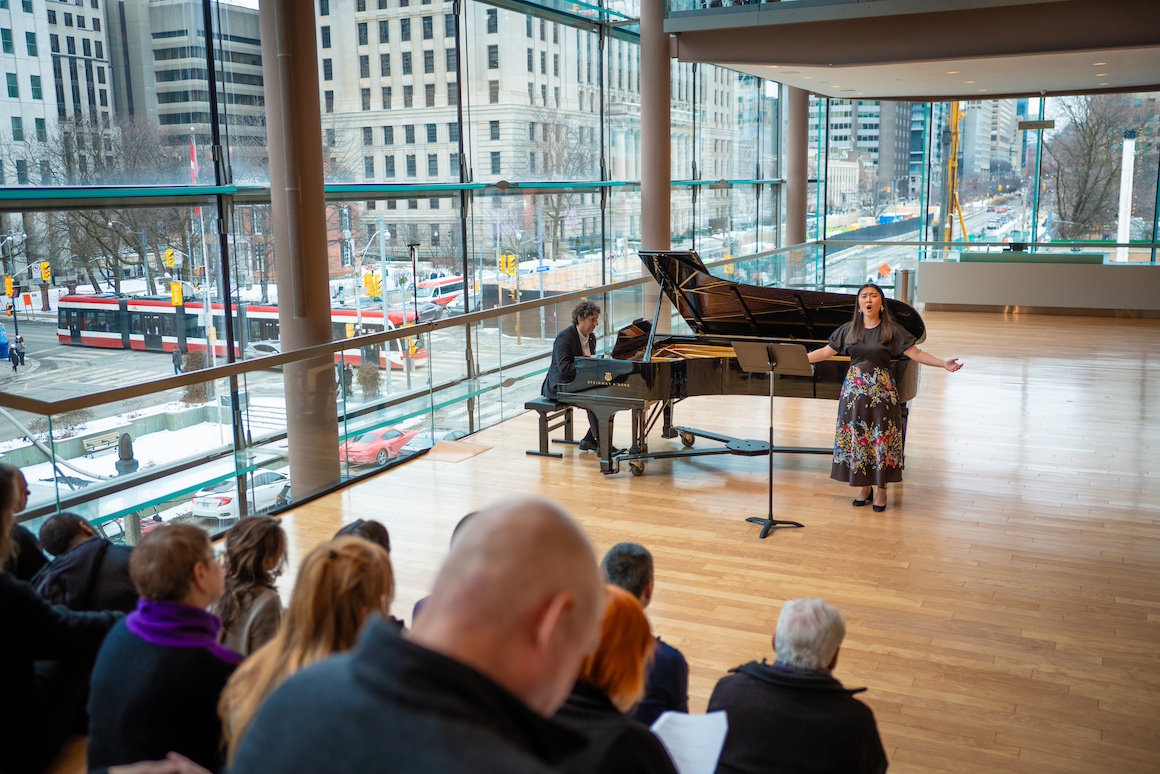
So, an intriguing concert which I enjoyed. I went in not really realising that there was such a thing as Japanese art song. I came away intrigued; wanting to know more about the music and it’s evolution.
Photo credits: Karen E. Reeves
 operaramblings