
This year’s art song mentors for Toronto Summer Music; Dame Sarah Connolly and Joseph Middleton, gave the traditional recital in Walter Hall on Tuesday evening. Those who braved flooded streets and spotty TTC service enjoyed a treat. It was a carefully curated and beautifully performed collection of songs.
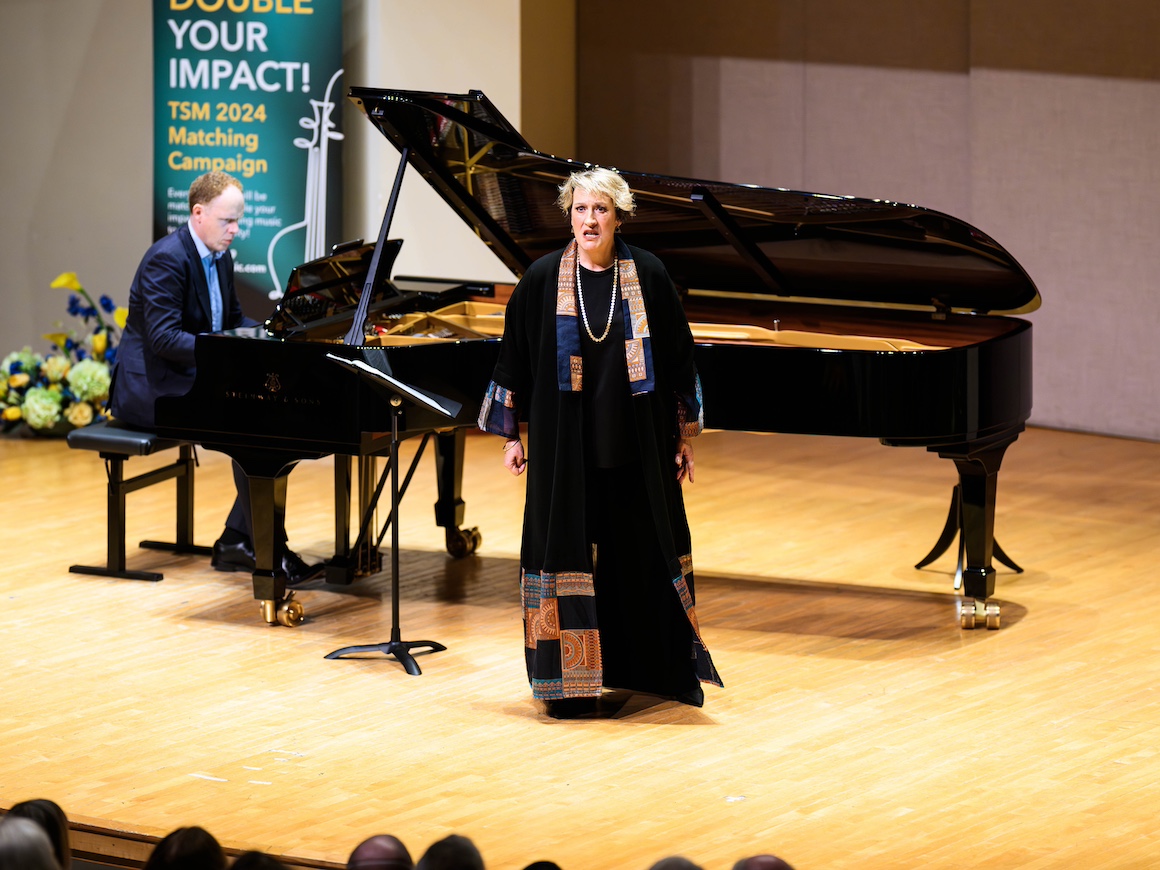
The first half of the programme consisted entirely of English language songs. Barber’s Three Songs, Op. 10 set texts by James Joyce and are quite declamatory in nature. The third song, “I Hear an Army” is particularly dramatic. Besides their own merits these songs set the tone for the evening. Connolly’s diction (the most welcome surtitles scarcely needed here) and phrasing were impeccable. She used a wide range of colours with taste and Middleton showed that he was no mere accompanist. The subtleties of his playing were one of the highlights of the evening.
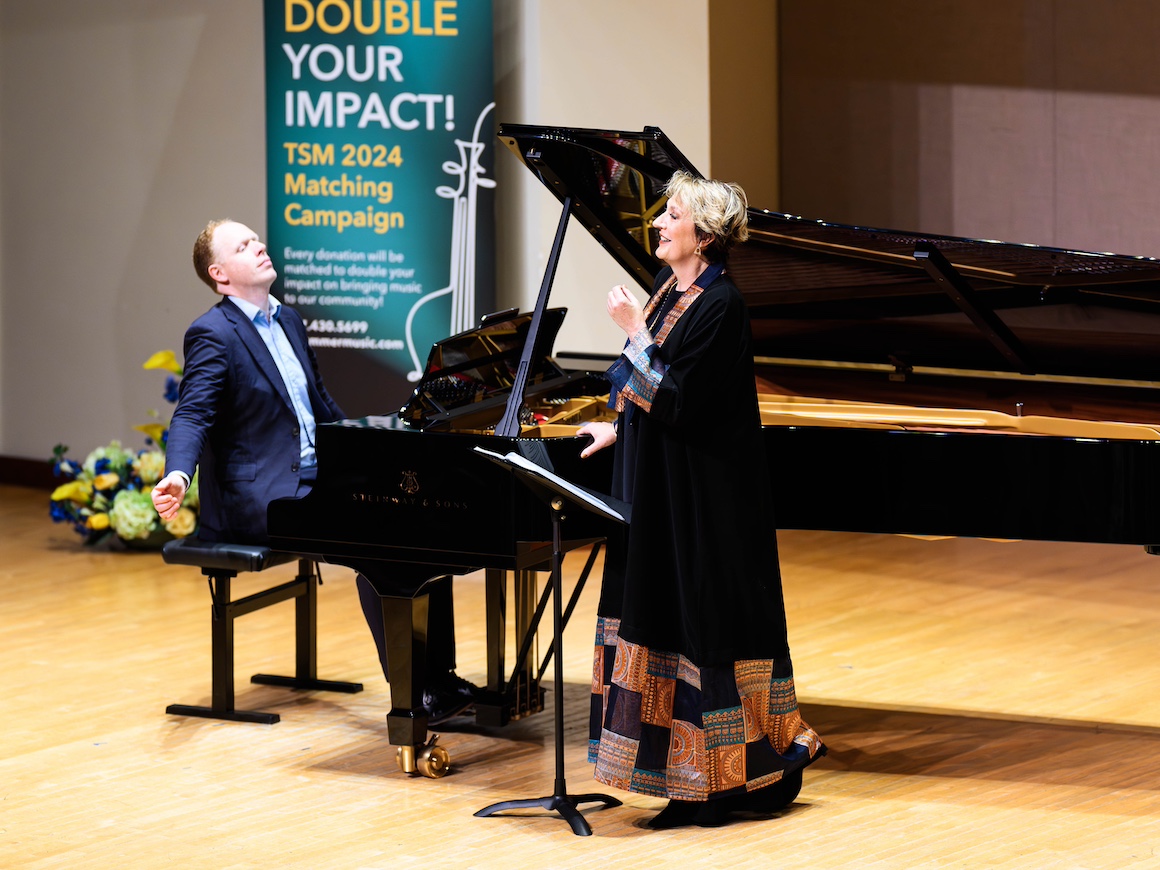
Errolyn Wallen’s Night Thoughts; written for the performers, came next. Wallen is a Belize born Brit and there’s definitely something here that reflects that heritage. It’s gentler than Maria Thompson Corley’s The Colour of Joy but reflects some similar ideas; the impact of a Northern winter on someone from somewhere warmer, the quality of Northern light, the hopes and fears of the immigrant experience. There’s something conversational too. Perhapds a reflection of her also being a singer/songwriter. I need to hear these songs again.

Richard Rodney Bennett’s A History of the Thé Dansant riffs in an impressionistic way on the experience of two upper class English children in the fashionable south of France in the 1920s. The poems are by his sister May Peacock. The atmosphere will be familiar to anyone who has read memoirs of writers of the period; Anthony Powell and Cyril Connolly (no relation as far as I know) come to mind. Jazz, fancy deserts, flirtation, not quite sun, sand and sex but getting there. These are all playfully evoked with jazzy touches. Dame Sarah definitely added her own ironic touches. Good fun.
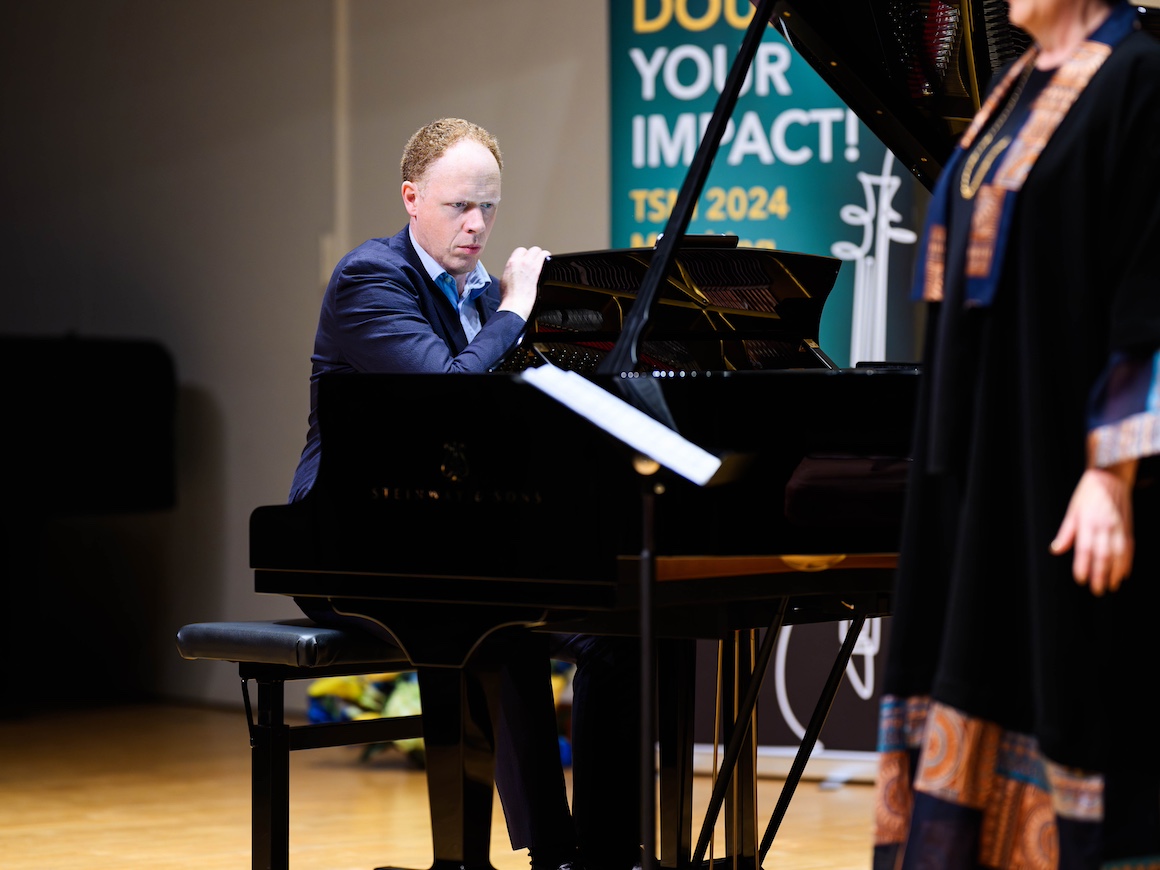
After the break things got a bit more serious, at east for a while. We heard one of the finest performances of the piano version of Mahler’s Rückert Lieder that I have ever heard. These songs cover such a wide emotional range and navigating it while maintaining impeccable musicality is a feat. I might single out one moment. At the devastating conclusion of “Um Mitternacht”, sung as the third of the five, Dame Sarah looked as emotionally drained as I felt and yet after the briefest of pauses she launched into an appropriately sunny “Liebst du um Schönheit”. There was so much subtlety, artistry and depth of emotion from both of them in this set that it defies my powers of description.

Continuing in the Viennese mould we got some early, and rarely heard, Schoenberg and Berg songs which really do show that what happened musically in Vienna in the decades after1900 was really all of a logical whole; however much some of the formal experimentation that went on might suggest otherwise. In an odd way this was reinforced by a final set of cabaret and musical pieces by Kurt Weill; composed of course in exile but carrying on that sensibility. I particularly enjoyed “Je ne t’aime pas” where Dame Sarah was not afraid to switch between rather lovely singing and a sort of Sprechstimme more typical of early Weill than the Broadway stuff.
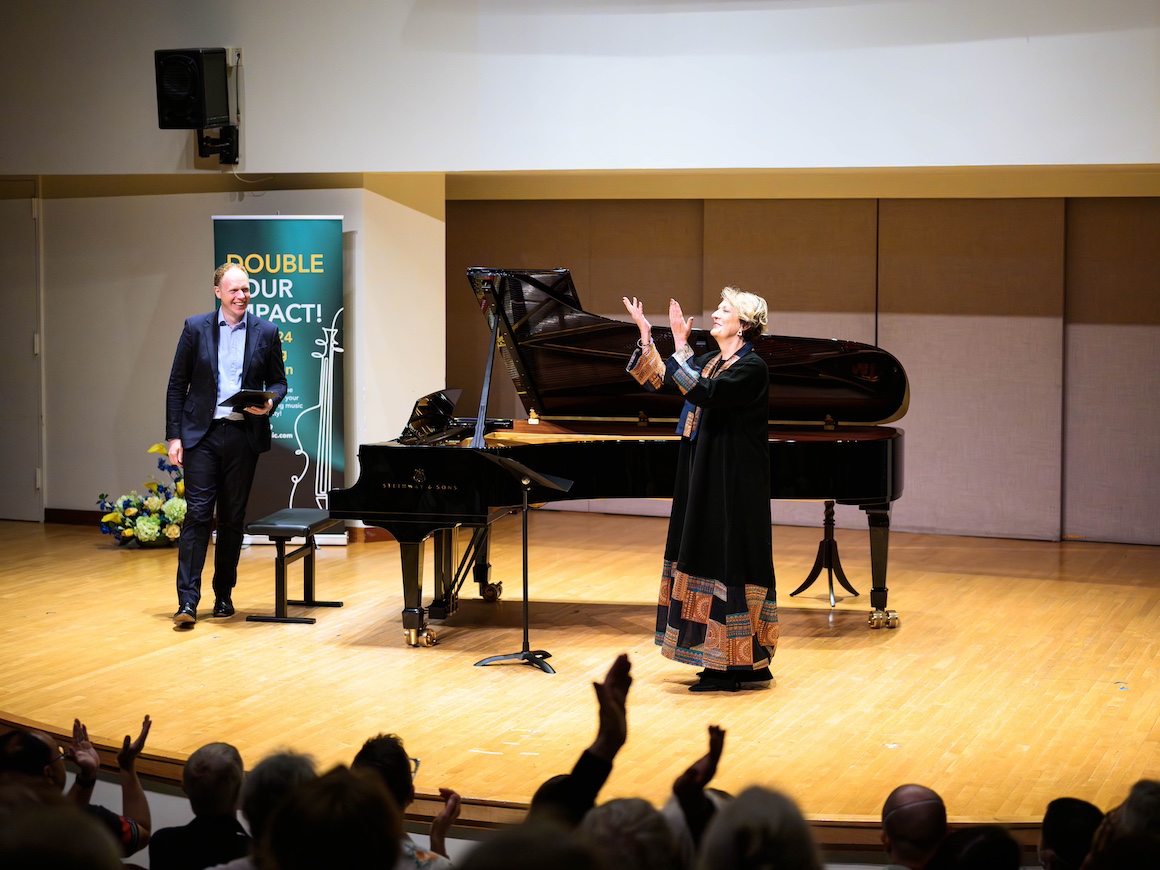
The encore was Herbert Howells’ setting of Walter de la Mer’s King David which Dame Sarah has described as “the greatest British Art Song ever written”. I’d have to think about that but it’s certainly a most beautiful poem and a lovely setting by a somewhat underrated composer. A fitting end to a fine recital that certainly charmed away sorrowfulness.
Photo credit: Lucky Tang
 operaramblings