
Sometimes the Canadian Opera Company gets it right and the current production of Janáček’s Cunning Little Vixen is a good example. It’s got all the things that might help boost a flagging audience. It’s not over familiar. Nobody is going to be complaining that they have seen the same old boring production five times already. It’s a brilliant score. The production is intelligent with enough for those who want more than a costume drama while not doing anything to shock the pearl clutchers. It’s well sung; with a goodly quantity of local talent, and the orchestral playing and conducting is exemplary. What more could one ask for? One could I suppose add that it’s an opera one could happily take children to.

The opera is, rather unusually, based on a comic strip about the vixen “Pointy Ears”. Both comic strip and opera relate her adventures in the forest and her relationship with the other wood denizens as well as the old Forester and his family. All the humans; bar the lusty Poacher and his bride to be, are old and disappointed. But life goes on in the forest as the seasons and the generations pass and the opera more or less concludes with a paean to Nature from the Forester. It’s very much of its time (1924) and to an extent Pointy Ears represents the New Woman living an independent life with a somewhat scandalous sex life. In this production that’s drawn out by the quite racy modern translation used for the surtitles but I don’t think there’s anything there that’s “new”; as in not in the original Czech.
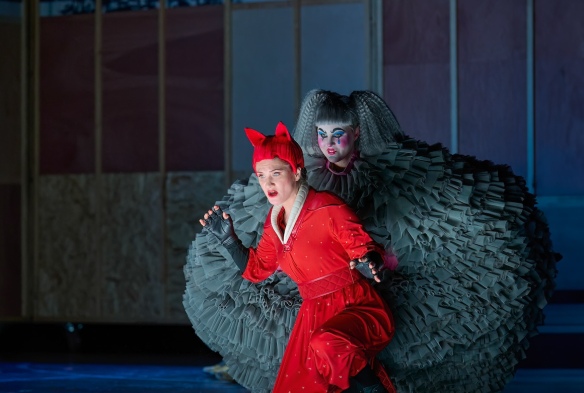
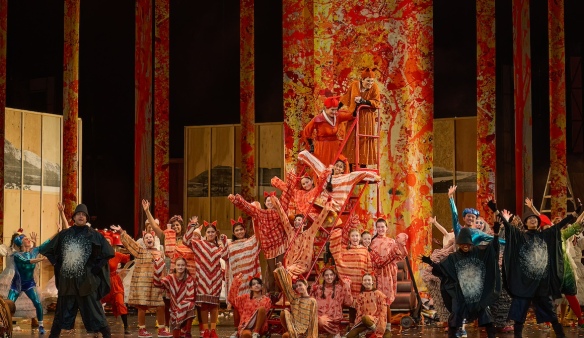
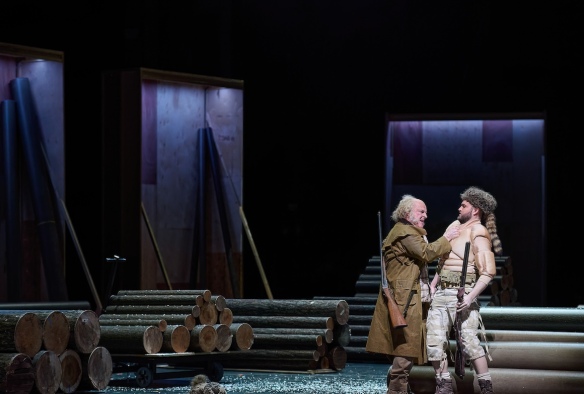
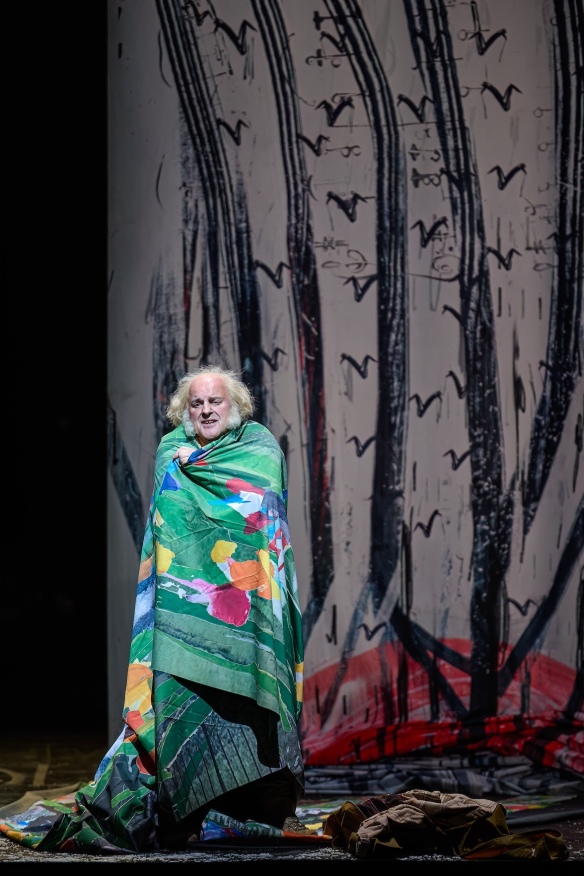
Jamie Manton’s production is clever and makes excellent use of ingenious sets and costumes by Tom Scutt.. Instead of a straightforward ancient forest we have a set that alternates between forest and lumberyard (cleverly done with scenery trucks). The relationship between humans and the forest (Nature) has become ambiguous. Time too is indicated ingeniously by the use of painted fabric scrolls hung from the fly. These unroll to mark the passing of the seasons and the stages of life. In the final one; unravelling as the Forester sings his great final aria, the sun sets followed by a faint impression of the score followed by nothing at all.
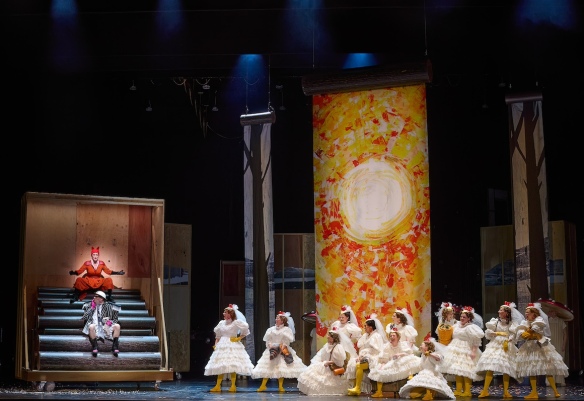
Within this general framework there is great life and colour. The animal costumes are colourfully impressionistic and there’s lots of movement; especially from the splendid Canadian Children’s Opera Company who contribute several soloists and the fox cub chorus (Pointy Ears has more offspring than Boris Johnson). A couple of really good dancers are used to good effect too. That’s not always a COC strength! The only quibble I have about the designs is that the set for Acts 1 and 2 is open at the back and despite the “trucks” being used to create locally improved acoustics there are still some. dead spots. In Act 3, with a back wall in place, sound projection is notably improved.
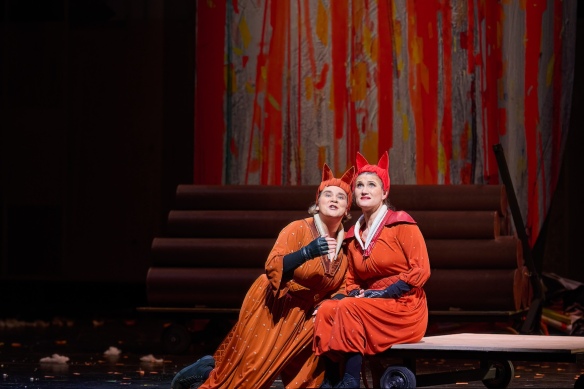
Performances are generally strong. There are three absolutely crucial roles. Pointy Ears, of course, sung splendidly by Jane Archibald; one of many fine Canadian singers on stage. Her suitor and eventual “husband”, Fox, is sung equally well by Ema Nikolvoska making a long awaited COC debut. And, of course, the Forester; one of the great baritone roles, sung here with absolute command by Chris Purves. It’s a trio of my favourite singers and I wasn’t disappointed at all.
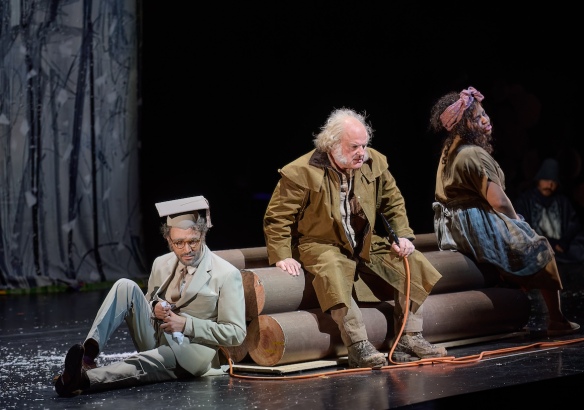
The supporting roles are nicely done too. Giles Tomkins, as the Priest, and Wesley Harrison, as the Schoolmaster, make an excellent pair as the Forester’s “old git” drinking companions. Tomkins is also rather good as the wicked capitalist Badger in Act i. A seriously overdressed Adam Luther and Charlotte Siegel preen and fuss amusingly as the Rooster and the Hen. Megan Latham is excellent as the put upon wife and Carolyn Sproule makes rather a good fist of the enormously overweight and essentially useless dog. There’s also a very funny Act 3 cameo from Alex Halliday as the testosterone fuelled Poacher. The youngsters playing assorted frogs, insects and what not are splendid too.
The vocal music in this opera is very good but it’s the orchestral writing that takes it to next level. This production uses the revised version of the score by Jiri Zahrádka based in part on work by Charles Mackerras which aims to restore Janáček’s original orchestration which apparently got toned down at some point; being considered too “experimental”. It’s a good choice but it still needs idiomatic conducting and a good orchestra to bring out the full splendour. Johannes Debus and the COC Orchestra do it full justice.
This is an example of what the COC is capable of at its best. The Rusalka a few seasons ago would be another such. What one might ask is why they don’t do it more often. It’s pretty clear that the old war horses aren’t packing in the punters like they used to so perhaps we might hope to see fewer warmed over productions of Carmen and Madama Butterfly and more intelligent, “something for everybody” productions like this Cunning Little Vixen.
There are five more performances by this cast running to February 16th with an alternative cast doing a “relaxed performance” on February 13th.
Photo credits: Michael Cooper
 operaramblings
Nice summary
Sent from my iPad