
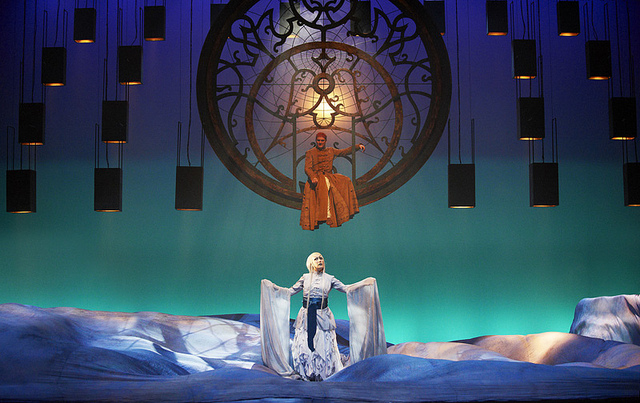
 So another Toronto season has come and gone. I thought it was a pretty satisfying one taken as a whole. There weren’t any total disasters and there were several productions of the highest class. I made it to all seven shows and saw three of them twice; Rigoletto (because, among other things, it was double cast), L’Amour de Loin (because it was so good!) and Semele (because it was the production chosen for the Ensemble Studio). I also attended the final dress rehearsal of The Florentine Tragedy/Gianni Schicchi double bill.
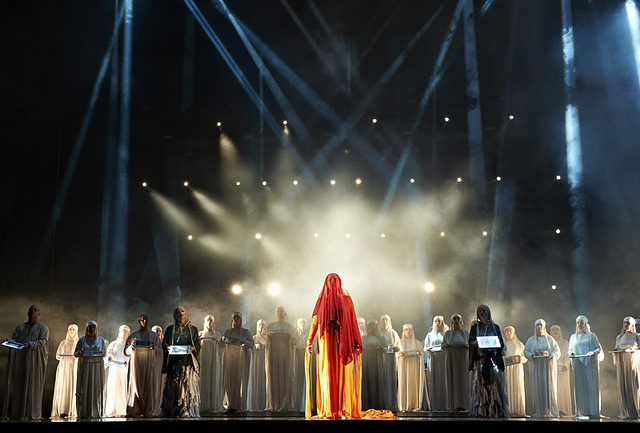 The highlights for me were L’Amour de Loin and Iphigénie en Tauride. The decision to stage the former caused a certain amount of upset with the critocracy, largely on the grounds that it wasn’t Canadian, but I thought it was a very good opera, brilliantly staged and exceptionally well sung. Those of us with the leisure to do so were also able to get an introduction to Saariaho’s music at two excellent free lunchtime concerts Mc’d by the composer. I noticed lots of French being spoken in the bars during both of the performances that I attended which suggests it was drawing an out of town audience. Iphigénie was, as predicted, equally satisfying. A superb cast and Robert Carsen’s elegant, minimalist staging were all we expected them to be.
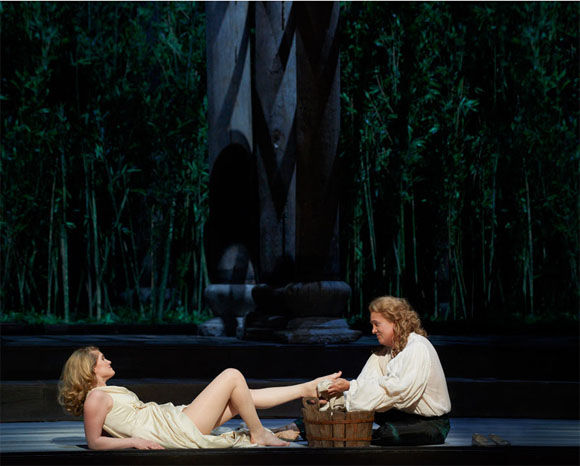 Less successful was Paul Curran’s slightly lack lustre Tosca. The main problem seemed to be a lack of chemistry between the principals and rumour had it that in many ways the second cast was a better bet. So it goes. Then there was Zhang Juan’s Semele where directorial ego seems to have got the better of both musical and dramatic judgement. This was really unfortunate as once more Jane Archibald lit up the Four Seasons Centre. More of her please Mr. Neef.
 Christopher Alden’s Rigoletto was fascinating though perhaps the sort of thing that gets him criticised for being too cerebral and not emotional enough. I particularly enjoyed the second cast performance where the youthful vibrance of David Lomeli and Simone Osborne really brought the piece to life. The Florentine Tragedy/Gianni Schicchi double bill was a pretty good example of how to do opera as real theatre without radically reimagining the piece. One feels Catherine Malfitano’s own massive experience as a performer must have been key to this. Lee Blakeley’s Tales of Hoffman did a good job of making a good show out of an opera that’s a bit of an incoherent mess with a rather neat steam punk aesthetic.
 By German standards none of these three productions was remotely radical. They all had a point of view, they all played with setting in time and place and they all sought to illuminate aspects of the work being played. In other words they didn’t fully, in the words of the Conservative Credo “respect the composer’s intentions”. As a result said Conservatives, well represented in the Toronto press, subjected them to the sort of attack that one expects to see conclude “Yours in disgust, Colonel (ret’d) J Snooks, Tunbridge Wells”. I confidently expect to see the use of electric lighting deprecated in a future review. Maybe we need a season of Bieito, Herheim and Kušej just to make a point! I’d certainly take the COC approach over the saminess of Opera Atelier or the “Broadway banality” of a well known house a little to the south of us.
 I think it’s possible to see a pretty clear pattern emerging in the COC’s programming. There’s a heavy reliance on British and North American directors with a marked bias to the edgier ones (Alden brothers, Carsen, Albery, Sellars etc). That tendency continues in 2012/13 where the Aldens, Sellars and Carsen will be responsible for 5/7 productions and further into the future with, for example, Carsen’s Falstaff currently playing at the Royal Opera House. As yet we haven’t seen many big name directors from mainland Europe but there are rumours of a Tcherniakov Don Giovanni and of course there will be François Girard’s Parsifal, though 2015 is given as the earliest possible date for that. Choice of repertoire is fairly balanced with a slight conservative bias. It’s pretty firmly anchored on a Mozart, Verdi, Puccini, Strauss arc and there aren’t too many rarities. Commercially that’s probably inevitable. Casting too shows a clear pattern. There is a core group of Canadian international stars who fill a pretty substantial proportion of the leading roles. They are augmented by an increasing number of international ‘A’ list singers though so far not perhaps the starriest of the stars. Other non-Canadians. mostly Americans, feature as needed. Supporting roles tend to go to current and former members of the Ensemble Studio. It works.
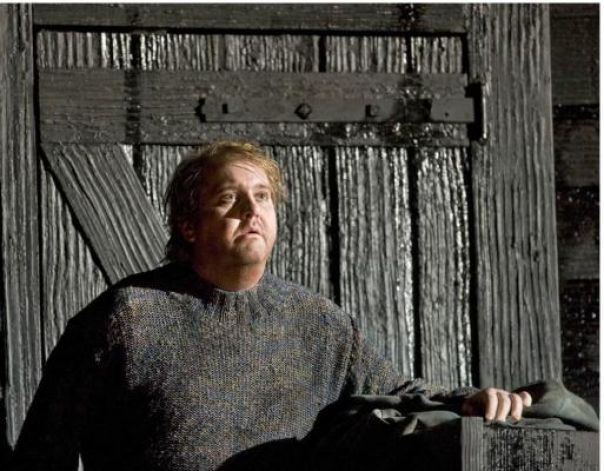 So what’s on (the unfulfilled part of) my wishlist. I’m very excited that we will probably see Neil Armfield’s Peter Grimes. Can we have Stuart Skelton please? I really would like to see more works from the last 100 years. More Janáček, more Berg and more Britten for sure but perhaps we should also see more operas by American composers. Some Floyd or Heggie or more John Adams wouldn’t come amiss. The less often performed Strauss works would be welcome too. As far as casting goes I can’t get too much of Braun, Schade and Archibald but where is Mr. Finley?
And so onto 2012/13
 operaramblings