
Of all the groups I’ve seen explore the boundaries of “classical music” in Toronto, none goes further than Slow Rise Music and this was especially true of their concert Collide-o-Scope which played at the Tranzac on Saturday and Sunday.

In a sense music has always been about the collision of music’s history as an art form and the actual world in which it is written and performed. It doesn’t exist in a vacuum. Exploring that idea was the genesis for Collide-o-Scope which brought together six composer/performers who each created a piece for the concert; thus the entire programme, bar some improvisations, was of world premieres.

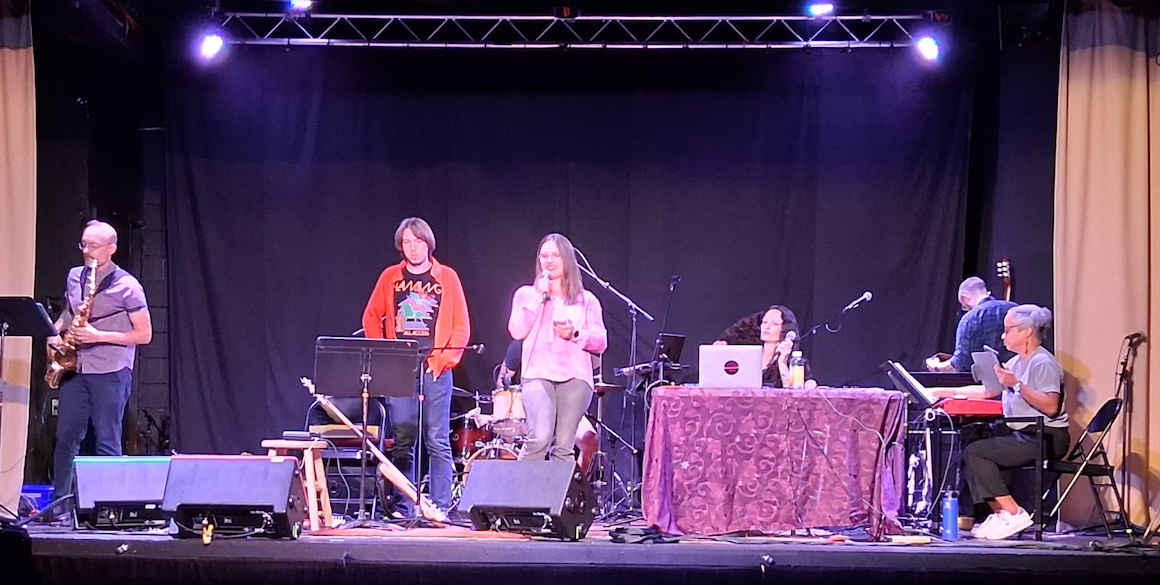
The choice of instruments was driven by the choice of composer/performers and it’s far from a standard classical line up. There was Keisha Bell on keyboards, Greg Bruce on saxophone, Nolan Hildebrand on drum kit, Andrew Noseworthy on electric guitar, Tristan Zaba on electric bass plus multi-genre vocalist Samantha Selci. Slow Rise describe this as a “chamber rock sextet” which seems fair enough! Even with extensive use of live and pre-recorded electronics a lot of the music had a distinct avant-pop feel though there were also jazz and what, for want of a better term, I’ll call “Darmstadt” influences.
I’m not going to write about all of the six pieces but just focus on two or three that caught my imagination. Selci’s Crash Out was quite poppy but with extensive use of electronics and some jazzy saxophone. Her varied vocal techniques added another layer as did some interesting lighting effects (Patrick McKenna).

Hildebrand’s Digital Concrete Euphoria was wild. It had pop influences but they weren’t the comfortable, dance music kind. This was like an extended scream gone feral. A bit terrifying actually.
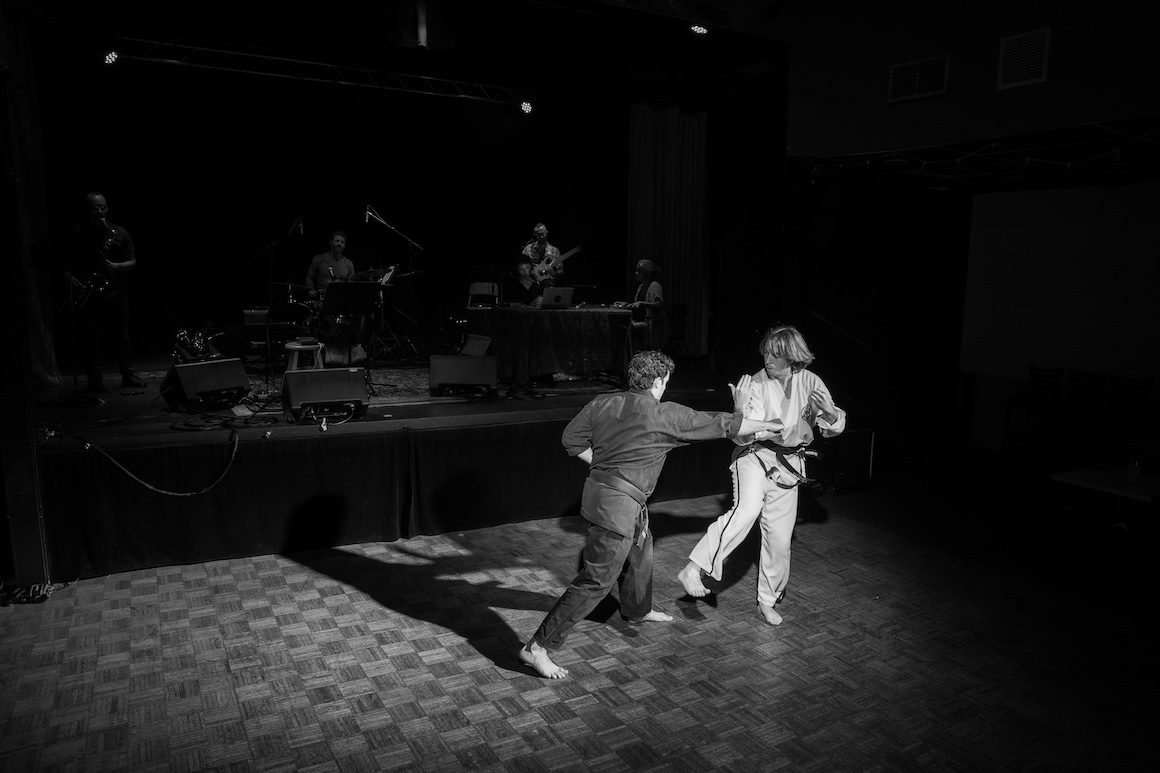
The final piece; Martial Excavations, was by Zaba and was grounded in his experience as a martial artist. Much the least “poppy” of the pieces on offer it explored a range of opposites; action/reaction, attack/defence etc, with the music supplemented by Tae Kwan Do style martial arts from the composer and Alex Pachete. It’s an interesting concept that worked rather well.
The thing about Slow Rise Music’s gigs is that there is a lot more going on than just playing the notes on the page. They really have to be experienced. Worth watching out for if you are interested in how far from the “norms” of classical performance a show can be.

 operaramblings