
There’s a change in both style and pace for part 2 of Why Not Theatre’s Mahabharata. (See review of part 1). The stage band is gone and the whole back wall is given over to video screens. Sometimes the whole is used and sometimes just the top half; often using split screen effects. Hana Kim’s projections are front and centre in this instalment.
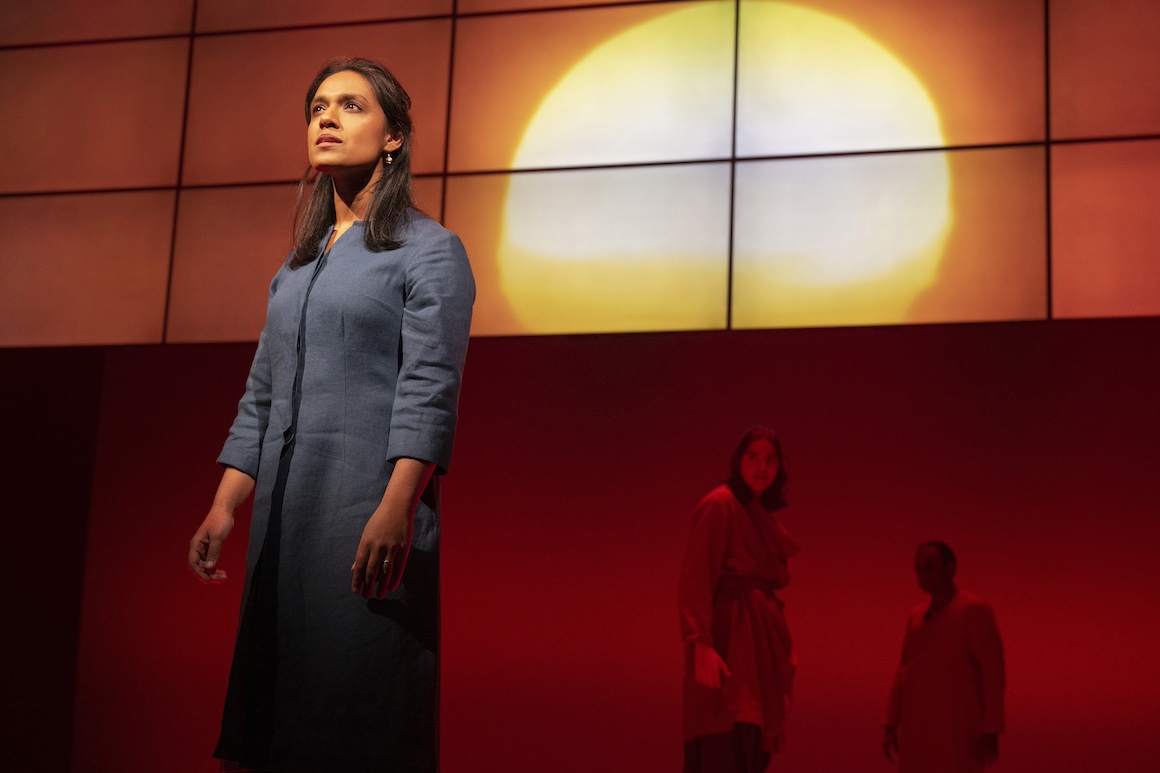
So where are we? The Pandava’s have returned from exile and Duryodhna has refused to consider any kind of partition of the kingdom. Krishna mediates but to no avail. This is rather well done with excellent use of video of the live action to reinforce it. It’s war and it will draw in the whole world. Krishna wants to remain neutral so he offers Arjuna the choice of his, unarmed, service or his million warriors; the Kauravas will get the unchosen offering. Arjuna chooses Krishna as his charioteer.

And so to the field of Kurukshetra where the opposing legions face off in battle array. Krishna and Arjuna ride out to recce but Arjuna has doubts about the rightness of waging war on kin. He is instructed in dharma and bakhti (duty) by Krishna in the section of the poem known as the Bhagavad Gita. The staging here is just amazing. Projections of cosmic creation and destruction play in the background and a golden avatar of Krishna appears and sings the hymn in Sanskrit (surtitles than goodness!). The other avatar of Krishna and Arjuna take yoga poses. The scene is spectacularly beautiful and the singing (Meher Pavri) sensational. Robert Oppenheimer would have loved this.

So Arjuna returns to duty and the multi-day fighting begins. The key actions take place. Arjuna kills Karna. Bhishma is riddled with arrows. Bhima kills all hundred Kauravas. Shakuni narrates the action to Dhritarashtra and Gandhari and all the time Lord Shiva dances. This is Jay Emmanuel in Bharatanatyam style symbolizing the Lord of Destruction and he continues throughout the battle action as the earth is soaked in blood and covered in corpses..
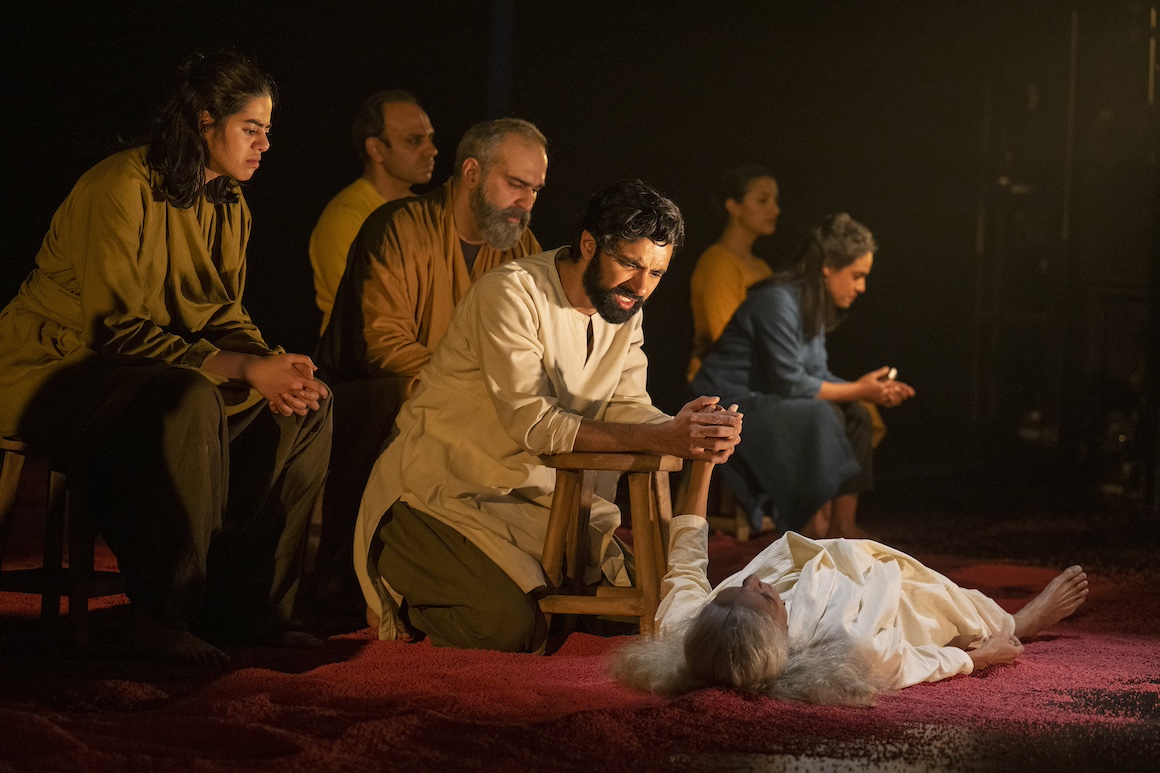
At the end only a handful of combatants are still alive and Dhritarashtra and Gandhari, together with Kunti, renounce the world and go off to be hermits in the forest. The Pandavas reign for 36 years and we get further lessons in dharma as Yudhishtira’s lingering anger keeps the Pandavas out of Heaven. But we close, as we began, at the court of Arjuna’s great-grandson Janemajaya where he is listening to the story. The moral is clear. Revenge is not dharma and he ends the blood feud with the snakes.
Taking both parts together, this is an extraordinary achievement. Ravi Jain and Miriam Fernandes and their creative team have successfully turned a major, highly complex, deeply ambiguous epic into compelling theatre. They have assembled a stellar cast (see review of part 1 for details) and created magic. Go see it if you can.
Canadian Stage’s presentation of The Mahabharata parts 1 and 2 is playing at the Bluma Appel Theatre until April 27th.
Photo credits: David Cooper
 operaramblings