
Mozart’s Mitridate, re di Ponto is definitely one of his less often performed works even though it’s astonishingly accomplished for a fourteen year old composer. One can see why. It adheres very faithfully to the opera seria model. Far more so than, say, La clemenza di Tito. The libretto is based on a play by Racine which, frankly, lacks dramatic interest and has a contrived ending. The opera wraps all the loose ends up in about three minutes. Structurally da capo aria follows recitative follows da capo aria with little variation and the arias all adhere pretty rigidly to the formal range of baroque emotions. That said there is some spectacular vocal writing; both lyrical and dramatic, which allows the singers to fully display their skills.
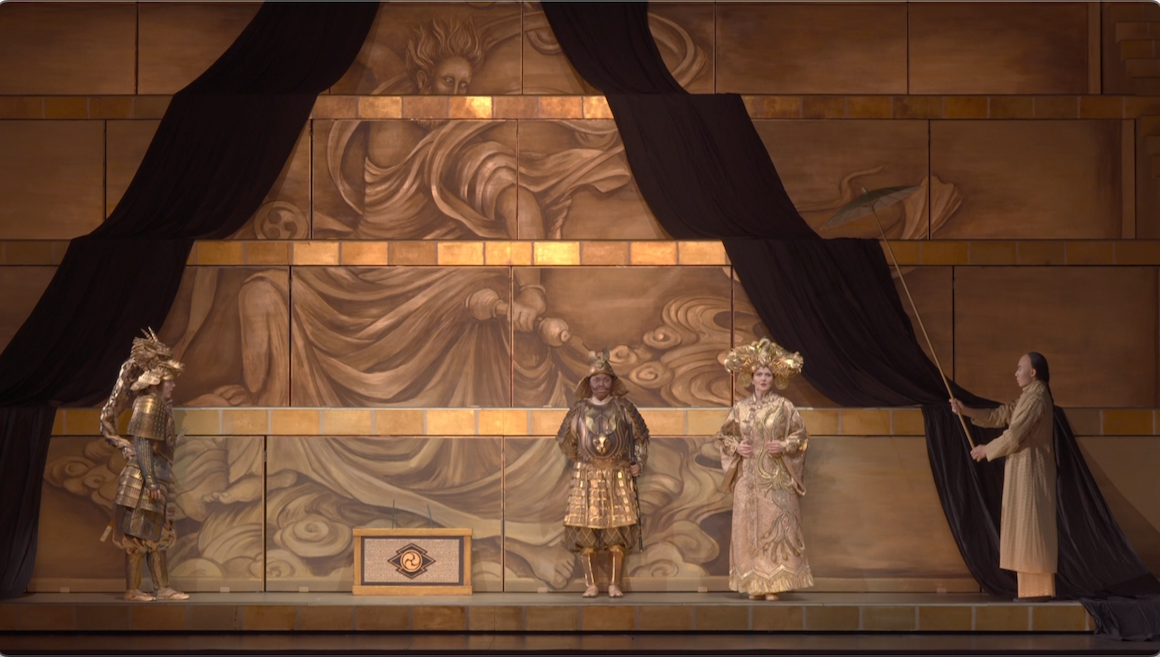
Satoshi Miyagi’s producton, recorded at the Staatsoper unter den Linden in 2022, tries to liven things up with the visuals and to a certain extent succeeds. The “stage” is essentially a multi level wall; designed by Eri Fukazawa, flanked by staircases by which characters move between levels but it’s also modular so the background picture changes and panels open to allow the ingress and egress of singers. There’s no chorus but supers are used effectively to indicate “public mood”.
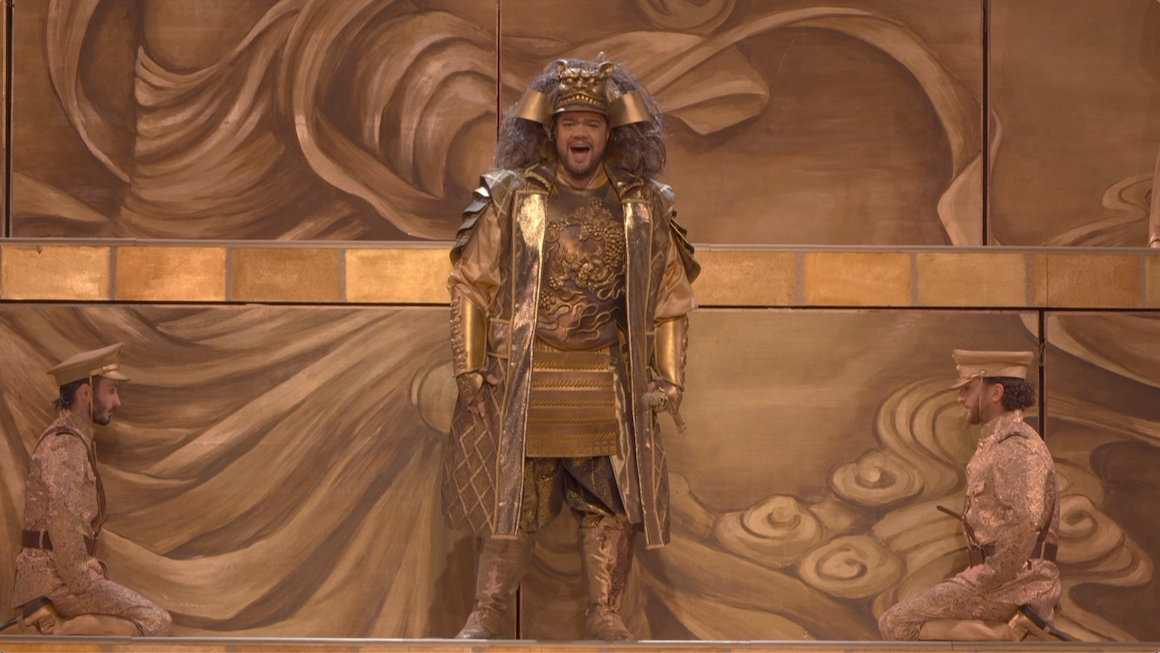
Costumes, by Kayo Takahashi Deschene, are spectacular with extensive use of metal tones and elaborate decoration. The theme is mainly Japanese; both samurai traditions and modern dress uniforms, but she conjures up a Siamese look for Ismene. It’s very good to look at., But Miyagi can’t do much about the fact that most of the time nothing much is happening and most of the singing is “park and bark” albeit arranged in painterly ways.

The singing is very good indeed though a touch monochrome as it really is heavy on high voices. There are two, quite high, tenor roles but the rest are soprano/alto roles; the women of course but the original had three castrati too. Here Farnace is sung by a counter-tenor with Arbate and Sifare sung by mezzos. The star of the show is probably Pene Pati, in the title role. He’s very secure, has the high notes and a rather beautiful and expressive voice seen to great advantage in “Vado incontro al fato estremo”. But Angela Brower as Sifare and Ana Maria Labin as Aspasia are equally good. Both have serious coloratura skills. The latter’s “Nel grave tormento” is pretty spectacular while Brower shows great control in “Lungi da te, mio bene”.

Sarah Aristidou is quite an appealing and technically able Ismene and Paul-Antoine Bénos-Dijan, as Farnace, has coloratura chops to match the ladies. Adriana Bignagni Lesca as Arbate and Sahy Ratia in the smaller tenor role of Marzia are also fine. The orchestra is Les musiciens du Louvre and they sound like a proper period band. There’s some fine on-stage horn playing too. Marc Minkowski conducts elegantly.

The cameras are in the hands of Tiziano Mancini. It’s fairly straightforward to film but I did feel the “not much happening” problem led to a few too many, too close, close-ups. The bigger picture was prettier. Sound quality (the usual DTS-HD-MA and 48kHz/24bit stereo options) and video quality are well up to normal Blu-ray standard. The booklet has an essay, a track listing and a synopsis. Subtitle options are Italian, English, French, German, Spanish, Japanese and Korean.
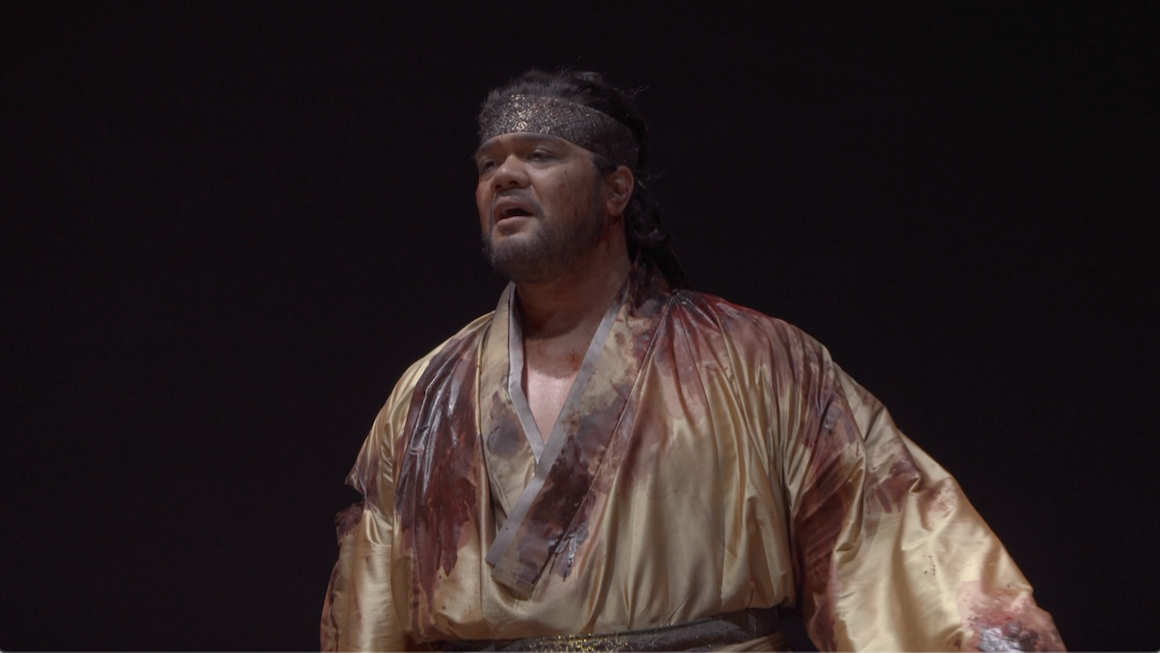
There aren’t many Mitridates available on video and this is the only one on Blu-ray. The competition is a 2017 DVD recording with Michael Spyres and the thirty year old Covent Garden version. If you have an urge to possess this work this is probably the version to have.

Catalogue information: Unitel Blu-ray 768004
 operaramblings