
January 27th marked the 79th anniversary of the liberation of Auschwitz-Birkenau by units of the red Army. The anniversary is commemorated as International Holocaust Remembrance Day. Yesterday it was recognised in Toronto by a performance by the Likht Ensemble at the Meridian Arts Centre in North York.
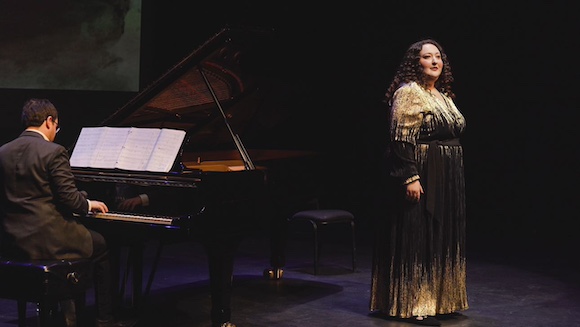
The music was drawn from the Shoah Songbook Project which over the last few years has rediscovered a lot of music written during the Holocaust. (Quite a lot of this was seen on Youtube during the pandemic and has been reviewed here previously; Lithuania, Poland) There were songs and instrumental pieces collected from Theresienstadt, Auschwitz, the Vilna and Kovno ghettoes in Lithuania and the Lvov ghetto in Poland. There are songs found on scraps of paper and preserved by camp musicians. Pieces found in drawers or buried deep in archives. Pieces written on the back of Gestapo forms. What survives is random. What didn’t survive or is, perhaps, still to be discovered is unknowable.
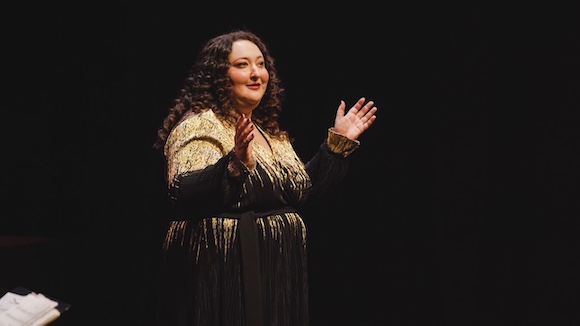
The music covers a wide and often surprising range of emotions. Naturally there’s sadness, longing for home and fear. But there’s also hope and some surprisingly upbeat numbers reflecting a kind of gallows humour. Often fragmentary and usually musically pretty straightforward a lot of the music has been arranged for performance by Likht Ensemble pianist Nate Ben-Horin.
Saturday night’s concert put a range of the found music together in a very effective, beautiful and moving way. The core of the programme was songs in German, Yiddish and Polish sung by soprano Jaclyn Grossman with Ben-Horin at the piano but for much of the second half of the show they were joined by violinist Barry Schiffman with some quite lovely playing. Jaclyn was on fine form and sand with a touching simplicity and honesty.
The programme was greatly enhanced by narration by Ben Heppner. Mostly it was stark recital of ghetto orders. “At 6am on $date all Jews will assemble in the square. Anyone remaining in their apartment will be shot” and so on. It was quite enough to contextual;ize the music and if there was nothing there that would surprise a student of the Holocaust it was still shocking enough. Evocative projections with (blessedly) clear surtitles behind the stage rounded out the effect.
Simple, direct, beautiful and incredibly moving.
 operaramblings