
Yolanda Bonnell’s White Girls in Moccasins, presented by manidoons collective and Native Earth Performing Arts opened at the Aki Studio on Friday night. Co-directed by Bonnell and Carmen Alvis, it’s a play about identity and and recovering roots. The principal character Miskozi, like the playwright, is Indigenous but I don’t think the play is entirely about Indigenous identity. The other two roles are Zlibi, played by a Bermudian Trans Woman of African ancestry and Waabishkizi; played by a second generation Settler woman. So while the focus is on Indigenous identity I think it raises a lot of other questions too.
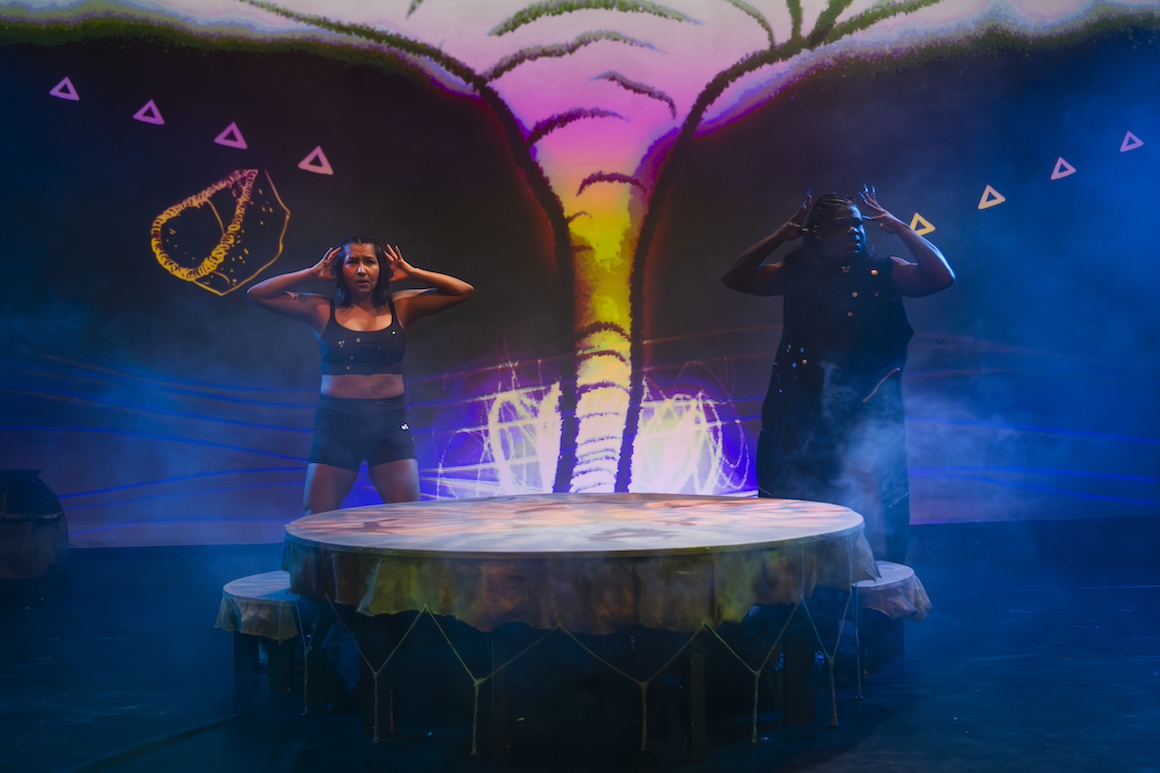
It’s presented as a series of more or less discrete scenes with lots of childhood flashbacks, “contemporary scenes” and a repeated return to an episode of Wheel of Fortune where Zlibi and Waabisshkizi transform into Pat Sejak and Vanna White. The underlying subject matter may be deadly serious but the play is not afraid to be laugh out loud funny and even sometimes a bit ridiculous.
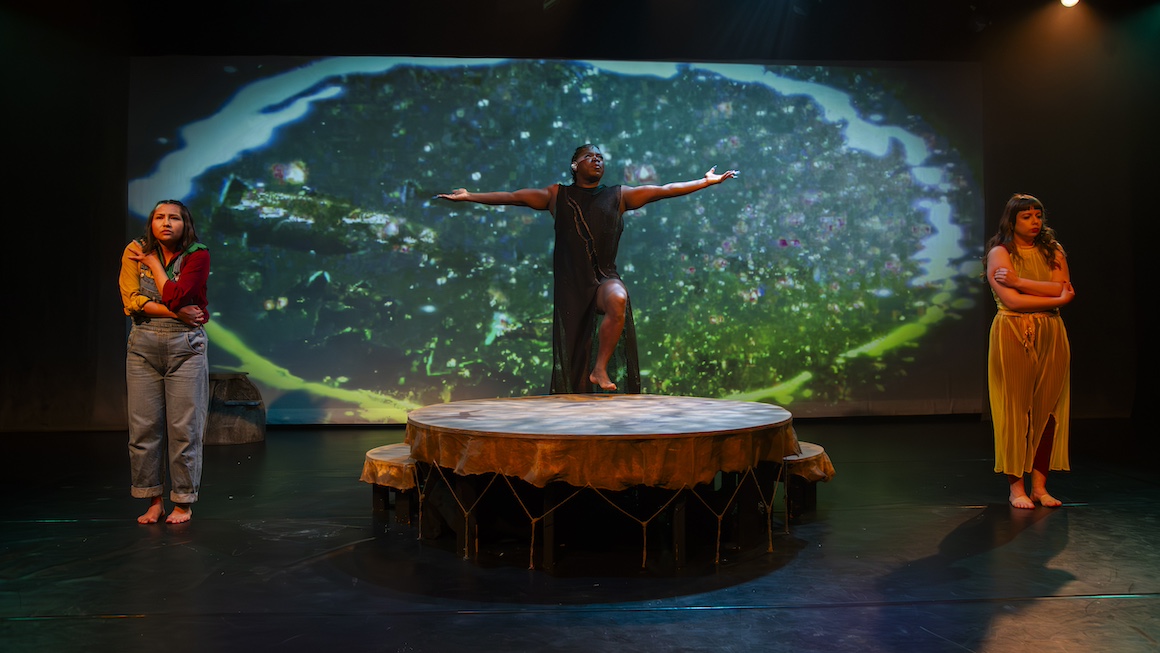
It’s visually really interesting with frequent startling costume changes (Rachel Forbes and Asli Özüak) and brilliant and massively important projections (Rihkee Strapp and Trevor Schwellnus). There’s a particularly striking sequence where we segue from a recurrent trout motif to a laser eyed Queen Elizabeth as the impact of colonialism comes into play. There’s also fuzzy black and white TV reportage of various Indigenous protests and the reaction of the Canadian state.
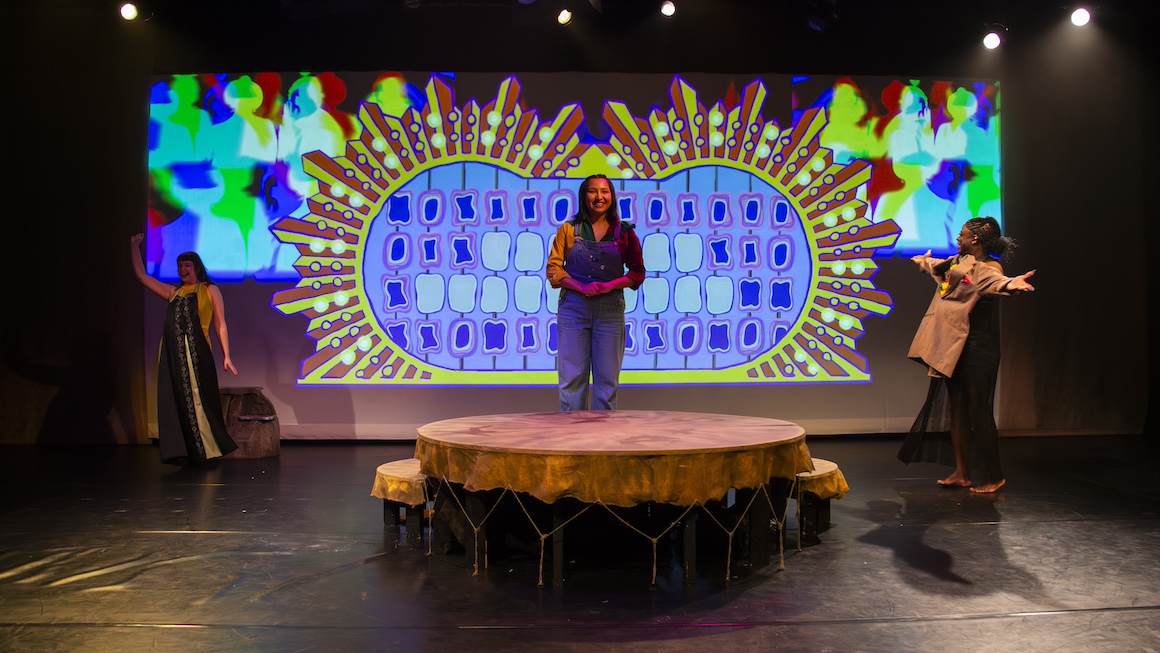
Katia Ferderber, as Miskozi, is at the heart of the show. In many ways it’s her story as the girl from the Rez who moves to the city but can never shake off being brown. One really gets a sense of her psychological journey as she goes from her childhood with her grandparents to trying to fit in in the city, to realising that she has to in some sense “go back”. She’s also a terrific mover which really matters in a really high energy show.
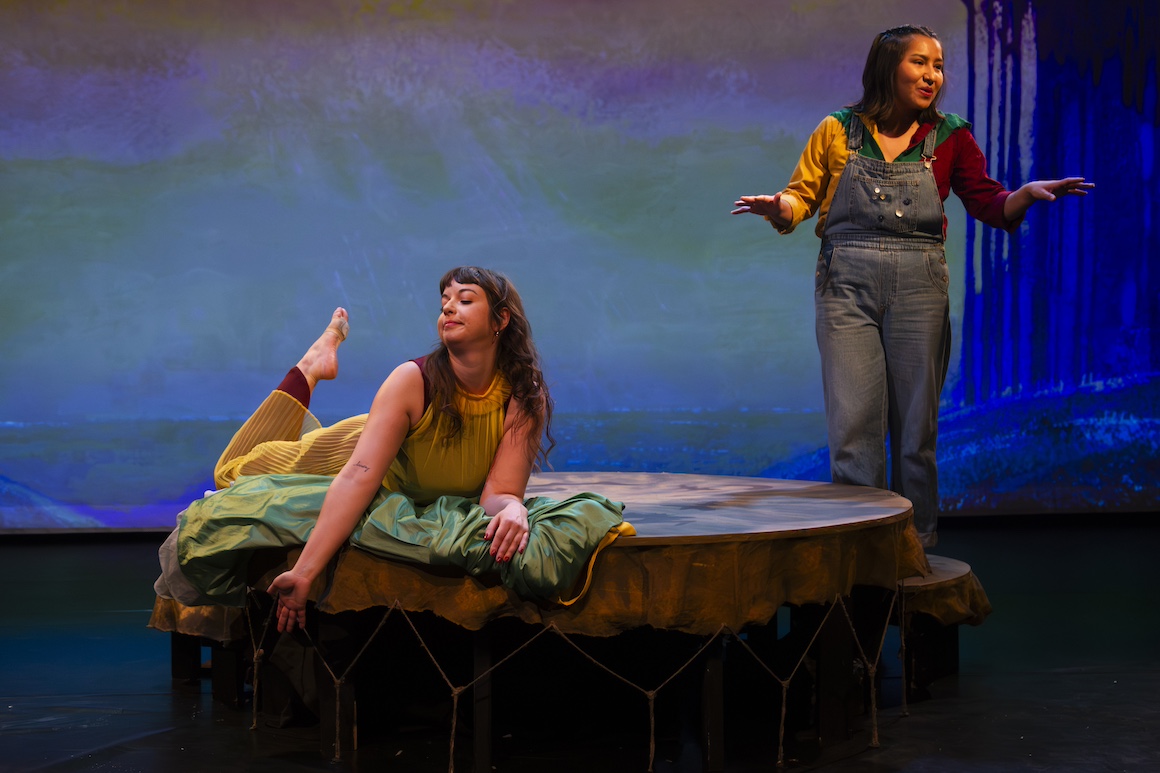
Elizabeth Staples, as Waabishkizi, is a kind of foil. She plays many roles from being Miskozi’s sister to Vanna White and many points in between. A lot of it is quite goofy and awkward which maybe a pointer to some idea of deracination in Settler identity. I want to come back to that.
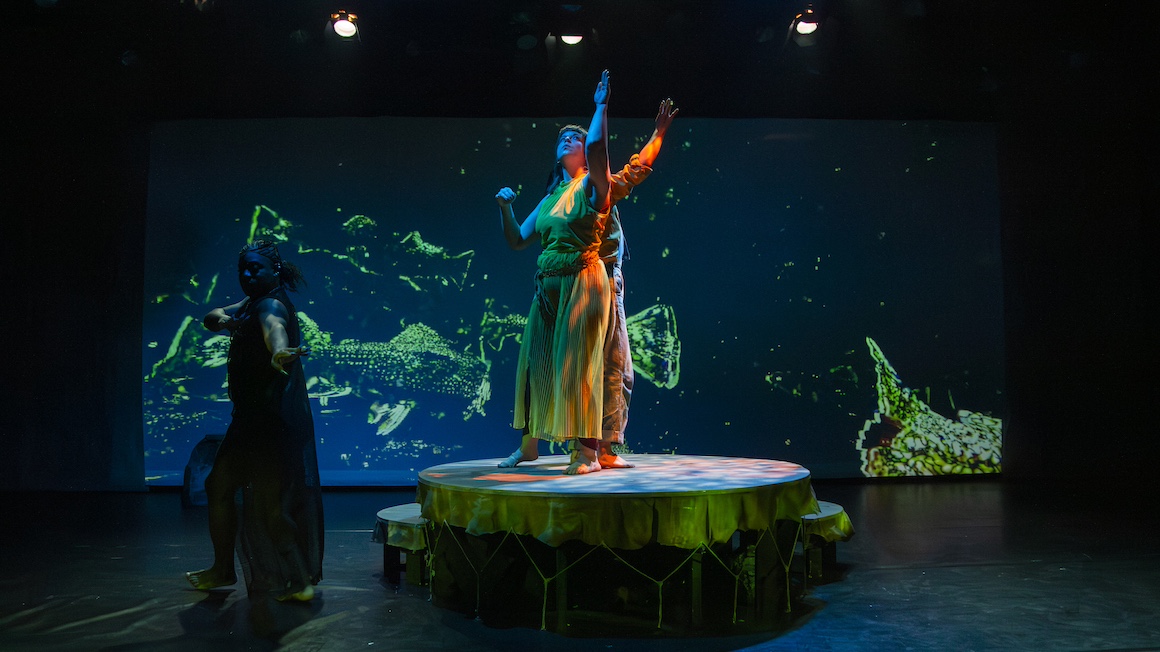
Ravyn Wingz, as Zlibi, is an imposing presence. She’s tall with talon like blue nails. She too plays many roles from counselling Miskozi on her relationship to the land to portraying an OTT Pat Sejak. It’s actually quite unsettling as she seems to represent something that’s neither Indigenous or Settler (or at least a Settler identity distinct from the colonialist mainstream).
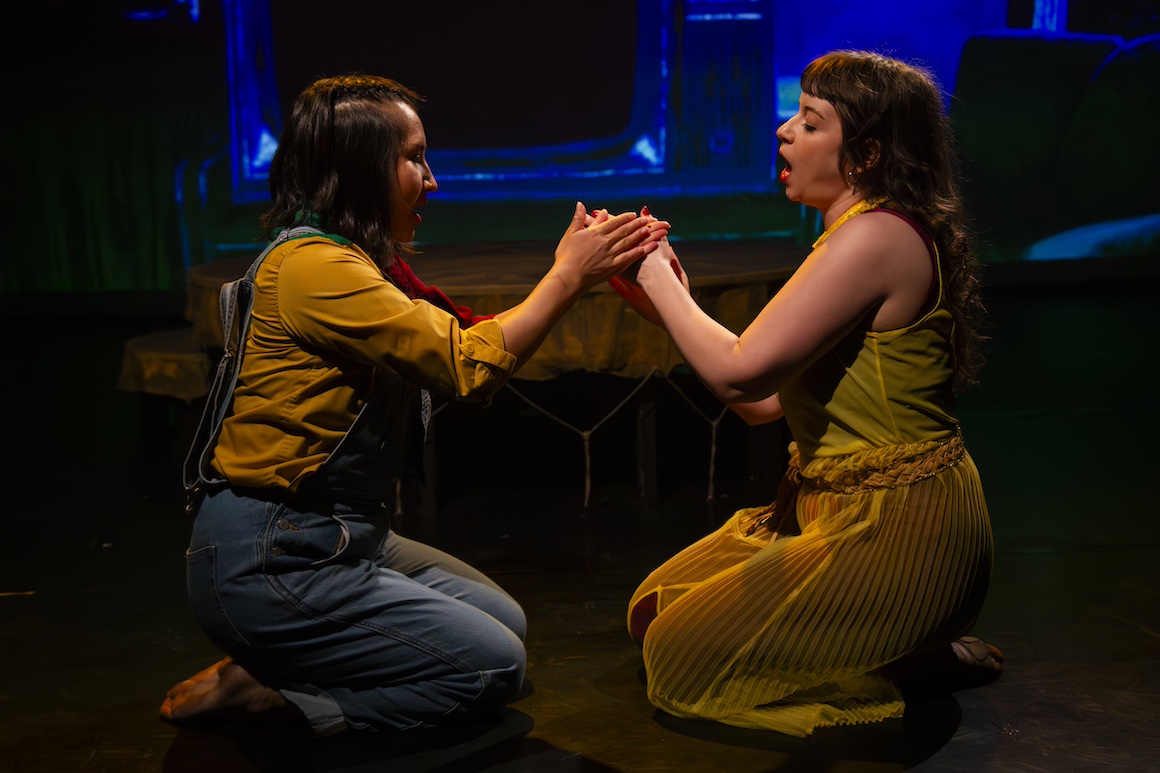
The “answer” to the Wheel of Fortune puzzle is “You Are Never Lost” and it plays out as Miskozi’s realisation that what she must do is reconnect to the Land and thereby her heritage. But what does it mean for Zlibi and Waabishkizi? Just as Miskozi almost loses her connection to who she is they too have partially lost roots. Zlibi’s ancestors were forcibly uprooted and transported across the ocean in an act of colonialism as brutal as any. If we read Waabishkizi as Settler than she too is, to a degree deracinated. The process may be voluntary and may lack the violence of colonialism, but here is loss of identity involved. Maybe to some extent many of us are lost but each needs to discover their own, different ways of finding?
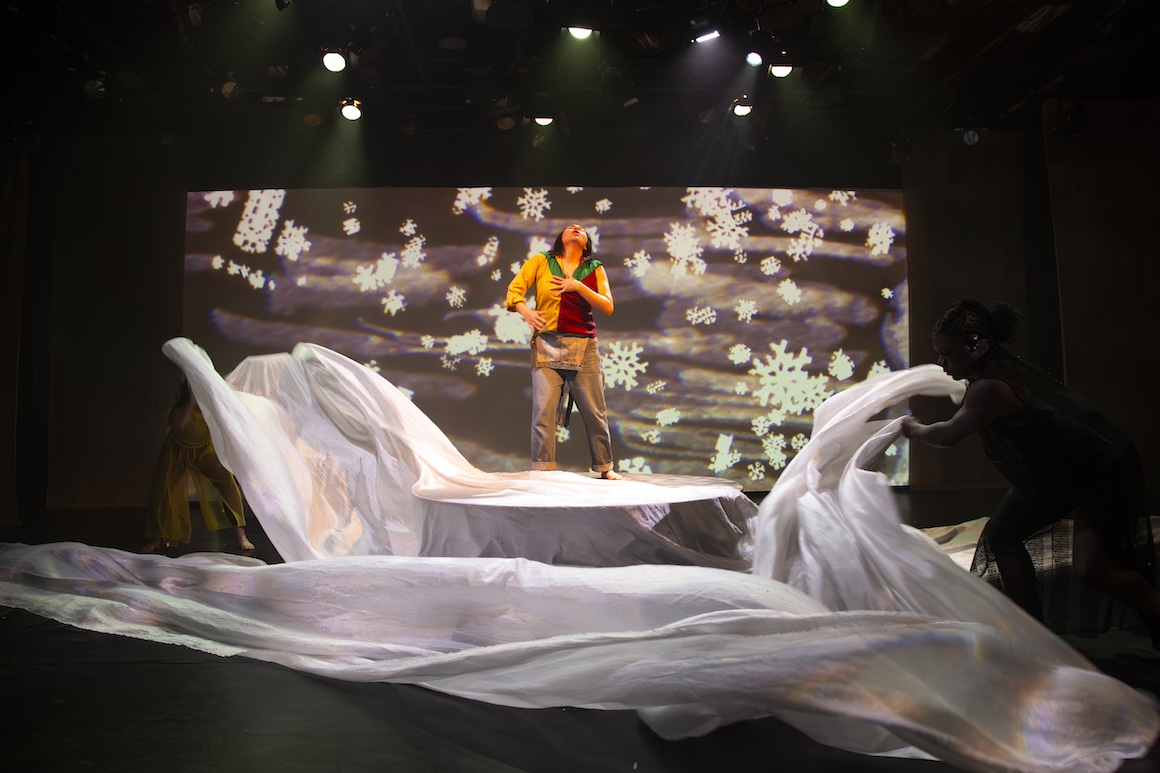
So, White Girls in Moccasins manages to be energetic, rather beautiful and extremely funny while asking some really tough and important questions about who we are; wherever we are from and however we got here. The run continues at Aki Studio until April 12th.
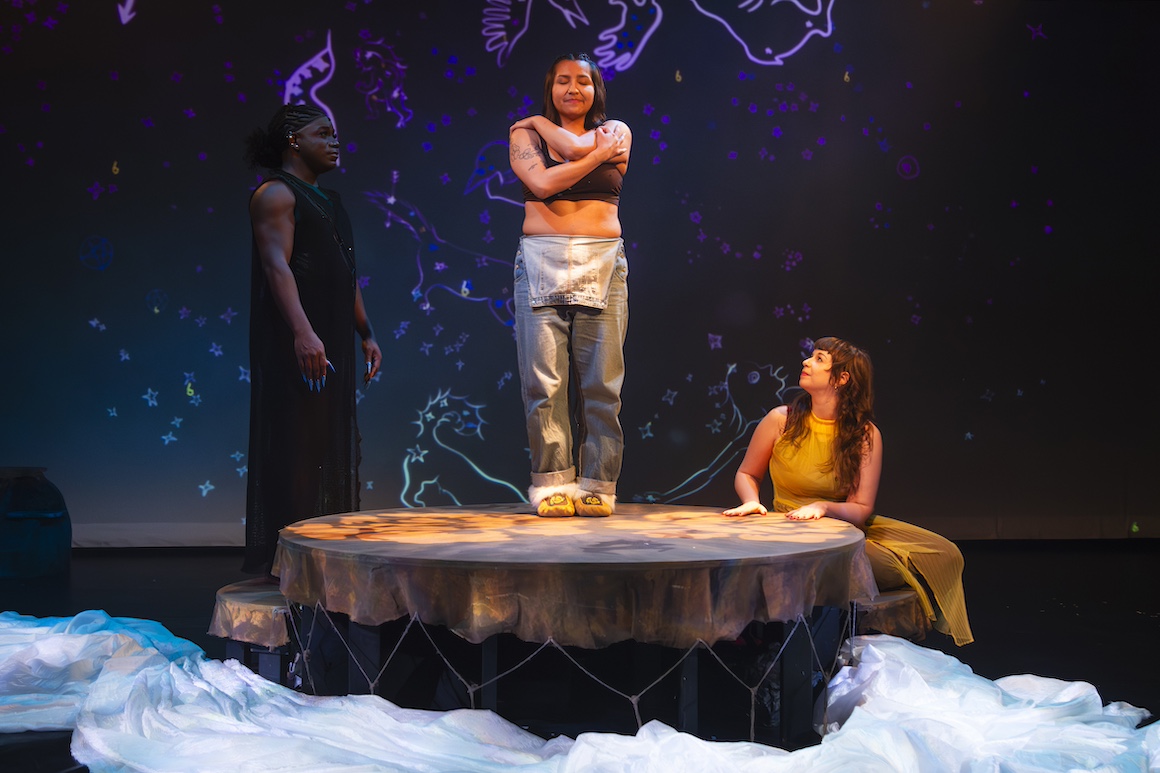
Photo credit: Kate Dalton
 operaramblings