
On one level Tennessee Williams’ Summer and Smoke seems like just another Southern Gothic tale of repressed small town folk with southern accents shouting at other members of their thoroughly dysfunctional families. There’s plenty of that of course but there’s also a fascinating analysis of how relationships can be made or broken according to, essentially, how individual life arcs align. This aspect is very clearly brought out in Paolo Santalucia’s production that opened at Crow’s Theatre on Wednesday evening.
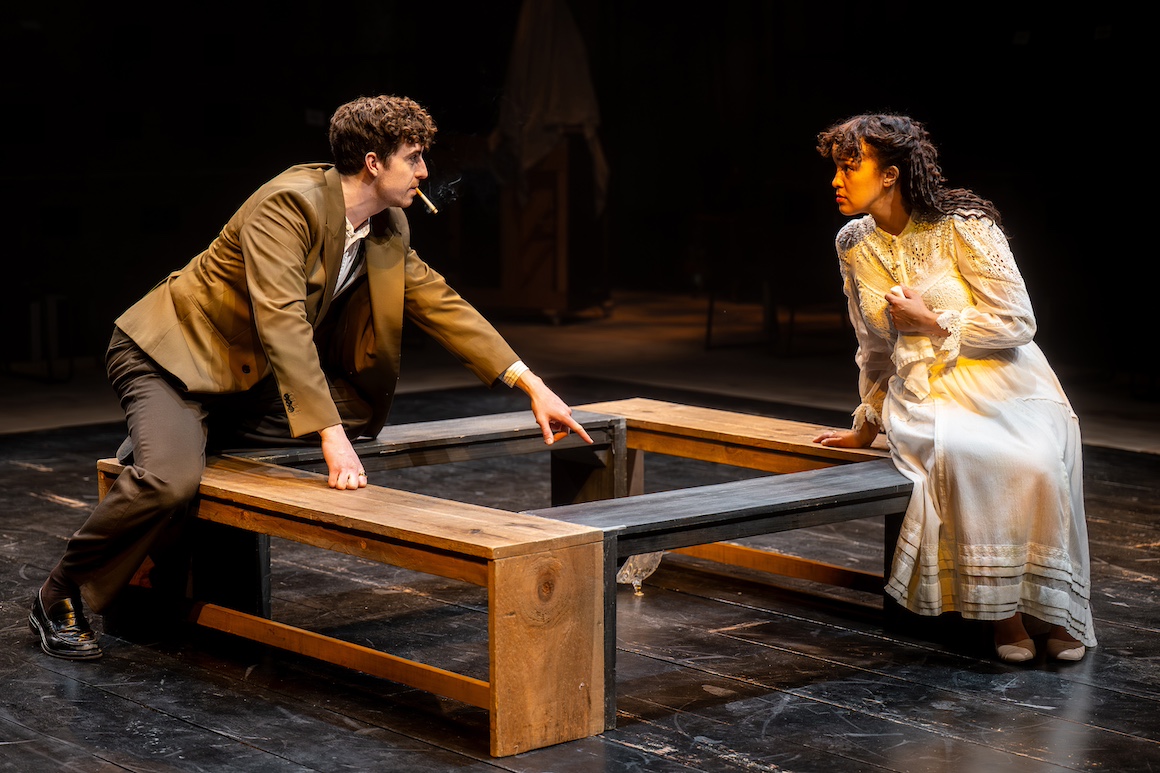
We are in Glorious Hill, Mississippi early in the twentieth century. Alma Winemiller is the intellectually curious daughter of the local minister worn down by looking after her mentally unstable mother and filling her social role as “minister’s wife”. Her world is turned upside down when the local doctor’s son, John Buchanan, returns from winning all the plaudits at Johns Hopkins Medical School. They they were childhood friends and neighbours and Alma is keen to renew the acquaintance but John is far from ready to settle down with a proper young lady. He’s too busy sowing his wild oats; drinking and gambling at the local casino and carrying on a torrid affair with Mexican dancer Selena Gomez. What encounters Alma can arrange turn into acrimonious and sterile arguments about the nature of Love. For her it’s about the Soul; like a Gothic cathedral reaching towards heaven. For John, it’s purely anatomical.
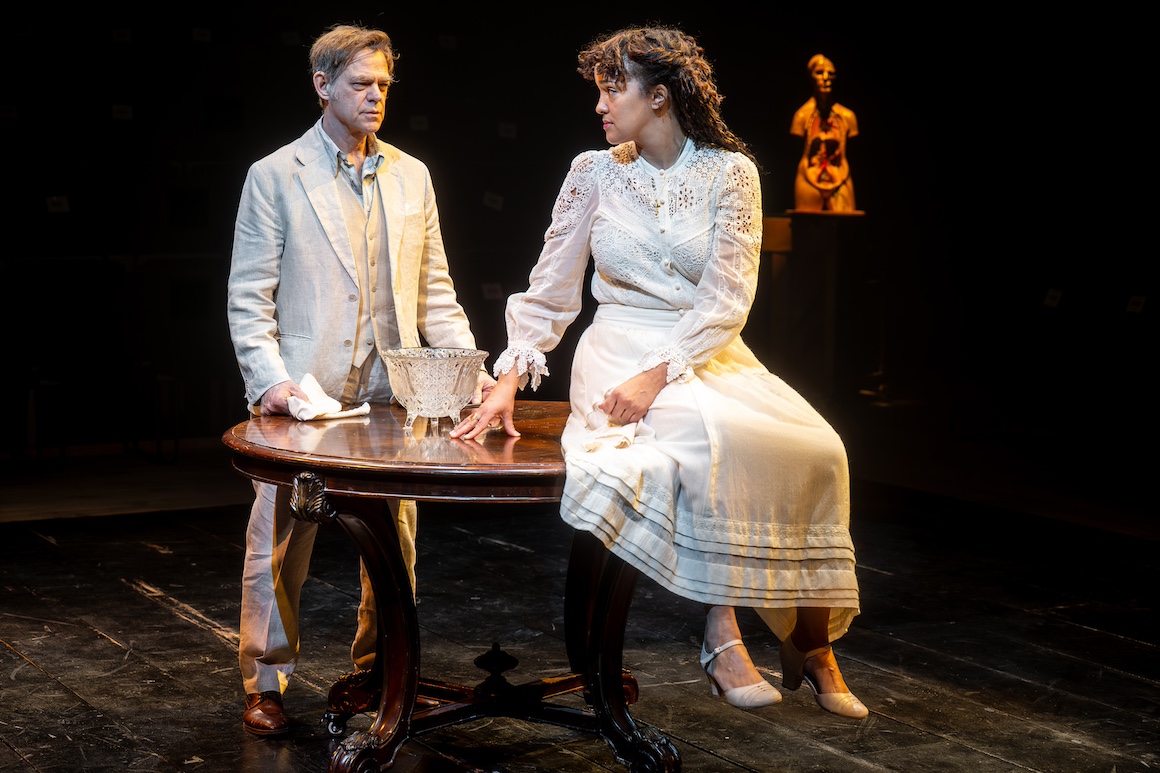
Matters come to a head when old doctor Buchanan interrupts an “orgy” that John is hosting while he is away dealing with an epidemic. In the ensuing chaos Selena’s father shoots the old doctor and the party breaks up in confusion. Alma has some kind of breakdown and when, months later, she reappears she has visibly aged. meanwhile John has taken over his father’s role, successfully dealt with the epidemic and become engaged to a nice young lady; ironically a former pupil of Alma’s. Now the roles are reversed. Alma’s very overt advances are rejected by John who now wants something very different. Plus ça change.
The synchronicity aspect is very subtle and could easily be lost in the usual Williams’ shouting and throwing things but Santalucia gets the job done with the help of an excellent cast and some slick designs. bahia watson plays Alma and she’s just brilliant. She’s on stage practically the whole play and talks and talks. In many scenes other characters can’t get a word in edgeways. She does this with amazingly energetic body language and in a completely consistent accent (don’t ask me if it’s authentic Mississippi delta or not but it’s certainly close). She manages the physical and moral transition in Act 2 wonderfully well. It’s almost as if she has become a different person.
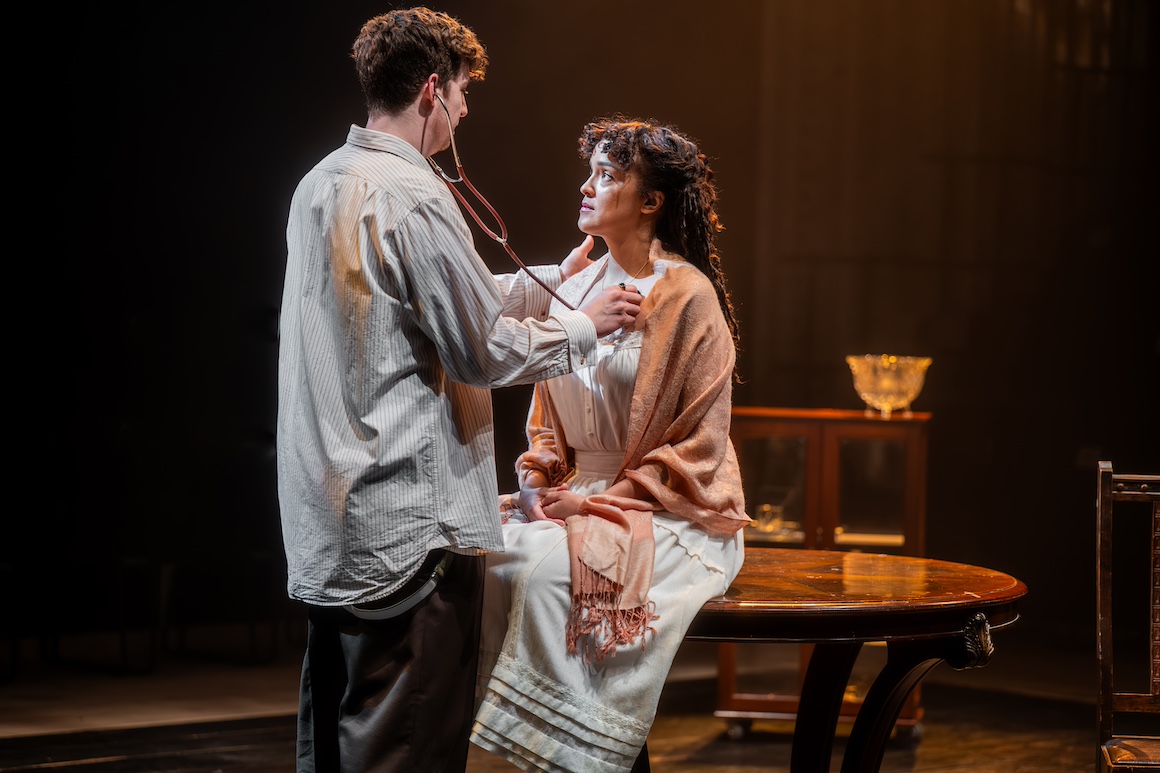
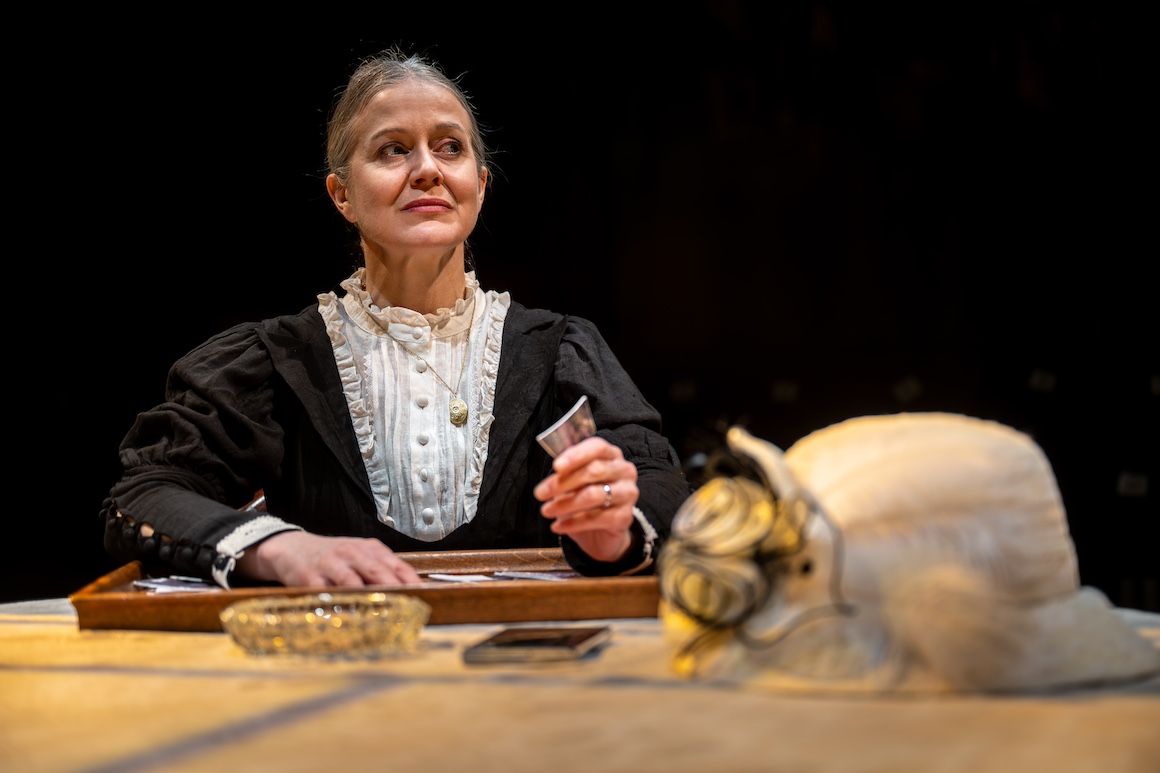
Dan Mousseau, as John Buchanan, manages his arc with equal skill and puts in a rather fine and passionate physical performance. Everyone else is at least doubling up on roles and pride of place must go to Bella Reyes who manages to be a very sexy and sultry Selena Gomez and the ditzy bride-to-be Nellie Ewell plus a very brief cameo as one of Alma’s “intellectual circle”. Beau Dixon also manages to convince as two very different characters; the very uptight Reverend Winemiller and the violent drunkard Gomez père. Amy Rutherford pulls off another excellent double as the nutty, ice cream guzzling mother and the acerbic neighbour Mrs. Bassett. Stuart Hughes is entirely believable as a somewhat world weary Buchanan senior and briefly doubles up as Alma’s friend Vernon. Kaleb Horn rounds things out playing three minor characters. It’s a good ensemble.
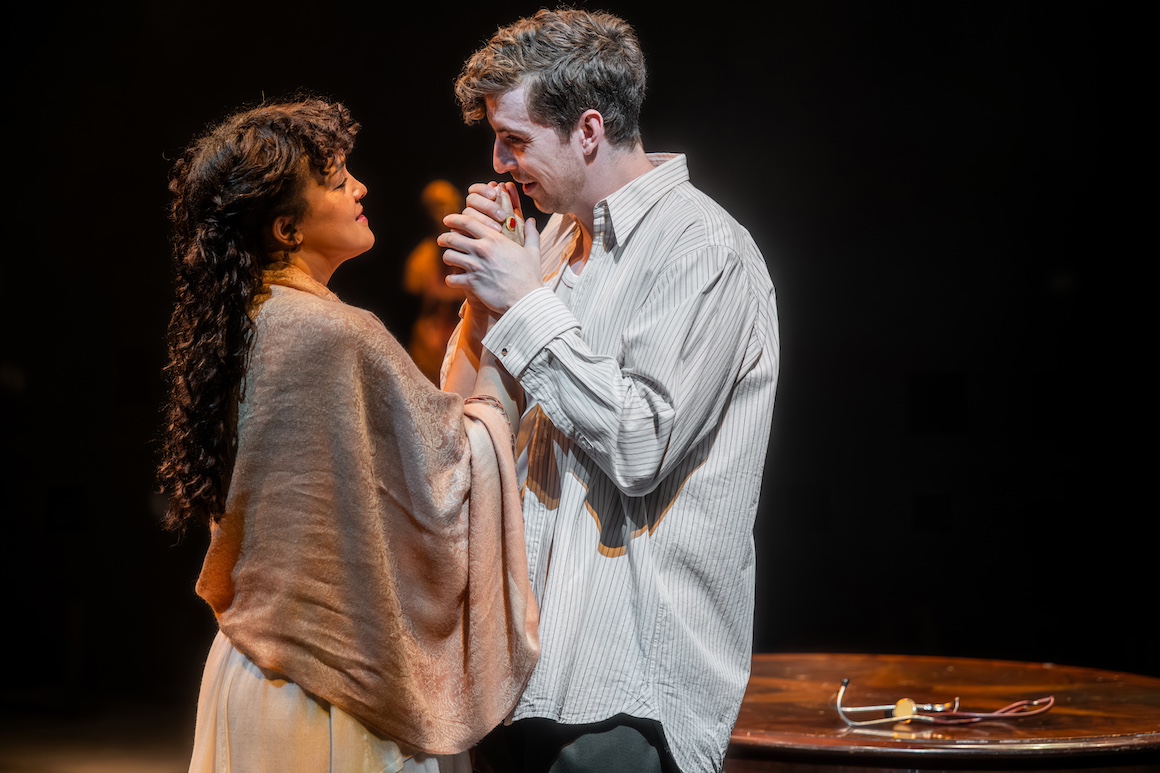
It’s staged in the round with entrances at the corners. There’s a lot of coming and going and frequent need to add and remove props. It’s done efficiently by the cast with potentially disruptive breaks covered by highly effective, sometimes spectacular, lighting (Lorenzo Savoini) and sound design (Thomas Ryder Payne). Beau Dixon, in addition to acting, is responsible for the very period appropriate religious and patriotic music that breaks out at intervals as well as the loucher sounds of the Moonlit Lake casino.
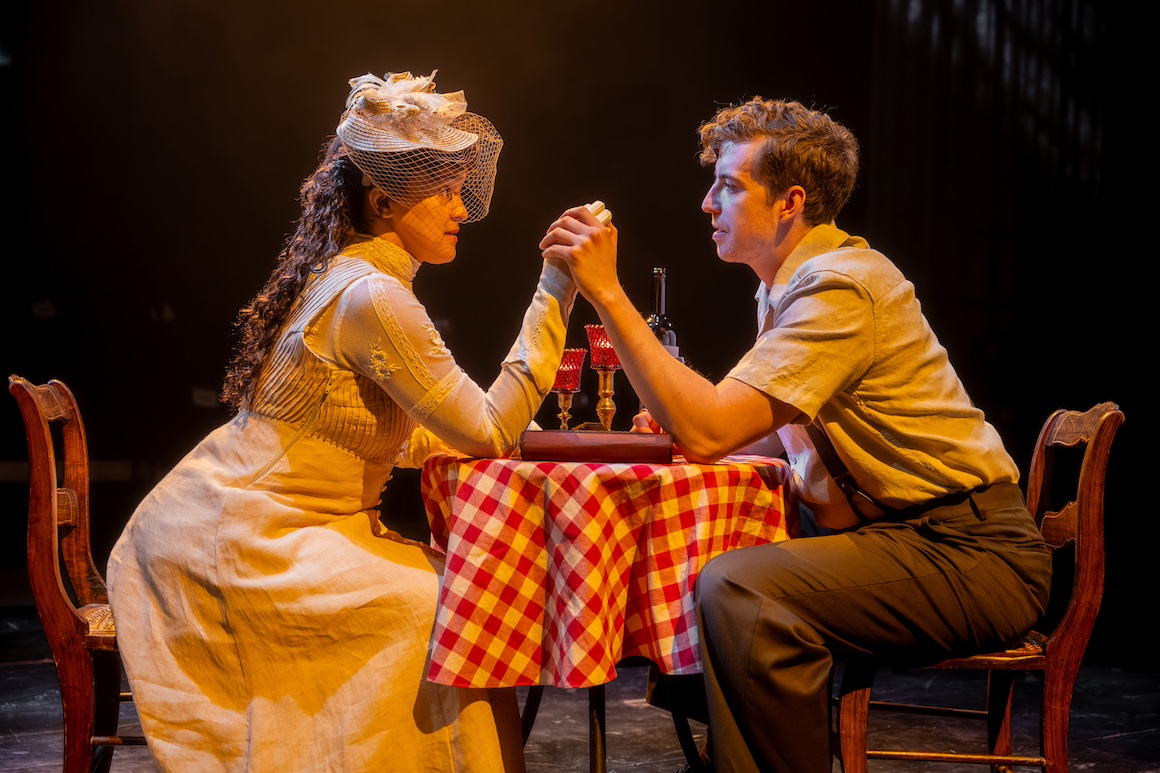
I sometimes find myself asking “why am I subjecting myself to another Tennessee Williams play?”. It’s for evenings like this where the subtle philosophical underpinnings of the work are matched with terrific acting and stagecraft. That transcends the shouting matches and the casual racism.
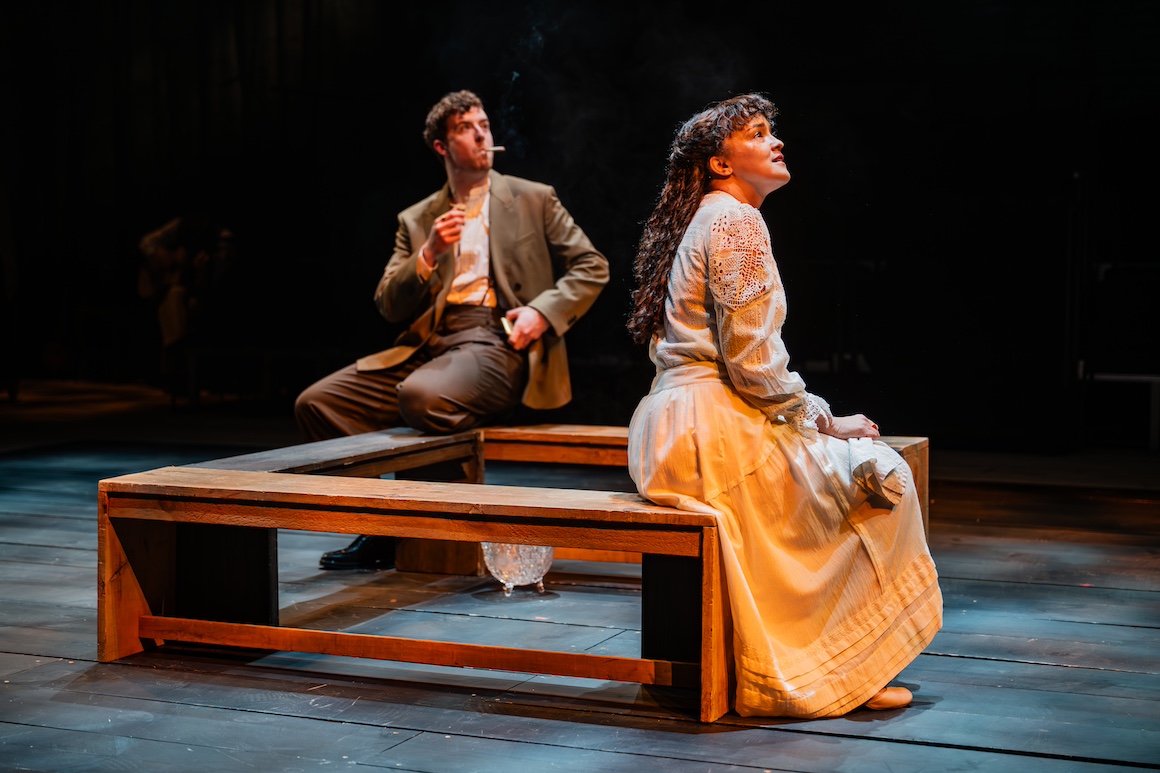
Summer and Smoke continues at Crow’s Theatre until March 8th.
Photo credits: Dahlia Katz
 operaramblings