
Devon Healey’s Rainbow on Mars opened on Wednesday evening at the Ada Slaight Hall at the Daniels Spectrum. It’s a co-production by Outside the March and the National Ballet directed by Nate Bitton and Mitchell Cushman with choreography by Robert Binet.
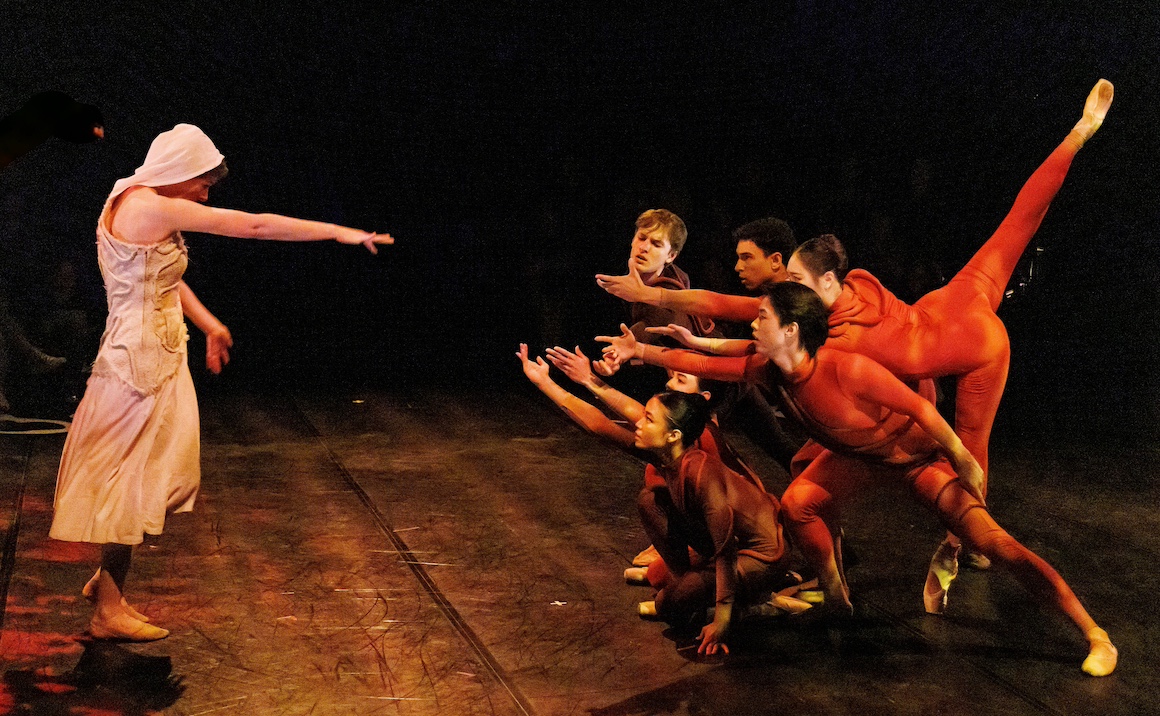
It’s a sideways look at the world from the alternative angles of seeing and not-seeing (Healey is blind) with a generous dose of cynicism about both technology and high tech medicine and their potential to improve human experience. It’s staged in the round with an immersive soundscape designed to make the show accessible to the non-sighted. A Voice (Vanessa Smythe) narrates the action and the narration is beamed into the auditorium from 360 degrees and behind the audience. It’s an unusual and interesting effect.

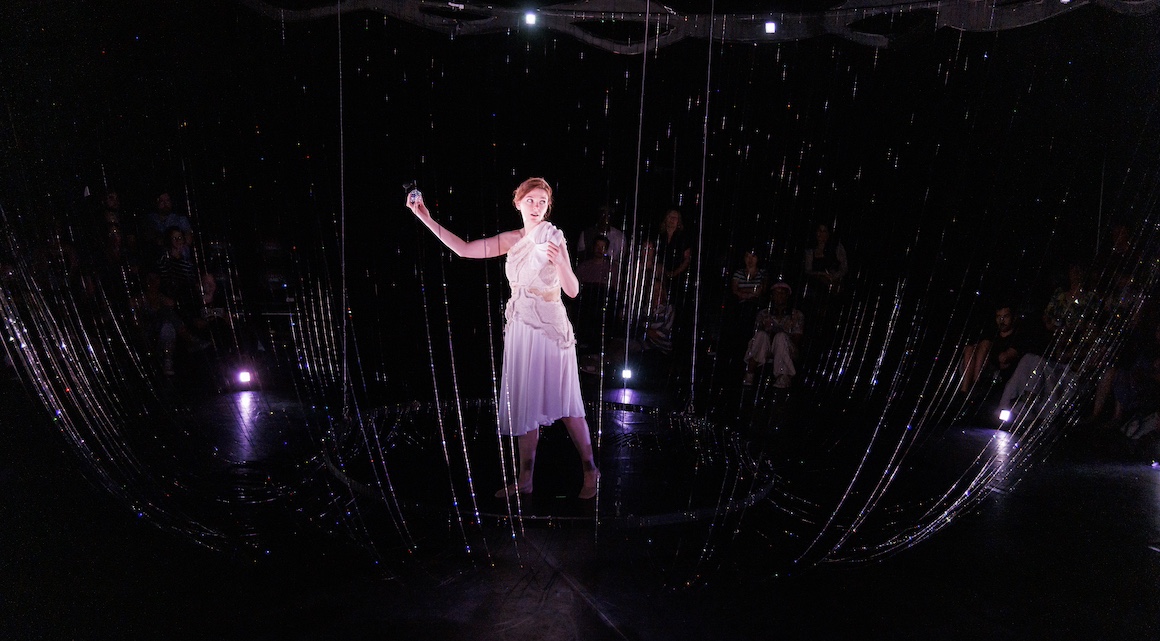
The play opens with Iris (Healey) as one of the inhabitants of the Cave. They live in black cocoons interacting only with the blue screens of their devices which provide them with an endless stream of flickering images to manipulate. Iris escapes her cocoon only to be captured by the Guards, in which process her device is broken. She is now blind. A medical team (played by Sofía Rodriguez, Danté Prince and Amy Keating; who will play the other triads that crop up as well) does a text book “how not to do a patient consult” in which the patient is just “a case”. It’s a nightmare version of my six monthly check ups at the Kensington Eye Institute though, thankfully, my ophthalmologist and her team are lovely people not at all like the Labcoats here.
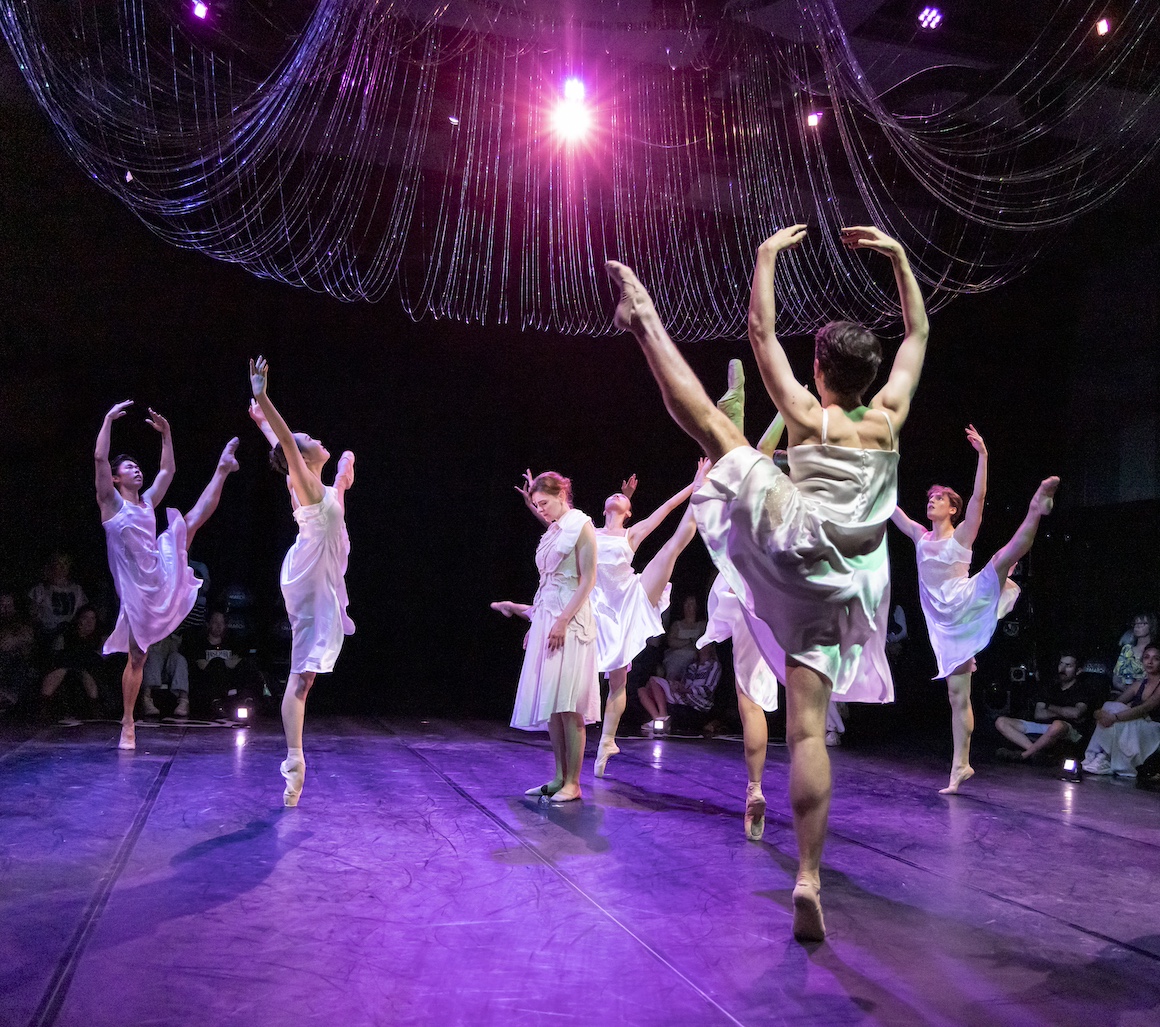
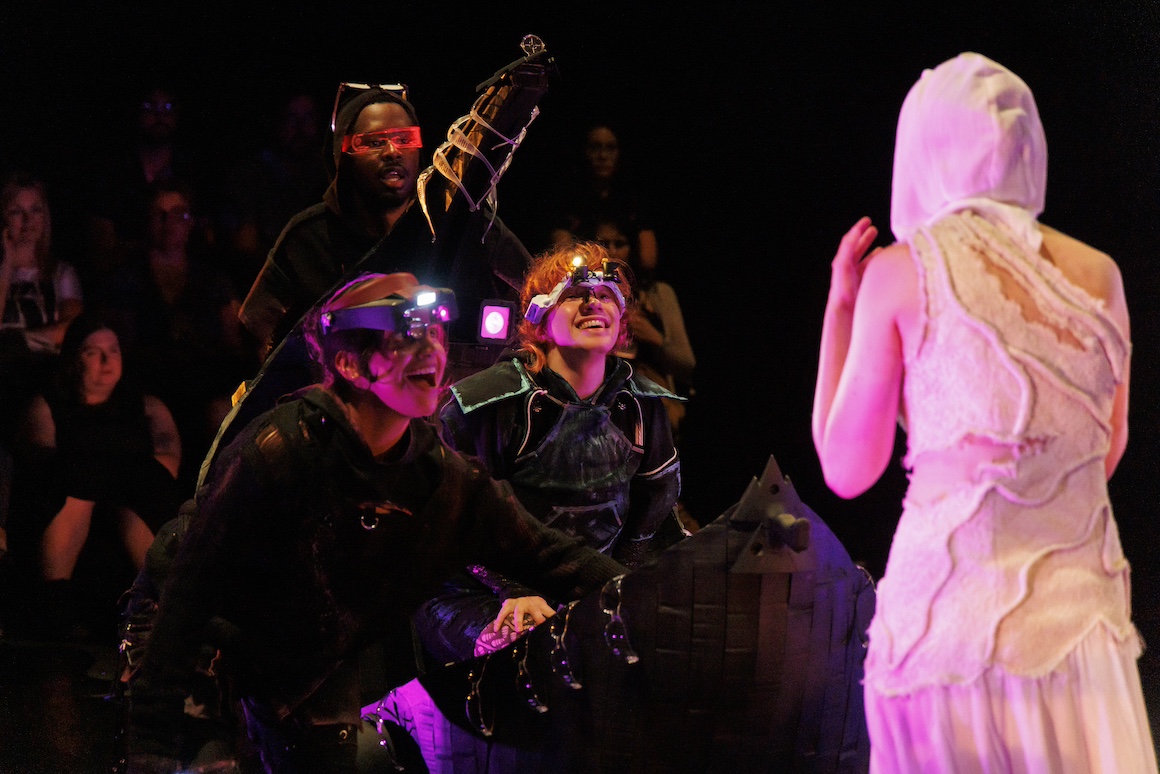
The Labcoats are succeeded by the Techies who are convinced that if they can get there hands on a device they will be able to do (unspecified) wonders. Meanwhile they offer Iris a clunky VR solution and disappear. Eventually Iris meets Arlo (Elliot Gibson), who is trying to create a meaningful unsighted reality, and the mysterious one-eyed Lynk (Bitton) who appears to be the only person able to move between the world of the Cave and the Other Place. Iris is obsessed with finding her device, or another one, and returning to the Cave. Why is not clear. Meanwhile she makes do with a tactile discard from the Techies’ boat; the Squish. This cannot offer images but its tactile repertoire is extensive.
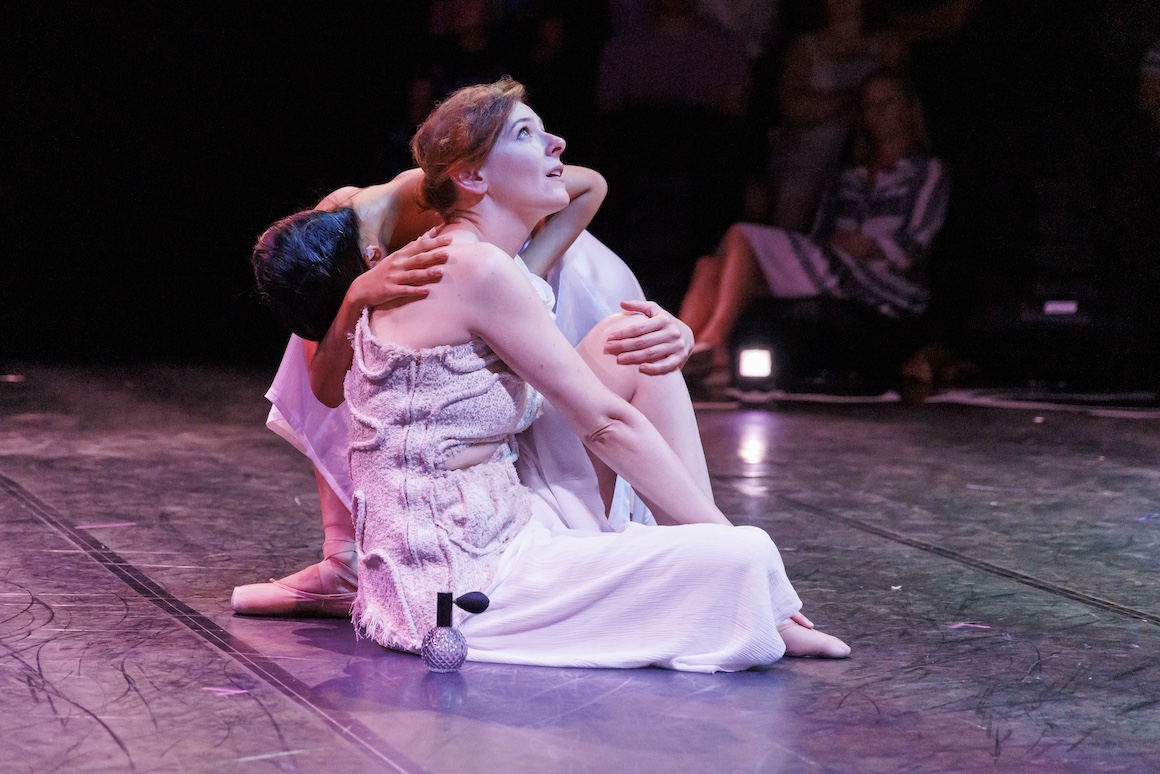
Eventually Iris acquires a Device; the one Lynk has been using all along. The Techies do their thing. But no-one is any the wiser. There’s a low background hum of “Image, Scroll, Tap”. To return to the Cave or to make a deeper meaning in the Other Place?
Into all this action Binet inserts lively choreography in which a dozen apprentice dancers from the National Ballet become many things; animate and inanimate, while interacting with the actors; notably with Healey. It’s all rather beautiful but one wonders what the blind members of the audience (and there were a fair few) made of it.
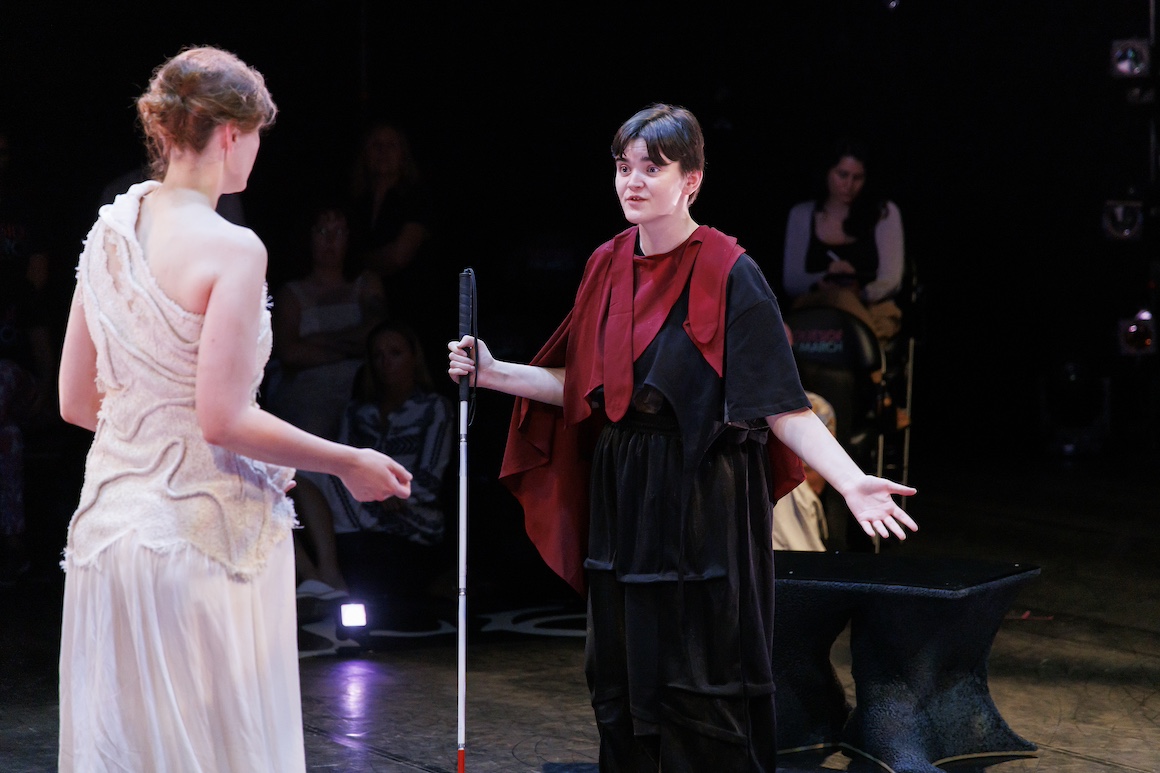
It’s all very well done. The actors are excellent with just enough wry humour to keep things from being unbearably depressing. The young dancers are athletic and technically very competent. The staging is slick and visually rather lovely with excellent costumes by Anahita Dehbonehie and a functionally efficient and really eye catching set by Nick Blais. The sound design by Heidi Chan initially had my teeth on edge with its insistent unstable bass rumble but it gets more varied and complex and supports the spoken word well which, one suspects, really helps those who can’t see the action.
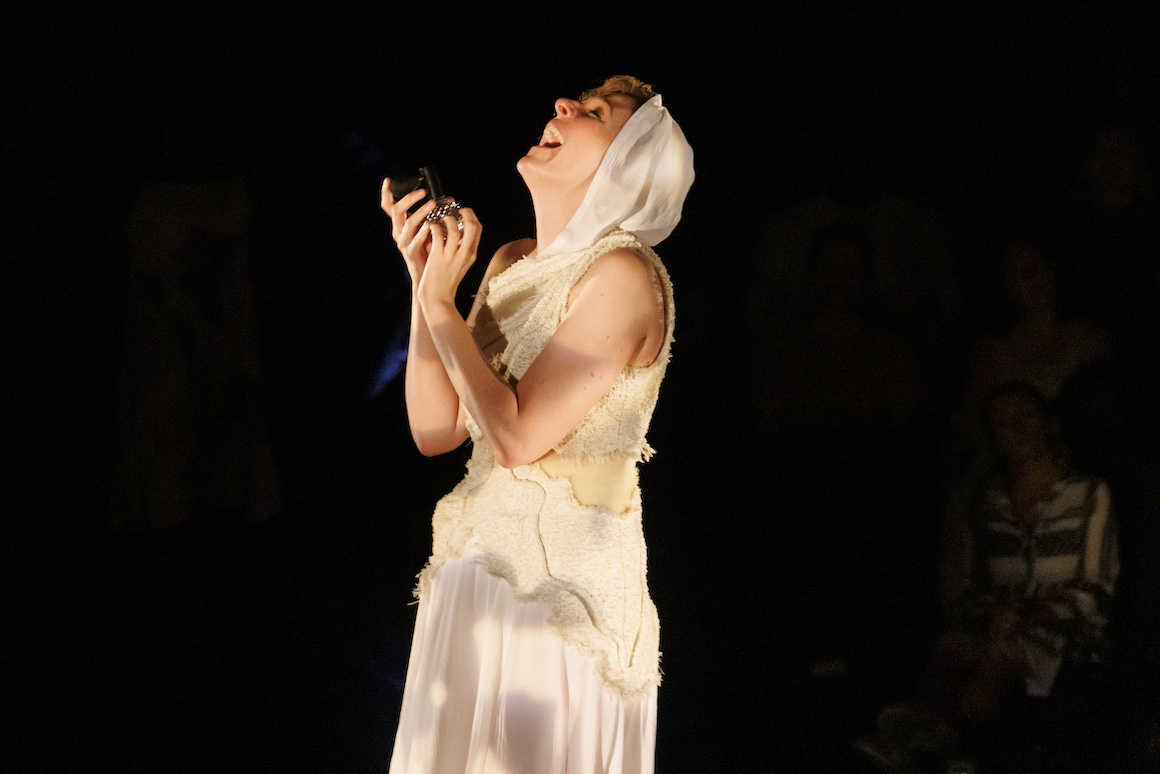
All in all it’s a thoughtful meditation of what it means to Be and what part Sight plays in that with just enough sly humour to stop it being ponderous.
Rainbow on Mars continues at the Daniels Spectrum until August 20th.
Photo credit: Bruce Zinger
 operaramblings