
Mahabharata is one of the great epics. It’s long (my somewhat abridged translation runs 1400 pages) and it’s complex. To condense it into five hours or so of theatre and still have it retain its essential qualities is astonishing but, based on the first part which I saw at the Bluma Appel Theatre last night, Why Not Theatre’s production does just that.

Miriam Fernandes and Ravi Jain have blended story telling, acting, music and dance into a spectacular and compelling theatrical experience. There are many, many characters though at the centre is the struggle for power among the descendants of Shantanu, king of the Kurus. This resolves into a rivalry between two sets of brothers; the Pandavas and their collective wife Draupadi and the Kauravas; the hundred sons of the blind king Dhritarashtra and his queen Gandhari, led by the eldest, Duryodhana. They are assisted by various gods, demi-gods and heroes while all being caught up in a feud with the Nagas (snakes). The epic themes of Love, Honour, Ambition, Pride and Revenge are all on display. And underlying it all is the eternal interplay of Karma and Dharma; how free are we and what is “right conduct”?
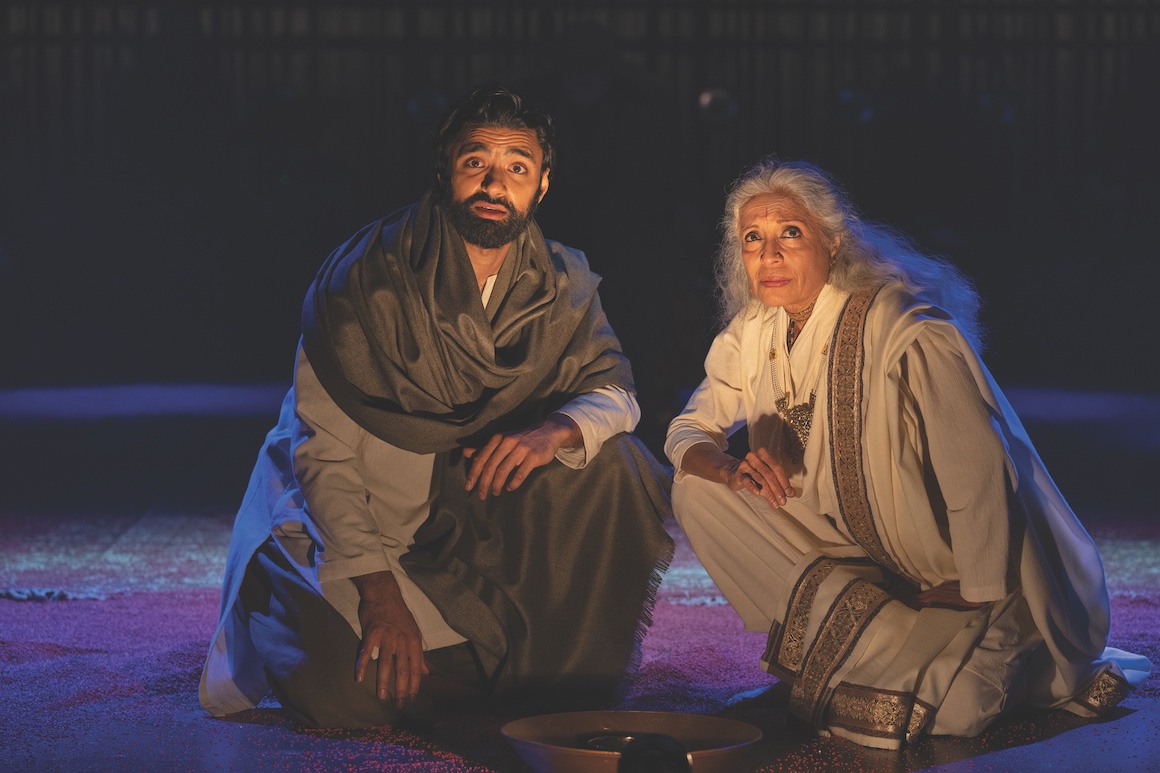
Structurally in the play we have Miriam Fernandes as the narrator guiding us through the complexities while the cast acts out the key events with a good deal of very accomplished dancing in several traditional styles. Backing all this up is a band playing (mostly) traditional Indian instruments led by Suba Sankaram. The music itself effectively combines traditional elements and newly composed music by Suba and John Gzowski.

There are some really strong performances and it’s hard to know where to start. Maybe with the relationship between the wise old Dhrishtarashta, played with restraint and dignity by Ravin Ganatra and his ambitious and impulsive son Duryodhna played with a kind of nervous , febrile energy by Darren Kuppan. The latter is heavily under the influence of his controlling mother Gandhari, played by Goldy Notay, and her rather sinister brother Shakuni, played by Sakuntala Ramanee (there is quite a lot of gender bending in the casting). Throw into the mix Karna; half brother of the Pandavas by the Sun God, who has thrown in his lot with Duryodhna. Navtej Sandhu brilliantly encapsulates his resentment at being treated as a commoner by his half-sibs while projecting a warrior persona as strong as Arjuna’s.

In the other camp we have the Pandavas. Shawn Ahmed portrays Yudishthira as cool and sensible but overly concerned with his honour where perhaps greater issues of Dharma are at stake. He is well matched by Munish Sharma as an appropriately large and rambunctuous Bhima and Anaka Maharaj-Sandhu as the great archer Arjuna who we shall see more of in part 2. There’s a finely nuanced performance too from their tutor Bhishma played by Sukania Venugopa.
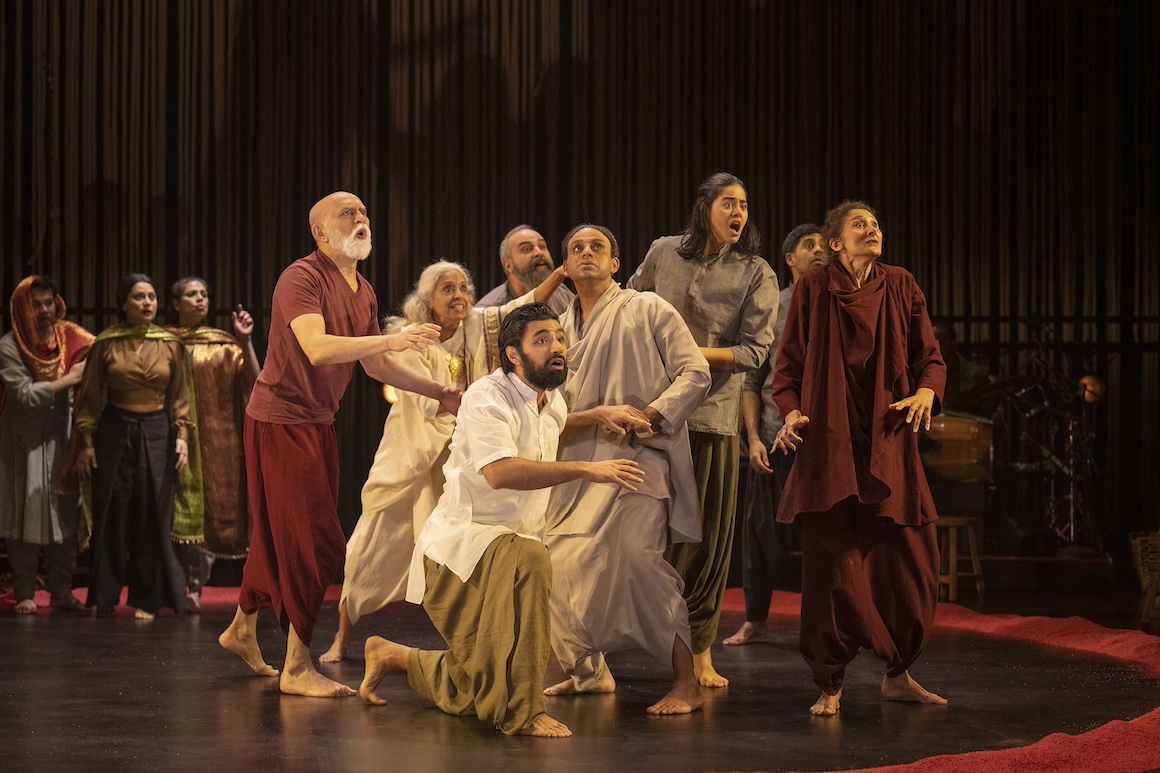
Towards the end of part 1 we also meet the Pandavas’ collective wife Draupadi; played with great dignity and a certain powerful stillness by Goldy Notay, and Neil D’Souza as Krishna. There’s humour here with the god presented as part Loki, part Christ. These two characters will become much more important in part 2.
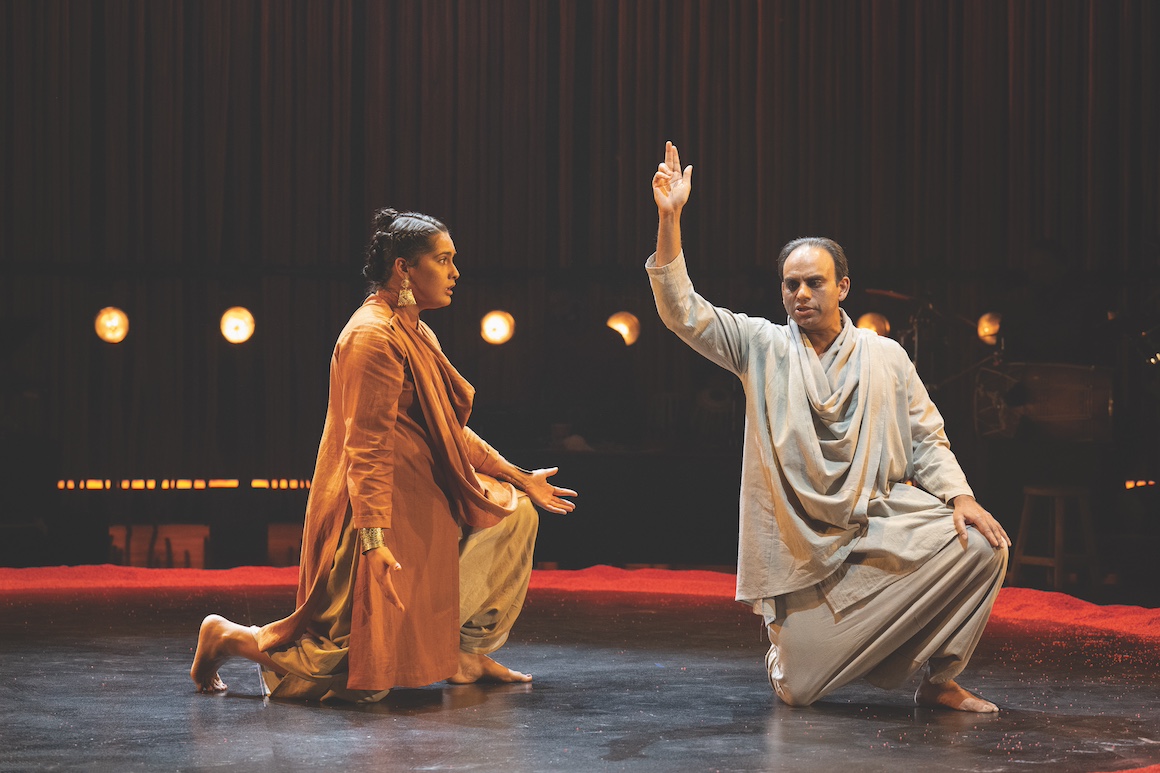
Ravi Jain’s direction blends the various elements of stage action skilfully and creates some striking moments. I was particularly struck by the clever scene where Duryodhna tries to humiliate the enslaved Draupadi by having her stripped but her sari is infinitely long. This was neatly done! But that’s only one of a range of stunning effects achieved by sets by Lorenzo Savoini, lighting by Kevin Lamotte and projections by Hana Kim. The large stage is full of sound and action and it’s spectacular while consistently serving the narrative.

And speaking of the narrative where are we left at the end of part 1? Yudishthira has just gambled away the Pandavas’ inheritance and even the brothers themselves and Draupadi in a crooked dice game but Dhrishtarashta has redeemed them from slavery and sentenced them to exile in the forest while, for now at least, Duryodhna stands to inherit everything. I can’t wait for part 2 tonight!
Mahabharata is presented in two parts by Canadian Stage at the Bluma Appel Theatre until April 27th.
Photo credits: Michael Cooper (1st and last), David Cooper (the rest).
 operaramblings