
Roland Schimmelpfennig’s play Winter Solstice in an English translation by David Tushingham opened at Canadian Stage’s Berkeley Street Theatre on Friday night. It’s directed by Alan Dilworth of Necessary Angel theatre Company in collaboration with Birdland Theatre and Canadian Stage.

To cut to the chase, it’s another play (see my review of Wights) about the difficulty left inclining intellectuals have with confronting the resurgence of extreme right wing ideas though this time with a very specifically German flavour. Like the other play it also involves pretty dysfunctional relationship dynamics.
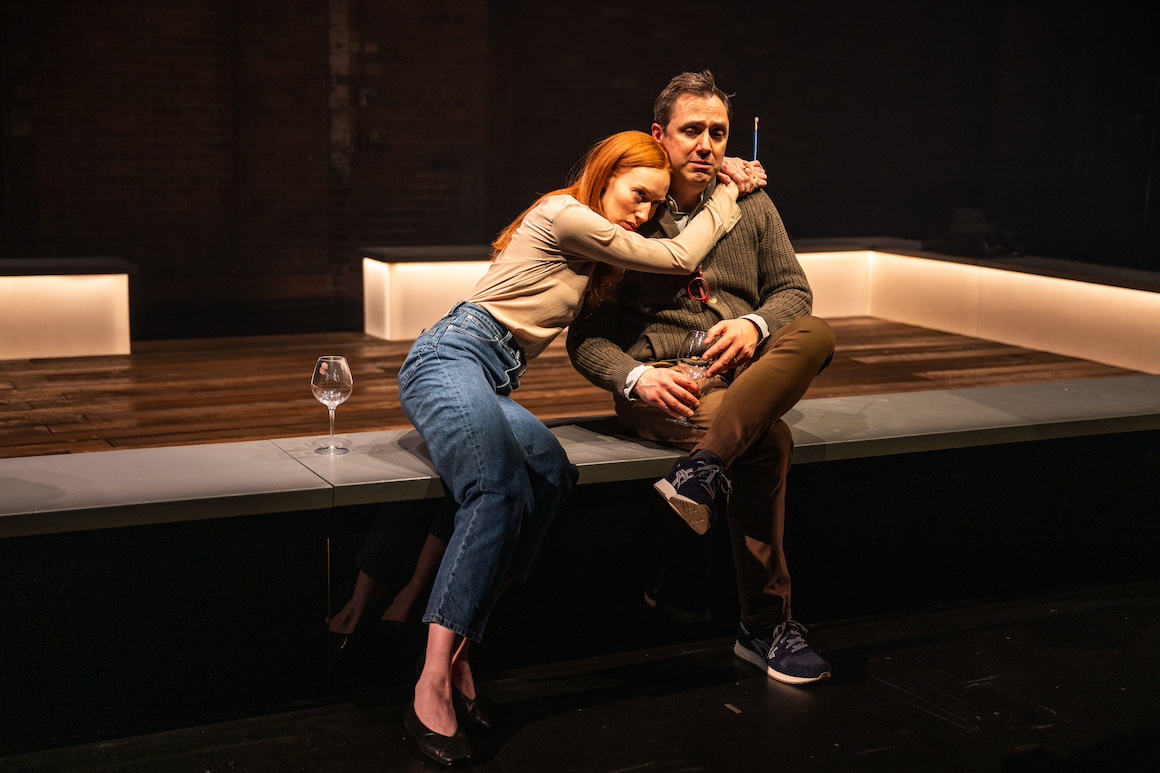
Bettina (Kira Guloien) and Albert (Cyrus Lane) are respectively a maker of avant-garde films and an academic and short story writer. They are comfortably off and live in a large, tastefully decorated, apartment in the right part of town with their soon to be eight year old daughter. It’s Christmas Eve and Bettina’s mother Corinna (Nancy Pal) has just arrived after a harrowing train journey. She has a track record of overstaying her welcome but everyone is too polite to say so. Enter Rudolph (Diego Matamoros) who Corinna has met on the train and invited to stay.
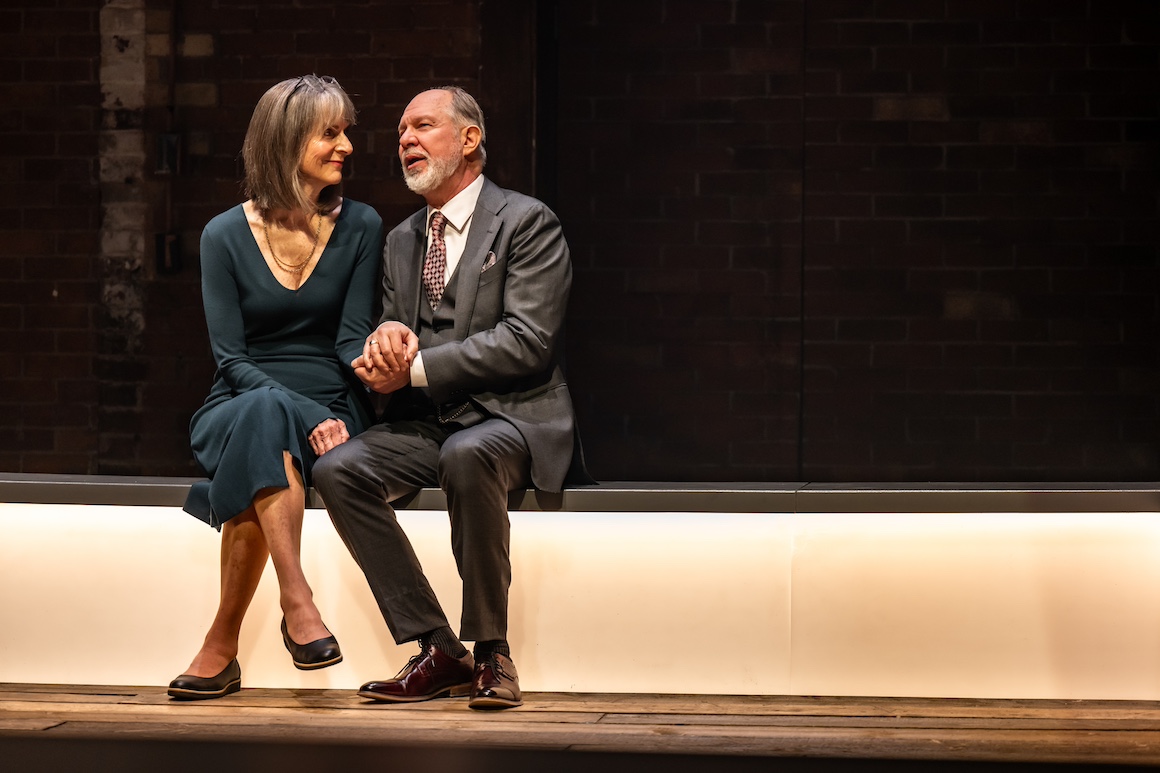
Of course there’s considerable discomfort about this intrusion that just deepens as the layers are peeled back on Rudolph. He’s well dressed, well mannered and well spoken. He’s from Paraguay but not Paraguayan. He plays Chopin and Bach on the piano. He expresses ideas about Order, Natural Hierarchy and the importance of the ancient Norse gods. Bettina is largely impervious to this; she’s wrapped up in dealing with her mother, and Corinna (who Rudolph calls Gudrun) is entranced. Albert is deeply disturbed but he’s stoked up on drugs and wine and is fielding a side issue with a young woman at his publishers. So, confrontation, such as it may be, will be largely indirect and muddied by personal issues.

All of this is narrated in large part in the third person. There’s a narrator (Frank Cox-O’Connell) who will eventually morph into Konrad; a painter who is both childhood friend of Albert and sexually attracted to Bettina (an attraction which is reciprocal). And even when Konrad isn’t narrating it’s more common for one character to be describing another’s thoughts and actions than for that character to be acting them. It’s consciously, artificially, more “tell” than “show” reinforced by all taking place in a very minimalistic set; a half height walled box and some chairs.
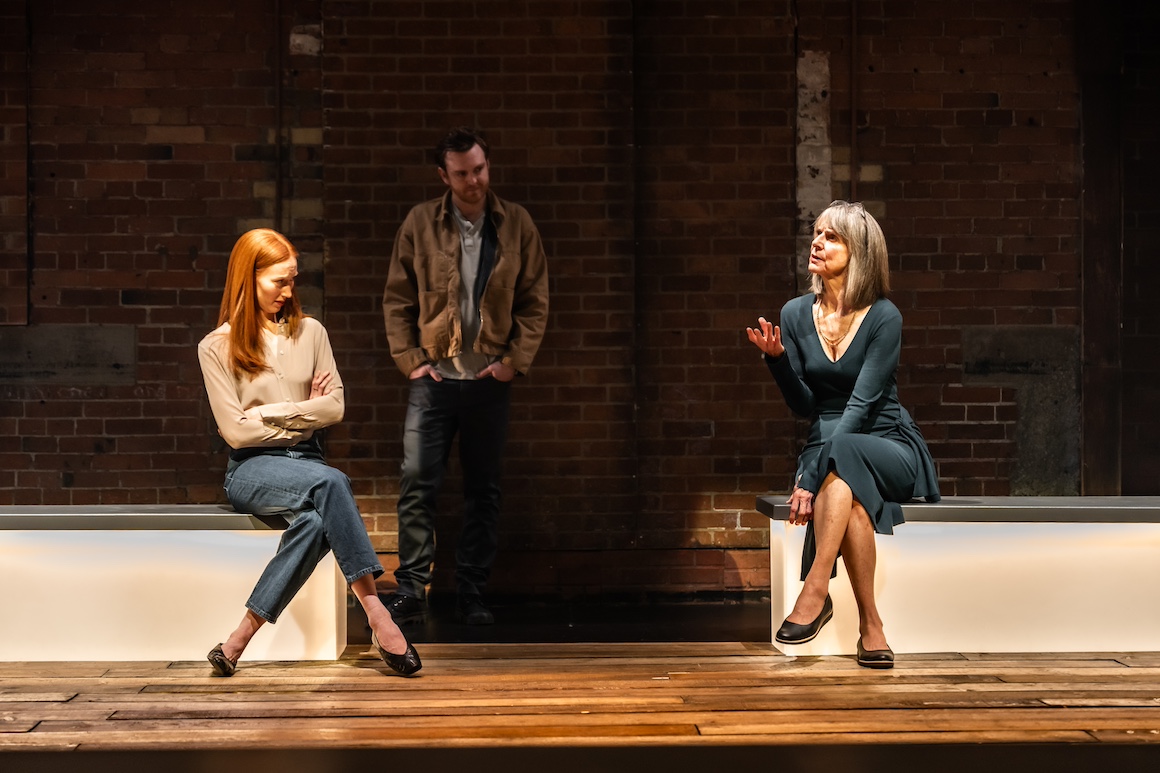
So, Rudolph becomes more and more obviously the embodiment of never quite deNazified Naziism and Albert becomes increasingly unhinged. The timeline becomes fluid. It’s hard to tell whether something is “real” or a projection from/into the past. Scenes repeat but with different dynamics; especially the increasingly fraught tension between Rudolph and Albert. Sometimes it’s uncomfortably civilized and sometimes it, briefly, boils over into something much more visceral; at least on one possible timeline. In the end nothing is resolved.
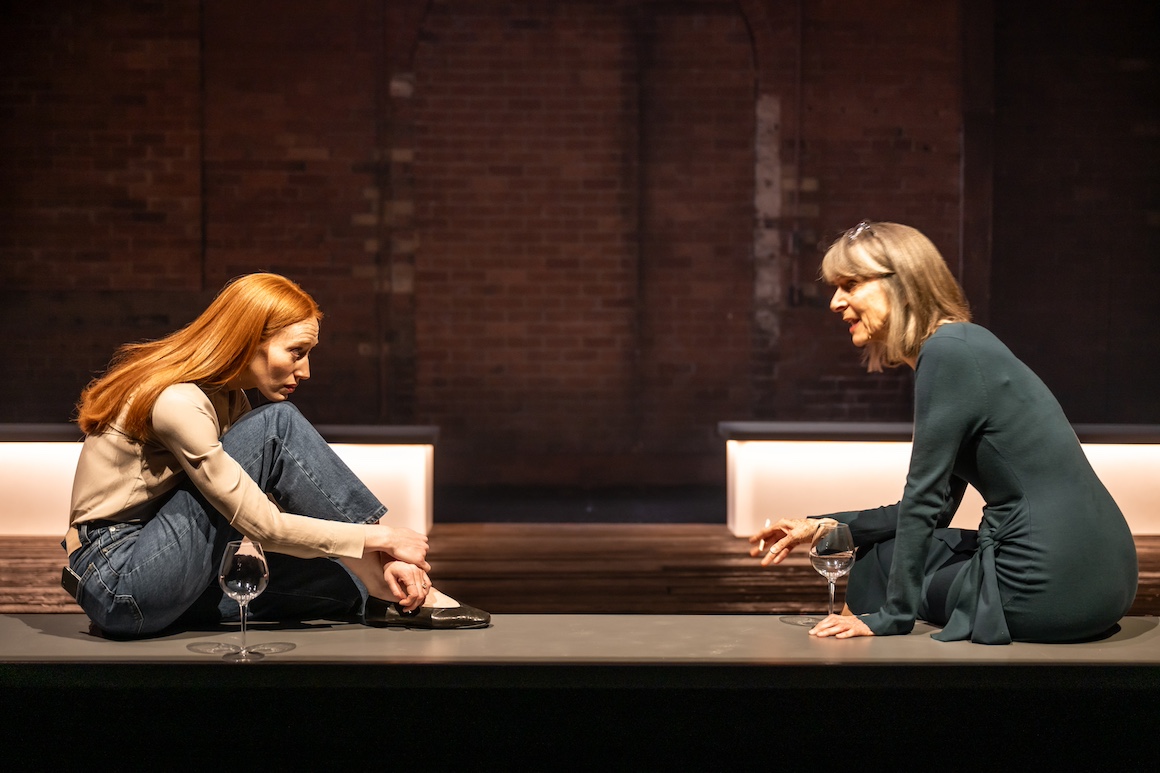
It’s a cleverly constructed play with heavy use of meta-theatricality. It eschews “naturalism” to foreground the ideological issues. Tightly directed here and brilliantly acted it’s impressive theatre but Schimmelpfennig makes the audience work hard. There’s no spoon-feeding here and each of us must draw their own conclusions.

I see it as a metaphor for the resurgence of right wing racist politics in Europe and the inability of democratic politicians and intellectuals of all stripes to deal with it. They pussy foot with terms like “populism” when they mean racism and fascism. The treat politicians like Le Pen and Farage as if they were just slightly eccentric rather than the spiritual heirs of the people we hanged at Nuremberg. For decades after 1945 the symbolism and the overt expression of Nazi ideas in Europe was taboo or even illegal but the poison was still there; aided and abetted by the American occupation forces treating (ex?) Nazis as useful for helping to create anti-Soviet hysteria. Now it’s coming back to the surface and no-one knows quite what to do.

Yeats presciently called an earlier concatenation of similar events and ideologies The Second Coming:
Turning and turning in the widening gyre
The falcon cannot hear the falconer
Things fall apart; the centre cannot hold;
Mere anarchy is loosed upon the world,
The blood-dimmed tide is loosed, and everywhere
The ceremony of innocence is drowned;
The best lack all conviction, while the worst
Are full of passionate intensity.
Winter Solstice continues at the Berkeley Street Theatre until February 2nd.
Photo credits: Dahlia Katz
 operaramblings